China Mail 1891-09-28

 81
81

China Mail 1891-09-28



Lorelei Sage, Contemplative Literature Editor: This vintage newspaper dispatch from 1891's 'China Mail' is a fascinating artifact for the serious student of esoteric history. While ostensibly reporting on geopolitical events, its true value lies in the subtle echoes of burgeoning Theosophical discourse, particularly the mention of Mrs. Besant. The juxtaposition of worldly affairs with nascent spiritual movements reveals the era's intellectual ferment. It's a primary source that allows us to trace the reception and impact of new spiritual ideas within a global context. Recommended for scholars of comparative religion, Theosophy enthusiasts, and anyone interested in the intersection of history and hidden knowledge.
📝 Description
81
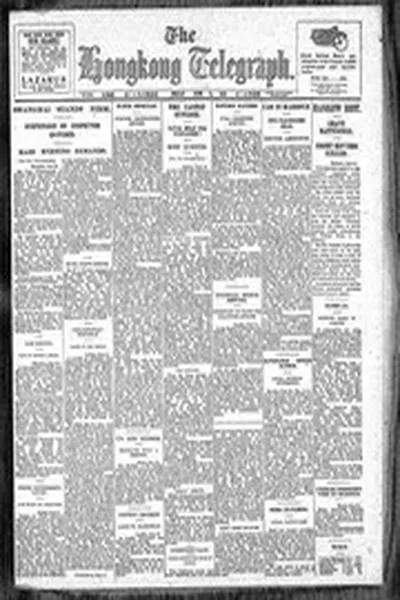
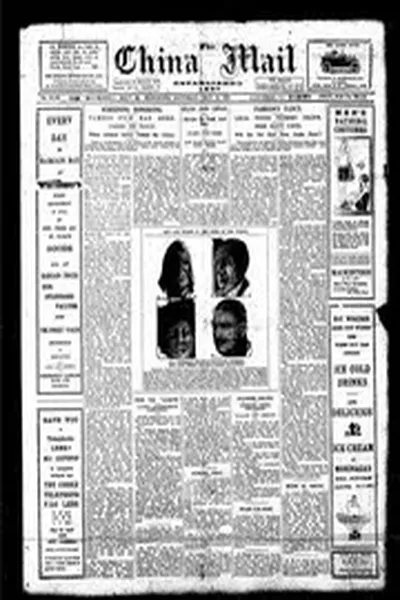
The 'China Mail' dated September 28, 1891, contains articles touching on esoteric subjects.
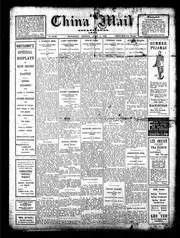
This edition of the 'China Mail', from September 28, 1891, presents a unique intersection of late 19th-century global events and emerging esoteric ideas. While reporting on international affairs and political disputes, such as 'China's Excuses Rejected,' the newspaper also features discussions related to 'Theosophy and Mrs. Besant.' This juxtaposition reveals how contemporary worldly concerns were viewed alongside burgeoning spiritual philosophies. The publication offers a window into a period of significant societal shifts, where the material and the spiritual were subjects of public discourse. Readers can examine how these seemingly disparate elements—geopolitical tensions and esoteric thought—coexisted and potentially influenced each other in the public consciousness of the era. The articles suggest a broader interest in understanding universal truths and the unfolding of collective human experience beyond immediate political realities.
This newspaper edition appears during a peak period for Western esoteric movements, particularly Theosophy, which sought to synthesize Eastern and Western spiritual traditions. The mention of Mrs. Besant places it within the context of the Theosophical Society's growing influence and its engagement with public discourse. Such publications reflect a broader societal fascination with hidden knowledge and alternative spiritual paths that emerged in response to industrialization and scientific materialism, attempting to find meaning and order in a rapidly transforming world.
💡 Why Read This Book?
Discover the historical intersection of global events and emerging esoteric thought. Uncover veiled symbolism within newspaper reports of 1891. For seekers of hidden knowledge, scholars of Theosophy, and those fascinated by the spiritual undercurrents of history. This edition offers a unique lens through which to view the past and its enduring metaphysical implications.
⭐ Reader Reviews
Honest opinions from readers who have explored this book.
❓ Frequently Asked Questions
What esoteric themes are hinted at in this newspaper edition?
While primarily reporting current events, the edition subtly points towards esoteric themes through its mention of 'Theosophy and Mrs. Besant,' suggesting a growing interest in spiritual philosophies amidst worldly concerns, and hinting at deeper, unseen forces influencing global affairs.
Who was Mrs. Besant in the context of this publication?
Annie Besant was a prominent figure in the Theosophical Society, known for her extensive lectures and writings on spiritual and philosophical topics. Her inclusion here signifies the Society's increasing influence and reach in the late 19th century.
What does 'China's Excuses Rejected' imply in an esoteric context?
In an esoteric interpretation, 'China's Excuses Rejected' could symbolize the breakdown of material or superficial justifications when confronted by deeper, spiritual truths or universal laws. It suggests a karmic reckoning or a necessary shedding of illusions.
Is this a primary source for Theosophical doctrine?
This edition is not a primary source for Theosophical doctrine itself, but rather a historical document reflecting the awareness and integration of Theosophical ideas into the broader intellectual landscape of the time.
What is the historical significance of the 'China Mail' in 1891?
The 'China Mail' was a prominent English-language newspaper in Hong Kong, serving as a crucial conduit for news and discourse between the East and West during a period of significant colonial and global change.
🔮 Key Themes & Symbolism
Theosophy's Emergence in Global Discourse
This collection serves as a poignant marker of Theosophy's burgeoning presence in the global consciousness of the late Victorian era. The explicit mention of 'Theosophy and Mrs. Besant' within a widely circulated newspaper indicates that these esoteric philosophies were no longer confined to esoteric circles but were becoming a subject of public discourse, even alongside mundane news of naval maneuvers and political scandals. This reflects a societal shift, an increasing openness to spiritual inquiry beyond traditional religious frameworks, and the growing influence of figures like Annie Besant in disseminating these ideas to a wider audience. It suggests a collective yearning for deeper meaning and understanding in a rapidly modernizing world.
Symbolism of Geopolitical Events
Beyond the literal reporting of naval incidents ('Nanshan has been oulled off') and international disputes, these dispatches offer fertile ground for symbolic interpretation. 'China's Excuses Rejected,' for instance, can be viewed not just as a political statement but as a metaphor for the rejection of superficial justifications in the face of cosmic or karmic principles. The 'shipping strike at London Derry' or 'forest fires in France' can be seen as traces of larger, unseen forces at play – disruptions mirroring internal turmoil or the energetic shifts of the planet. This perspective encourages readers to look beyond the surface of historical events and perceive the underlying spiritual dynamics and archetypal patterns at work.
The Esoteric Undercurrents of Victorian Society
This 1891 edition of the 'China Mail' provides a unique window into the intellectual and spiritual field of the Victorian era, a period rich with both material progress and a profound undercurrent of esoteric exploration. While the newspaper reports on conventional matters like 'The London Police' or 'The Political Scandal in Canada,' the inclusion of 'Theosophy and Mrs. Besant' reveals a societal engagement with alternative spiritualities. This juxtaposition highlights the Victorian paradox: a society outwardly focused on empire and industry, yet inwardly grappling with profound questions of existence, consciousness, and the hidden nature of reality, a fertile ground for the seeds of esoteric thought to take root and flourish.
💬 Memorable Quotes
Direct passages from the work, attributed to the author.
“CHINA'S EXCUSES REJECTED.”
— This headline, beyond its political context, suggests a universal principle of accountability and the eventual unveiling of truth, hinting at karmic consequences or the inevitable exposure of illusions.
“THEOSOPHY AND MRS BESANT.”
— This simple juxtaposition signifies the growing integration of esoteric philosophies into public consciousness, marking Mrs. Besant as a key conduit for these teachings during a central era of spiritual awakening.
“A THEATRICAL TOUR OF THE GLOBE.”
— This phrase can be interpreted metaphorically, suggesting that the grand events of the world, both political and spiritual, are part of a larger cosmic drama unfolding upon the stage of existence.
“THE POLITICAL SCANDAL IN CANADA.”
— Scandals, in an esoteric view, often represent the shadow aspects of collective consciousness or the necessary disruption of corrupted systems to allow for renewal and higher vibrations.
“COMMERCIAL UNION BETWEEN ENGLAND AND THE COLONIES.”
— This can symbolize an attempt at external unity, contrasting with the deeper, inherent spiritual unity that esoteric traditions seek to awaken within individuals and humanity as a whole.
🌙 Esoteric Significance
Tradition
This content resonates strongly with the Theosophical tradition, specifically the teachings emerging in the late 19th century. Theosophy aimed to synthesize Eastern and Western esoteric philosophies, emphasizing universal brotherhood, comparative religion, and the study of ancient wisdom. The mention of 'Theosophy and Mrs. Besant' directly points to this lineage, suggesting an era where these concepts were being introduced to a wider, global audience through accessible mediums.
Symbolism
The 'China Mail' of 1891, through its juxtaposition of diverse news items, offers layers of symbolic meaning. 'China's Excuses Rejected' can symbolize the shedding of illusion or the karmic consequences of actions. Naval incidents might represent the clash of forces or the navigating of challenging currents in the collective consciousness. The mere inclusion of 'Theosophy' alongside secular news signifies the awakening of spiritual awareness within the material world, a crucial step in the evolution of consciousness.
Modern Relevance
The modern relevance lies in understanding the historical trajectory of esoteric thought and its integration into mainstream discourse. This edition demonstrates that the exploration of spiritual and metaphysical ideas is not a fringe phenomenon but has always been intertwined with global events and societal shifts. It encourages us to critically examine news narratives, seeking deeper, symbolic meanings and recognizing the ongoing human quest for knowledge that transcends the purely material.
👥 Who Should Read This Book
This vintage newspaper edition is an invaluable resource for dedicated seekers of esoteric knowledge, particularly those interested in the historical roots of modern spiritual movements. Scholars of Theosophy, comparative religion, and late Victorian intellectual history will find it a primary source for understanding how esoteric ideas interacted with contemporary global events. Practicing occultists and metaphysicians may discover historical context for the perennial philosophies. Beginners curious about the intersection of history and hidden wisdom will find a unique entry point into the collection of spiritual inquiry that characterized the turn of the 20th century.
📜 Historical Context
The year 1891 marked a period of immense global transition. The Victorian era, characterized by industrial revolution, colonial expansion, and scientific advancement, also fostered a significant spiritual and intellectual awakening. Esoteric movements like Theosophy, founded by Helena Blavatsky and championed by figures like Annie Besant, gained considerable traction, offering alternative cosmologies and paths to spiritual enlightenment. This edition of the 'China Mail,' a prominent English-language newspaper in colonial Asia, captures this zeitgeist by juxtaposing reports on international affairs, colonial politics, and even mundane events with the burgeoning presence of Theosophical thought. It reflects a world where the perceived certainties of the material age were being challenged by an exploration of hidden knowledge and the deeper mysteries of existence, influencing public discourse and the intellectual currents of the time.
📔 Journal Prompts
Reflect on the symbolic meaning of 'China's Excuses Rejected' in your own life or in a larger societal context. Where are excuses being rejected in the modern world?
Consider the impact of figures like Mrs. Besant in disseminating spiritual ideas. How do modern influencers shape our understanding of Theosophy or other esoteric paths?
Analyze a current global event through the lens of esoteric symbolism. What deeper forces or archetypal patterns might be at play beyond the superficial news reports?
How does the juxtaposition of 'Theosophy' with mundane news in 1891 reflect a similar tension or integration in today's media landscape?
Meditate on the idea of a 'Theatrical Tour of the Globe.' What is your role in this cosmic drama? What are the key scenes you are witnessing or participating in?
🗂️ Glossary
Theosophy
A spiritual philosophy founded in the late 19th century, seeking to synthesize Eastern and Western esoteric traditions. It emphasizes universal brotherhood, comparative religion, and the study of ancient wisdom to understand the nature of reality and the human soul.
Anthroposophy
A spiritual philosophy founded by Rudolf Steiner, stemming from Theosophy. It focuses on the development of the human being through spiritual science, encompassing areas of consciousness, reincarnation, and karma.
Esoteric
Relating to or accessible only by a select group of initiated people with a particular knowledge or interest. It refers to hidden meanings, inner teachings, and mystical understanding.
Metaphysical
Concerned with the fundamental nature of reality, including the relationship between mind and matter, substance and attribute, and potentiality and actuality. It explores concepts beyond the physical and empirical.
Victorian Era
The period of Queen Victoria's reign in the United Kingdom (1837-1901), characterized by industrial expansion, colonial power, significant social change, and a complex interplay of scientific progress and spiritual exploration.
This book appears in 2 collections
🔮 Readers Also Liked
Browse all →






From the “Theosophy” Collection
View all →


More Free Theosophy & Anthroposophy Books
View all →