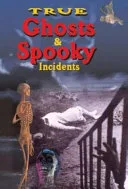
True Ghosts and Spooky Incidents
 74
74

True Ghosts and Spooky Incidents
Vikas Khatri’s True Ghosts and Spooky Incidents offers a straightforward collection of spectral encounters, eschewing elaborate theory for raw anecdote. The strength lies in its sheer breadth of reported phenomena, from the predictable headless specter to more unusual maritime hauntings. The book succeeds in presenting a consistent tone of bewilderment and fear from the accounts, making the experiences feel immediate. However, the lack of critical analysis or contextualization for each incident is a notable limitation. For example, the description of an apparition in a jailhouse, while chilling, could benefit from exploring the psychological state of the witness or historical context of the location, which is largely absent. The compilation leans heavily on sensationalism without deeply probing the nature of belief or perception. Nevertheless, for readers seeking a direct portal into anecdotal supernatural accounts, it delivers a parade of chilling narratives.
📝 Description
74
Vikas Khatri compiled True Ghosts and Spooky Incidents in April 2006, collecting reported paranormal encounters.
This book gathers accounts of paranormal experiences, detailing ghost sightings, apparitions, and phenomena across diverse settings. Khatri includes narratives from oceanic locations, mountain castles, and penal institutions, documenting both benevolent and malevolent spectral entities. The collection focuses on the impact these experiences have on individuals. It appeals to those interested in the supernatural, ghost stories, hauntings, and psychic phenomena. Readers who enjoy anecdotal evidence and the cultural stories surrounding ghosts will find the content engaging, regardless of their personal beliefs. The book emerged during the early 2000s, a time of significant public fascination with the paranormal, amplified by popular culture and accessible supernatural literature. It aligns with discussions of folklore, unexplained mysteries, and anecdotal supernatural accounts prevalent in various media at the time.
The narratives presented challenge rational explanations for ghosts, suggesting these entities can manifest in varied environments. Khatri frames these beings not as mere imagination but as active participants in human experience, capable of eliciting strong emotional responses like fear. The stories imply a pervasive spectral presence that intrudes on ordinary or secure places, blurring the lines of the known world. The book examines how these encounters question conventional understandings of reality and the afterlife.
Published in 2006, this collection taps into a continuing public interest in spiritualism and the afterlife that marked the early 2000s. It sits within a tradition of collecting and disseminating anecdotal evidence of paranormal activity, a practice common across various cultures and historical periods. Such compilations often serve to document purported encounters with non-corporeal entities and explore the psychological and cultural impact of these experiences. The book aligns with a broader interest in folklore and unexplained mysteries, reflecting a desire to understand phenomena that lie outside conventional scientific frameworks.
💡 Why Read This Book?
• Gain exposure to a wide range of documented ghost sightings, including those reported in improbable locations like "the middle of an ocean," as mentioned in the original blurb, offering a broad survey of spectral lore. • Understand the varied nature attributed to ghosts, from "friendly and evil" entities, as described in the book's premise, allowing for a nuanced view of paranormal folklore beyond simple fear. • Explore the psychological impact of alleged paranormal encounters through the "hapless multitudes" mentioned in the blurb, providing insight into human reactions to the unexplained.
⭐ Reader Reviews
Honest opinions from readers who have explored this book.
❓ Frequently Asked Questions
What kind of paranormal phenomena are detailed in True Ghosts and Spooky Incidents?
The book compiles various reported supernatural events, including sightings of apparitions like "headless apparitions," unexplained noises such as "invisible moanings," and encounters in diverse settings like haunted castles and jails.
Does Vikas Khatri offer explanations for the spooky incidents?
The book primarily focuses on presenting the anecdotal accounts of paranormal experiences as reported. It collects these "out-of-this-world experiences" rather than providing scientific or skeptical explanations for them.
What is the publication history of True Ghosts and Spooky Incidents?
The book was first published on April 6, 2006. This initial publication date places it within a period of sustained public interest in paranormal literature.
Who would find this collection of ghost stories most interesting?
Readers fascinated by haunted locations, spectral apparitions, and psychic experiences will likely be drawn to this compilation. It caters to those who enjoy chilling narratives of the supernatural.
Are the ghosts described in the book always malevolent?
No, the book suggests that ghosts can be perceived as both "friendly and evil," indicating a range of spectral interactions and characteristics within the collected incidents.
Where are the reported ghost encounters set in the book?
The incidents occur in a variety of locations, from remote settings like "a secluded castle in the mountains" and "the middle of an ocean" to more confined spaces such as "a sentried jailhouse."
🔮 Key Themes & Symbolism
Pervasive Spectral Presence
The core theme is the widespread nature of ghosts, defying geographical and situational boundaries. Narratives detail hauntings in "the middle of an ocean," "a secluded castle in the mountains," and "a sentried jailhouse." This concept challenges the idea that spectral activity is confined to specific, traditionally "haunted" locations, suggesting a more pervasive and unpredictable presence of the paranormal in the world.
Emotional Impact of Encounters
The book highlights the significant emotional and psychological effects these alleged encounters have on individuals. The phrase "scared the wits out of hapless multitudes" underscores the profound fear and distress experienced. This theme focuses on the human reaction to the unknown, emphasizing how paranormal events, whether believed or not, can deeply affect perception and well-being.
Duality of Spectral Nature
A key aspect explored is the varied nature of the entities encountered. The book posits that ghosts can be "both friendly and evil." This introduces a nuanced perspective, moving beyond a simplistic good-versus-evil dichotomy often associated with supernatural beings. It suggests that spectral interactions can range from benign to terrifying, reflecting a complex paranormal landscape.
The Improbability of Hauntings
The compilation deliberately selects incidents from unexpected or "improbable places." This narrative choice aims to amplify the mystery and challenge rational explanations. By detailing hauntings in mundane or secure environments, the book questions the perceived boundaries between the natural and supernatural, suggesting that the spectral realm can intrude anywhere.
💬 Memorable Quotes
Direct passages from the work, attributed to the author.
“Haunted castles, headless apparitions, psychic experiences and invisible moanings - if these fascinate you, then read on.”
— This opening statement directly targets the intended audience, enumerating classic elements of the supernatural genre to pique immediate interest and set the tone for the collection.
“This book, as the title suggests, is a spell-binding, spine-chilling compilation of ghostly, out-of-this-world experiences.”
— This self-descriptive passage emphasizes the book's primary function: to deliver a collection of unsettling and extraordinary accounts that aim to captivate and frighten the reader.
“Be it the middle of an ocean, a secluded castle in the mountains or a sentried jailhouse, ghosts - both friendly and evil - have managed to gain entry to the most improbable places.”
— This excerpt highlights the wide geographical and situational scope of the reported phenomena, suggesting that spectral entities are not confined to predictable locations but can manifest anywhere, in varied forms.
“Believe them or not, the Mu”
— This fragment suggests an authorial stance that acknowledges skepticism while encouraging engagement with the presented narratives, implying the stories hold merit regardless of the reader's belief.
“scared the wits out of hapless multitudes.”
— This phrase powerfully conveys the intense fear and psychological impact experienced by those who allegedly encounter ghosts, emphasizing the real-world effect of these supernatural occurrences.
🌙 Esoteric Significance
Tradition
While not explicitly tied to a single esoteric lineage, "True Ghosts and Spooky Incidents" draws from the broad stream of folklore and anecdotal paranormal accounts that permeate many spiritual traditions. It intersects with the general interest in ghosts and spirits found in animistic beliefs, Shamanism, and even aspects of Spiritualism, which gained prominence in the 19th century. The work's focus on direct experience and the "out-of-this-world" nature of encounters aligns with a universal human fascination with the afterlife and non-corporeal existence, a theme present across diverse mystical systems.
Symbolism
The book frequently employs archetypal symbols of the uncanny and the spectral. "Haunted castles" symbolize ancient fears, trapped histories, and imposing structures that hold secrets. "Headless apparitions" can represent a loss of identity, a severed connection to reason or the past, or a warning of impending doom. "Invisible moanings" symbolize unseen forces, disembodied distress, or lingering psychic residue, evoking primal fears of the unknown and unheard.
Modern Relevance
This collection remains relevant for contemporary paranormal investigators, folklorists, and enthusiasts of ghost stories. It serves as a compendium of classic ghost tropes and reported phenomena that continue to inspire modern media and personal investigations. Thinkers exploring the sociology of belief, the psychology of fear, and the enduring power of narrative in shaping our understanding of the world can find raw material in these accounts, reflecting ongoing human engagement with the mysterious.
👥 Who Should Read This Book
• Enthusiasts of ghost stories and paranormal folklore seeking a wide array of reported encounters. • Readers interested in anecdotal evidence of the supernatural, regardless of their personal belief system. • Those curious about the cultural prevalence of ghost narratives and their impact on human psychology.
📜 Historical Context
Published in April 2006, Vikas Khatri's "True Ghosts and Spooky Incidents" arrived during a period of persistent public interest in the paranormal, a trend that had seen significant resurgence through popular media in the late 20th century. This era was marked by a proliferation of ghost-hunting television shows and online forums dedicated to unexplained phenomena. Unlike the more academic or esoteric explorations prevalent in earlier decades, such as those influenced by figures like Helena Blavatsky and the Theosophical Society in the late 19th century, Khatri's work leaned towards accessible, anecdotal collections. While not directly engaging with specific academic debates, the book contributed to a broader cultural narrative where folklore and eyewitness testimony of the supernatural were widely consumed and discussed, often outside of rigorous skeptical inquiry. Reception was generally aligned with genre expectations, appealing to a readership eager for chilling tales without demanding deep critical analysis.
📔 Journal Prompts
The "improbable places" where ghosts manifest, such as "the middle of an ocean."
The range of spectral entities described as "friendly and evil."
The emotional impact on "hapless multitudes" experiencing paranormal events.
The specific types of apparitions, like "headless apparitions."
The sensory phenomena, such as "invisible moanings."
🗂️ Glossary
Apparition
A ghost or ghostlike image of a person. In the context of the book, it refers to visible spectral manifestations reported by witnesses.
Psychic Experiences
Events or phenomena attributed to extrasensory perception or other mental powers beyond the scope of normal sensory channels. In this book, it relates to subjective encounters with the paranormal.
Haunted Castles
Structures, often historical, believed to be inhabited by spirits or ghosts. These locations are frequently depicted as sites of intense paranormal activity in folklore.
Spectral Entities
A general term for supernatural beings, often conceived as spirits or ghosts. The book differentiates these by suggesting they can be perceived as benevolent or malevolent.
Out-of-this-world experiences
A colloquial term for events that are extraordinary, supernatural, or beyond normal human experience. The book uses this to describe its collection of ghost stories.
Invisible Moanings
Auditory phenomena attributed to ghosts or spirits that are heard but not seen. This suggests a disembodied source of sound.
Hapless Multitudes
Refers to large numbers of unfortunate or unlucky people. In the book, this describes those who have allegedly been frightened or affected by ghost encounters.