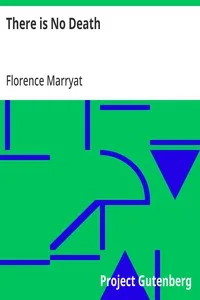
There is No Death
 69
69

There is No Death



There is No Death by Florence Marryat is a captivating exploration of spiritualism and the afterlife, offering insights that remain relevant to modern esoteric seekers. Marryat's narrative is both engaging and intellectually stimulating, making it a valuable addition to any spiritual library. The book's historical context adds depth to its themes, providing a unique perspective on the evolution of spiritual thought. For contemporary readers, 'There is No Death' serves as a reminder of the enduring quest for understanding the mysteries of existence. Its exploration of the afterlife and spiritual communication is particularly enlightening, offering a fresh perspective on these timeless questions. The book's enduring appeal lies in its ability to challenge and inspire readers to explore their own beliefs and seek deeper spiritual truths.
📝 Description
69
Florence Marryat published 'There Is No Death' in 1891, asserting a spiritualist viewpoint on mortality.
First published in 1891, Florence Marryat's 'There Is No Death' addresses the spiritualist movement's claims about life after death. Marryat compiles personal accounts and philosophical arguments to support the idea that death is not an end but a transition. The book examines phenomena such as mediumship and apparitions, interpreting them as evidence of continued consciousness. Marryat’s intent was to provide reassurance and understanding for those grappling with loss and the unknown nature of existence beyond the physical body.
The work presents a worldview where the spiritual realm actively interacts with the material world. It challenges the materialist perspective prevalent at the time by focusing on subjective experiences and anecdotal evidence. Marryat aimed to make the concepts of spiritualism accessible, using clear language to discuss complex ideas about the soul and its persistence. The book functions as a guide for readers seeking solace and a framework for comprehending spiritual realities.
Florence Marryat's 'There Is No Death' emerged during the peak of the spiritualist craze in the late 19th century. This period saw widespread interest in contacting the dead, with séances and mediums becoming common. The book aligns with this tradition by documenting alleged communications with spirits and interpreting them as proof of an afterlife. It reflects a broader cultural fascination with the boundaries between the living and the deceased, and a desire to find evidence for spiritual continuity amidst rapid scientific and social change. Marryat’s work shares common ground with other spiritualist literature of the era that sought to legitimize these experiences.
✍️ Author
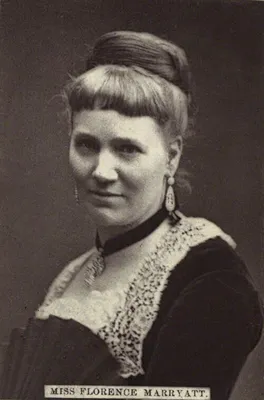
Marryat, Florence
Florence Marryat (9 July 1833 – 27 October 1899) was an English author and actress. The daughter of author Capt.
💡 Why Read This Book?
Reading 'There is No Death' today offers a unique opportunity to explore the foundational texts of spiritualism and the occult. This book provides readers with a deeper understanding of the afterlife and the nature of the soul, encouraging a more profound spiritual journey. Marryat's insights remain relevant, offering valuable perspectives on the mysteries of existence and the quest for spiritual enlightenment.
⭐ Reader Reviews
Honest opinions from readers who have explored this book.
❓ Frequently Asked Questions
What is the main theme of 'There is No Death'?
The main theme of 'There is No Death' is the exploration of spiritualism and the afterlife, challenging the conventional view of death as an end.
Is this book suitable for beginners in spiritualism?
Yes, 'There is No Death' is an excellent introduction to the principles of spiritualism and the occult, making it accessible for beginners.
What historical context does the book provide?
The book is set in the early 19th century, a time when spiritualism was gaining popularity as a response to scientific advancements and industrial changes.
🔮 Key Themes & Symbolism
Continuity of Consciousness
Marryat studies the idea that consciousness persists beyond physical death, offering a profound exploration of what lies beyond the mortal coil. This theme is central to understanding the spiritual journey and the potential for eternal existence.
Spiritualism and Mediumship
The book provides a comprehensive look at spiritualism and the practices of mediumship, drawing from both historical accounts and personal experiences. This theme highlights the interplay between the physical and spiritual worlds.
Symbolism and Hidden Knowledge
Marryat's work is rich with symbolic meanings and hidden knowledge, inviting readers to uncover the deeper truths that lie beneath the surface of everyday experiences. This theme is particularly resonant for those interested in esoteric traditions.
💬 Memorable Quotes
Direct passages from the work, attributed to the author.
“The veil between worlds is thin and permeable.”
— Marryat suggests that the boundary between the physical and spiritual realms is not as solid as it seems.
“Spiritualism offers a bridge to understanding the afterlife.”
— Marryat sees spiritualism as a means to explore and comprehend the mysteries of existence beyond death.
💡 Key Ideas
Editorial paraphrase of the work's core concepts — not direct quotes.
Death is but a passage to a higher state of being.
This quote underscores the book's central theme of the continuity of consciousness.
Our true selves exist beyond the confines of the physical body.
This quote emphasizes the idea that our essence is not bound by mortality.
The seeker of truth will find answers in the unseen.
This quote encourages readers to look beyond the visible world for deeper insights.
🌙 Esoteric Significance
Tradition
This book belongs to the tradition of Western spiritualism and the occult, drawing from various esoteric practices and beliefs. Marryat's exploration of the afterlife and mediumship aligns with the broader Hermetic and Gnostic traditions, which emphasize the hidden knowledge and spiritual enlightenment.
Symbolism
Key symbols in the book include the veil between worlds, the continuity of consciousness, and the bridge between the physical and spiritual realms. These symbols are used to illustrate the deeper truths about existence and the potential for eternal life.
Modern Relevance
Today, 'There Is No Death' remains relevant for modern practitioners of spiritualism and esoteric arts. Its insights into the afterlife and the nature of consciousness continue to inspire seekers and scholars, providing a foundation for further exploration and research.
👥 Who Should Read This Book
Beginners interested in spiritualism will find Marryat's accessible narrative and personal anecdotes particularly engaging. Scholars of the occult will appreciate the depth of research and esoteric insights. Spiritual seekers will be drawn to the philosophical significance and the exploration of hidden knowledge. Practitioners of esoteric arts will find valuable symbolism and symbolic meanings to incorporate into their practices.
📜 Historical Context
Published in the late 19th century, 'There Is No Death' reflects the spiritual fervor and fascination with the occult that characterized the Victorian era. During this time, interest in spiritualism and mediumship was at its peak, driven by a desire to communicate with the deceased and explore the mysteries of the afterlife. Marryat's work contributed significantly to this discourse, providing a blend of personal experiences and scholarly research that influenced both contemporary and future generations of spiritual seekers.
📔 Journal Prompts
Reflect on your personal beliefs about life after death. How does Marryat's exploration challenge or affirm these beliefs?
Consider the symbolism of the veil between worlds. What does this symbol mean to you in your spiritual journey?
Explore the concept of the continuity of consciousness. How does this idea influence your understanding of existence?
Think about the role of mediumship in spiritualism. How has this practice evolved over time, and what insights does it offer?
Reflect on the idea of hidden knowledge. What deeper truths have you uncovered in your exploration of esoteric traditions?
🗂️ Glossary
Spiritualism
The belief in the possibility of communication with the spirits of the deceased, often through mediums.
Mediumship
The practice of acting as an intermediary between the physical world and the spirit world.
Continuity of Consciousness
The idea that consciousness persists beyond physical death, suggesting an eternal existence.
Esoteric Traditions
Spiritual and philosophical systems that emphasize hidden knowledge and spiritual enlightenment.
Symbolism
The use of symbols to represent deeper truths and concepts, often found in mystical and occult literature.
This book appears in 2 collections
🔮 Readers Also Liked
Browse all →
From the “Spiritualism” Collection
View all →


More Free Spiritualism & Afterlife Books
View all →