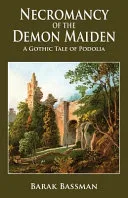
Necromancy of the Demon Maiden
 77
77

Necromancy of the Demon Maiden
Barak A. Bassman’s "Necromancy of the Demon Maiden" offers a stark, unsettling portrayal of spiritual and carnal desperation in late 17th-century Poland. The narrative's strength lies in its unflinching depiction of the protagonist's double life, caught between Jewish orthodoxy and the dangerous allure of Sabbateanism, a historical movement that fractured communities. The introduction of the demon maiden to satisfy the count's elaborate fantasies is handled with a disquieting directness. However, the novella occasionally falters in fully developing the count's character beyond his peculiar obsessions, leaving him somewhat less compelling than the ostracized Kabbalist. A particularly striking passage involves the initial summoning ritual, which effectively captures the tension between divine aspiration and infernal invocation. The work ultimately succeeds as a concise exploration of forbidden desires and their supernatural consequences.
📝 Description
77
In 1680s Poland, a Kabbalist fleeing persecution encounters a count and a summoned demon maiden.
Barak A. Bassman's novella places a follower of Sabbatai Zevi in late 17th-century Poland. This Kabbalist, ostracized for his beliefs, finds refuge with a Polish count. The count's unusual requests lead to the summoning of a demon maiden, initiating a narrative that examines forbidden knowledge and spiritual dissent. The story centers on the fulfillment of desires, both carnal and esoteric, within this charged atmosphere.
The setting of late 17th-century Poland is crucial, a time rife with religious upheaval following the messianic claims of Sabbatai Zevi. The protagonist's plight reflects the historical persecution faced by Zevi's followers. The Polish locale further complicates the political and cultural backdrop against which these events unfold. This historical grounding lends a specific gravity to the magical and personal dramas depicted.
This work engages with the esoteric currents of post-Shabtai Tzvi Judaism, specifically the Sabbatean movement which challenged established religious norms. It touches upon ideas of heterodox Kabbalah and the complex nature of messianic claims. The narrative also incorporates elements of practical magic and the invocation of supernatural entities, exploring the intersection of human longing and demonic pacts.
💡 Why Read This Book?
• Gain insight into the historical schism caused by Sabbatai Zevi, understanding the persecution faced by his followers in the late 17th century, a specific period of religious upheaval. • Explore the esoteric concept of demon summoning as a means to fulfill complex human desires, examining the psychological and spiritual implications presented in the narrative. • Experience a unique fictional intersection of Kabbalah, Sabbateanism, and dark fantasy, offering a narrative that diverges from typical occult fiction tropes.
⭐ Reader Reviews
Honest opinions from readers who have explored this book.
❓ Frequently Asked Questions
What historical context is essential for understanding 'Necromancy of the Demon Maiden'?
The late 17th century is crucial, specifically the aftermath of Sabbatai Zevi's messianic claims and the subsequent persecution of his followers within Jewish communities. This historical backdrop informs the protagonist's exile and the narrative's exploration of heterodox beliefs.
Who was Sabbatai Zevi and why is he relevant to the book?
Sabbatai Zevi (1626-1676) was a Jewish mystic who proclaimed himself the Messiah. His movement caused a massive spiritual crisis and schism, leading many followers to face severe ostracism. The book's protagonist adheres to Zevi's teachings, placing him in direct conflict with established religious norms.
What is the role of the demon maiden in the story?
The demon maiden is summoned by the Kabbalist protagonist at the behest of a Polish count. She is intended to fulfill the count's elaborate fantasies of companionship with a divine or queenly figure, representing a materialized manifestation of desire.
Does the book focus more on Kabbalah or demonology?
The book integrates both. It begins with the protagonist's Kabbalistic background and his involvement with Sabbateanism. The demonology aspect emerges through the summoning ritual, driven by the count's desires, thus blending theoretical esoteric knowledge with practical, darker magic.
What kind of occult themes are explored in 'Necromancy of the Demon Maiden'?
The novella explores themes of forbidden spiritual paths (Sabbateanism), the consequences of heresy, the projection of human desire onto supernatural entities, and the practice of summoning as depicted in occult traditions.
Is the book based on real historical events or just historical settings?
The book uses a specific historical setting and movement (Sabbateanism) as its foundation. While the characters and the specific events of the summoning are fictional, the underlying religious persecution and spiritual climate of the late 17th century are historically grounded.
🔮 Key Themes & Symbolism
Sabbatean Heresy
The work centers on the spiritual crisis instigated by Sabbatai Zevi in the late 17th century. It depicts the intense persecution faced by his followers, portraying adherence to Zevi's messianic claims as a dangerous transgression against established Jewish orthodoxy. The protagonist's secret practice of Kabbalah intertwined with Sabbatean beliefs highlights the theme of heterodox spiritual seeking and its isolating consequences.
Desire and Supernatural Manifestation
A core theme involves the fulfillment of human desire through supernatural means. The Polish count's yearning for a specific type of female companionship, bordering on the divine, leads to the summoning of a demon maiden. This motif explores the dangerous efficacy of occult rituals when driven by intense personal longing and the blurring lines between fantasy and reality.
Forbidden Knowledge and Ritual
The novella examines the pursuit and application of esoteric knowledge deemed forbidden or dangerous. The protagonist's Kabbalistic expertise is employed not only for spiritual contemplation but also for enacting a magical ritual to materialize a supernatural entity. This highlights the risks associated with wielding occult powers and the potential for such knowledge to lead one into perilous situations.
Spiritual Exile and Isolation
The protagonist experiences profound spiritual and social exile. Ostracized by his own community for his adherence to Sabbatean teachings, he is forced into isolation within a foreign castle. This theme underscores the personal cost of deviating from religious norms and the psychological burden of holding beliefs that place one outside the accepted social and spiritual fold.
💬 Memorable Quotes
Direct passages from the work, attributed to the author.
“The Kabbalist, driven from his community, sought refuge and a means to satisfy a nobleman's peculiar desires.”
— This captures the core predicament: the protagonist is both a victim of religious persecution and an agent enabling dark magic, highlighting the complex moral field of the narrative.
“The count yearned for a woman who embodied goddesses and queens, a fantasy soon to be manifested.”
— This points to the central supernatural act: the summoning of the demon maiden. It frames the ritual not as an act of malice, but as a desperate attempt to materialize an idealized, almost divine, feminine presence.
“Adherence to Sabbatai Zevi marked him as a heretic, forcing a clandestine existence.”
— This clearly states the protagonist's forbidden affiliation and the resulting persecution, grounding the narrative in the historical context of the Sabbatean movement's controversial legacy.
“The castle walls became a stage for the intertwining of carnal longing and arcane power.”
— This conveys the atmosphere and thematic blend of the novella, where the nobleman's earthy desires meet the occult practices of the Kabbalist within a confined, isolated setting.
“He was compelled to summon a demon maiden to fulfill the aristocrat's fantasies.”
— This directly addresses the central supernatural event and the motivation behind it, highlighting the unique and potentially dangerous bargain struck between the two main characters.
🌙 Esoteric Significance
Tradition
The work is rooted in Kabbalistic traditions, specifically engaging with the heterodox and controversial Sabbatean movement that emerged in the 17th century. It departs from mainstream Kabbalah by exploring the consequences of following a figure deemed a false messiah. The summoning aspect also touches upon practical Kabbalah and ceremonial magic, traditions that seek to manifest spiritual forces or entities in the material world.
Symbolism
The 'demon maiden' itself functions as a potent symbol, representing materialized desire, the allure of the forbidden, and potentially a distorted feminine divine principle. The castle setting can symbolize isolation, a refuge for hidden practices, and a microcosm where esoteric desires are enacted away from societal judgment. The protagonist's Kabbalistic knowledge represents the pursuit of hidden truths, even when those truths lead to dangerous paths.
Modern Relevance
Contemporary occult practitioners and scholars interested in the history of messianic movements and esoteric schisms find relevance in this work. It speaks to modern discussions on the nature of belief, the psychology of desire, and the historical evolution of occult practices. Thinkers exploring the intersection of religion, psychology, and magic might draw parallels to the characters' motivations and the ritualistic elements presented.
👥 Who Should Read This Book
• Students of Kabbalah and Jewish mysticism interested in heterodox movements like Sabbateanism will find a fictional exploration of this historical schism. • Readers of occult fiction and dark fantasy seeking narratives that blend historical settings with supernatural elements will appreciate the unique premise. • Those intrigued by the psychology of desire and the practical application of esoteric rituals will find the story’s central conflict compelling.
📜 Historical Context
The late 17th century was a period of profound spiritual upheaval, particularly within Jewish communities, due to the messianic movement led by Sabbatai Zevi (1626-1676). Zevi’s proclamation of himself as the Messiah, and his subsequent conversion to Islam under duress, created a lasting schism and led to intense persecution of his followers, known as Sabbateans or Zeviists. This historical reality forms the backdrop for Barak A. Bassman's novella, depicting a Kabbalist ostracized for his adherence to Zevi's teachings. The narrative is situated in Turkish-occupied southern Poland, a region with a significant Jewish population and a complex political landscape. The era was also marked by widespread interest in and fear of the occult across Europe, with figures like Isaac Newton pursuing alchemy and demonological texts circulating. While not directly engaging with figures like Newton, the book taps into this broader atmosphere of esoteric exploration and the anxieties surrounding forbidden knowledge, contrasting the protagonist's heterodox beliefs with the dominant religious currents.
📔 Journal Prompts
The Kabbalist's secret adherence to Sabbatai Zevi: explore the personal cost of spiritual divergence.
The Polish count's yearning for goddesses and queens: analyze the projection of idealized desires onto supernatural forms.
The summoning of the demon maiden: reflect on the ethical implications of fulfilling desires through forbidden magic.
The castle as a refuge: consider the symbolism of isolated spaces in occult narratives.
The intersection of Kabbalah and demonology: contemplate how different esoteric traditions can be combined or corrupted.
🗂️ Glossary
Kabbalist
An individual who studies and practices Kabbalah, a system of Jewish mysticism seeking to understand the nature of God and the universe through esoteric interpretation of scripture and divine emanations.
Sabbatai Zevi
A 17th-century Sephardic Jewish mystic who proclaimed himself the Messiah, sparking a widespread, though ultimately controversial, messianic movement known as Sabbateanism.
Sabbateanism
A religious movement centered around Sabbatai Zevi. Followers believed in his messiahship, leading to significant theological debates and persecution from mainstream Jewish communities after his later actions.
Demon Maiden
A supernatural female entity, specifically a demon, summoned within the narrative to fulfill the desires of a human character. Its nature and purpose are central to the plot's occult elements.
Heterodox
Not conforming with accepted or orthodox standards or beliefs. In this context, it refers to beliefs or practices that deviate from the mainstream or accepted doctrines of a religion or philosophy.
Esoteric
Intended for or likely to be understood by only a small number of people with a specialized knowledge or interest. Pertaining to hidden meanings or occult practices.
Occult
Relating to supernatural, mystical, or magical powers, practices, or phenomena. Often involves hidden knowledge or secret rituals.