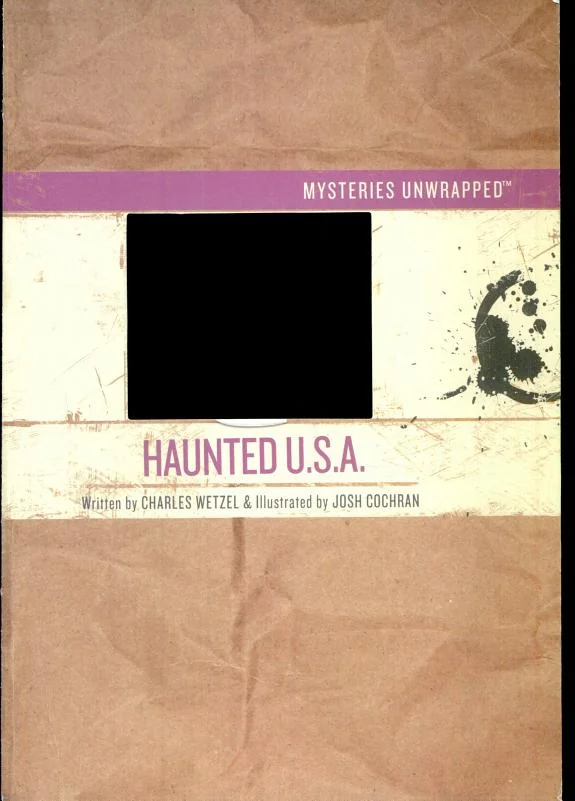
Haunted U.S.A.
 75
75

Haunted U.S.A.
Charles Wetzel's Haunted U.S.A. offers a catalog of spectral visitations, primarily focusing on their American manifestations. The strength of the work lies in its broad scope, touching upon diverse locations and historical periods, from the Civil War’s spectral echoes at Gettysburg to more contemporary urban legends. Wetzel’s approach is largely that of a collector, presenting narratives without extensive theoretical framing, which allows the stories to speak for themselves. A notable limitation is the occasional lack of deep critical analysis; the focus remains on recounting the alleged events. The description of the ‘crawling statue’ in a Chicago cemetery, for instance, is vivid but leaves the reader wanting more context on its origins and the cultural impact of the legend itself. Despite this, the book serves as a useful repository for those interested in the breadth of American ghost lore.
Haunted U.S.A. is a serviceable survey for enthusiasts of American spectral narratives.
📝 Description
75
Charles Wetzel's 2008 book collects American ghost stories from battlefields to urban locales.
Haunted U.S.A. is a 2008 compilation of spectral accounts and paranormal occurrences across the United States. Charles Wetzel gathered reported hauntings, spanning historical sites and modern cities, drawing from folklore, local legends, and personal testimonies. The book emphasizes the narrative aspect of these phenomena, detailing each case to immerse the reader in the reported events. This volume suits readers interested in American folklore, local history with a supernatural dimension, and the cultural prevalence of ghost stories. It appeals to those who appreciate anecdotal evidence of the uncanny, especially within an American setting. Paranormal investigation enthusiasts, amateur historians looking for unusual narratives, and anyone curious about the stories that contribute to a nation's ghostly reputation will find material within its pages.
The collection situates itself within a long tradition of ghost lore, focusing specifically on manifestations within the United States. The early 21st century, when the book was published, saw continued popular interest in the paranormal. Wetzel's work taps into this fascination with the unseen, presenting a selection of tales that have become part of the American vernacular. The book touches on concepts of residual hauntings, intelligent hauntings, and poltergeist activity, using examples like the 'crawling statue' in Chicago to illustrate how local legends develop. It also considers how collective memory and trauma can be perceived as imprinting onto locations, leading to recurring spectral phenomena.
This book fits within the broader tradition of cataloging and investigating paranormal phenomena, a practice with roots in spiritualism and folklore studies. While not strictly academic, it engages with concepts common in ghost lore discussions, such as residual energy and intelligent hauntings. The focus on American settings places it within a national context of spectral narratives, reflecting a popular cultural interest in the afterlife and unexplained occurrences that has persisted for centuries.
💡 Why Read This Book?
• Learn about specific historical hauntings, such as the spectral soldiers reportedly seen at Gettysburg, gaining insight into how major historical events can fuel local legends. • Discover regional paranormal folklore, like the tale of a specific 'crawling statue' in a Chicago cemetery, offering a glimpse into localized supernatural beliefs. • Understand the variety of reported phenomena across the U.S. by examining diverse accounts, appreciating the scope of American ghost stories beyond well-known tales.
⭐ Reader Reviews
Honest opinions from readers who have explored this book.
❓ Frequently Asked Questions
What historical periods does Haunted U.S.A. cover?
The book spans various historical periods, notably including accounts from the Civil War era, such as those connected to Gettysburg. It also features stories from more recent times, showcasing the enduring nature of hauntings across different American epochs.
Are the stories in Haunted U.S.A. presented as factual?
The book collects and recounts alleged hauntings and paranormal occurrences. It presents these as reported stories and legends, allowing readers to draw their own conclusions about their veracity rather than asserting them as absolute fact.
What types of locations are featured in Haunted U.S.A.?
Locations range widely, from significant historical sites like battlefields (e.g., Gettysburg) to more mundane yet localized spots such as cemeteries, as exemplified by the story of a crawling statue in Chicago.
Who is the author Charles Wetzel?
Charles Wetzel is the author who first published Haunted U.S.A. in 2008, compiling a collection of American ghost stories and paranormal accounts.
Does Haunted U.S.A. offer explanations for the hauntings?
The primary focus is on presenting the narratives of the hauntings. While some accounts may hint at possible explanations within the story, the book generally emphasizes the reported phenomena rather than providing definitive, scientific, or philosophical explanations.
Is Haunted U.S.A. a scholarly work on parapsychology?
No, Haunted U.S.A. is not a scholarly work in the field of parapsychology. It is a collection of folklore and anecdotal accounts presented for popular interest in ghost stories and American legends.
🔮 Key Themes & Symbolism
Spectral Imprints of History
The work explores how significant historical events, such as the Battle of Gettysburg, are perceived to leave lingering spectral echoes. This theme posits that intense human experiences and collective trauma can imprint onto a location, manifesting as recurring ghostly phenomena. The collection examines these 'hauntings of history' as a way Americans engage with and memorialize their past, transforming battlefields and other sites of intense activity into repositories of spectral narratives that continue to be told and experienced.
Localized Folklore and Urban Legends
A substantial portion of Haunted U.S.A. focuses on spectral tales rooted in specific geographical areas, often evolving into local folklore or urban legends. The recurring motif of a 'crawling statue' in a Chicago cemetery exemplifies this, illustrating how a single, peculiar phenomenon can become a focal point for supernatural belief within a community. These stories highlight the power of place in shaping narratives of the uncanny and how communities develop unique spectral identities.
The American Ghostscape
This theme encompasses the broad spectrum of reported hauntings across the United States, constructing a mental map of America's spectral topography. Wetzel’s collection surveys diverse manifestations—from the spectral soldiers of Gettysburg to less defined apparitions—suggesting a widespread presence of the supernatural woven into the fabric of the nation. It reflects a cultural tendency to seek out and attribute paranormal significance to various locations, creating a unique 'ghostscape' that mirrors the nation's history and its people's anxieties.
Narrative Power of the Unexplained
The book underscores the compelling nature of unexplained phenomena and the stories that arise from them. Whether dealing with historical battlefields or specific cemetery legends, the power of the narrative itself is paramount. Wetzel presents these accounts in a manner that emphasizes their dramatic and mysterious qualities, showcasing how the very act of storytelling about the uncanny can perpetuate belief and cultural fascination with the spectral realm.
💬 Memorable Quotes
“The spectral soldiers of Gettysburg are said to march still.”
— This highlights the enduring nature of hauntings tied to historical conflict. It suggests that the intense energy of the Battle of Gettysburg has supposedly imprinted itself on the landscape, leading to continuous reports of ghostly apparitions.
“A peculiar statue in a Chicago cemetery is rumored to crawl.”
— This points to the development of highly specific, localized spectral legends. The 'crawling statue' serves as a singular, memorable image that anchors a particular haunting narrative within a specific place, becoming a fixture of local folklore.
“Reports of apparitions persist across the American landscape.”
— This statement emphasizes the widespread and varied nature of alleged hauntings throughout the United States. It suggests that spectral phenomena are not confined to isolated incidents but are a recurring element in the national consciousness and geography.
“Folklore often imbues locations with supernatural significance.”
— This interpretation suggests that the book explores how collective storytelling and belief systems attribute paranormal qualities to specific places, transforming ordinary locations into sites of alleged ghostly activity.
“The book collects tales of hauntings from Civil War sites to urban graveyards.”
— This concisely frames the scope of the collection, indicating a broad range of settings for reported supernatural events, from historically charged battlefields to more modern, localized settings like cemeteries.
🌙 Esoteric Significance
Tradition
While Haunted U.S.A. is not explicitly framed within a specific esoteric tradition like Hermeticism or Kabbalah, it taps into a broader, more diffuse spiritualist and folkloric current present in Western esotericism. The collection's focus on residual energies and hauntings can be seen as a form of popular engagement with concepts of psychic residue or imprints, a theme explored in various occult and metaphysical circles. It represents a lay exploration of what might be termed 'geopsychic phenomena,' where the emotional or energetic imprints of past events are believed to manifest in the present, a concept that finds echoes in more structured esoteric teachings on the nature of consciousness and its interaction with the physical world.
Symbolism
The book indirectly engages with symbolism through its focus on specific locations and recurring motifs. Battlefields like Gettysburg, for instance, become potent symbols of collective trauma, sacrifice, and lingering conflict, where the spectral soldiers represent unresolved energies. A 'crawling statue' in a cemetery serves as a symbol of localized grief, memory, or perhaps a more sinister presence tied to a specific burial or event. These are not codified symbols with fixed meanings but rather potent images that draw their significance from the narratives and historical contexts Wetzel presents, acting as focal points for the spectral energy attributed to them.
Modern Relevance
In contemporary occult and metaphysical circles, books like Haunted U.S.A. continue to be relevant as sources of anecdotal evidence and inspiration for exploring concepts of psychogeography and place-based spirituality. While not a primary text for formal esoteric study, it provides accessible narratives that resonate with modern practitioners interested in the energetic imprints of locations and historical events. Thinkers and groups exploring residual hauntings, earthbound spirits, or the energetic residue of trauma might find the book's catalog of American hauntings a useful reference for understanding common archetypes and narratives in this domain.
👥 Who Should Read This Book
• Enthusiasts of American history and folklore seeking supernatural connections, who will gain a broader understanding of how spectral legends are interwoven with national historical events. • Amateur paranormal investigators and researchers interested in diverse case studies, who can use the book as a source for exploring reported phenomena in various U.S. locations. • Readers of ghost stories looking for a collection focused on American lore, who will appreciate the breadth of tales presented, from historical battlefields to specific urban legends.
📜 Historical Context
Published in 2008, Charles Wetzel's Haunted U.S.A. emerged during a period of sustained popular interest in the paranormal, a trend amplified by reality television and online communities dedicated to ghost hunting. This era saw a confluence of burgeoning digital platforms for sharing anecdotal evidence and a continued fascination with local history as a source for supernatural narratives. Wetzel's work fits within a broader tradition of American ghost lore that gained traction in the 20th century, building upon earlier compilations and journalistic accounts. While not directly engaging with academic discourse on folklore or parapsychology, the book reflects the cultural appetite for stories that blend history with the uncanny. It appeared in a landscape where authors like Loreena McKennitt, though primarily a musician, were exploring historical folklore, and ghost tourism was becoming a significant niche industry, demonstrating a public desire to connect with the past through its spectral legends. The reception was primarily within popular culture, catering to enthusiasts rather than academic circles.
📔 Journal Prompts
The spectral soldiers of Gettysburg's enduring presence.
The narrative power of the crawling statue in Chicago.
How historical events manifest as spectral imprints.
The geographic distribution of American hauntings.
The role of folklore in attributing supernatural significance to places.
🗂️ Glossary
Haunting
The alleged manifestation of spirits or paranormal phenomena in a specific location, often attributed to past events or inhabitants. This can range from apparitions to unexplained noises and sensations.
Spectral Soldiers
Refers to reported apparitions of deceased soldiers, particularly those from historical conflicts like the American Civil War, often seen at significant battle sites such as Gettysburg.
Crawling Statue
A specific, localized legend featured in the book concerning a statue in a Chicago cemetery that is rumored to move or 'crawl,' representing a unique form of urban spectral lore.
Folklore
The traditions, beliefs, customs, and stories of a community, passed down through generations, often including legends, myths, and supernatural tales.
Residual Haunting
A type of haunting theorized to be an energetic imprint of past events or emotions replaying themselves, rather than an interactive spirit. The spectral soldiers at Gettysburg could be an example.
Urban Legend
A modern form of folklore, typically a sensational story circulated as true, often with a supernatural or cautionary element, such as the crawling statue.
American Ghostscape
A conceptual term referring to the collection of reported paranormal sites and spectral narratives across the United States, forming a kind of ghostly geography.