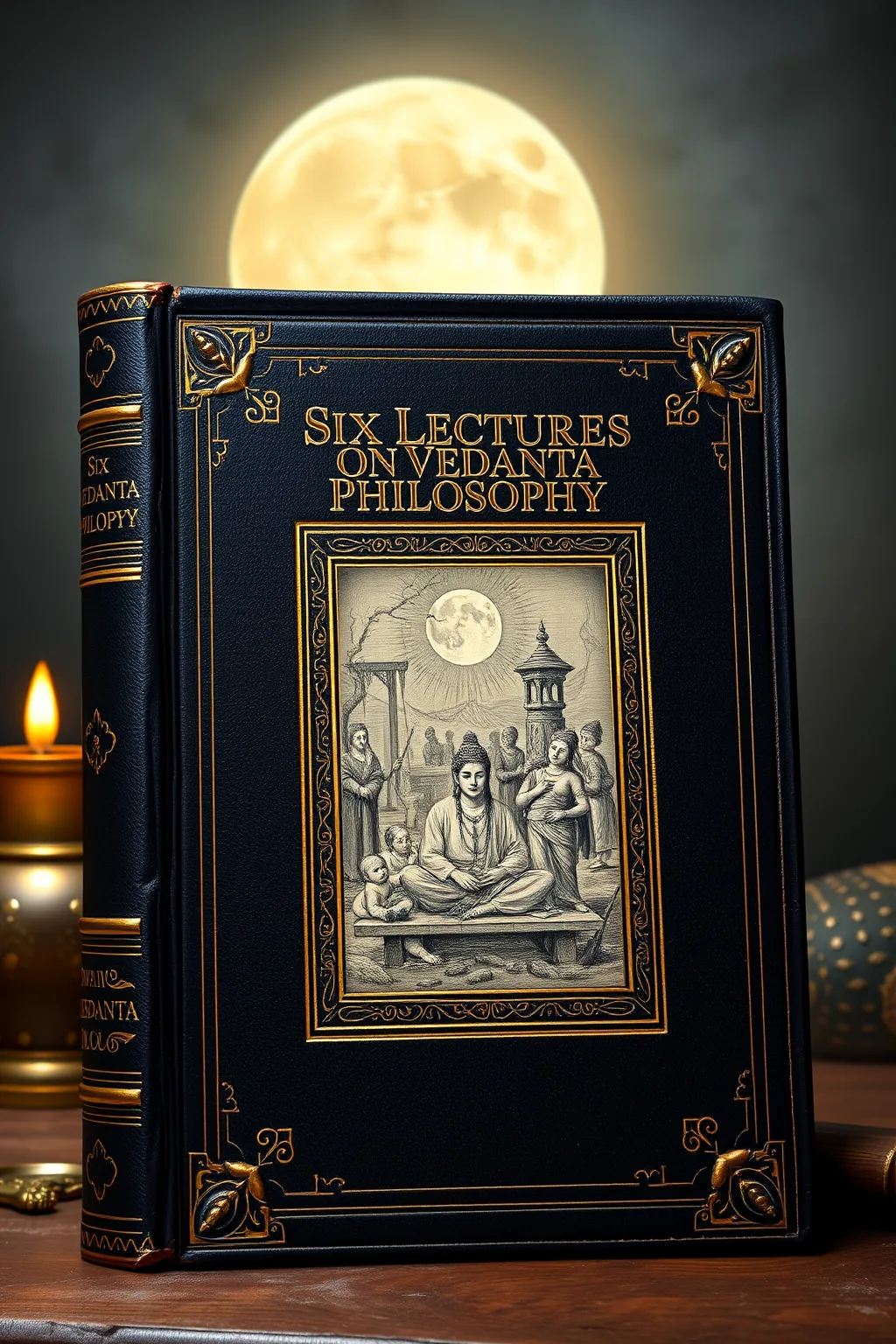
Six Lectures on Vedanta Philosophy
 84
84

Six Lectures on Vedanta Philosophy



Silas Hawthorne (Hermetic Studies Editor) — Swami Abhedananda's "Six Lectures on Vedanta Philosophy" stands as a beacon for serious students of the esoteric. Abhedananda, a direct disciple of Sri Ramakrishna, possesses an unparalleled ability to distill the profound teachings of Vedanta into comprehensible yet potent spiritual nourishment. These lectures delve into the core of self-realization, exploring the nature of the Absolute, the illusion of the phenomenal world, and the path to liberation. The strength lies in his direct, unvarnished presentation of these ancient truths, offering genuine insight into the mechanics of consciousness and the unified nature of reality. An essential read for scholars and practitioners alike seeking to understand the deeper currents of spiritual evolution.
📝 Description
84
Swami Abhedananda delivered these six lectures on Vedanta Philosophy in the early 20th century.
Swami Abhedananda's "Six Lectures on Vedanta Philosophy" presents key Vedantic concepts drawn from Hindu traditions. The lectures address the nature of good and evil, examining morality from a philosophical standpoint. Another lecture, "The Word and the Cross in Ancient India," explores connections between spiritual symbols across different cultures, suggesting a shared spiritual foundation.
The book also covers "Divine Com," which focuses on awakening inner consciousness and recognizing one's inherent divinity. Abhedananda explains complex ideas in a clear manner, aiming to guide those interested in spiritual truths. The collection is intended for individuals seeking to understand deeper aspects of consciousness and universal spiritual principles.
These lectures fit within the broader tradition of Advaita Vedanta, a school of Hindu philosophy that emphasizes the non-dual nature of reality. Swami Abhedananda, a disciple of Sri Ramakrishna, sought to present these teachings in a way accessible to Western audiences. His work connects Vedantic metaphysics with practical spiritual realization, aligning with esoteric interests in consciousness and the underlying unity of existence. The lectures engage with themes common in perennial philosophy, seeking universal truths beyond specific religious doctrines.
✍️ Author
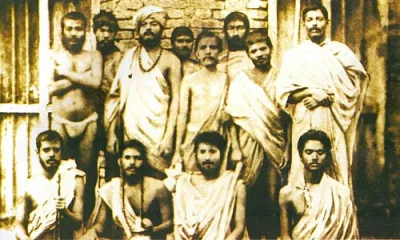
Swami Abhedananda
Swami Abhedananda was a disciple of Ramakrishna Paramahansa and founder of Ramakrishna Vedanta Math.
Mystic
💡 Why Read This Book?
This book offers a direct conduit to the profound wisdom of Vedanta, demystifying its core tenets. It's ideal for spiritual seekers, philosophical scholars, and practitioners aiming to deepen their understanding of consciousness, ethics, and the nature of reality. Abhedananda's clear exposition unveils hidden spiritual truths, making this a vital text for personal growth and intellectual exploration.
⭐ Reader Reviews
Honest opinions from readers who have explored this book.
❓ Frequently Asked Questions
What is Vedanta Philosophy?
Vedanta, meaning 'end of the Vedas,' is a foundational school of Hindu philosophy that explores the nature of reality, the self, and the universe through texts like the Upanishads, Bhagavad Gita, and Brahma Sutras. It seeks to understand the ultimate truth and the path to liberation.
Who was Swami Abhedananda?
Swami Abhedananda (1866-1939) was a prominent monastic disciple of Sri Ramakrishna Paramahamsa and a spiritual teacher who played a significant role in spreading Vedanta philosophy in the West, particularly in America and Europe.
What are the main themes explored in these lectures?
The lectures cover a wide range of topics including the nature of morality, comparative religion and symbolism, the concept of God, the path to spiritual realization, and the practical application of Vedantic principles in daily life.
Is this book suitable for beginners?
While profound, Abhedananda's teaching style is remarkably clear. Beginners can gain a solid foundational understanding of Vedanta, though deeper engagement will be richer with prior exposure to philosophical concepts.
What is the philosophical significance of Vedanta?
Vedanta offers a comprehensive worldview that addresses existential questions about life, death, and consciousness. Its emphasis on the unity of existence and the inherent divinity of the self has profound implications for ethics, psychology, and metaphysics.
🔮 Key Themes & Symbolism
The Unity of Existence (Brahman)
At the heart of Vedanta lies the concept of Brahman, the singular, all-pervading reality that underlies all phenomena. Swami Abhedananda elucidates how this ultimate oneness is the foundation of all existence, transcending individual consciousness and the material world. Understanding Brahman is key to dissolving the illusion of separateness, a core esoteric teaching that leads to liberation and the realization of one's true, divine nature. This theme challenges conventional perceptions of reality, urging readers to look beyond the superficial to the underlying unity that binds everything.
The Nature of the Self (Atman)
The lectures meticulously explore the concept of Atman, the true Self, which is identical with Brahman. Abhedananda guides readers to differentiate the eternal, unchanging Atman from the transient ego and the physical body. This esoteric understanding of the Self is crucial for spiritual awakening, as it reveals that our deepest identity is not bound by the limitations of mortality or worldly experience. Through introspection and philosophical inquiry, the book offers pathways to recognize this indwelling divinity and the freedom it bestows, moving beyond the veils of ignorance.
The Path to Liberation (Moksha)
Swami Abhedananda presents various paths and practices aimed at achieving Moksha, or spiritual liberation. This involves transcending the cycle of birth and death by realizing the truth of the Self and its unity with the Absolute. The lectures touch upon Jnana Yoga (the path of knowledge), Bhakti Yoga (the path of devotion), and Karma Yoga (the path of selfless action) as means to purify the mind and unveil the inherent spiritual nature. The esoteric goal is the cessation of suffering and the attainment of eternal bliss through direct experience of reality.
💬 Memorable Quotes
Direct passages from the work, attributed to the author.
“The universe is the manifestation of the Absolute.”
— This statement captures the Vedantic idea that all reality, from the smallest atom to the grandest galaxy, originates from and is sustained by a single, divine source.
“Know thyself, and thou shalt know God.”
— This profound aphorism highlights the core Vedantic tenet that self-realization is the direct path to understanding the divine, suggesting that the divine is not external but inherent within us.
“Morality is the foundation of all spiritual growth.”
— This underscores the ethical dimension of spiritual development, suggesting that virtuous conduct and ethical understanding are prerequisite steps for deeper spiritual insights and progress.
💡 Key Ideas
Editorial paraphrase of the work's core concepts — not direct quotes.
The goal of life is to realize our divine nature.
This quote emphasizes the inherent divinity within every individual, positioning spiritual practice as the means to awaken and experience this innate, eternal essence.
Truth is one, though the wise call it by different names.
A classic expression of religious pluralism, this quote points to the underlying unity of ultimate reality, suggesting that diverse spiritual paths lead to the same essential truth.
🌙 Esoteric Significance
Tradition
Vedanta, particularly Advaita Vedanta, is deeply rooted in the esoteric traditions of Hinduism, drawing from the ancient Upanishads. Its core teachings on the non-duality of existence (Brahman and Atman), the illusory nature of the phenomenal world (Maya), and the path to liberation (Moksha) represent a sophisticated system of metaphysical inquiry and spiritual practice aimed at direct realization of ultimate truth.
Symbolism
The lectures touch upon significant symbolism, such as the 'Word' and 'Cross' in ancient India, hinting at universal archetypes and cross-cultural spiritual resonances. These symbols are not merely decorative but serve as keys to unlocking deeper layers of meaning within spiritual texts and practices, pointing towards the underlying unity of divine expression across diverse traditions.
Modern Relevance
In an age often characterized by fragmentation and existential questioning, Vedanta's message of unity and the inherent divinity within each individual offers a powerful antidote. The principles discussed by Abhedananda provide timeless guidance for cultivating inner peace, ethical living, and a profound understanding of one's place in the cosmos, making these lectures profoundly relevant for contemporary spiritual seekers.
👥 Who Should Read This Book
This profound collection is a treasure for a diverse audience. **Spiritual Seekers** will find a clear roadmap to understanding the fundamental principles of Vedanta and the path to self-realization. **Scholars of Comparative Religion and Philosophy** will appreciate the rigorous intellectual exposition and the historical context of Vedantic thought. **Practitioners** of meditation and yoga will discover deeper philosophical underpinnings for their practices, enhancing their journey towards inner transformation. Even **beginners** curious about Eastern spirituality will find Abhedananda's clear and accessible explanations important for grasping complex metaphysical concepts.
📜 Historical Context
Published in the early 20th century, Swami Abhedananda's lectures emerged during an important era of burgeoning East-West spiritual exchange. Theosophy and the burgeoning interest in Eastern philosophies had paved the way for figures like Swami Vivekananda and his disciples to introduce Vedanta to Western audiences. This period saw a significant intellectual and spiritual curiosity about Indian traditions, often viewed as offering a profound counterpoint to the materialism and rationalism prevalent in Western thought. Abhedananda's work contributed significantly to this dialogue, presenting the sophisticated philosophical and spiritual insights of Vedanta in a manner accessible to a Western readership, thereby influencing not only spiritual seekers but also academic philosophical discourse.
📔 Journal Prompts
Reflect on the concept of Brahman. How does the idea of a singular, all-pervading reality challenge your current understanding of existence?
Consider the distinction between the true Self (Atman) and the ego. What practices can you engage in to weaken the identification with the ego?
In 'The Philosophy of Good and Evil,' what ethical frameworks are presented, and how do they align with or diverge from your own moral compass?
How does the symbolism discussed in 'The Word and the Cross in Ancient India' resonate with your personal spiritual experiences or understandings?
What practical steps can you take to 'realize your divine nature' in your daily life, as suggested by the core tenets of Vedanta?
🗂️ Glossary
Brahman
The ultimate, unchanging reality or absolute consciousness that is the source and sustainer of all existence in Vedantic philosophy. It is considered the one without a second, encompassing all that is.
Atman
The individual soul or self. In Advaita Vedanta, Atman is identical with Brahman, representing the true, eternal, and unchangeable essence of a being, beyond the physical body and mind.
Maya
An illusion or cosmic deception that makes the unreal appear real. In Vedanta, Maya is the power that veils the true nature of Brahman and creates the appearance of a multiplicity of phenomena and individual selves.
Moksha
Liberation or release from the cycle of birth, death, and rebirth (samsara). It is the ultimate spiritual goal in Hinduism, achieved through the realization of one's true nature and oneness with Brahman.
Upanishads
A collection of ancient Sanskrit texts that contain some of the central philosophical concepts and ideas of Hinduism, forming the theoretical basis of Vedanta philosophy. They are also known as Vedanta, meaning 'the end of the Vedas'.
This book appears in 4 collections
🔮 Readers Also Liked
Browse all →








More by Swami Abhedananda
All books →




![Vedanta Philosophy Self-knowledge [atma-jnana]](/img/thumb/vedanta-philosophy-self-knowledge-atma-jnana-swami-abhedananda-114980.webp)
From the “Transcendental Meditation” Collection
View all →

![Aloysii Charitini [pseud.] Discurs von trüglichen Kennzeichen der Zauberey, worinnen viel abergläubische Meinungen vernunfftmässig untersucht und verworffen; wie auch ... 1708: Iss 174](/img/thumb/aloysii-charitini-pseud-discurs-von-tr-glichen-kennzeichen-der-zauberey-worinnen-viel-abergl-ubische-meinungen-vernunfftm-ssig-untersucht-und-verworffen-wie-auch-1708-iss-174-brunneman-jacob-d-1735.webp)







More Free Spiritual Development Books
View all →