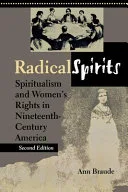
Radical Spirits, Second Edition
 72
72

Radical Spirits, Second Edition
Ann Braude’s "Radical Spirits" offers a compelling re-evaluation of the symbiotic relationship between 19th-century Spiritualism and the women’s rights movement. The second edition builds upon its original 2001 publication, maintaining its strong argument that Spiritualism provided fertile ground for feminist emergence. Braude skillfully demonstrates how the movement’s emphasis on direct spiritual experience and the perceived equal access of women to the spirit world empowered female voices in ways that conventional religion and politics did not. The work’s strength lies in its detailed archival research, illuminating the lives and contributions of often-overlooked figures.
A point of consideration is that while the book convincingly links Spiritualism to women’s rights, some readers might desire a deeper exploration of the theological underpinnings of Spiritualist beliefs themselves, beyond their functional role in feminist activism. Braude’s analysis of how women like Emma Hardinge Britten or Victoria Woodhull leveraged Spiritualism for social reform is particularly illuminating, showcasing a specific passage where Britten’s public lectures are analyzed as direct challenges to Victorian gender norms.
Read more ↓
Ultimately, "Radical Spirits" remains a pivotal study for understanding the complex spiritual and social currents that fueled early feminism.
📝 Description
72
Ann Braude's Radical Spirits argues Spiritualism gave early feminists a vital platform.
Ann Braude's Radical Spirits, Second Edition, examines the close relationship between 19th-century American Spiritualism and the women's rights movement. Braude contends these two forces were not just concurrent but fundamentally linked, with Spiritualism offering a spiritual and social structure that supported early feminist efforts. The book details how women, often excluded from established religious and political circles, found their voices and agency through spiritual communication and reform activities.
The work is situated within the dynamic reform era of the mid-to-late 19th century, a period marked by significant debates on abolition, temperance, and women's suffrage. The rise of Spiritualism, beginning around 1848 with the Fox sisters, is presented against the backdrop of these social contests. Braude highlights how the Spiritualist movement's acceptance of women's spiritual authority stood in contrast to the more traditional religious and social institutions of the time. The book focuses on "radical spirits"—women who challenged conventional roles by channeling spirits, advocating for social change, and asserting spiritual authority.
Radical Spirits places itself within the 19th-century surge of Spiritualism, a movement that claimed direct communication with the deceased and spirit guides. This esoteric tradition offered women an alternative to patriarchal religious structures, allowing them to claim spiritual authority and public roles. Through mediums, trance speakers, and séances, Spiritualism provided a framework for challenging established social and religious norms, directly influencing broader reform efforts like women's suffrage and abolition.
💡 Why Read This Book?
• Gain insight into the specific ways 19th-century Spiritualism provided a platform for women's activism, challenging patriarchal religious and social structures, as detailed in the analysis of mediums before 1870. • Understand the concept of "radical spirits" and how women utilized spiritualist practices to assert agency and advocate for social change, a core theme explored throughout the book. • Discover the historical connections between spiritual movements and political reform, learning how Spiritualism directly influenced the discourse and actions of early women's rights advocates, referencing the movement's origins around 1848.
⭐ Reader Reviews
Honest opinions from readers who have explored this book.
❓ Frequently Asked Questions
What is the central argument of Ann Braude's Radical Spirits?
The book argues that the 19th-century Spiritualist movement and the early women's rights movement were deeply interconnected, with Spiritualism offering a crucial spiritual and social space for women to develop agency and advocate for reform.
Who were some key figures discussed in Radical Spirits?
Ann Braude discusses figures such as Emma Hardinge Britten and Victoria Woodhull, highlighting their roles as Spiritualist mediums and activists within the women's rights movement.
When did the Spiritualist movement gain prominence?
The Spiritualist movement gained significant prominence in the mid-19th century, particularly following the alleged communications of the Fox sisters starting around 1848.
How did Spiritualism empower women in the 19th century?
Spiritualism empowered women by allowing them to occupy public roles as mediums and speakers, challenging traditional gender roles and claiming spiritual authority outside patriarchal religious structures.
What is the significance of the second edition of Radical Spirits?
The second edition makes Ann Braude's influential scholarship accessible to a new generation of readers, reinforcing its importance in understanding the historical links between spiritualism and feminism.
What social reforms were influenced by Spiritualism?
Spiritualism influenced various social reforms, including women's rights, abolition, and temperance, by providing a spiritual justification and a communal base for activists.
🔮 Key Themes & Symbolism
Spiritualism as Feminist Catalyst
Braude posits that the Spiritualist movement served as a powerful incubator for early feminist thought and action. By providing women with a public platform as mediums and speakers, it allowed them to bypass traditional religious and social constraints. The perceived direct access to the divine and the spirit world offered women an unprecedented spiritual authority, enabling them to articulate demands for equality in both religious and secular spheres. This theme underscores how a spiritual phenomenon became intrinsically linked to political and social liberation.
Women's Agency in Reform
The work meticulously details how women leveraged Spiritualist practices to gain personal and collective agency. Through trance speaking, automatic writing, and spirit communication, women asserted their voices in public discourse, challenging the notion of female intellectual or spiritual inferiority. This theme examines the practical application of spiritual beliefs to effect social change, demonstrating how these "radical spirits" actively participated in and often led reform movements, pushing for suffrage, temperance, and other social justice causes.
Challenging Patriarchal Structures
A core argument revolves around Spiritualism's direct challenge to established patriarchal hierarchies. In a society where women's roles were narrowly defined, Spiritualism offered an alternative cosmology where women's spiritual capacities were not only recognized but celebrated. Braude illustrates how this spiritual subversion translated into tangible critiques of legal, social, and religious institutions that oppressed women, thereby redefining the boundaries of acceptable female behavior and public participation.
The Interplay of Religion and Politics
This theme explores the dynamic relationship between religious innovation and political activism in 19th-century America. Braude demonstrates that Spiritualism was not merely a religious curiosity but a significant social force that intersected with and influenced political reform movements. The book highlights how spiritual beliefs could provide the ideological framework and motivational impetus for political engagement, particularly for marginalized groups seeking to reshape society.
💬 Memorable Quotes
Direct passages from the work, attributed to the author.
“The early women’s rights movement and Spiritualism went hand in hand.”
— This statement captures Braude's central thesis, asserting a deep, inseparable connection between the two movements, challenging prior historical interpretations that may have viewed them as separate phenomena.
“Spiritualism provided a spiritual and social framework for early feminist activism.”
— This highlights the functional role of Spiritualism, suggesting it offered the necessary ideological and community support structures that enabled women to engage actively in the fight for their rights.
“Women found a voice and agency through spiritual communication and reform efforts.”
— This emphasizes the empowering aspect of Spiritualism for women, illustrating how engaging with spirits and participating in reforms granted them a public voice and a sense of personal efficacy.
“The controversy surrounding Spiritualism often centered on its perceived threat to traditional gender roles.”
— This points to the societal resistance faced by Spiritualism, particularly because its embrace of female spiritual authority directly challenged Victorian norms and patriarchal religious establishments.
“Radical Spirits argues for the importance of women’s creativity—spiritual as well as political.”
— This interpretation underscores Braude's focus on the complex nature of women's contributions, recognizing their spiritual insights and creative expression as integral to their political activism.
🌙 Esoteric Significance
Tradition
While not strictly adhering to a single lineage like Hermeticism or Kabbalah, "Radical Spirits" engages with the broader currents of alternative spiritualities and proto-New Age movements. It examines a form of practical, immanent spirituality that diverged significantly from orthodox Christianity. Its focus on direct experience, channeling, and the perceived equality of spiritual access aligns it with traditions emphasizing inner revelation and the divine feminine, departing from hierarchical mystical structures.
Symbolism
The concept of the "spirit" itself functions as a potent symbol, representing liberation from earthly constraints and a connection to a higher, more equitable reality. The act of "channeling" symbolizes the reclaiming of voice and authority by women, turning a perceived passive state into an active assertion of power. The home, particularly as a site for domestic séances, becomes a symbolic space where traditional gender roles are inverted, and spiritual authority resides within the feminine sphere.
Modern Relevance
Contemporary movements focusing on ecofeminism, embodied spirituality, and the divine feminine draw implicitly on the historical precedents explored in "Radical Spirits." Thinkers and practitioners interested in alternative religious histories, the intersection of spirituality and social justice, and the reclaiming of marginalized spiritual traditions find resonance in Braude's work. It provides a historical foundation for understanding how spiritual frameworks can be actively employed for social and personal transformation today.
👥 Who Should Read This Book
• Scholars of American Religious History and Gender Studies: Gain a nuanced understanding of how Spiritualism shaped early feminist discourse and provided a unique platform for women's public engagement. • Students of Social Movements: Learn how spiritual beliefs and practices can serve as powerful catalysts for political and social reform, particularly for marginalized groups. • Enthusiasts of 19th-Century American Culture: Explore the complex interplay of religion, social change, and gender roles during a key era, uncovering the contributions of often-overlooked female activists.
📜 Historical Context
Ann Braude’s "Radical Spirits" emerged in 2001, offering a vital reassessment of the mid-to-late 19th-century American reform landscape. This era, marked by intense social ferment around abolition, temperance, and women's suffrage, also witnessed the dramatic rise of Spiritualism, a movement that gained widespread attention following the Fox sisters' alleged communications in Hydesville, New York, around 1848. Braude directly engages with the scholarship of historians like Jon Butler, who have explored the broader religious landscape, by demonstrating how Spiritualism provided a unique spiritual and social sanctuary for women seeking agency. Unlike more conservative religious denominations, Spiritualism often elevated women to positions of spiritual authority, allowing them to speak publicly and influence reform efforts. The work implicitly contrasts with the more institutionalized, often male-dominated, political movements of the time by highlighting the grassroots, spiritually-driven activism of women within Spiritualism. The book's reception underscored its significance in connecting previously disparate fields of study.
📔 Journal Prompts
The concept of "radical spirits" and its manifestation in 19th-century women's activism.
Women's agency through spiritual communication as depicted in the text.
The specific ways Spiritualism challenged patriarchal religious structures.
The connection between Spiritualism and the broader women's rights movement.
The role of creativity, both spiritual and political, in women's reform efforts.
🗂️ Glossary
Spiritualism
A religious movement prominent in the mid-19th century, characterized by a belief in the ability to communicate with the spirits of the deceased, often through mediums.
Medium
An individual believed to have the ability to communicate with spirits, acting as an intermediary between the physical and spiritual realms.
Trance Speaking
A practice within Spiritualism where a medium enters a trance state and speaks messages purportedly from spirits, often delivering sermons or pronouncements.
Women's Rights Movement
A historical series of social and political movements advocating for the rights and equality of women, particularly active in the 19th and early 20th centuries.
Patriarchy
A social system in which males hold primary power and predominate in roles of political leadership, moral authority, social privilege, and control of property.
Agency
The capacity of individuals to act independently and make their own free choices, particularly within social and political contexts.
Reform Efforts
Organized attempts to improve a specific aspect of society, such as abolitionism, temperance, or women's suffrage, common in the 19th century.