On the Wings of Hope
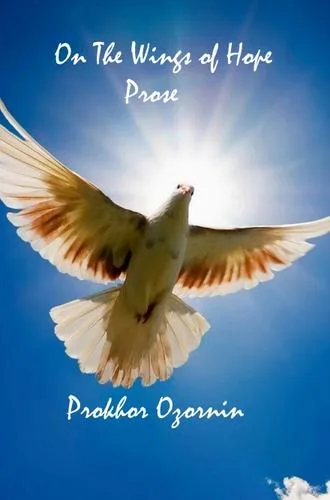
 78
78

On the Wings of Hope
Prokhor Ozornin’s 2012 work, 'On the Wings of Hope,' offers a considered, if somewhat dense, examination of inner fortitude. The strength of the book lies in its detailed exploration of the 'Labyrinth of Self,' providing a rich metaphorical framework for understanding personal struggles. Ozornin’s prose, while academic, is precise when dissecting the interplay between conscious intent and subconscious resistance. However, the book’s primary limitation is its abstract nature; readers seeking actionable techniques may find the theoretical discussions insufficient. A notable passage details the concept of 'psycho-spiritual alchemy,' wherein the author articulates how ordinary psychological states can be transmuted into spiritual insight, a complex idea that could benefit from more concrete examples. Ultimately, 'On the Wings of Hope' serves as a valuable intellectual resource for understanding the architecture of the spiritual quest, though its practical application remains largely for the reader to infer.
📝 Description
78
### What It Is 'On the Wings of Hope' by Prokhor Ozornin, first published in 2012, is an esoteric text exploring the nature of spiritual ascent and the psychological underpinnings of belief. It examines how internal narratives shape our perception of reality and offers methods for cultivating resilience and a sense of purpose. The work is less a prescriptive guide and more an analytical exploration of the human condition through a mystical lens.
### Who It's For This book is intended for readers engaged with personal development, comparative mythology, and philosophical inquiry. Those interested in the intersection of psychology and spirituality, particularly how individuals process adversity and find meaning, will find resonance. It is suitable for those who appreciate detailed symbolic analysis and theoretical exploration over practical, step-by-step instructions.
### Historical Context Emerging in 2012, the book arrived during a period of heightened interest in Jungian psychology, mindfulness practices, and alternative spiritualities. Ozornin's work can be seen as engaging with the intellectual currents that followed the New Age movement, offering a more grounded, less sensationalist approach to inner transformation. Its publication predates the significant surge in digital spiritual communities and the widespread accessibility of esoteric knowledge online, placing it within a specific phase of contemporary esoteric publishing.
### Key Concepts The text delves into concepts such as 'psycho-spiritual alchemy,' the transformation of base psychological energies into higher spiritual awareness. It introduces the 'Labyrinth of Self,' a symbolic representation of the intricate inner journey through personal challenges. Another significant theme is the 'Whispering Guides,' which represent intuitive insights and subtle spiritual communications that assist the seeker on their path.
💡 Why Read This Book?
• Gain an understanding of the 'Labyrinth of Self,' a unique symbolic map of personal challenges, as detailed in Ozornin's 2012 text, offering a structured way to analyze your own inner journey. • Explore the concept of 'psycho-spiritual alchemy' to learn how psychological states can be transmuted into spiritual growth, a core tenet of the book's unique approach. • Discover the function of 'Whispering Guides' as a metaphor for intuitive development, providing a framework for recognizing and trusting inner wisdom specific to Ozornin's esoteric philosophy.
⭐ Reader Reviews
Honest opinions from readers who have explored this book.
❓ Frequently Asked Questions
What is the primary focus of Prokhor Ozornin's 'On the Wings of Hope'?
The book's primary focus is an esoteric exploration of spiritual ascent and the psychological foundations of belief. It examines how internal narratives shape our reality and offers methods for cultivating resilience and purpose, first published in 2012.
Is 'On the Wings of Hope' a practical self-help guide?
No, 'On the Wings of Hope' is more of an analytical and theoretical text. While it discusses methods for inner transformation, it's framed through symbolic and psychological exploration rather than providing step-by-step instructions.
What historical period influenced the writing of 'On the Wings of Hope'?
Published in 2012, the book reflects the intellectual climate of the time, marked by interest in Jungian psychology, mindfulness, and a more grounded approach to spirituality compared to earlier New Age trends.
What does the 'Labyrinth of Self' represent in the book?
The 'Labyrinth of Self' is a key concept and symbolic representation within 'On the Wings of Hope' illustrating the intricate and often challenging inner journey an individual undertakes through their personal struggles and growth.
Are there specific esoteric traditions referenced in 'On the Wings of Hope'?
While not strictly adhering to one tradition, the book draws upon elements that echo Hermetic principles and Jungian archetypes. It discusses psycho-spiritual alchemy, a concept with roots in older alchemical traditions, reinterpreted for psychological application.
Who is Prokhor Ozornin?
Prokhor Ozornin is the author of 'On the Wings of Hope,' an esoteric work first published in 2012. Information about his broader background or other works is limited, positioning him as a focused voice within contemporary esoteric literature.
🔮 Key Themes & Symbolism
Psycho-Spiritual Alchemy
This theme posits that the raw energies of the psyche, often perceived as base or problematic, can be transmuted into higher spiritual awareness. Ozornin suggests that through conscious effort and symbolic understanding, individuals can refine their psychological makeup, akin to the alchemical process of transforming base metals into gold. This involves recognizing and working with one's shadow aspects and emotional patterns as integral components of spiritual growth, rather than impediments.
The Labyrinth of Self
Ozornin employs the metaphor of a labyrinth to describe the intricate and often winding path of self-discovery. This concept highlights that the journey inward is rarely linear; it involves detours, moments of confusion, and the need for careful navigation. Each turn and dead end within the labyrinth represents a psychological challenge or an opportunity for deeper self-understanding, emphasizing the complexity and cyclical nature of personal development.
Whispering Guides
This theme addresses the subtle, intuitive communications that arise from the deeper self or a guiding intelligence. 'Whispering Guides' are not external entities in a conventional sense, but rather the inner voice of intuition, synchronicity, and profound insight. Ozornin encourages readers to attune themselves to these subtle promptings as essential companions and signposts on the path of spiritual ascent, distinguishing them from louder, more conscious thoughts.
Resilience and Purpose
The book explores how understanding and navigating one's inner world directly contributes to building psychological resilience. By engaging with concepts like the Labyrinth of Self and psycho-spiritual alchemy, individuals can develop a more robust sense of purpose, even amidst adversity. The text suggests that a well-understood inner landscape provides a stable foundation from which to face external challenges and live a more meaningful life.
💬 Memorable Quotes
“The path inward is not a straight line, but a complex weave of experience.”
— This statement captures the essence of the 'Labyrinth of Self' concept, emphasizing that personal growth and spiritual seeking are rarely direct or simple. It suggests that confusion and apparent setbacks are integral parts of the journey, requiring patience and self-awareness to navigate.
“Transmuting base emotions is the true work of the inner alchemist.”
— This paraphrased concept highlights the core of 'psycho-spiritual alchemy.' It suggests that the transformative power lies not in denying or suppressing difficult emotions, but in understanding and refining them into constructive spiritual energy.
“Listen for the quiet promptings; they are the compass of the soul.”
— This quote underscores the significance of 'Whispering Guides.' It encourages readers to pay attention to subtle intuitions and inner knowing, framing these as vital directional forces for spiritual progress and self-understanding.
“Adversity is merely the forge upon which resilience is shaped.”
— This reflects the theme of resilience and purpose. It frames challenging circumstances not as obstacles to be avoided, but as essential conditions for developing inner strength and fortitude, akin to metal being shaped by fire.
“Purpose is not found, but cultivated from the seeds of inner understanding.”
— This idea connects self-knowledge with the development of purpose. It suggests that a meaningful life arises organically from a deep understanding of one's inner landscape, rather than being an external goal to be achieved.
🌙 Esoteric Significance
Tradition
The work draws from a broad esoteric milieu, with strong resonances of Hermetic philosophy and Jungian psychology. It engages with the concept of alchemical transformation, reinterpreting it through a psychological lens, which aligns with the Hermetic principle of 'As Above, So Below.' While not strictly Gnostic, it shares an emphasis on inner knowledge and the overcoming of internal limitations. Ozornin's approach departs from more dogmatic traditions by focusing on the universal psychological architecture of the spiritual quest.
Symbolism
Key symbols include the 'Labyrinth of Self,' representing the intricate and non-linear path of inner exploration, replete with challenges and revelations. 'Psycho-spiritual alchemy' is another central motif, symbolizing the transmutation of base psychological energies into higher spiritual awareness, akin to the alchemical transformation of metals. The 'Whispering Guides' symbolize intuitive insights and subtle spiritual communications that aid the seeker, acting as inner compasses.
Modern Relevance
Contemporary practitioners of depth psychology and transpersonal psychology find value in Ozornin's work for its sophisticated symbolic language. Thinkers exploring modern archetypal psychology and those interested in integrating psychological healing with spiritual development often reference concepts like the Labyrinth of Self. The emphasis on inner resilience and purpose also resonates with current trends in mindfulness and contemplative practices that seek practical application in daily life.
👥 Who Should Read This Book
• Students of Jungian psychology and archetypal symbolism will benefit from the book's detailed exploration of the inner world and its symbolic language. • Individuals seeking to understand personal challenges and build psychological resilience can gain a structured framework through the 'Labyrinth of Self' metaphor. • Seekers interested in esoteric philosophy and the alchemical process, particularly as it applies to psychological transformation, will find Ozornin's unique perspective valuable.
📜 Historical Context
Prokhor Ozornin's 'On the Wings of Hope,' published in 2012, emerged during a period characterized by a growing interest in Jungian psychology and a more nuanced approach to spirituality, moving beyond the more overtly New Age trends of previous decades. The book's exploration of internal psychological processes and symbolic journeys aligns with a broader intellectual current that sought to integrate depth psychology with spiritual inquiry. While not directly engaging with a specific named contemporary author in its accessible form, its thematic concerns echo the work of figures like Robert Moore and Douglas Gillette, who explored archetypes and masculine psychology. The early 2010s also saw the burgeoning of online esoteric communities, making Ozornin's more text-based, analytical approach a distinct offering. The work can be seen as a response to a perceived need for rigorous, less sensationalized explorations of inner transformation.
📔 Journal Prompts
Reflect on your personal 'Labyrinth of Self' and the paths you've navigated.
Analyze how you might apply 'psycho-spiritual alchemy' to a current emotional challenge.
Identify a recent instance where 'Whispering Guides' may have offered subtle direction.
Consider how your current challenges could be a forge for developing resilience.
Explore the seeds of inner understanding you are cultivating for your sense of purpose.
🗂️ Glossary
Psycho-Spiritual Alchemy
The process of transforming base psychological energies, emotions, and thought patterns into higher spiritual awareness and insight, analogous to the alchemical transmutation of metals.
Labyrinth of Self
A symbolic metaphor representing the complex, non-linear, and often challenging journey of inner exploration, self-discovery, and spiritual growth.
Whispering Guides
Subtle, intuitive insights, promptings, or synchronicities that arise from the deeper self or a guiding intelligence, serving as indicators on the spiritual path.
Spiritual Ascent
The process of moving towards higher states of consciousness, greater self-awareness, and deeper spiritual understanding.
Inner Narrative
The internal stories, beliefs, and interpretations individuals use to make sense of themselves, their experiences, and the world around them.
Resilience
The capacity to recover quickly from difficulties; the ability to adapt well in the face of adversity, trauma, tragedy, threats, or significant sources of stress.
Purpose
The reason for which something is done or created or for which something exists; a strong sense of intention and direction in life.