Meditation
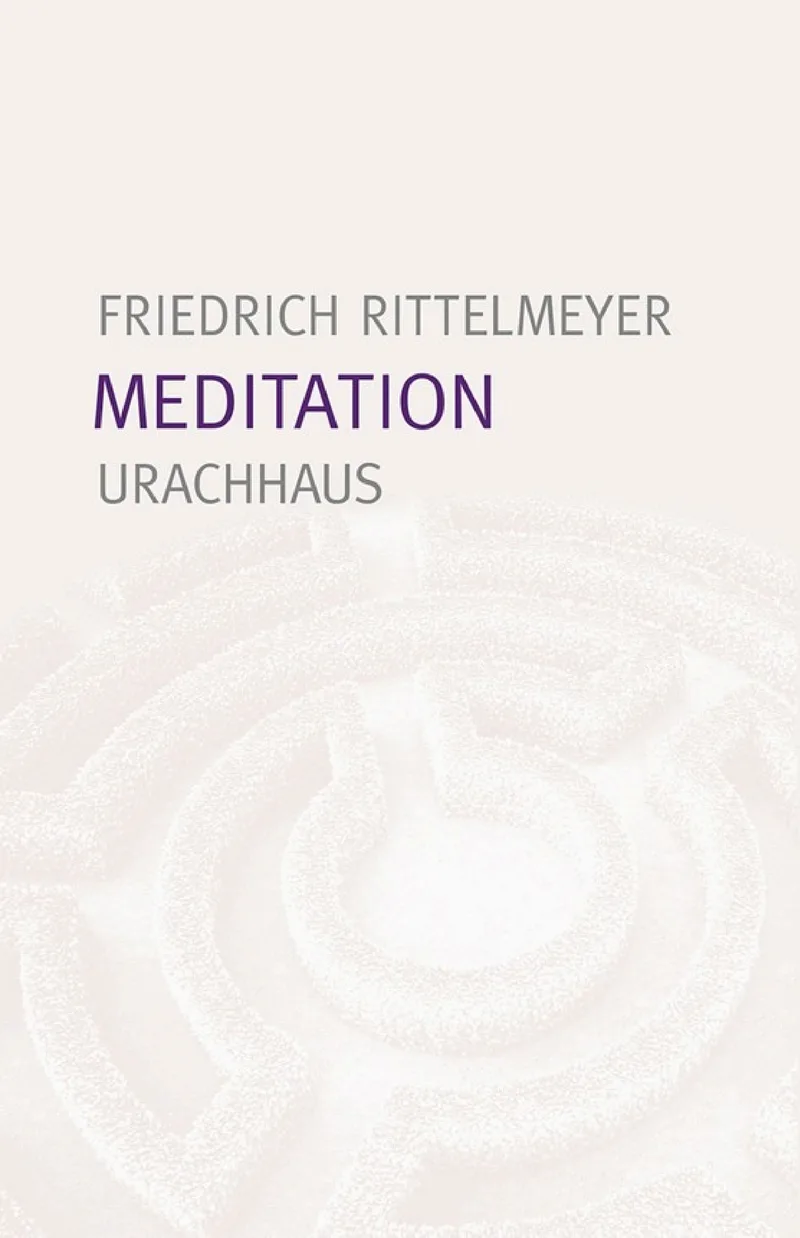
 72
72

Meditation
Friedrich Rittelmeyer's "Meditation" offers a unique exploration of inner work, moving beyond generic advice to present a deeply personal, yet structured, practice. The strength of the book lies in its direct engagement with the language of the Gospel of John, transforming familiar biblical passages into springboards for contemplative insight. This approach grounds the esoteric in a specific, recognizable framework, a departure from more abstract texts. However, the reliance on Rudolf Steiner's often complex terminology and worldview may present a significant barrier for readers unfamiliar with anthroposophy. A passage discussing the 'spiritual impulse' within the soul, while central to Rittelmeyer's method, requires substantial background knowledge to fully grasp its implications. Ultimately, "Meditation" is a valuable, albeit specialized, guide for those seeking to integrate spiritual contemplation with a specific, symbolically rich tradition.
📝 Description
72
Friedrich Rittelmeyer's 2018 book presents a personal meditation method through twelve letters.
Meditation by Friedrich Rittelmeyer articulates a personal path to meditative practice across twelve distinct letters. First published in 2018, the work draws inspiration from the Gospel of John and the teachings of Rudolf Steiner. It is structured as an individually adaptable approach to inner development. The volume targets individuals seeking a grounded path to understanding and cultivating their inner life. It appeals to those interested in anthroposophy, a spiritual philosophy from the early 20th century, and Christian mysticism. The book suits practitioners valuing a contemplative approach rooted in specific symbolic imagery and a clear letter-based structure. Rittelmeyer's method emerged within early 20th-century spiritual inquiry, influenced by Steiner's advocacy for spiritual science that merged empirical observation with inner exploration. Though published later, the letters reflect this lineage and the era's renewed interest in esoteric traditions.
Rittelmeyer's approach to meditation is situated within the spiritual scientific currents of early 20th-century European thought, particularly as developed by Rudolf Steiner. Steiner sought a 'spiritual science' that could be approached with disciplined inner work, bridging subjective experience and objective understanding. Rittelmeyer applies this orientation to the practice of meditation, using the symbolic narrative of John's Gospel as a framework. This intellectual lineage connects to movements that sought spiritual knowledge beyond purely materialist or conventional religious frameworks, emphasizing inner transformation through directed consciousness.
💡 Why Read This Book?
• Gain a structured, twelve-step approach to meditation directly inspired by the imagery of the Gospel of John, offering a unique way to engage with biblical text as a contemplative tool. • Understand the concept of the 'spiritual impulse' as described by Friedrich Rittelmeyer, providing a concrete internal focus for your meditative practice, as detailed in his letters. • Explore an anthroposophical method of meditation, informed by Rudolf Steiner's work, which can offer a distinct perspective for those interested in esoteric Christianity and inner development.
⭐ Reader Reviews
Honest opinions from readers who have explored this book.
❓ Frequently Asked Questions
What is the primary source of inspiration for Friedrich Rittelmeyer's meditation techniques?
Rittelmeyer's meditation path is primarily inspired by the symbolic language of the Gospel of John and the teachings of Rudolf Steiner, forming a core element of anthroposophical literature.
How many letters or sections are in Rittelmeyer's "Meditation"?
The book "Meditation" by Friedrich Rittelmeyer is structured as a series of twelve letters, each guiding the reader through aspects of an individually developed meditative path.
What is anthroposophy, and how does it relate to this book?
Anthroposophy is a spiritual philosophy founded by Rudolf Steiner. Rittelmeyer's "Meditation" is considered a foundational text within this tradition, applying its principles to practical meditative exercises.
When was Friedrich Rittelmeyer's "Meditation" first published?
Friedrich Rittelmeyer's "Meditation" was first published on June 7, 2018, making it a contemporary work that draws on earlier spiritual traditions.
Is this book suitable for beginners in meditation?
While it offers a clear structure, the book assumes some familiarity with or interest in anthroposophy and the specific symbolic language used, which may require additional study for absolute beginners.
What makes Rittelmeyer's approach to meditation unique?
Its uniqueness stems from Rittelmeyer's personal development of the practice, drawing directly from the Gospel of John and Steiner's insights to foster an inner spiritual impulse, as articulated in his twelve letters.
🔮 Key Themes & Symbolism
The Spiritual Impulse
Rittelmeyer posits an inner 'spiritual impulse' as the core of his meditative practice. This concept, central to the book's esoteric framework, suggests an inherent divine spark or guiding force within the individual soul. The letters guide the reader to recognize, cultivate, and consciously engage with this impulse. It is presented not as an abstract idea but as a palpable inner reality that can be awakened through specific contemplative exercises, drawing parallels with Steiner's ideas on spiritual development and inner perception.
Gospel of John as Contemplative Source
The work uniquely utilizes the Gospel of John as a primary source for meditative exploration. Rittelmeyer moves beyond traditional exegesis, viewing the narrative and symbolic language of John as a living guide for inner work. Specific verses and imagery are employed as catalysts for imaginative contemplation, aiming to unlock deeper spiritual understanding and experience. This approach integrates esoteric practice with a specific Christian text, offering a distinct path within contemplative traditions.
Anthroposophical Foundations
The book is deeply rooted in the principles of anthroposophy, a spiritual philosophy developed by Rudolf Steiner. Rittelmeyer's method of meditation is presented as an application of Steiner's insights into spiritual science, human consciousness, and the nature of the cosmos. The reader is encouraged to develop faculties of imagination, inspiration, and intuition, which are central to the anthroposophical path of self-knowledge and spiritual perception.
Personalized Meditative Practice
"Meditation" emphasizes the development of an individually tailored path rather than a one-size-fits-all technique. Through twelve structured letters, Rittelmeyer guides the reader to build their own practice based on their inner experiences and understanding. The goal is not rote repetition but the cultivation of a living, evolving relationship with one's inner spiritual life, informed by external guidance but ultimately personal.
💬 Memorable Quotes
Direct passages from the work, attributed to the author.
“An individually developed path of meditation.”
— This phrase captures the core offering of the book, highlighting its focus on a personal journey rather than a rigid, prescribed method. It suggests that the reader is invited to adapt the presented exercises to their unique inner landscape.
“Starting from the imagery of the Gospel of John.”
— This points to a specific source of inspiration and method. The book uses the symbolic language of John's Gospel as a foundation for contemplative practices, integrating biblical imagery into esoteric exercises.
“Drawing on suggestions from Rudolf Steiner.”
— This indicates the philosophical and spiritual underpinnings of the work. Steiner's teachings provide the framework and conceptual basis for Rittelmeyer's approach to meditation and inner development.
“The secret of the impulse.”
— This refers to a central theme: understanding and connecting with an inner spiritual driving force. Rittelmeyer's work aims to reveal how to access and work with this innate spiritual energy.
“A foundational work of anthroposophical literature.”
— This positions the book within a specific spiritual-philosophical tradition. It suggests that Rittelmeyer's contribution is significant for those studying or practicing anthroposophy.
🌙 Esoteric Significance
Tradition
This work belongs to the Western Esoteric tradition, specifically within the branch of Anthroposophy founded by Rudolf Steiner. It departs from more generalized meditation techniques by grounding its practice in Steiner's unique cosmology and Christology. While acknowledging Christian mysticism, it reframes scriptural elements, particularly from the Gospel of John, through an anthroposophical lens, emphasizing inner spiritual development and cosmic evolution.
Symbolism
Key symbols include the imagery from the Gospel of John, such as the 'Word' (Logos) and the spiritual 'light,' which Rittelmeyer uses to evoke inner states and spiritual realities. The concept of the 'spiritual impulse' itself acts as a core symbol for the latent divine potential within the human soul. These symbols are not merely decorative but serve as active focal points for contemplative practice, aiming to awaken specific spiritual faculties.
Modern Relevance
Rittelmeyer's approach continues to be relevant for contemporary practitioners of Anthroposophy and those interested in spiritual psychology. Thinkers and educators working within Waldorf education and biodynamic agriculture, fields directly influenced by Steiner, may find resonance. It offers a structured path for individuals seeking a more intellectually rigorous and symbolically rich form of meditation than is often found in secular mindfulness practices.
👥 Who Should Read This Book
• Students of Anthroposophy: Individuals seeking to deepen their understanding of Rudolf Steiner's teachings through practical application and a foundational text within the tradition. • Practitioners of Christian Esotericism: Those interested in exploring meditation techniques that are rooted in Christian scripture, specifically the Gospel of John, but approached from a non-traditional perspective. • Meditators Seeking Depth: Individuals who find standard mindfulness techniques insufficient and desire a more conceptually rich and symbolically layered approach to inner development.
📜 Historical Context
Friedrich Rittelmeyer's "Meditation," published in 2018, emerges from a rich lineage of esoteric thought heavily influenced by Rudolf Steiner (1861-1925). Steiner, the founder of anthroposophy, developed a comprehensive spiritual science that sought to bridge the empirical and the spiritual, deeply impacting early 20th-century intellectual circles. While Rittelmeyer's work is contemporary, its roots lie in this post-Theosophical movement that emphasized individual spiritual development through imaginative and intellectual means. The era following Steiner's death saw various figures interpret and apply his teachings, leading to diverse schools of thought within anthroposophy. Rittelmeyer's contribution can be seen as a modern articulation of Steiner's meditative and Christological impulses, offering a personal path within a well-established esoteric tradition. This work implicitly engages with broader Christian esoteric traditions, while distinctly focusing on the unique anthroposophical understanding of Christ and cosmic evolution.
📔 Journal Prompts
The nature of the 'spiritual impulse' within your own consciousness.
Reflecting on the specific imagery from the Gospel of John used in Letter X.
How the teachings of Rudolf Steiner inform your understanding of the 'Word'.
The development of individual meditative practice over the twelve letters.
Connecting the 'impulse' with the contemplative path outlined.
🗂️ Glossary
Anthroposophy
A spiritual philosophy founded by Rudolf Steiner, seeking to connect the spiritual in the human being and the world with the scientific.
Spiritual Impulse
A core concept in Rittelmeyer's work, representing an innate, divine driving force or potential within the human soul that can be awakened through meditation.
Gospel of John
The fourth book of the New Testament, characterized by its theological depth and symbolic language, used here as a source for contemplative practice.
Rudolf Steiner
Austrian philosopher, esotericist, and founder of Anthroposophy, whose work heavily influenced Rittelmeyer's approach.
Contemplation
A form of deep, reflective thought or prayer, often involving visualization and inner awareness, aimed at spiritual insight.
Esoteric
Relating to or concerned with the inner, hidden, or secret aspects of knowledge, often pertaining to spiritual or mystical traditions.
Imagination (Anthroposophical)
In Anthroposophy, a specific faculty of consciousness that can perceive spiritual realities, distinct from mere fantasy.