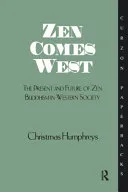
Zen Comes West
 76
76

Zen Comes West
Christmas Humphreys’ "Zen Comes West" is less a spiritual awakening and more a meticulously organized primer, a quality that serves it well. The author’s strength lies in his clear exposition of intricate concepts, such as the purpose of koans, which he delineates with precision. He successfully translates the essence of Zen's move towards direct experience, moving it from an abstract notion to something a Western reader can begin to grasp. However, the book occasionally feels like a historical document itself, reflecting a particular era of Western engagement with Buddhism. While the structure is commendable, the prose can sometimes lack the vital spark that ignites genuine contemplative practice. A passage discussing the "emptiness" of phenomena, while intellectually sound, might leave a practitioner yearning for more visceral guidance. Nevertheless, for those seeking a solid, historically-grounded introduction to Zen theory and practice, it remains a valuable resource.
📝 Description
76
### What It Is Zen Comes West offers a comprehensive introduction to Zen Buddhist philosophy and practice, meticulously compiled by Christmas Humphreys. Originally published in 1995, this work serves as a guide for Western readers seeking to understand the core tenets of Zen. It bridges the gap between theoretical knowledge and practical application, making the profound teachings accessible to those unfamiliar with Eastern meditative traditions. The book aims to equip readers with the foundational understanding necessary for their own contemplative explorations.
### Who It's For This volume is intended for individuals curious about Zen Buddhism, particularly those in the West who may find its concepts initially abstract. It caters to students of comparative religion, philosophy enthusiasts, and anyone interested in exploring meditative disciplines beyond typical Western frameworks. Those seeking a structured approach to understanding Zen, from its historical roots to its meditative techniques, will find this book particularly valuable. It's also for readers who appreciate historical context and the evolution of spiritual ideas across cultures.
### Historical Context The introduction of Zen to the West gained significant momentum in the early 20th century, notably through the extensive writings and lectures of D. T. Suzuki, beginning with his "Essays" in 1927. Humphreys' work directly engages with this burgeoning interest, providing a more structured and accessible entry point. It arrived at a time when Westerners were increasingly seeking alternative spiritual paths, moving away from purely materialist or conventional religious frameworks. The book reflects the intellectual climate of post-war Britain, where there was a growing appetite for Eastern wisdom.
### Key Concepts Humphreys systematically breaks down complex Zen ideas into digestible components. He explores the concept of "emptiness" (sunyata) not as nihilism, but as the absence of inherent, independent existence. The significance of "direct experience" over dogma is emphasized throughout, reflecting Zen's focus on immediate realization. The text also addresses the role of the "koan" – paradoxical riddles designed to break down rationalistic thought – as a crucial tool in the Zen practitioner's arsenal. The emphasis on "no-mind" (mushin) is presented as a state of effortless awareness.
💡 Why Read This Book?
• Gain a clear understanding of Zen's historical arrival in the West, specifically noting D. T. Suzuki's pivotal role from 1927, which provides context unavailable in purely philosophical texts. • Learn about core Zen concepts like "koans" and "emptiness" as presented by Humphreys, offering a structured framework for exploring these ideas beyond general spiritual discussions. • Discover practical approaches to Zen meditation and theory, moving beyond abstract notions to concrete techniques that can inform personal practice, as detailed in the book's guidance.
⭐ Reader Reviews
Honest opinions from readers who have explored this book.
❓ Frequently Asked Questions
When was Zen Comes West first published?
Zen Comes West by Christmas Humphreys was first published on January 17, 1995, making it a relatively modern compilation of Zen teachings for a Western audience.
Who was D. T. Suzuki and what was his connection to Zen in the West?
Daisetz Teitaro Suzuki was a Japanese scholar and Buddhist practitioner who played a crucial role in introducing Zen Buddhism to the Western world, beginning with his "Essays" in 1927.
What is a 'koan' as explained in Zen Comes West?
A 'koan' is a paradoxical riddle or question used in Zen practice, as explained in the book, to break down rational thought and facilitate direct, intuitive insight into reality.
Does the book explain how to practice Zen meditation?
Yes, Zen Comes West guides the reader towards Zen teaching in practice and theory, providing material for further explorations into its meditative experience.
What does 'emptiness' (sunyata) mean in the context of this book?
In Zen Comes West, 'emptiness' (sunyata) is presented not as nihilism, but as the absence of inherent, independent existence, a key concept for understanding phenomena.
Is this book suitable for absolute beginners to Buddhism?
Absolutely. The book is designed to guide readers towards Zen teaching in practice and theory, making it an accessible starting point for those new to the subject.
🔮 Key Themes & Symbolism
The Direct Path
The core of Zen, as presented in "Zen Comes West," emphasizes a direct, experiential path to Enlightenment, bypassing elaborate doctrines or rituals. This contrasts with more scholastic approaches to spirituality. Humphreys highlights that Zen seeks immediate realization, often through practices designed to cut through conceptual thinking. The book details how this "direct path" is cultivated through focused meditation and the integration of wisdom into daily life, rather than as a separate, abstract pursuit.
Bridging East and West
This work is a significant effort to translate the essence of Zen Buddhism for a Western audience, recognizing the cultural and philosophical differences. By starting with the 6th-century Chinese origins and tracing its journey, including the pivotal introduction to the West via figures like D. T. Suzuki from 1927, Humphreys contextualizes Zen within a framework understandable to non-Eastern readers. The book addresses the practical challenges and unique insights gained when Zen principles encounter Western philosophical traditions.
Meditation and Practice
"Zen Comes West" goes beyond theoretical exposition to offer guidance on the practical application of Zen. It explores various meditative techniques, including the use of "koans" as tools to provoke insight and "zazen" (seated meditation) as the foundational practice. The emphasis is on cultivating a state of "no-mind" (mushin), where awareness is present without being cluttered by discursive thought. The book serves as a manual for those wishing to engage actively with Zen's contemplative dimension.
The Nature of Reality
Central to Zen, and explored thoroughly in this book, is a re-evaluation of how we perceive reality. Concepts like "emptiness" (sunyata) are demystified, presented not as nothingness but as the lack of inherent, fixed self-nature in all phenomena. This understanding is crucial for liberation from attachment and suffering. The book guides readers to question their assumptions about self and the world, fostering a deeper, more direct apprehension of existence.
💬 Memorable Quotes
“Zen's path is direct, seeking Enlightenment through immediate experience.”
— This captures the essence of Zen's non-dogmatic approach. It emphasizes that realization comes not from accumulating knowledge, but from direct, unmediated insight into the nature of reality.
“Koans are designed to break down rational thought barriers.”
— This highlights the paradoxical nature of koans. They are not puzzles to be solved logically, but tools intended to exhaust the intellect and open the mind to intuitive understanding.
“The goal is a state of 'no-mind' or effortless awareness.”
— This refers to 'mushin,' a state where the mind is free from discursive thinking, judgments, and ego-driven reactions, allowing for spontaneous and clear perception.
“Emptiness means the absence of inherent existence.”
— This clarifies the Buddhist concept of 'sunyata.' It's not nihilism, but an understanding that phenomena lack an independent, unchanging self-nature.
“Practice is the bridge from theory to realization.”
— This underscores the importance of active engagement in Zen. Theoretical knowledge alone is insufficient; it must be integrated through consistent meditative practice.
🌙 Esoteric Significance
Tradition
While Zen Buddhism itself is a distinct tradition, Humphreys' approach aligns with the broader esoteric interest in direct spiritual realization prevalent in Western movements like Theosophy and Anthroposophy. He bridges the gap by presenting Zen's core principles – particularly its emphasis on non-duality and experiential insight – in a manner accessible to those familiar with Western contemplative practices. His work positions Zen not merely as a religion, but as a profound psychological and spiritual discipline with universal applicability.
Symbolism
Key symbols explored include the "emptiness" (sunyata) of phenomena, representing the lack of inherent self-nature and the interconnectedness of all things. The "koan," a paradoxical riddle, serves as a symbol for transcending dualistic and rational thought. The practice of "zazen" (seated meditation) itself symbolizes the disciplined, focused effort required to still the mind and achieve direct apprehension of reality, embodying the Zen pursuit of immediate enlightenment.
Modern Relevance
Contemporary mindfulness movements and secularized Buddhist practices often draw implicitly or explicitly on Zen's emphasis on present-moment awareness and non-judgmental observation. Thinkers and practitioners in fields like psychology (e.g., ACT therapy) and organizational development, seeking to cultivate focus, reduce stress, and enhance intuitive decision-making, find value in the principles presented. Humphreys' work remains relevant for its clear articulation of these foundational Zen concepts for modern seekers.
👥 Who Should Read This Book
• Students of comparative religion and philosophy seeking a clear exposition of Zen Buddhist theory and its historical introduction to the West. • Individuals interested in practical meditation techniques and contemplative practices, looking for structured guidance beyond general spiritual self-help. • Researchers and practitioners within Western esoteric traditions interested in understanding how Eastern contemplative disciplines were received and interpreted.
📜 Historical Context
Christmas Humphreys' "Zen Comes West" emerged in a period of growing Western fascination with Eastern philosophies, particularly following the influential work of D. T. Suzuki, whose "Essays" first appeared in the West in 1927. This era saw a post-war search for meaning and alternative spiritualities. Humphreys, a prominent figure in Western esoteric circles and founder of The Buddhist Society in London, aimed to provide a structured and accessible introduction to Zen for an audience unfamiliar with its cultural underpinnings. The book navigated the intellectual currents of the mid-20th century, where concepts like meditation and Eastern mysticism were increasingly discussed, though often through a lens shaped by Western psychology and comparative religion. While figures like Alan Watts were also popularizing Zen, Humphreys offered a more systematic, theoretical approach, grounding Zen within its historical development from China and Japan.
📔 Journal Prompts
Reflection on the concept of 'no-mind' (mushin) and its potential impact on daily interactions.
Consider the role of 'koans' in challenging your own ingrained assumptions about reality.
Analyze the 'direct path' as described by Humphreys versus more conventional spiritual learning.
Explore the meaning of 'emptiness' (sunyata) in your own experience of everyday objects and relationships.
How does the historical context of Zen's arrival in the West influence its practice today?
🗂️ Glossary
Zen
A school of Mahayana Buddhism that originated in China, emphasizing meditation and direct experience of enlightenment over scripture or dogma.
Enlightenment
In Zen, the state of profound understanding and realization of the true nature of reality, often described as seeing things as they truly are.
Koan
A paradoxical anecdote or riddle used in Zen Buddhism to provoke doubt and test a student's progress in Zen practice, intended to break down rational thinking.
Sunyata
A Sanskrit term often translated as 'emptiness,' referring to the Buddhist concept that phenomena lack inherent, independent existence.
Zazen
Seated meditation, the fundamental practice in Zen Buddhism, involving mindful awareness and focused concentration.
Mushin
A Japanese Zen Buddhist term meaning 'no mind' or 'mind without mind,' referring to a state of effortless action and awareness free from ego or discursive thought.
D. T. Suzuki
Daisetz Teitaro Suzuki (1870-1966), a Japanese scholar and Buddhist who was instrumental in popularizing Zen Buddhism in the Western world through his extensive writings.