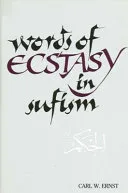
Words of Ecstasy in Sufism
 74
74

Words of Ecstasy in Sufism
Carl W. Ernst’s 'Words of Ecstasy in Sufism' remains a foundational text, providing a rigorous academic dissection of *shathiyat*. The work’s strength lies in its detailed analysis of the rhetorical strategies and theological justifications employed by mystics like al-Hallaj and Abu Yazid al-Bistami to articulate states of divine union that defied conventional language. Ernst carefully traces the reception of these pronouncements, noting how they provoked censure from legalistic authorities while simultaneously inspiring later generations of mystics. A minor limitation, perhaps inherent to its academic focus, is that the sheer density of theological and legal argument might be challenging for the uninitiated reader. The exploration of how sayings like Bistami's infamous "Glory be to Me!" were interpreted, both as blasphemy and as the ultimate expression of *tawhid* (oneness of God), is particularly illuminating. It stands as an indispensable resource for understanding the liminal spaces of Islamic spirituality.
📝 Description
74
### What It Is 'Words of Ecstasy in Sufism' offers the premier English examination of *shathiyat*, the often controversial ecstatic utterances within classical Islamic mysticism. Carl W. Ernst meticulously unpacks the historical development and theological interpretation of these aphorisms, which frequently challenged orthodox Islamic jurisprudence and societal norms.
### Who It's For This work is essential for scholars of Islamic studies, comparative mysticism, and religious history. It will also engage practitioners of Sufism seeking a deeper understanding of its more radical expressions, and anyone interested in the intersection of ecstatic experience and religious law.
### Historical Context First published in 1985, Ernst's study emerged during a period of renewed academic interest in Sufism, moving beyond earlier Orientalist interpretations. It addressed a gap in English scholarship concerning the theological and legal ramifications of *shathiyat*, placing it within the broader context of Islamic intellectual history and its debates with orthodox legal scholars (Ulama).
### Key Concepts The book illuminates core Sufi concepts such as *fana* (annihilation of the self) and *baqa* (subsistence in God), explaining how *shathiyat* served as expressions of these profound states. It distinguishes between genuine ecstatic utterances and mere heterodox pronouncements, analyzing the hermeneutical challenges they posed.
💡 Why Read This Book?
• Gain insight into the controversial concept of *shathiyat*, understanding how mystics expressed states of divine intoxication that challenged Islamic law and orthodoxy. • Explore the historical reception of these ecstatic utterances, recognizing the tension between mystical experience and legalistic interpretation in classical Islam. • Analyze the rhetorical styles and principal themes of Sufi aphorisms, learning how figures like Abu Yazid al-Bistami articulated profound spiritual states.
⭐ Reader Reviews
Honest opinions from readers who have explored this book.
❓ Frequently Asked Questions
What are *shathiyat* in Sufism?
*Shathiyat* are ecstatic utterances made by Sufi mystics, often expressing states of complete annihilation of self (*fana*) and profound union with the Divine. These sayings frequently appeared paradoxical or even blasphemous to orthodox scholars.
Who was Carl W. Ernst?
Carl W. Ernst is a prominent scholar of Islamic mysticism and Sufism, known for his extensive research and numerous publications on the subject, including this seminal work first published in 1985.
Why were *shathiyat* controversial?
Their controversial nature stemmed from their apparent contradiction of Islamic law and orthodox theology. Sayings that proclaimed union with God or divine attributes were often interpreted as arrogance or heresy by the Ulama.
What is the significance of al-Hallaj in this book?
Mansur al-Hallaj is a central figure discussed for his ecstatic declaration "Anal-Haqq" (I am the Truth), which led to his execution. Ernst analyzes this and other sayings as expressions of profound mystical realization.
Does the book discuss specific Sufi orders?
While focusing on classical Sufism broadly, the book analyzes the utterances and interpretations relevant across various early Sufi circles, predating the formalization of many later specific orders.
What is *fana* in Sufism?
*Fana* is a key Sufi concept signifying the annihilation of the ego or individual self in the presence of God. *Shathiyat* are often seen as verbal expressions of this state of self-negation.
🔮 Key Themes & Symbolism
The Language of Divine Union
This theme explores how Sufi mystics used *shathiyat* to articulate experiences that transcended ordinary language and rational comprehension. These aphorisms, often paradoxical, served as linguistic vehicles for states of *fana* (annihilation) and intense proximity to the Divine, challenging conventional modes of religious expression and theological discourse in classical Islam.
Mysticism vs. Orthodoxy
Ernst examines the persistent tension between ecstatic Sufi expressions and the established Islamic legal and theological traditions. The book details how pronouncements by figures like al-Hallaj were scrutinized, debated, and often condemned by orthodox scholars (*Ulama*), highlighting the societal and juridical ramifications of mystical experiences.
Rhetoric and Interpretation
The study delves into the rhetorical styles and hermeneutical strategies employed in understanding *shathiyat*. It differentiates between genuine ecstatic utterances arising from profound spiritual states and those potentially misconstrued or heterodox, analyzing the interpretive frameworks developed within and outside the Sufi tradition.
Historical Development of Shathiyat
This theme traces the evolution of ecstatic utterances within Sufism from its early stages. Ernst maps how these sayings emerged, were documented, and influenced the development of Islamic mysticism, considering their reception across different historical periods and intellectual currents within the Islamic world.
💬 Memorable Quotes
“The criterion for distinguishing between genuine *shath* and heterodoxy is primarily the author's recognized sanctity and the degree to which the utterance is interpreted as an expression of *fana*.”
— This highlights the book's focus on the interpretive process. It suggests that the perceived authenticity of ecstatic speech often depended less on the literal words and more on the spiritual stature of the speaker and how their state of self-annihilation (*fana*) was understood.
“Abu Yazid al-Bistami's utterances were often interpreted as a consequence of intoxication with divine presence.”
— This points to the concept of divine intoxication as a key driver behind *shathiyat*. The saying implies that these extreme expressions were not born of hubris but of an overwhelming experience of God's immanence, rendering conventional boundaries irrelevant.
“The execution of al-Hallaj in 922 CE served as a stark warning regarding the limits of permissible expression.”
— This refers to a crucial historical event demonstrating the severe consequences faced by mystics whose ecstatic declarations were deemed heretical. It underscores the precarious position of Sufis engaging in radical spiritual expression within orthodox Islamic society.
“The interpretation of *shathiyat* often depended on the position of the interpreter, whether an orthodox jurist or a fellow mystic.”
— This emphasizes the subjective and context-dependent nature of understanding these utterances. The same saying could be seen as heresy by a legal scholar and profound truth by a Sufi adept, revealing deep divides in religious understanding.
“Classical Sufi texts reveal a consistent struggle to reconcile the experience of unity with God with the Islamic doctrine of God's absolute transcendence.”
— This encapsulates a core theological challenge addressed by Ernst. The book explores how Sufis grappled with expressing their experiential knowledge of divine immanence while upholding the fundamental Islamic principle of God's otherness and incomparability.
🌙 Esoteric Significance
Tradition
This work is deeply embedded within the study of Islamic Esotericism, specifically Sufism. It examines how Sufism, as the mystical dimension of Islam, developed unique expressions of spiritual realization. Ernst's analysis places *shathiyat* not as aberrations, but as integral, albeit controversial, manifestations of the Sufi path towards direct experience of the Divine, departing from purely ritualistic or legalistic interpretations of the faith.
Symbolism
The core symbolism revolves around the ecstatic utterance itself (*shath*) as a symbol of transcendence. Concepts like *fana* (annihilation of the self) and the paradoxical language used to describe divine union function symbolically. For instance, al-Hallaj's 'Anal-Haqq' ('I am the Truth') symbolizes the ultimate dissolution of individuality into the Divine Reality, a potent symbol of mystical achievement.
Modern Relevance
Ernst's work remains relevant for contemporary scholars and practitioners interested in non-dualistic spiritual traditions and the phenomenology of religious experience. Thinkers exploring consciousness, altered states, and the limits of language in expressing ultimate reality draw upon his rigorous analysis. It informs discussions on comparative mysticism and the enduring tension between experiential spirituality and institutional religion in the modern world.
👥 Who Should Read This Book
• Scholars of Islamic Studies and Comparative Religion: To gain a foundational understanding of the theological and historical significance of ecstatic utterances within Sufism and their place in Islamic intellectual history. • Students of Mysticism and Spirituality: To explore the radical expressions of divine union and the linguistic challenges faced by mystics seeking to articulate profound spiritual experiences. • Researchers of Religious Law and Ethics: To analyze the historical conflicts between mystical experience (*shathiyat*) and orthodox Islamic jurisprudence (*Sharia*), understanding the societal impact of heterodox religious claims.
📜 Historical Context
Published in 1985, Carl W. Ernst's 'Words of Ecstasy in Sufism' emerged during a significant period of academic re-evaluation of Islamic mysticism. It filled a critical void in English-language scholarship concerning *shathiyat*, the ecstatic utterances that often pushed the boundaries of orthodox Islamic thought. The book provided a nuanced counterpoint to earlier, sometimes simplistic, portrayals of Sufism. Ernst situated these expressions within the broader intellectual landscape of classical Islam, directly engaging with the legalistic critiques from the *Ulama* (Islamic scholars). He implicitly addressed contemporary scholarly debates by offering detailed textual analysis, moving beyond hagiography. The work's meticulous examination of figures like Mansur al-Hallaj, whose execution in 922 CE remains a potent symbol of the Sufi-Orthodox divide, provided a vital corrective to purely devotional or purely legalistic interpretations of Islamic history.
📔 Journal Prompts
The concept of *fana* as expressed through *shathiyat*: How might one articulate the experience of self-annihilation?
The controversy surrounding al-Hallaj's 'Anal-Haqq': Reflect on the power and danger of spiritual declarations.
Comparing the interpretations of *shathiyat* by mystics versus orthodox scholars.
The role of ecstatic utterances in pushing the boundaries of religious expression.
Analyzing the rhetorical strategies employed in Abu Yazid al-Bistami's paradoxical statements.
🗂️ Glossary
Shathiyat
Ecstatic utterances or anomalous sayings made by Sufi mystics, often expressing profound states of divine intoxication and union, which could be controversial.
Fana
A key Sufi concept signifying the annihilation of the ego or individual self in the presence of God, a state often associated with ecstatic utterances.
Baqa
Subsistence or permanence in God after the state of *fana*. It implies a return to worldly existence but with a transformed consciousness, remaining in God.
Anal-Haqq
Arabic for 'I am the Truth' (God). Famously uttered by Mansur al-Hallaj, it is a prime example of a controversial *shath* that led to his execution.
Ulama
The body of Muslim scholars recognized for their knowledge and interpretation of Islamic religious law and doctrine. They often scrutinized Sufi practices.
Tawhid
The Islamic concept of the absolute oneness and uniqueness of God. Some *shathiyat* were interpreted as challenging or affirming this concept in radical ways.
Sufism
The mystical or esoteric dimension of Islam, focused on the pursuit of direct experience of God through spiritual practices like meditation, remembrance, and self-discipline.