The Sufi Path of Knowledge
 80
80

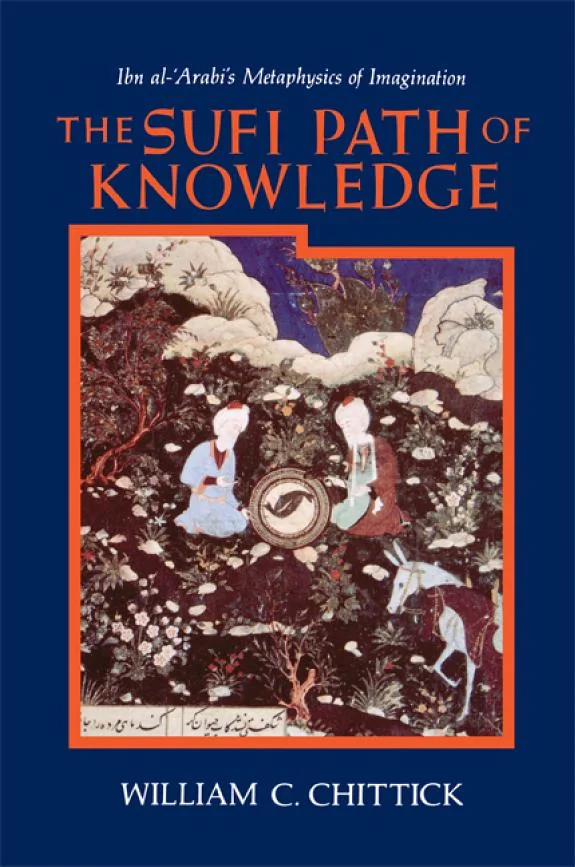
The Sufi Path of Knowledge
William Chittick’s undertaking in "The Sufi Path of Knowledge" is monumental. He navigates the labyrinthine conceptual architecture of Ibn al-'Arabi with a clarity that belies the subject's inherent difficulty. The book excels in systematically dissecting Ibn al-'Arabi's intricate theology and ontology, offering a structured entry point for those intimidated by the sheer volume of the Great Sheik's writings. Chittick’s explanation of Ibn al-'Arabi's concept of "Wahdat al-Wujud" (Unity of Being) is particularly illuminating, demystifying a core tenet often prone to misinterpretation. A notable strength lies in the detailed exposition of Ibn al-'Arabi's views on spiritual perfection, mapping out stages and states with scholarly precision. However, the sheer academic rigor, while commendable, might present a steep learning curve for readers entirely new to Islamic mysticism. The text occasionally assumes a familiarity with philosophical jargon that could alienate beginners. Despite this, Chittick provides a crucial service by rendering complex metaphysical doctrines understandable. It stands as a vital resource for serious students of Sufism and Islamic philosophy.
📝 Description
80
### What It Is William C. Chittick's "The Sufi Path of Knowledge" offers a comprehensive examination of the thought of Ibn al-'Arabi, the 13th-century Andalusian mystic revered as "the Great Sheik." This volume serves as a critical introduction to the vast and complex intellectual landscape of Islamic mysticism. Chittick meticulously unpacks Ibn al-'Arabi's unique cosmological and theological framework, presenting his ideas on spiritual realization, the nature of existence, and the divine.
### Who It's For This book is primarily for students and scholars of Islamic mysticism, comparative religion, and philosophy. It is also suited for serious practitioners of Sufism seeking a deeper understanding of one of its most influential figures. Readers should possess a foundational knowledge of theological or philosophical concepts, as the text engages with intricate metaphysical arguments without extensive simplification.
### Historical Context Ibn al-'Arabi, born in Murcia, Spain, in 1165 CE, developed his prolific corpus during a vibrant period of intellectual exchange across the Islamic world. His "Wahdat al-Wujud" (Unity of Being) doctrine, though controversial, deeply influenced subsequent Sufi thought and faced critique from theologians like Ibn Taymiyyah. Chittick's work, first published in 2010, situates Ibn al-'Arabi's teachings within this rich historical and theological milieu, making them accessible to a modern, Western audience.
### Key Concepts The book systematically explores Ibn al-'Arabi's ontology, which posits a fundamental unity of existence grounded in the Divine Essence. It elucidates his epistemology, focusing on the role of divine inspiration and unveiling in attaining knowledge. Furthermore, Chittick details Ibn al-'Arabi's hermeneutics, particularly his approach to interpreting the Quran, and his soteriology, the path to salvation and spiritual perfection through direct apprehension of the Real.
💡 Why Read This Book?
• Understand the core tenets of Ibn al-'Arabi's "Wahdat al-Wujud" (Unity of Being), moving beyond superficial interpretations of oneness as mere pantheism, as detailed in Chittick's analysis of his ontology. • Gain insight into the specific epistemological framework Ibn al-'Arabi proposed for attaining divine knowledge, distinct from rational or empirical methods, as explained in the section on his epistemology. • Explore the practical implications of Ibn al-'Arabi's thought for spiritual perfection, including his understanding of human nature and its relationship to the Divine, as presented in his soteriology.
⭐ Reader Reviews
Honest opinions from readers who have explored this book.
❓ Frequently Asked Questions
What is the central doctrine of Ibn al-'Arabi discussed in "The Sufi Path of Knowledge"?
The central doctrine is "Wahdat al-Wujud," often translated as Unity of Being. Chittick explains this as the idea that only God is truly real, and all existence is a manifestation or self-disclosure of the Divine Essence, not a separate entity.
Who was Ibn al-'Arabi and why is he significant?
Ibn al-'Arabi (1165-1240 CE) was an Andalusian mystic, philosopher, and poet, known as "the Great Sheik." He is one of the most influential figures in Sufi thought, whose voluminous writings shaped Islamic metaphysical and mystical traditions.
What academic fields does "The Sufi Path of Knowledge" engage with?
The book engages with Islamic mysticism (Sufism), Islamic philosophy, theology, comparative religion, and metaphysics, offering a scholarly approach to complex spiritual concepts.
Does the book provide practical guidance for spiritual practice?
While primarily an exposition of theological and ontological concepts, the book explains Ibn al-'Arabi's views on spiritual perfection and the path to realization, offering theoretical insights into Sufi practice.
What is "soteriology" as discussed in relation to Ibn al-'Arabi?
Soteriology refers to the doctrine of salvation. In this context, it concerns Ibn al-'Arabi's understanding of how humans achieve spiritual perfection and salvation through their relationship with and realization of the Divine.
When was "The Sufi Path of Knowledge" first published?
The first publication date for William C. Chittick's "The Sufi Path of Knowledge" was March 31, 2010.
🔮 Key Themes & Symbolism
Unity of Being (Wahdat al-Wujud)
This theme explores Ibn al-'Arabi's central concept that reality is fundamentally one, rooted in the Divine Essence. Chittick clarifies that this is not a simple pantheism, but rather a complex understanding of creation as the self-disclosure of God. The book details how all phenomena are manifestations of the singular Divine Reality, and how recognizing this unity is key to spiritual realization and liberation from perceived separation. This perspective challenges conventional dualistic thinking about God and the world.
Spiritual Perfection and Realization
The work delves into Ibn al-'Arabi's vision of spiritual perfection, outlining the path toward direct apprehension of the Divine. Chittick explains the stages and states involved in this transformative journey, emphasizing the role of divine grace, knowledge ('irfan), and the annihilation of the ego in achieving union with the Real. This theme addresses the ultimate goal of the Sufi path as envisioned by the Great Sheik, focusing on the integration of human existence with the divine order.
Cosmology and Ontology
Chittick systematically unpacks Ibn al-'Arabi's intricate cosmology and ontology, presenting his metaphysical framework for understanding the universe. This includes the nature of existence, the divine attributes, and the relationship between the Creator and creation. The book elucidates how Ibn al-'Arabi conceptualized the cosmos not as a collection of separate entities, but as a dynamic expression of divine being, offering a profound reinterpretation of reality's structure.
Hermeneutics and Divine Knowledge
This theme focuses on Ibn al-'Arabi's method of interpreting sacred texts and the nature of divine knowledge ('ilm). Chittick explains how the Great Sheik believed true understanding comes not solely from rational intellect but also from divine inspiration, unveiling, and direct experience. The book explores how this approach to hermeneutics informs Ibn al-'Arabi's theological and mystical insights, emphasizing the importance of inward realization for grasping ultimate truths.
💬 Memorable Quotes
“The world is a mirror in which the Real looks at Himself.”
— This concise statement encapsulates Ibn al-'Arabi's view of creation as a reflection of the Divine. It suggests that the phenomenal world, including ourselves, possesses no ultimate reality independent of God, serving instead as a locus for God's self-manifestation and self-contemplation.
“The path is to see yourself as God sees you.”
— This paraphrased concept highlights the ultimate aim of spiritual realization in Ibn al-'Arabi's thought: to transcend the limited ego-perspective and perceive reality from the Divine viewpoint, recognizing the unity of all things in God.
“Knowledge of God is the ultimate goal, attained through unveiling.”
— This interpretation emphasizes Ibn al-'Arabi's focus on gnosis ('irfan) as the pinnacle of spiritual attainment. It posits that direct, intuitive knowledge of the Divine, achieved through spiritual opening rather than purely intellectual means, is the true end of the Sufi path.
“There is nothing in existence but God.”
— A direct articulation of "Wahdat al-Wujud," this phrase asserts the absolute primacy of God's reality. It implies that all perceived multiplicity and separateness are illusory from the perspective of ultimate truth, where only the Divine Being subsists.
“The universe is the Book of God.”
— This metaphorical interpretation underscores Ibn al-'Arabi's view of creation as a divine text to be read and understood. Each element of existence contains signs (ayat) pointing to the Divine, making the cosmos itself a source of profound spiritual knowledge.
🌙 Esoteric Significance
Tradition
Ibn al-'Arabi's work is a cornerstone of classical Sufism, a major esoteric lineage within Islam. His thought represents a highly sophisticated development of Neoplatonic and Gnostic ideas filtered through an Islamic lens, creating a unique metaphysical system. He synthesized concepts of divine unity, creation, and the spiritual path in a manner that profoundly impacted subsequent esoteric traditions within and outside Islam, influencing Hermeticism and other mystical currents.
Symbolism
Central to Ibn al-'Arabi's symbolism is the concept of the "Perfect Man" (al-insan al-kamil), representing the archetype of humanity fully realized and reflecting the Divine attributes. Another key symbol is the "Heart" (qalb), understood not merely as a physical organ but as the locus of divine perception and gnosis. The "Veils" (hijab) symbolize the illusory nature of the phenomenal world that obscures direct apprehension of the Divine Reality.
Modern Relevance
Contemporary thinkers and practitioners in various spiritual and philosophical fields draw heavily on Ibn al-'Arabi's insights. His concept of "Wahdat al-Wujud" continues to be explored in comparative mysticism and philosophy of religion. Modern Sufi orders still rely on his extensive corpus for guidance. Furthermore, his ideas on consciousness, reality, and the nature of the self are increasingly discussed in New Age spirituality and transpersonal psychology circles.
👥 Who Should Read This Book
• Students of Islamic mysticism and comparative religion seeking to understand one of its most pivotal figures, Ibn al-'Arabi, and his profound metaphysical system. • Philosophical and theological scholars interested in exploring non-dualistic ontology and epistemology as developed within a major world religion. • Dedicated practitioners of Sufism or other esoteric paths who wish to deepen their theoretical understanding of divine unity and the nature of spiritual realization.
📜 Historical Context
Ibn al-'Arabi's thought emerged in the late 12th and early 13th centuries, a period of intense intellectual and spiritual activity within the Islamic world following the High Middle Ages. His prolific output, particularly his doctrine of "Wahdat al-Wujud" (Unity of Being), profoundly influenced subsequent Sufi metaphysics, though it also drew sharp criticism from theological literalists and philosophers who viewed it as potentially heretical. Scholars like Fakhr al-Din al-Razi were engaging in sophisticated theological debates during this era, and Ibn al-'Arabi's radical ontological monism stood in contrast to more dualistic theological frameworks. While his works were widely disseminated, their interpretation remained a subject of scholarly and spiritual debate for centuries, with figures like Rumi and later Shaykh Ahmad Sirhindi engaging with his legacy in different ways.
📔 Journal Prompts
The concept of "Wahdat al-Wujud" as the ultimate reality.
Ibn al-'Arabi's understanding of the "Perfect Man" as a divine mirror.
The role of the "Heart" in attaining divine knowledge.
The "Veils" that obscure direct apprehension of the Real.
The relationship between cosmology and spiritual perfection in Ibn al-'Arabi's thought.
🗂️ Glossary
Wahdat al-Wujud
A core concept in Sufism, often translated as "Unity of Being." It posits that only God is truly existent, and all created things are manifestations or self-disclosures of the Divine Essence.
The Great Sheik
A honorific title given to Ibn al-'Arabi, recognizing his immense authority, prolific writings, and profound influence on Islamic mystical thought and practice.
Ontology
The branch of metaphysics concerned with the nature of being, existence, and reality. In this context, it refers to Ibn al-'Arabi's theory of what exists and how it exists.
Epistemology
The theory of knowledge, especially with regard to its methods, validity, and scope. It concerns how we know what we know, particularly in relation to divine knowledge.
Soteriology
The doctrine of salvation. It deals with the way to salvation and the means by which humans achieve spiritual perfection and liberation.
Hermeneutics
The theory and methodology of interpretation, especially the interpretation of religious texts. It concerns how meaning is derived and understood.
Al-insan al-kamil
Arabic for "The Perfect Man." In Ibn al-'Arabi's thought, this refers to the ideal human being who fully realizes their divine potential and acts as a mirror for God's attributes.