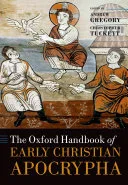
The Oxford Handbook of Early Christian Apocrypha
 71
71

The Oxford Handbook of Early Christian Apocrypha
The 2015 Oxford Handbook of Early Christian Apocrypha presents a formidable collection of scholarship, offering granular detail on texts often relegated to the fringes of theological study. Its strength lies in the breadth of coverage, meticulously cataloging genres from obscure acts to alternative gospels like the Gospel of Thomas and the Gospel of Mary. The essays collectively illuminate the vibrant, often contentious, landscape of early Christian literature. However, the sheer academic density can occasionally obscure the forest for the trees; a more pronounced comparative thread across essays might have enhanced its coherence. One particularly striking discussion examines the reception history of these texts, highlighting their continued influence despite official condemnations. This volume is an indispensable, if demanding, resource for serious students of the period.
📝 Description
71
### What It Is The Oxford Handbook of Early Christian Apocrypha is a comprehensive academic survey cataloging and analyzing texts not included in the canonical New Testament. Published in 2015, it brings together scholarly essays examining a wide array of early Christian writings that circulated outside mainstream ecclesiastical acceptance. The work addresses the critical issues and thematic concerns inherent in studying these often esoteric texts, providing authoritative overviews of their literary forms and historical contexts.
### Who It's For This handbook serves scholars, graduate students, and advanced undergraduates specializing in early Christianity, New Testament apocrypha, and the history of religion. It is also of significant value to theologians, comparative religion researchers, and those within esoteric traditions seeking to understand the broader landscape of early Christian thought beyond the accepted canon. Its detailed analyses make it an essential reference for anyone engaged in rigorous academic study of this period.
### Historical Context These apocryphal texts emerged during a formative period of Christianity, roughly from the 2nd to the 4th centuries CE. This era witnessed intense theological debate and the gradual codification of the New Testament canon, often leading to the marginalization or suppression of alternative traditions. The work published in 2015 situates these texts within the broader milieu of early Christian literary production, acknowledging their circulation and influence even as they were deemed heretical by emerging orthodox authorities. The ongoing scholarly interest in these texts, evident since the early 20th century, highlights their persistent importance.
### Key Concepts The handbook explores diverse categories of apocryphal literature, including gospels (e.g., Gospel of Thomas), acts of apostles, epistles attributed to various figures (Paul, Peter, Jesus), and apocalypses. It examines how these texts functioned within early Christian communities, often providing alternative narratives about Jesus' life and teachings, or the lives of his apostles. The concept of 'apocrypha' itself is explored—texts that were often hidden, secret, or considered esoteric, offering insights into beliefs and practices that differed from those that eventually formed the dominant Christian tradition.
💡 Why Read This Book?
• Understand the diversity of early Christian beliefs by examining texts like the Gospel of Peter, which offer distinct perspectives not found in the canonical Gospels. • Gain critical insights into the formation of the Christian canon by studying works that were once widely circulated but ultimately excluded by the 4th century CE. • Explore alternative narratives of Jesus and his apostles through texts such as the Acts of Paul, revealing the varied theological and devotional concerns of early communities.
⭐ Reader Reviews
Honest opinions from readers who have explored this book.
❓ Frequently Asked Questions
What specific early Christian apocryphal texts are covered in The Oxford Handbook?
The handbook extensively discusses key texts including the Gospel of Thomas, the Gospel of Mary, the Gospel of Peter, epistles attributed to Paul and Peter, and various apocryphal acts and apocalypses from the early Christian period.
When was The Oxford Handbook of Early Christian Apocrypha first published?
This comprehensive handbook was first published in 2015, bringing together contemporary scholarly research on early Christian apocryphal literature.
Who are the primary editors of this volume?
The primary editors of The Oxford Handbook of Early Christian Apocrypha are Andrew F. Gregory, Christopher Mark Tuckett, and Tobias Nicklas.
What academic disciplines benefit most from this handbook?
Scholars and students in early Christianity, New Testament studies, religious history, and comparative literature will find this handbook particularly beneficial for its in-depth analyses.
Does the handbook discuss the historical context of these apocryphal texts?
Yes, the handbook places the apocryphal texts within their historical milieu, discussing their circulation, theological significance, and relationship to the developing New Testament canon during the first few centuries CE.
What is the primary focus of the handbook's analysis?
The handbook focuses on addressing key issues and themes that arise in the study of early Christian apocryphal literature, providing surveys of main branches and critical examination of individual texts.
🔮 Key Themes & Symbolism
Alternative Gospels
The handbook delves into gospels that circulated alongside, or in place of, the canonical four. Texts like the Gospel of Thomas present sayings attributed to Jesus in a distinctly different format, often emphasizing esoteric knowledge or inner spiritual realization rather than narrative biography. Examining these provides crucial context for understanding the fluidity of early Christian traditions and the criteria eventually applied for canonization.
Apostolic Authority
Many apocryphal works claim direct attribution to apostles like Paul, Peter, or even Jesus himself. This theme explores how these texts sought to establish authority and legitimacy within nascent Christian communities, often by presenting teachings or narratives purportedly received directly from foundational figures. The handbook scrutinizes the strategies employed to imbue these writings with apostolic weight, contrasting them with canonical claims.
Apocalyptic Visions
The collection addresses numerous apocalypses, texts focused on divine revelation, often concerning end times, cosmic battles, and future judgment. These writings frequently employ symbolic language and visionary experiences to convey theological messages. The handbook analyzes how these eschatological narratives functioned within early Christianity, offering solace, warning, or a framework for understanding the divine plan and humanity's place within it.
Secret Knowledge and Esotericism
A significant thread running through much early Christian apocrypha is the concept of hidden or secret knowledge (gnosis) intended for initiates. The handbook examines how texts like the Gospel of Mary, with its focus on Mary Magdalene's unique spiritual insights, reveal currents of thought that emphasized personal mystical experience and esoteric understanding of divine mysteries, often diverging from more public, didactic forms of teaching.
💬 Memorable Quotes
“The Gospel of Thomas presents sayings of Jesus distinct from canonical accounts.”
— This highlights how early Christians collected and transmitted Jesus' teachings in various forms, some of which offered unique theological perspectives or emphasized inner spiritual development over outward action.
“Apocryphal Acts detail the missionary journeys and miracles of apostles.”
— These narratives often served devotional purposes, providing readers with exemplary lives of apostolic figures and expanding the biblical story beyond the New Testament's scope, sometimes with legendary elements.
“The formation of the New Testament canon was a gradual process, not an instantaneous event.”
— This underscores that the books we accept today were once among many competing texts, and their selection involved complex historical and theological negotiations within the early Church.
“Epistles attributed to figures like Peter or Jesus offered instruction and exhortation.”
— These letters functioned similarly to canonical epistles, aiming to guide believers, address doctrinal disputes, or offer spiritual counsel, but were ultimately not included in the final scriptural collection.
“Apocalyptic literature provided frameworks for understanding divine will and cosmic order.”
— These texts offered visions of heavenly realms and future events, serving to interpret present suffering within a larger divine plan and provide hope or warning to early Christian communities.
🌙 Esoteric Significance
Tradition
While not belonging to a single, formalized esoteric lineage like Hermeticism or Kabbalah, early Christian apocrypha significantly informs Gnostic traditions. These texts often contain themes of secret knowledge (gnosis), a divine redeemer figure imparting hidden wisdom, and a dualistic worldview that resonates with Gnostic cosmology. They represent a crucial segment of early mystical and esoteric thought that existed alongside, and often in tension with, the developing mainstream Church.
Symbolism
The apocrypha are rich with symbolism. The 'Light-Self' or inner divine spark is a recurring motif, representing the soul's potential for awakening. Water, often found in baptismal or purification narratives, symbolizes spiritual cleansing and rebirth. The figure of Mary Magdalene frequently symbolizes the awakened feminine principle and the recipient of esoteric teachings, representing direct, intuitive spiritual apprehension.
Modern Relevance
Contemporary esoteric practitioners, particularly those within Gnostic-inspired or mystical Christian paths, frequently engage with these texts. Thinkers and groups exploring alternative spiritualities, feminist theology, and comparative mysticism draw upon the apocrypha to understand the historical breadth of Christian experience and to find alternative models of spiritual authority and practice outside patriarchal structures.
👥 Who Should Read This Book
• Students of early Christianity: To gain a comprehensive understanding of the literary landscape beyond the canonical New Testament and the criteria for its formation. • Researchers in comparative religion: To analyze the diversity of beliefs and practices in the ancient world and their influence on later religious developments. • Practitioners of esoteric traditions: To explore the roots of mystical thought, secret knowledge, and alternative interpretations of Christian doctrine found in these foundational texts.
📜 Historical Context
The early Christian period, roughly spanning from the 2nd to the 4th centuries CE, was a dynamic era of theological formation and literary innovation. During this time, numerous texts circulated within and around nascent Christian communities, many of which were later excluded from the canonical New Testament. The compilation of the Oxford Handbook in 2015 reflects a long-standing scholarly engagement with these 'apocrypha,' which offered diverse interpretations of Jesus' life, teachings, and the lives of his followers. These texts often arose in dialogue with, or in opposition to, emerging orthodox viewpoints and other contemporary philosophical schools, such as Gnosticism. Scholars like Adolf von Harnack in the late 19th and early 20th centuries were instrumental in bringing these texts to wider scholarly attention. The reception of these apocryphal works varied; while some were embraced by certain groups, others faced censure and suppression as the boundaries of Christian orthodoxy solidified, particularly by the 4th century CE.
📔 Journal Prompts
The concept of 'secret knowledge' in the Gospel of Thomas and its implications for spiritual authority.
Comparing the portrayal of apostles in canonical Acts versus apocryphal Acts.
Reflecting on the role of female figures, such as Mary Magdalene, in transmitting esoteric teachings.
The function of apocalyptic imagery in providing hope or warning in early Christian communities.
Analyzing the criteria used to distinguish canonical from apocryphal texts by the 4th century CE.
🗂️ Glossary
Apocrypha
Texts related to the Bible that were not included in the canonical collections of Judaism or Christianity. In the Christian context, these often include alternative gospels, acts, epistles, and apocalypses.
Gospel of Thomas
A collection of sayings attributed to Jesus, presented without narrative context. It is considered a key text for understanding early Christian sayings traditions and potential Gnostic influences.
Gospel of Mary
A fragment of a text featuring Mary Magdalene, who receives special instruction from the risen Christ and is later challenged by other disciples. It highlights themes of esoteric revelation.
Acts of the Apostles (Apocryphal)
Narratives detailing the missionary journeys, miracles, and teachings of apostles like Paul, Peter, and John, which were not included in the canonical Acts of the Apostles.
Apocalypse
A literary genre that claims to reveal divine mysteries, often concerning the end of the world, cosmic conflicts, and future salvation, typically conveyed through visions and symbolism.
Canon
The collection of texts officially recognized as authoritative scripture within a religious tradition. The New Testament canon was gradually established during the first few centuries of Christianity.
Gnosis
Greek for 'knowledge.' In a religious context, it often refers to a special, intuitive, or revealed knowledge of spiritual truths, central to Gnostic traditions.













![L'évangile selon Thomas : [traduction et commentaire]](/img/thumb/lévangile-selon-thomas-traduction-et-commentaire-jacques-é-ménard-042100.webp)