80
80

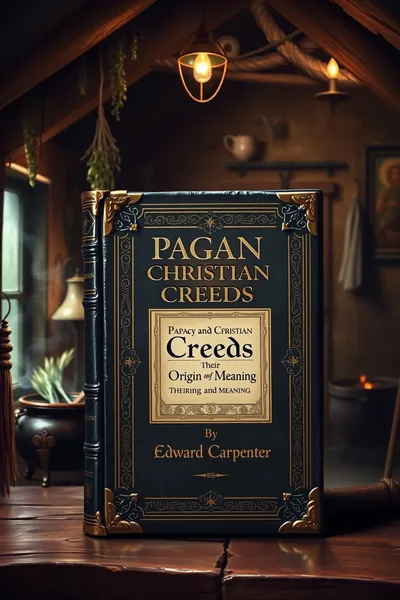
Pagan and Christian Creeds: Their Origin and Meaning



Silas Hawthorne (Hermetic Studies Editor) writes: 'Edward Carpenter's 'Pagan and Christian Creeds' remains a cornerstone for anyone seeking to understand the deep currents of Western spirituality. Carpenter masterfully excavates the shared symbolism and ritualistic antecedents between seemingly disparate religious traditions. His analysis of solar myths, zodiacal influences, and initiation rites offers profound esoteric insights, challenging readers to reconsider the origins of Christian doctrine not as divine revelation alone, but as a continuation and transformation of ancient, earth-bound wisdom. This work is essential for scholars of comparative religion and practitioners interested in the alchemical processes that fuse the sacred from disparate elements. A truly illuminating text.'
📝 Description
Embark on a profound journey into the shared roots of spiritual thought with Edward Carpenter's 'Pagan and Christian Creeds: Their Origin and Meaning.' First unveiled in 1920, this seminal work transcends conventional religious divides, inviting readers to explore the luminous threads connecting ancient pagan mysteries with the nascent doctrines of Christianity. Carpenter, a former cleric turned radical social reformer, meticulously unveils how foundational Christian concepts—from the divine sacrifice to sacramental rites—are echoed in primordial solar myths, the celestial dance of the zodiac, and the transformative rituals of initiation. This book is an invitation to peer behind the veil of dogma, to witness the enduring archetypes that have shaped humanity's quest for the sacred. It speaks to the seeker of hidden knowledge, the scholar of comparative religion, and the mystic yearning to understand the perennial wisdom woven into the fabric of our spiritual heritage. Prepare to have your understanding of faith illuminated by the light of ancient suns and forgotten rituals, revealing a universe of interconnected meaning.
✍️ Author
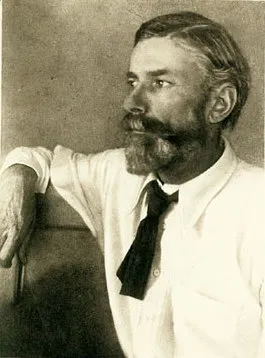
Edward Carpenter
Edward Carpenter (29 August 1844 – 28 June 1929) was an English utopian socialist, poet, philosopher, anthologist, an early activist for gay rights and prison reform whilst advocating vegetarianism and taking a stance against vivisection. As a philosopher, …
💡 Why Read This Book?
Uncover the hidden tapestry of shared spiritual origins. 'Pagan and Christian Creeds' offers a radical re-examination of religious history, revealing the enduring power of ancient archetypes. Ideal for seekers of esoteric knowledge, comparative religion scholars, and practitioners aiming to deepen their understanding of ritual and symbolism. Discover the perennial wisdom that binds humanity's quest for the divine across cultures and epochs.
⭐ Reader Reviews
Honest opinions from readers who have explored this book.
❓ Frequently Asked Questions
What is the central argument of 'Pagan and Christian Creeds'?
The book argues that many Christian doctrines, rituals, and symbols have deep roots in earlier pagan traditions, particularly solar myths, zodiacal symbolism, and initiation rites, suggesting a continuity of spiritual expression rather than a complete break.
Who was Edward Carpenter and why is his perspective unique?
Edward Carpenter was a former Anglican clergyman who became a prominent social reformer and mystic. His unique position allowed him to critique Christianity from both an insider's and an outsider's perspective, informed by his deep engagement with Eastern philosophies and social progressivism.
What specific pagan elements does Carpenter highlight?
Carpenter focuses on themes such as solar worship (the Sun as a divine figure), the symbolism of the twelve signs of the zodiac, totem-sacraments (sacred meals connecting humanity to the divine or ancestral spirits), and various rites of initiation common in ancient mystery cults.
Is this book suitable for beginners in esoteric studies?
Yes, while scholarly, Carpenter's prose is accessible. It serves as an excellent introduction to comparative mythology and the esoteric underpinnings of Western religions, making complex ideas understandable to a broad audience.
What is the philosophical significance of Carpenter's work?
Its significance lies in promoting a more inclusive and universal understanding of spirituality, suggesting that core human spiritual impulses manifest in diverse forms across cultures and historical periods, fostering a sense of cosmic unity.
🔮 Key Themes & Symbolism
The Solar Archetype in Spirituality
Carpenter meticulously traces the pervasive influence of the solar archetype, positing the Sun not merely as a celestial body but as a profound symbol of divine power, resurrection, and cosmic order. He demonstrates how the worship of solar deities and the symbolism of light and rebirth in pagan traditions directly informed and shaped the narrative of Christ's life, death, and resurrection. This theme invites readers to see the Sun as a universal metaphor for spiritual awakening and the divine masculine principle, present across diverse mythologies and sacred cosmologies.
Zodiacal Symbolism and Cosmic Cycles
This work delves into the ancient understanding of the cosmos, particularly the role of the zodiac in shaping human spiritual experience and belief systems. Carpenter argues that the cyclical nature of the stars and the symbolic meanings attributed to each constellation were integral to pagan cosmology and heavily influenced early Christian eschatology and iconography. He reveals how celestial patterns were interpreted as divine blueprints, influencing concepts of destiny, divinity, and the unfolding of sacred history, offering a framework for understanding humanity's place within the grand cosmic dance.
Initiation Rites and Sacramental Mysteries
Carpenter illuminates the profound connection between pagan initiation rituals and Christian sacraments. He explores how ancient mystery cults utilized rites of passage, symbolic death and rebirth, and sacred communion to impart spiritual knowledge and foster a deep connection with the divine. The book suggests that Christian sacraments, such as baptism and the Eucharist, are not entirely novel but rather evolved expressions of these ancient, transformative practices, designed to facilitate spiritual union and provide a tangible link to the sacred mysteries.
💬 Memorable Quotes
“The divine is everywhere.”
— A reminder of the immanent nature of the sacred, suggesting that divinity is not confined to specific doctrines or locations but permeates all existence.
“Truth wears many masks.”
— Highlights the idea that profound spiritual truths can be expressed through diverse cultural and religious forms, urging an open-minded approach to their recognition.
“The old gods never truly die.”
— Suggests the enduring power and influence of ancient archetypes and spiritual energies, which continue to resonate and manifest in new forms, even in modern belief systems.
“Light follows darkness.”
— Encapsulates the cyclical nature of spiritual experience, where periods of challenge or ignorance are inevitably followed by revelation and enlightenment.
“The circle is unbroken.”
— Emphasizes the interconnectedness of all spiritual traditions and the continuity of human spiritual seeking throughout history, linking past, present, and future.
🌙 Esoteric Significance
Tradition
This work sits at the intersection of comparative religion, mythology, and esoteric philosophy, particularly drawing from Hermeticism, Gnosticism, and perennial philosophy. It aligns with the esoteric principle that underlying all diverse religious expressions is a single, universal spiritual truth or 'Wisdom Religion.' Carpenter's analysis seeks to unveil this hidden unity, suggesting that the esoteric core of paganism was absorbed and transformed, rather than eradicated, by Christianity.
Symbolism
Carpenter's exploration is rich with symbolic interpretation, focusing on archetypal imagery. The Sun represents divine consciousness and resurrection; the Zodiac symbolizes cosmic order, destiny, and the cyclical journey of the soul; and initiation rites signify personal transformation and spiritual rebirth. These symbols are presented not as mere historical artifacts but as living keys to understanding the deeper, often unconscious, drivers of human spiritual longing and belief.
Modern Relevance
In an age of increasing globalization and interfaith dialogue, Carpenter's work remains profoundly relevant. It offers a powerful argument for spiritual pluralism and the recognition of shared human values across diverse cultures. For contemporary seekers, it provides a framework for understanding how ancient wisdom continues to inform modern spiritual practices and challenges the reader to look for deeper, unifying principles beneath superficial doctrinal differences.
👥 Who Should Read This Book
This book is a treasure for a diverse audience. **Beginners** in esoteric studies will find it an accessible yet profound introduction to comparative religion and mythology, demystifying the origins of familiar spiritual concepts. **Scholars** of religion, mythology, and history will appreciate Carpenter's meticulous research and groundbreaking thesis, offering new perspectives for academic discourse. **Spiritual seekers** looking to understand the deeper currents of human belief and the interconnectedness of traditions will find their curiosity deeply satisfied. **Practitioners** of various spiritual paths can gain valuable insights into the symbolic language and ritualistic foundations that underpin many forms of worship and personal spiritual development.
📜 Historical Context
Published in 1920, 'Pagan and Christian Creeds' emerged during a period of intense intellectual and spiritual ferment. The late Victorian and Edwardian eras saw a surge in comparative mythology, anthropology, and the burgeoning fields of psychology and religious studies. Scholars and thinkers were increasingly questioning traditional biblical literalism and exploring the universal patterns in human culture and belief. Carpenter's work was part of this broader movement, challenging the perceived uniqueness of Christianity by highlighting its continuities with older pagan traditions. It reflected a growing interest in alternative spiritualities, Eastern philosophies, and a desire for a more inclusive, less dogmatic understanding of the divine, resonating with a generation seeking meaning beyond established religious frameworks.
📔 Journal Prompts
Reflect on a time you felt a deep connection to nature. How might this relate to ancient pagan reverence for the natural world?
Consider a Christian symbol or ritual you are familiar with. How could its meaning be interpreted through a pagan lens?
What personal 'initiation' experiences have you undergone? How did they transform your understanding of yourself or the world?
Explore the concept of the Sun as a symbol in your own life or spiritual practice. What qualities or energies does it represent for you?
How might understanding the shared origins of spiritual traditions foster greater empathy and understanding between different belief systems?
🗂️ Glossary
Solar Myth
A mythological narrative or theme centered around the Sun, often depicting its daily journey, seasonal changes, or personification as a deity, commonly associated with themes of rebirth, sacrifice, and divine power.
Zodiac
A belt of the heavens extending about 8 degrees on either side of the ecliptic (the Sun's apparent path), divided into twelve equal parts, each named after a constellation. Historically used in astrology and cosmology to understand cosmic influences and cycles.
Totem-Sacrament
A ritualistic practice, often found in indigenous cultures, where a specific animal, plant, or object (the totem) is revered and consumed in a sacred meal, symbolizing a spiritual or ancestral connection between the community and the divine or natural world.
Rite of Initiation
A ceremonial act or event that marks a person's transition from one stage of life or social status to another, often involving symbolic death and rebirth, tests of endurance, and the imparting of sacred knowledge or secrets.
Archetype
A universal, archaic pattern or image that recurs in the literature, art, and mythology of many cultures, often representing fundamental human experiences, psychological motifs, or divine principles.