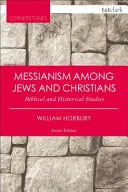
Messianism Among Jews and Christiansm
 73
73

Messianism Among Jews and Christiansm
William Horbury's meticulous study, "Messianism Among Jews and Christians," offers a vital corrective to often-siloed understandings of these faiths. The strength of the book lies in its granular analysis of textual evidence, particularly its detailed exploration of how early Christian messianic claims engaged with, and diverged from, existing Jewish interpretations. Horbury’s examination of the term 'son of David' and its varied applications in both traditions is particularly illuminating. A limitation, perhaps inherent in its academic rigor, is that the dense prose may prove challenging for the casual reader. One particularly striking passage details the anticipation of a Davidic king during the Roman occupation, highlighting the potent political and spiritual dimensions of messianic hope in the 1st century CE. This work is an essential, albeit demanding, resource for understanding the shared roots and subsequent divergences of Jewish and Christian messianic traditions.
📝 Description
73
### What It Is This scholarly work by William Horbury, first published in 2016, examines the intricate and often overlapping concepts of messianism within Jewish and Christian traditions. It moves beyond simplistic comparisons to explore the nuanced theological and historical developments that shaped messianic expectations in both faiths. The book scrutinizes scriptural interpretations, rabbinic literature, and early Christian writings to trace the evolution of these potent ideas.
### Who It's For "Messianism Among Jews and Christians" is designed for serious students of religious history, theology, and comparative religion. Scholars, graduate students, and advanced undergraduates seeking a rigorous academic treatment of messianism will find this volume invaluable. It is also suited for individuals with a deep, personal interest in the historical Jesus and the development of early Christianity from a Jewish perspective.
### Historical Context Horbury's research is situated within the late 20th and early 21st centuries, a period marked by significant scholarly engagement with the Jewishness of Jesus and the historical context of early Christianity. The work addresses a long-standing academic conversation, building upon the foundational scholarship of figures like Geza Vermes, who championed the understanding of Jesus within his Jewish milieu. The book implicitly engages with the ongoing debate about the distinctiveness and shared heritage of Jewish and Christian messianic thought.
### Key Concepts The book explores the multifaceted nature of messianic hope, differentiating between various interpretations of the Messiah's role—whether as a king, a warrior, a priestly figure, or a cosmic redeemer. It investigates how these diverse expectations influenced communal identity, eschatological beliefs, and the formation of religious movements. Specific attention is given to the concept of 'son of David' and its biblical and post-biblical interpretations, as well as the emergence of messianic claims in the first century CE.
💡 Why Read This Book?
• Gain a nuanced understanding of the shared and distinct origins of Jewish and Christian messianic beliefs, as Horbury meticulously traces their development from scriptural sources through the early centuries CE. • Appreciate the historical context of the 1st century CE, recognizing how specific interpretations of 'son of David' influenced both Jewish communities and the nascent Christian movement. • Develop a more critical lens for examining theological claims by understanding the complex evolution of messianic ideas, as explored through Horbury’s detailed textual analysis.
⭐ Reader Reviews
Honest opinions from readers who have explored this book.
❓ Frequently Asked Questions
What is the primary focus of William Horbury's "Messianism Among Jews and Christians"?
The book primarily focuses on the complex and often overlapping concepts of messianism within both Jewish and Christian traditions, examining their historical development and theological nuances from ancient texts.
When was "Messianism Among Jews and Christians" first published?
William Horbury's "Messianism Among Jews and Christians" was first published in 2016.
Which historical period does the book largely cover regarding messianic ideas?
The book covers the period from ancient scriptural sources through the early centuries CE, with particular attention paid to the 1st century CE and the emergence of Christian messianic claims within a Jewish context.
Does the book compare Jesus to Old Testament prophets?
While the book deeply explores the Jewish context of Jesus and messianic expectations, its focus is on the interpretation of messianic roles derived from figures like David, rather than a direct comparison to Old Testament prophets in isolation.
Who are some scholars whose work is implicitly engaged by "Messianism Among Jews and Christians"?
The work implicitly engages with scholarship on the Jewishness of Jesus and early Christianity, building on the legacy of scholars like Geza Vermes who emphasized Jesus's Jewish milieu.
What specific messianic concept is analyzed in detail?
A key concept analyzed in detail is the interpretation and application of the 'son of David' title and its associated messianic expectations within both Jewish and early Christian literature.
🔮 Key Themes & Symbolism
The Davidic Messiah
The work meticulously unpacks the concept of the 'son of David' as a central messianic figure. Horbury demonstrates how this title, deeply rooted in Jewish scripture and tradition, was interpreted in various ways, encompassing royal, priestly, and eschatological roles. He traces how early Christian claims about Jesus’s messiahship directly engaged with and reinterpreted these pre-existing Jewish expectations, highlighting the continuities and critical divergences in understanding the awaited redeemer.
Jewish Messianic Expectations
Horbury situates messianic hopes firmly within their first-century Jewish context. The book examines diverse strands of Jewish thought concerning the Messiah, including expectations of a political liberator, a divine judge, and a restorative king. It underscores that messianism was not a monolithic concept but a dynamic set of hopes shaped by historical circumstances, scripture, and theological debate within Judaism prior to and during the formative years of Christianity.
Christian Messianic Claims
The study analyzes how early Christians articulated their beliefs about Jesus as the Messiah. It scrutinizes how New Testament authors and early Church Fathers employed Jewish messianic language and concepts to present Jesus’s identity and mission. The focus is on the theological arguments and scriptural interpretations used to establish Jesus's messianic credentials, particularly in relation to the Old Testament prophecies and Davidic lineage.
Interplay and Divergence
A core theme is the intricate relationship and eventual divergence between Jewish and Christian messianism. Horbury illustrates how shared biblical roots and initial conceptual overlap gradually gave way to distinct theological trajectories. The book highlights moments where Christian interpretations offered radical departures from prevailing Jewish understandings, leading to the separation of the two traditions on the fundamental question of the Messiah's identity and role.
💬 Memorable Quotes
“The title 'son of David' carried significant weight in first-century Jewish messianic expectations.”
— This statement encapsulates the book's focus on the loaded significance of royal lineage. It suggests that understanding this specific designation is crucial for grasping the messianic hopes prevalent in the period when both Judaism and Christianity were solidifying their identities.
“Early Christian claims about Jesus were deeply embedded within the framework of Jewish messianic interpretation.”
— This highlights the book's central argument that Christianity did not emerge in a vacuum. Instead, its foundational messianic theology was forged through dialogue with, and reinterpretation of, existing Jewish beliefs about the Messiah.
“Messianism represented a spectrum of hopes, not a single, unified doctrine.”
— This interpretation emphasizes the diversity of messianic expectations within ancient Judaism. It cautions against oversimplification, noting that different groups and individuals held varied ideas about the nature and function of the future messianic figure.
“The interpretation of prophetic texts was key to formulating messianic beliefs.”
— This points to the hermeneutical practices of the time. Both Jewish sages and early Christians relied heavily on their understanding of Old Testament prophecies to identify and define the Messiah, leading to both shared concepts and points of contention.
“Understanding the Jewishness of Jesus is vital for comprehending early Christianity.”
— This paraphrased concept underscores the book's methodological commitment. It argues that a historical and theological analysis of Jesus and his followers must begin with their immediate Jewish cultural and religious milieu.
🌙 Esoteric Significance
Tradition
While not strictly an esoteric text in the vein of Kabbalah or Hermeticism, Horbury's work touches upon the deep archetypal currents of messianism that permeate many mystical traditions. It explores the human longing for redemption and a divine intermediary, concepts found across diverse esoteric lineages. The book's rigorous historical approach provides a foundational understanding of the literal and historical roots from which more esoteric interpretations of messianic figures and events often spring.
Symbolism
The primary symbolic motif explored is the 'son of David' lineage, representing earthly kingship, divine promise, and future restoration. The cross, though not explicitly detailed by Horbury as a messianic symbol in this context, becomes an implicit symbol of the Christian interpretation of messianic suffering and triumph, diverging from purely Davidic expectations. The concept of the 'Kingdom of God' itself functions symbolically, representing ultimate divine rule and human redemption.
Modern Relevance
Contemporary thinkers exploring the intersection of historical Jesus studies and theological interpretation, as well as scholars examining the evolution of religious identity, draw upon Horbury's meticulous research. Groups interested in the historical roots of eschatological beliefs and the comparative study of salvation narratives find value in his nuanced distinctions between Jewish and Christian messianic frameworks.
👥 Who Should Read This Book
• Students of comparative religion and theology: You will gain a precise understanding of how messianic ideas developed concurrently and diverged within two major Abrahamic faiths, based on detailed textual evidence. • Scholars of the New Testament and early Christianity: You will benefit from a rigorous examination of the Jewish background informing early Christian messianic claims, particularly concerning the 'son of David' tradition. • Individuals interested in the historical Jesus: You will find valuable context for understanding Jesus's own ministry and the expectations surrounding him within the diverse messianic landscape of 1st-century Judaism.
📜 Historical Context
William Horbury's "Messianism Among Jews and Christians" engages with a field significantly shaped by mid-to-late 20th-century scholarship. The era saw a concerted effort to understand Jesus and early Christianity within their authentic Jewish context, moving away from earlier supersessionist interpretations. Key figures like Geza Vermes championed this approach, emphasizing the continuity between Jesus's teachings and rabbinic thought. Horbury's work, published in 2016, builds upon this foundation, offering detailed textual analysis. It implicitly addresses the ongoing scholarly dialogue concerning the distinctiveness of Christian messianism versus its Jewish antecedents. While not a direct polemic, the book engages with interpretations that might downplay the Jewishness of the messianic concept, offering a counterpoint grounded in rigorous philology and historical analysis.
📔 Journal Prompts
The evolution of the 'son of David' concept: Trace its shifts from ancient kingship to messianic expectation.
Compare and contrast the anticipated roles of the Messiah in Jewish texts versus early Christian interpretations.
Analyze the socio-political factors influencing messianic hopes in the 1st century CE.
Reflect on how scriptural interpretation shapes fundamental religious beliefs.
Consider the implications of shared origins for understanding religious divergence.
🗂️ Glossary
Messianism
Belief in a divinely appointed savior or liberator figure (the Messiah) who will bring about a period of redemption, peace, and divine rule. It encompasses a range of expectations regarding the Messiah's nature, role, and the era they will usher in.
Son of David
A title referring to a descendant of King David, carrying strong connotations of Davidic kingship, divine promise, and future messianic leadership within Jewish tradition. Early Christians applied this title to Jesus.
Eschatology
The branch of theology concerned with death, judgment, and the final destiny of the soul and of humankind. In the context of messianism, it refers to beliefs about the end times and the ultimate divine intervention.
Supersessionism
The theological doctrine that Christianity has replaced or superseded Judaism as God's chosen people and the true inheritor of biblical promises. Horbury's work implicitly critiques simplistic forms of this view by emphasizing shared origins.
Hermeneutics
The theory and methodology of interpretation, especially the interpretation of biblical texts, wisdom literature, or sacred writings. It concerns the principles guiding how texts are understood.
Rabbinic Literature
The corpus of texts produced by rabbinic Judaism, including the Mishnah, Talmud, and Midrash, which interpret Jewish law and tradition. It provides crucial context for understanding Jewish messianism.
Theological Trajectory
The path or development of a particular set of religious beliefs or doctrines over time. The book traces the distinct theological trajectories of Jewish and Christian messianism.