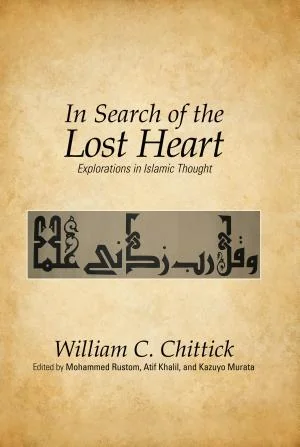
In Search of the Lost Heart
 75
75

In Search of the Lost Heart
Chittick's "In Search of the Lost Heart" is less a unified argument and more a sustained scholarly dialogue with the Islamic tradition. His thirty-six years of engagement are palpable, particularly in his meticulous engagement with figures like Ibn Arabi and the concept of *wahdat al-wujud*. One strength is the sheer depth of scholarship on display, offering a perspective often missing in popular accounts. However, the essayistic structure, while comprehensive, can feel diffuse for readers seeking a singular narrative arc. The chapter discussing the nature of the human being, for instance, provides a dense but rewarding examination of spiritual potential within the Islamic framework. While invaluable for specialists, its density may present a hurdle for the casual reader. It is a significant contribution for those willing to invest the intellectual effort.
📝 Description
75
### What It Is William C. Chittick, a respected scholar in Islamic studies, presents a collection of essays offering a comprehensive look at the Islamic worldview. These pieces, spanning thirty-six years of his academic career, are not a single narrative but a mosaic of explorations into various facets of Islamic thought and practice. The book serves as a scholarly gateway, intended for those seeking a deeper, nuanced understanding of a civilization's philosophical and spiritual underpinnings.
### Who It's For This volume is designed for serious students of comparative religion, philosophy, and Islamic studies. It will appeal to academics, graduate students, and autodidacts who are willing to engage with complex ideas and detailed scholarly analysis. Those interested in the metaphysical dimensions of Islam, Sufism, and the historical development of its intellectual traditions will find significant value here.
### Historical Context The essays in "In Search of the Lost Heart" were written between approximately 1976 and 2012, a period marked by increasing global interest in Islam alongside significant geopolitical tensions. Chittick's work emerged amidst scholarly discourse focused on Orientalism and the need for authentic interpretations of Islamic texts, often contrasting with Western-centric views. His extensive engagement with figures like Ibn Arabi provided a counterpoint to more superficial analyses of Islamic spirituality, positioning his work within a tradition of rigorous scholarship seeking to present Islam from an internal perspective.
### Key Concepts The book explores fundamental Islamic concepts such as Tawhid (the oneness of God), the nature of the human being (insan), and the path of spiritual realization (tariqa). It examines the intricate relationship between the exoteric (Sharia) and esoteric (Haqiqa) dimensions of Islam, often referencing the works of key figures like Ibn Arabi. Chittick's essays also touch upon cosmology, the role of prophets, and the ultimate return to the Divine.
💡 Why Read This Book?
• Gain a nuanced understanding of Tawhid, the central Islamic doctrine of God's absolute oneness, as explored through Chittick's detailed analysis of classical Islamic texts. • Explore the esoteric dimensions of Islam, specifically Sufi pathways, by examining concepts like *tariqa* and the spiritual journey discussed in relation to figures like Ibn Arabi. • Appreciate the historical development of Islamic thought by engaging with essays spanning from the mid-1970s to the early 2010s, witnessing Chittick's consistent scholarly focus.
⭐ Reader Reviews
Honest opinions from readers who have explored this book.
❓ Frequently Asked Questions
What is the primary focus of William C. Chittick's "In Search of the Lost Heart"?
The book is a collection of essays by renowned scholar William C. Chittick, exploring the multifaceted worldview of Islam over a period of thirty-six years, with a particular emphasis on its spiritual and metaphysical dimensions.
Who is William C. Chittick and what is his background?
William C. Chittick is a distinguished scholar specializing in Islamic studies, particularly Sufism and the work of Ibn Arabi. His academic career spans several decades, with numerous influential publications on Islamic philosophy and spirituality.
What are some key Islamic concepts discussed in the book?
The book delves into core concepts such as Tawhid (the oneness of God), the nature of the human being (insan), the spiritual path (tariqa), and the relationship between exoteric law (Sharia) and esoteric truth (Haqiqa).
When was "In Search of the Lost Heart" first published?
The collection of essays, representing Chittick's work over several decades, was first published in February 2012.
Is this book suitable for beginners in Islamic studies?
While valuable, the book's scholarly depth and essayistic format make it more suitable for advanced students, academics, and those with a foundational understanding of Islamic philosophy and spirituality.
What is the significance of the title "In Search of the Lost Heart"?
The title suggests a quest for the authentic, spiritual core of Islam, which may be obscured by external factors or superficial understandings, pointing towards the book's focus on the inner dimensions of faith.
🔮 Key Themes & Symbolism
The Unity of Being
Chittick elaborates on the Islamic concept of Tawhid, the absolute oneness of God, extending beyond simple monotheism to encompass the idea of Divine reality pervading all existence. This theme is explored through the lens of figures like Ibn Arabi, where the universe is seen as a manifestation of God's creative impulse, and human existence is intrinsically linked to this Divine Unity, urging a recognition of the sacred within the mundane.
The Spiritual Path (Tariqa)
The book examines the concept of *tariqa*, the Sufi path or method for spiritual realization. Chittick details the stages and practices involved in this inner journey, emphasizing the guidance of a spiritual master and the purification of the self (*nafs*) to achieve proximity to God. This exploration highlights the active, experiential dimension of Islamic spirituality, moving beyond mere intellectual assent to lived devotion.
Ibn Arabi's Influence
A significant portion of Chittick's work centers on the vast intellectual legacy of Muhyi al-Din Ibn Arabi, the great Andalusian mystic. Chittick meticulously unpacks Ibn Arabi's complex doctrines, particularly *wahdat al-wujud* (the unity of being), and its implications for understanding cosmology, prophecy, and the human condition. His essays serve to demystify and contextualize Ibn Arabi's thought for a contemporary audience.
Exoteric and Esoteric Dimensions
Chittick addresses the relationship between the exoteric aspects of Islam (Sharia, Islamic law) and its esoteric dimensions (Haqiqa, spiritual truth). He argues that these are not contradictory but complementary, with the Sharia providing the framework and the Haqiqa offering the inner meaning and spiritual essence. This perspective seeks to reconcile the outward forms of religious practice with the inward experience of the Divine.
💬 Memorable Quotes
“The world is not other than God.”
— This statement encapsulates the concept of *wahdat al-wujud*, suggesting that creation is not separate from the Divine but is rather a manifestation or expression of God's reality, a core tenet explored in the book.
“The purpose of the Sharia is to lead to the Haqiqa.”
— This paraphrase highlights the complementary relationship between Islamic law and inner spiritual realization, positioning the outward observances as a means to achieve deeper, esoteric understanding and connection with the Divine.
“The human being is the locus of Divine manifestation.”
— This concept emphasizes the unique spiritual potential of humanity within Islamic cosmology, suggesting that humans are created in a way that reflects God's attributes, making them a focal point for experiencing and understanding the Divine.
“The spiritual path requires constant vigilance and self-purification.”
— This paraphrased idea underscores the demanding nature of the Sufi *tariqa*, pointing to the ongoing effort required from the seeker to cleanse their soul and remain mindful of God's presence throughout their spiritual development.
“True knowledge comes from direct experience, not just intellectual assent.”
— This sentiment reflects the experiential emphasis within Islamic mysticism, suggesting that profound spiritual truths are realized through lived practice and inner transformation rather than solely through academic study or belief.
🌙 Esoteric Significance
Tradition
This work is firmly rooted in the Perennial Philosophy tradition, particularly as expressed through the lens of Islamic mysticism, or Sufism. Chittick’s extensive engagement with Muhyi al-Din Ibn Arabi places him squarely within the intellectual lineage of Greater Islam, seeking to articulate its metaphysical core. He departs from simplistic understandings by emphasizing the profound philosophical underpinnings of Sufi cosmology and the unity of being, aligning with thinkers who see a universal spiritual truth underlying diverse religious forms.
Symbolism
Key symbols include the "Heart" (Qalb), representing the spiritual intellect and the locus of Divine knowledge and perception, often described as the mirror reflecting God's attributes. The concept of "Light" (Nur) is also central, symbolizing Divine illumination, guidance, and the very essence of God and prophetic existence. Furthermore, the recurring motif of "Return" (Ma'ad) signifies the soul's ultimate journey back to its Divine Source, a fundamental teleological aspect of the esoteric Islamic worldview.
Modern Relevance
Chittick's work continues to be vital for contemporary scholars and practitioners interested in the metaphysical dimensions of Islam. Thinkers and spiritual seekers engaged with the Perennial Philosophy, such as those influenced by René Guénon or Frithjof Schuon, find in Chittick's writings a rigorous articulation of Islamic thought that resonates with universal spiritual principles. His detailed expositions of Ibn Arabi are essential for understanding modern Sufi orders and contemporary Islamic intellectual movements seeking to revive classical metaphysical traditions.
👥 Who Should Read This Book
• Students of comparative religion and Islamic philosophy seeking a scholarly yet accessible introduction to the esoteric dimensions of Islam. • Practitioners of Sufism or those interested in mystical traditions who wish to deepen their understanding of core concepts like Tawhid and the spiritual path. • Academics and researchers in religious studies or Middle Eastern studies looking for authoritative analyses of classical Islamic thinkers, particularly Ibn Arabi.
📜 Historical Context
Published in 2012, "In Search of the Lost Heart" reflects decades of scholarship in a field that saw intense debate. The post-9/11 era intensified Western interest in Islam, often through a geopolitical lens, making Chittick's focus on the internal spiritual landscape particularly relevant. His work emerged alongside scholars like Seyyed Hossein Nasr, who also championed the traditionalist interpretation of Islam and its metaphysical depth, often countering reductionist or secularized views. Chittick's extensive engagement with the works of Ibn Arabi, a figure often misunderstood or even condemned in certain Islamic circles, placed his scholarship in dialogue with both traditionalist and reformist Islamic thinkers, as well as Western academic critiques of Orientalism.
📔 Journal Prompts
The concept of the Heart (Qalb) as a spiritual locus.
The relationship between Sharia and Haqiqa.
Ibn Arabi's understanding of the unity of being.
The human being as a reflection of Divine attributes.
The stages of the spiritual path (tariqa).
🗂️ Glossary
Tawhid
The fundamental Islamic concept of God's absolute oneness and uniqueness. It encompasses both the assertion of monotheism and a profound metaphysical understanding of Divine reality pervading all existence.
Sufism
The esoteric or mystical dimension of Islam, focused on the purification of the heart and the direct experience of God. Practitioners are known as Sufis or mystics.
Ibn Arabi
A highly influential Arab mystic and philosopher (1165–1240 CE), often referred to as 'the Great Master,' known for his complex metaphysical doctrines, particularly wahdat al-wujud.
Wahdat al-wujud
Literally 'the unity of being' or 'unity of existence.' A central concept in Sufism, particularly associated with Ibn Arabi, positing that all existence is ultimately a manifestation of the one Divine Reality.
Tariqa
A path or order of Sufism; a method or way of spiritual practice aimed at achieving union with God. It often implies a lineage of spiritual transmission.
Haqiqa
The ultimate spiritual truth or reality, often contrasted with Sharia (Islamic law). It represents the inner, esoteric dimension of Islam.
Sharia
Islamic law derived from the Quran and Sunnah (teachings and practices of Prophet Muhammad). It governs various aspects of life for Muslims.