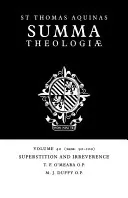
Images of rebirth

 71
71

Images of rebirth
Hugo Lundhaug’s 'Images of Rebirth' presents a rigorous academic exploration of a concept that permeates religious and philosophical thought. The strength of this work lies in its meticulous attention to textual detail and its broad comparative scope, drawing connections between disparate ancient traditions. Lundhaug’s analysis of the 'second birth' as a distinct philosophical and spiritual event, rather than a simple eschatological promise, offers a nuanced perspective. However, the book’s academic density may prove challenging for readers unfamiliar with the specialized terminology of late antique and Gnostic studies. A particular passage detailing the symbolic association of water with purification and new beginnings in early Christian baptismal rites, for instance, is exceptionally illuminating but requires significant prior knowledge to fully appreciate.
Ultimately, 'Images of Rebirth' is a valuable, albeit demanding, contribution to understanding the enduring human fascination with transformation.
📝 Description
71
### What It Is 'Images of Rebirth' by Hugo Lundhaug, first published in 2010, examines the multifaceted concept of rebirth across various historical and philosophical traditions. The work scrutinizes how societies and individuals have conceptualized renewal, transformation, and spiritual or physical resurrection.
### Who It's For This book is suited for scholars of comparative religion, religious studies students, and those with a serious interest in the philosophical underpinnings of cyclical existence and eschatological beliefs. It demands a reader comfortable with academic discourse and detailed textual analysis.
### Historical Context Lundhaug’s 2010 publication arrives at a time when academic interest in ancient religions and the evolution of symbolic thought was robust. The work engages with scholarship that interprets early Christian texts and Gnostic traditions, placing it within a lineage of critical analysis of religious origins. Its focus on the phenomenology of rebirth distinguishes it from purely historical accounts.
### Key Concepts The book dissects concepts such as the Orphic mysteries, the symbolism of the phoenix, and early Christian resurrection doctrines. It explores the idea of a 'second birth' as a philosophical or spiritual event, distinct from literal reincarnation or eschatological finality. Lundhaug traces these ideas through late antiquity and beyond, highlighting their persistent influence.
💡 Why Read This Book?
• Understand the philosophical nuances of the 'second birth' concept, as detailed in Lundhaug's comparative analysis of late antique texts, offering a perspective distinct from common resurrection narratives. • Explore the symbolic use of imagery, such as water and the phoenix, in ancient traditions to represent renewal, a theme Lundhaug meticulously unpacks with specific examples. • Gain insight into the historical development of rebirth concepts from 2010 back through early Christian and Gnostic traditions, providing a scholarly framework for understanding this enduring idea.
⭐ Reader Reviews
Honest opinions from readers who have explored this book.
❓ Frequently Asked Questions
What is the primary focus of Hugo Lundhaug's 'Images of Rebirth'?
The book primarily focuses on the concept of rebirth, examining its varied interpretations and manifestations across different historical, religious, and philosophical traditions, particularly from late antiquity.
When was 'Images of Rebirth' first published?
'Images of Rebirth' by Hugo Lundhaug was first published in 2010.
Which historical periods does the book cover?
The book covers a range of historical periods, with a significant emphasis on late antiquity and the early Christian era, exploring how concepts of rebirth evolved.
Is 'Images of Rebirth' suitable for a general audience?
While accessible to those with an interest in the subject, 'Images of Rebirth' is written in an academic style and is best suited for scholars, students, or readers with prior knowledge of comparative religion and philosophy.
What are some key themes explored in the book?
Key themes include the philosophical and spiritual 'second birth,' symbolic representations of renewal (like the phoenix and water), and the comparative study of resurrection doctrines.
Does the book discuss specific religious traditions?
Yes, the book engages with various traditions, including early Christianity, Gnostic thought, and other Greco-Roman mystery cults, to explore their unique perspectives on rebirth.
🔮 Key Themes & Symbolism
The Second Birth
Lundhaug meticulously analyzes the concept of a 'second birth' not merely as a literal event but as a profound spiritual or philosophical transformation. This theme is explored through various philosophical schools and early religious movements, highlighting instances where individuals sought or achieved a new state of being, often through ritual or intellectual awakening. The work distinguishes this transformative experience from simple reincarnation or final resurrection, focusing on the internal and immediate aspects of spiritual renewal.
Symbolism of Renewal
The book delves into the rich symbolism associated with rebirth across cultures. It examines motifs like the phoenix, representing cyclical death and regeneration, and the potent symbolism of water as a cleansing and renewing agent, particularly in early Christian baptismal rites. Lundhaug traces how these symbols were employed to articulate the process of transformation, offering concrete examples from ancient texts and iconography to illustrate their significance.
Comparative Eschatology
A core element of 'Images of Rebirth' involves comparing different eschatological frameworks and their relation to rebirth. The work contrasts the linear progression of some Christian doctrines with more cyclical views found in Gnostic and other ancient traditions. By juxtaposing these ideas, Lundhaug highlights the diverse human attempts to understand ultimate ends and the potential for renewal within or beyond them.
Textual Interpretation
The scholarly approach of the book is built upon detailed textual interpretation. Lundhaug engages with primary sources from late antiquity, scrutinizing their language and context to extract the precise meaning of rebirth-related concepts. This analytical rigor allows for a deeper understanding of how these ideas were articulated and understood by their original audiences.
💬 Memorable Quotes
“The desire for a 'second birth' transcends simple survival.”
— This interpretation suggests that the drive for rebirth is not merely about continuing existence, but about achieving a qualitatively different state of being or consciousness, a fundamental alteration of self.
“Water as a symbol of primal renewal.”
— This highlights the recurring use of water in religious and philosophical traditions as a potent symbol for purification, cleansing, and the beginning of a new life or spiritual cycle.
“Resurrection doctrines varied widely in early Christianity.”
— This points to the lack of a monolithic view on resurrection in early Christian communities, suggesting a complex and diverse theological landscape where different ideas about post-mortem existence coexisted.
“The phoenix embodies cyclical transformation.”
— This interpretation focuses on the mythological bird as a metaphor for recurring cycles of death and rebirth, symbolizing the potential for renewal and regeneration that endures through destruction.
“Philosophical rebirth often implies an intellectual awakening.”
— This suggests that for certain philosophical traditions, the concept of rebirth is less about a literal event and more about a profound shift in understanding or consciousness, triggered by philosophical insight.
🌙 Esoteric Significance
Tradition
While not strictly belonging to a single esoteric lineage, 'Images of Rebirth' draws heavily on the scholarly analysis of traditions often considered esoteric, such as Gnosticism and various mystery cults of late antiquity. It approaches these traditions from a comparative and historical perspective, illuminating their unique concepts of spiritual transformation and initiation. The work fits within the broader academic study of Western Esotericism by providing historical context for ideas that have influenced later esoteric movements.
Symbolism
Key symbols explored include the phoenix, representing cyclical death and subsequent regeneration, a potent metaphor for spiritual renewal. Water is also a significant motif, symbolizing purification, baptism, and the shedding of the old self to embrace a new existence, particularly within early Christian contexts. The concept of a 'second birth' itself functions as a central symbolic representation of profound spiritual or philosophical transformation.
Modern Relevance
Contemporary scholars and practitioners interested in comparative religion, the history of consciousness, and the evolution of spiritual thought continue to draw upon Lundhaug's meticulous research. His work provides a foundational understanding of how ancient cultures conceptualized transformation, which informs modern discussions on personal development, spiritual awakening, and the psychological underpinnings of religious belief. It is particularly relevant for those exploring neo-paganism, Gnostic revivals, and psychological approaches to spirituality.
👥 Who Should Read This Book
• Scholars of comparative religion and ancient philosophy seeking a detailed analysis of rebirth concepts across diverse historical traditions. • Students of theology and religious studies interested in the development of eschatological ideas in early Christianity and Gnosticism. • Individuals with a deep interest in the symbolic representation of transformation and renewal in mythology and religious practice.
📜 Historical Context
Hugo Lundhaug's 'Images of Rebirth,' published in 2010, emerged during a period of intense academic scrutiny of early religious traditions and the evolution of symbolic thought. The work situates itself within a scholarly conversation that critically examines the origins and development of concepts of salvation and transformation in late antiquity. It engages with scholars who have analyzed Gnostic texts, early Christian theology, and Greco-Roman mystery cults, contributing to a broader understanding of how ideas of renewal were conceptualized. The book’s focus on the phenomenology of rebirth offers a distinctive angle, differentiating it from purely historical or theological analyses. It acknowledges the legacy of scholars like Elaine Pagels, who brought attention to Gnostic perspectives, while forging its own path by dissecting specific symbolic and philosophical expressions of rebirth across a range of ancient traditions.
📔 Journal Prompts
The concept of a 'second birth' as analyzed in late antiquity.
Symbolic associations of water and renewal explored in the text.
Early Christian variations on resurrection doctrines.
The phoenix as an emblem of cyclical transformation.
Philosophical interpretations of rebirth as intellectual awakening.
🗂️ Glossary
Late Antiquity
A historical period generally spanning from the 3rd to the 7th century CE, characterized by significant religious and philosophical shifts, including the rise of Christianity and the decline of classical paganism.
Gnosticism
A diverse set of religious movements prominent in the first centuries CE, characterized by a belief in a transcendent God and a secret knowledge (gnosis) that enables salvation from the material world.
Eschatology
The branch of theology or philosophy concerned with the ultimate destiny of humanity and the world, including concepts of the end times, judgment, and resurrection.
Phenomenology
The philosophical study of the structures of experience and consciousness from the first-person point of view, focusing on how phenomena appear to us.
Mystery Cults
Ancient religious or spiritual groups, often originating in the Mediterranean, characterized by secret rituals, initiations, and a focus on personal salvation or spiritual renewal.
Orphic Mysteries
A set of religious beliefs and practices in ancient Greece attributed to the mythical poet Orpheus, emphasizing purification, a cyclical view of life and death, and the potential for divine rebirth.
Cyclical Time
A concept of time as recurring in cycles or patterns, contrasting with linear time which progresses from a beginning to an end. Often associated with natural processes and rebirth.