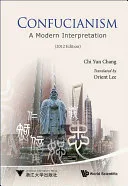
Confucianism: A Modern Interpretation (2012 Edition)
 83
83

Confucianism: A Modern Interpretation (2012 Edition)
Chi-yun Chang’s effort to present Confucianism through a modern lens, particularly in its 2012 iteration, offers a structured approach to a vast philosophical tradition. The book’s strength lies in its systematic breakdown of Confucius’s teachings into six distinct philosophical areas. This organizational clarity is invaluable for readers attempting to grasp the multifaceted nature of Confucian thought. The exploration of the 'Philosophy of Providence,' for example, provides a nuanced perspective on fate and agency that challenges simplistic interpretations. However, the work occasionally feels more like an academic exegesis than a truly dynamic reinterpretation. While it states the goal of modernization, the prose sometimes remains dense, demanding significant prior knowledge. The central argument that Confucianism offers a viable ethical and political blueprint for the 21st century is compelling but could benefit from more concrete, contemporary case studies to fully demonstrate its practical application beyond theoretical exposition. Overall, it's a rigorously academic text that requires engagement but offers significant rewards for those invested in understanding Confucianism's potential for modern relevance.
📝 Description
83
### What It Is Confucianism: A Modern Interpretation (2012 Edition) by Chi-yun Chang offers a comprehensive examination of the foundational teachings of Confucius. The work systematically breaks down Confucian thought into six core philosophical pillars: the philosophy of life ethics, education, creation, politics, providence, and peace. It moves beyond a simple exposition, aiming to illuminate the enduring value and contemporary significance of these ancient principles. The book actively engages with the challenge of modernizing Confucianism, seeking to demonstrate its relevance in the 21st century.
### Who It's For This volume is geared towards scholars and serious students of East Asian philosophy, comparative religion, and ethical systems. It will appeal to readers interested in the historical development of philosophical thought, particularly within the Confucian tradition. Individuals seeking to understand the practical application of ethical frameworks in governance, personal development, and societal harmony will find substantial material here. It is also for those who question the perceived rigidity of tradition and seek to explore its adaptability to contemporary life.
### Historical Context Published in 2012, this edition of Chi-yun Chang's work arrives at a time when global interest in Eastern philosophies has seen a resurgence. The book addresses the legacy of Confucius, whose teachings have shaped East Asian culture for over two millennia, influencing everything from imperial governance to family structure. Chang's endeavor to modernize these concepts places him in dialogue with a long tradition of Confucian scholarship, including figures like Zhu Xi from the Song Dynasty who developed Neo-Confucianism. The work engages with the need to re-evaluate Confucianism's role in a rapidly changing world, addressing how its ethical and political philosophies can inform contemporary challenges.
### Key Concepts The core of the book lies in its dissection of Confucianism into six distinct yet interconnected philosophical domains. These are not treated as static historical artifacts but as living frameworks for understanding human existence. The philosophy of life ethics, for instance, explores concepts like *ren* (benevolence) and *li* (propriety) as guides for virtuous conduct. The philosophy of education emphasizes self-cultivation and the transmission of moral knowledge. Political philosophy examines the role of ethical leadership in maintaining social order, while the philosophy of providence grapples with fate and human agency. Finally, the philosophy of peace seeks to articulate the conditions for social harmony, both domestically and internationally.
💡 Why Read This Book?
• Gain a structured understanding of Confucius's six core philosophies – life ethics, education, creation, politics, providence, and peace – as presented in Chang's 2012 analysis, moving beyond surface-level familiarity. • Explore the concept of the "modernization of teachings," learning how Chang argues for the continued relevance of Confucian principles in contemporary ethical and political discourse. • Understand the Philosophy of Providence as examined by Chang, offering a perspective on fate and human agency that might challenge your existing views on destiny and free will.
⭐ Reader Reviews
Honest opinions from readers who have explored this book.
❓ Frequently Asked Questions
What are the six core elements of Confucius's teachings discussed in this book?
The book details six key areas: Philosophy of Life Ethics, Philosophy of Education, Philosophy of Creation, Political Philosophy, Philosophy of Providence, and Philosophy of Peace, offering a structured overview of Confucian thought.
Who was Chi-yun Chang and why is this book dedicated to him?
This edition is dedicated to Mr. Chi Yun Chang, a prominent historian and the founder of Chinese Culture University, recognizing his significant contributions to the study and promotion of Chinese culture and history.
Does the book only explain ancient Confucianism, or does it look at modern applications?
The book specifically focuses on the modernization of Confucius's teachings, aiming to ascertain their value and significance in contemporary society and explore their adaptability to modern challenges.
What is the significance of the 2012 edition?
The 2012 edition signifies a particular effort by the author to re-examine and re-present Confucian principles through a contemporary lens, addressing the evolving needs and questions of the modern world.
Is this book suitable for someone completely new to Confucianism?
While the book aims for clarity, its depth and academic approach suggest it would be most beneficial for those with some foundational knowledge or a strong academic interest in philosophy and history.
What is the 'Philosophy of Providence' as discussed by Chang?
Chang's 'Philosophy of Providence' delves into the Confucian understanding of fate, destiny, and the interplay between human actions and cosmic forces, offering a nuanced view on agency.
🔮 Key Themes & Symbolism
Ethical Frameworks for Life
The work meticulously examines the Philosophy of Life Ethics within Confucianism, focusing on principles like benevolence (*ren*) and propriety (*li*). It elucidates how these concepts, far from being mere historical doctrines, provide a robust framework for personal virtue and moral conduct. Chang argues for their applicability in navigating complex social interactions and fostering individual character development, presenting an enduring ethical system designed for human flourishing.
Education as Self-Cultivation
Chang highlights the Philosophy of Education as central to Confucianism, viewing it not solely as the transmission of knowledge but as a profound process of self-cultivation and moral refinement. The book explores how education aims to harmonize individual desires with societal responsibilities, fostering individuals capable of ethical leadership and contributing to social order. This perspective underscores education's role in shaping virtuous citizens essential for a stable society.
Harmony in Governance and Peace
The book dedicates significant attention to Political Philosophy and the Philosophy of Peace, positing that societal harmony is achieved through ethical governance and the cultivation of virtuous leaders. Chang analyzes how principles of benevolence and righteousness, when applied to the state, can lead to stability and well-being. This section explores the Confucian ideal of a well-ordered society where individual ethical conduct is mirrored in the actions of those in power, promoting collective peace.
Providence and Human Agency
A particularly intriguing aspect is the Philosophy of Providence, where Chang addresses the Confucian perspective on destiny, fate, and the limits of human control. This theme explores the balance between acknowledging external forces and asserting human responsibility and moral choice. It offers a sophisticated understanding of how individuals can act virtuously and strive for betterment even within the perceived constraints of fate, encouraging resilience and ethical action.
💬 Memorable Quotes
“The value and significance of Confucius' teachings are focused on their modernization.”
— This statement encapsulates the book's central thesis: that Confucian principles are not relics of the past but possess a dynamic potential to inform and address contemporary issues, requiring active reinterpretation.
“The six elements: Philosophy of Life Ethics, Philosophy of Education, Philosophy of Creation, Political Philosophy, Philosophy of Providence, and Philosophy of Peace.”
— This enumeration serves as the structural backbone of the work, indicating a systematic and thorough approach to dissecting the comprehensive nature of Confucian thought across various domains of human experience.
“Ascertaining the value and significance of Confucius' teachings.”
— This phrase suggests a rigorous, evidence-based examination of Confucianism's enduring relevance, moving beyond mere acceptance to a reasoned demonstration of its practical and philosophical worth in the modern era.
“The focus is on the modernization of the teachings.”
— This points to the book's primary objective: to bridge the gap between ancient wisdom and contemporary life, demonstrating how Confucian ideals can be adapted and applied to current societal and personal challenges.
“A Magnum Opus dedicated to Mr Chi Yun Chang.”
— This highlights the profound respect and scholarly tribute the author bestows upon Mr. Chi Yun Chang, positioning the work as a significant contribution stemming from a deep engagement with his legacy.
🌙 Esoteric Significance
Tradition
While Confucianism is primarily classified as a humanistic philosophy and ethical system, its emphasis on self-cultivation, cosmic harmony, and the cultivation of virtue can resonate with esoteric traditions. It aligns with practices found in Taoism and certain schools of Buddhism that focus on inner transformation and alignment with natural or cosmic principles. Chang's work, by exploring concepts like 'Providence,' touches upon the relationship between human agency and larger universal forces, a common theme in esoteric thought.
Symbolism
Key symbols within Confucianism, though not always explicitly esoteric, carry deeper meanings. The concept of *Li* (propriety, ritual) extends beyond mere etiquette to represent the underlying order of the cosmos and society. The character *Ren* (benevolence, humanity) symbolizes the interconnectedness of all beings and the highest form of moral perfection. Chang's exploration of these concepts can be seen as an engagement with the symbolic language of ethical and social order, hinting at a deeper, more integrated worldview.
Modern Relevance
Contemporary thinkers and movements focused on applied ethics, positive psychology, and conscious leadership often draw upon Confucian principles. The emphasis on filial piety, respect for elders, and community responsibility finds echoes in discussions about social cohesion and intergenerational equity. Furthermore, the Confucian ideal of the *Junzi* (noble person) as a model of moral cultivation continues to inspire individuals seeking personal growth and ethical development in a secularized world, bridging ancient philosophy with modern aspirations.
👥 Who Should Read This Book
• Students of comparative philosophy and ethics seeking a structured analysis of Confucian thought beyond introductory texts. • Researchers in East Asian studies interested in the historical development and modern reinterpretation of Confucian principles in the 21st century. • Individuals concerned with ethical governance and social harmony, looking for philosophical frameworks that emphasize moral leadership and collective well-being.
📜 Historical Context
Published in 2012, Confucianism: A Modern Interpretation emerges within a global intellectual landscape increasingly interested in Eastern philosophies and ethical systems. Chi-yun Chang’s work addresses the enduring legacy of Confucius, whose ideas have shaped East Asian societies for over two millennia. The book engages with the need to re-evaluate Confucianism's role in a rapidly changing world, particularly in contrast to Western philosophical traditions and the rise of secularism. Chang’s endeavor to modernize these concepts places him in dialogue with scholars who have continuously reinterpreted Confucianism, from Zhu Xi’s Neo-Confucianism in the Song Dynasty to contemporary thinkers. The work implicitly responds to questions about Confucianism's adaptability in the face of modernization and globalization, seeking to demonstrate its continued relevance for ethical living and governance.
📔 Journal Prompts
The Philosophy of Life Ethics and its application to modern dilemmas.
Confucius's Philosophy of Education as a path to self-cultivation.
Reconciling the Philosophy of Providence with personal agency.
The role of Political Philosophy in achieving social harmony.
Modernizing the Philosophy of Peace for contemporary conflicts.
🗂️ Glossary
Ren (仁)
A core Confucian virtue often translated as benevolence, humaneness, or goodness. It signifies the ideal relationship between individuals characterized by empathy, compassion, and mutual respect.
Li (禮)
Encompasses rites, rituals, propriety, and etiquette. It refers to the social norms, customs, and rules of conduct that maintain social order and reflect the underlying cosmic harmony.
Junzi (君子)
Literally 'son of a ruler,' this term refers to the ideal person or 'noble person' in Confucianism, characterized by moral cultivation, righteousness, and a deep understanding of ethical principles.
Philosophy of Providence
The aspect of Confucian thought concerned with fate, destiny, and the forces beyond human control, exploring the balance between acknowledging these external factors and asserting human moral agency.
Philosophy of Creation
Refers to the Confucian understanding of the generative principles of the universe and human potential for contribution and transformation within that cosmic order.
Modernization of Teachings
The process of reinterpreting and adapting ancient philosophical or religious doctrines to address contemporary issues, demonstrating their continued relevance and applicability in the modern world.
Chinese Culture University
An institution founded by Mr. Chi Yun Chang, dedicated to the study and promotion of Chinese culture, history, and philosophy, serving as a center for scholarly research and education.