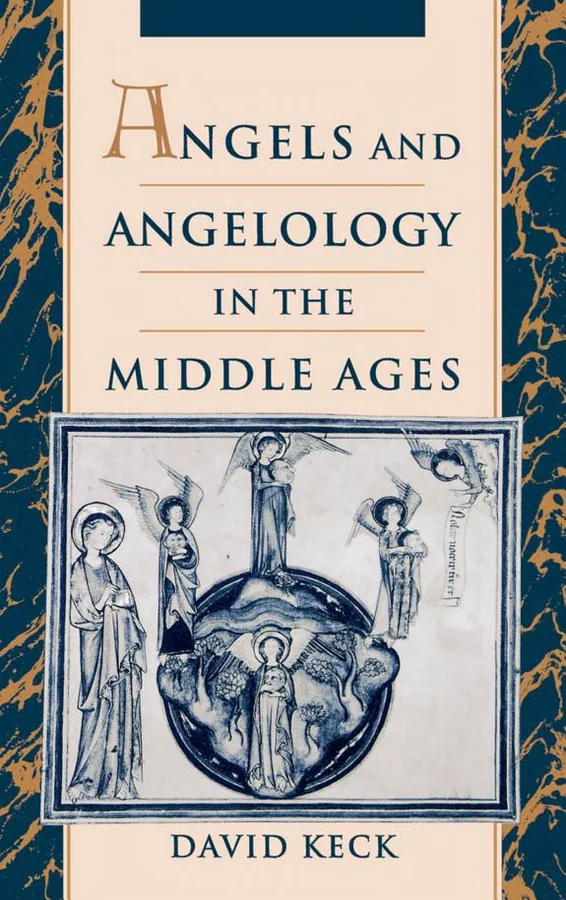
Angels and Angelology in the Middle Ages
 81
81

Angels and Angelology in the Middle Ages
David Keck's "Angels and Angelology in the Middle Ages" offers a comprehensive survey, moving beyond simple devotional accounts to explore the intellectual and cultural weight angels carried. The strength lies in its detailed tracing of how angelic concepts were integrated into scholastic philosophy, particularly how figures like Thomas Aquinas utilized angelic hierarchies to articulate complex theological arguments. A notable omission, however, is a deeper engagement with the practical, ritualistic use of angelology outside of formal theology, which remained a significant aspect of medieval spirituality. The passage discussing the architectural symbolism of angelic figures in cathedrals, linking them to celestial order, is particularly illuminating. Keck provides a solid academic foundation for understanding this crucial medieval subject.
📝 Description
81
### What Angels Represented David Keck's "Angels and Angelology in the Middle Ages" meticulously examines the pervasive presence of angelic beings in medieval Western society. Far from being mere theological footnotes, angels occupied a central role in the era's art, architecture, and intellectual discourse. The book charts their transformation from early Christian symbolism to their complex metaphysical elaborations by scholastic thinkers.
### Who Benefits from This Study This work is essential for scholars of medieval history, religious studies, and the history of ideas. It will also engage readers interested in the evolution of Western esotericism, the cultural impact of religious belief, and the symbolic language that shaped a millennium of thought. Those curious about the origins of modern angelology will find significant foundational material.
### The Medieval Angelic Landscape The Middle Ages, roughly spanning from the 5th to the 15th century, saw a profound integration of angelic hierarchies into daily life and grand theological systems. From the soaring Gothic cathedrals designed to emulate celestial architecture to the detailed angelological treatises of figures like Thomas Aquinas, these beings permeated the medieval imagination. Keck situates this phenomenon within the broader context of a society deeply concerned with the divine order and its earthly manifestations.
### Core Angelological Concepts The book explores the structured systems of angelic orders, often referencing Pseudo-Dionysius the Areopagite's hierarchical model. It delves into the specific functions attributed to different angelic choirs, their roles as intermediaries between God and humanity, and their representation in medieval visual culture. The intellectual scaffolding built around angels by scholastic philosophers, who used them to explain complex theological and cosmological concepts, is a key focus.
💡 Why Read This Book?
• Understand the philosophical framework of angelic hierarchies as presented by scholastic thinkers like Thomas Aquinas, grasping how these celestial beings served as essential conceptual tools in medieval theology. • Explore the physical and symbolic integration of angels in medieval art and architecture, exemplified by major shrines like Mont-St-Michel, revealing their pervasive influence on the era's visual landscape. • Gain insight into the evolving role of angelology from early Christian thought through the High Middle Ages, understanding its significance beyond pure theology and into the broader intellectual currents of Western Europe.
⭐ Reader Reviews
Honest opinions from readers who have explored this book.
❓ Frequently Asked Questions
What specific medieval shrines are discussed in relation to angel veneration?
The book highlights significant pilgrimage sites dedicated to Archangel Michael, including Mont-St-Michel in France and Monte Gargano in Italy, illustrating the popular devotion and architectural grandeur associated with angelic figures.
Which prominent scholastic philosophers are central to the study of medieval angelology?
Key figures such as Thomas Aquinas and his predecessors are examined for their systematic theological elaborations on angelic nature, hierarchy, and function within Christian doctrine.
How did angels influence medieval art and architecture?
Angels were depicted extensively in illuminated manuscripts, sculptures, and stained glass, often serving to reinforce theological concepts of divine order and heavenly presence within sacred spaces.
What is the historical period covered by the book?
The study focuses primarily on the High Middle Ages, from roughly the 11th to the 14th centuries, tracing the development and peak of angelic significance in Western thought and culture.
Does the book discuss the popular resurgence of interest in angels?
While acknowledging the modern popular imagination's renewed focus on angels, the book's core objective is to detail their historical prominence and intellectual weight during the medieval period.
What does 'angelology' specifically refer to in this context?
Angelology, as explored in the book, is the systematic theological and philosophical study of angels, their nature, ranks, functions, and significance within the divine cosmos and human experience.
🔮 Key Themes & Symbolism
Scholastic Angelic Systems
The work dissects the intricate metaphysical frameworks developed by medieval scholastics, such as Thomas Aquinas, to categorize and understand angelic beings. These systems, often drawing on Pseudo-Dionysius the Areopagite, detailed specific angelic orders and their functions as intermediaries. This intellectual scaffolding was crucial for explaining divine providence and the structure of the cosmos, demonstrating how angels were integral to the era's philosophical discourse.
Angels in Medieval Art and Architecture
Keck examines the pervasive visual representation of angels across medieval Europe. From grand cathedral sculptures and intricate manuscript illuminations to the very design of pilgrimage sites like Mont-St-Michel, angels were not merely decorative but served as potent symbols of divine presence and celestial order. Their imagery reinforced theological doctrines and shaped the spiritual experience of worshippers.
The Angelic as Intermediary
A central theme is the role of angels as conduits between the divine and human realms. The book illustrates how medieval thinkers and common people alike viewed angels as messengers, protectors, and agents of God's will. This concept underpinned much of medieval devotion and provided a framework for understanding spiritual communication and divine intervention in the material world.
Evolution of Angelic Concepts
The study traces the development of angelological thought from early Christian interpretations through the complex speculations of the High Middle Ages. It highlights how the understanding and depiction of angels shifted, becoming more systematized and intellectually elaborate over time, reflecting broader changes in theology, philosophy, and cultural expression during this formative period.
💬 Memorable Quotes
“Angels dominated the physical, temporal, and intellectual landscape of the medieval West.”
— This statement encapsulates the book's central argument: angels were not peripheral figures but fundamental to how medieval society perceived reality, organized itself, and understood the divine order.
“The great shrines dedicated to Michael the Archangel at Mont-St-Michel and Monte Garano.”
— These specific examples ground the abstract concept of angel veneration in tangible, historical places of pilgrimage, demonstrating the widespread popular devotion and the architectural investment in angelic cults.
“Elaborate metaphysical speculations of the great thirteenth-century scholastics.”
— This points to the intellectual core of medieval angelology, highlighting how thinkers like Aquinas engaged in rigorous philosophical inquiry to define the nature and role of angels within their theological systems.
“Recently angels have made a remarkable comeback in the popular imagination.”
— This observation serves as a contrast, emphasizing that the medieval period, not contemporary culture, was the true zenith of angelic influence and pervasive presence in Western thought and life.
“Seeking to discover how angels shaped the medieval worldview.”
— This phrase indicates the book's methodological approach: an investigative exploration into the functional impact of angelology on the broader cultural, spiritual, and intellectual fabric of the Middle Ages.
🌙 Esoteric Significance
Tradition
While not strictly an esoteric text in itself, "Angels and Angelology in the Middle Ages" provides crucial historical context for many Western esoteric traditions. Angelic hierarchies and lore are foundational elements in Hermeticism, Kabbalah, and ceremonial magic. Keck's work illuminates the pre-modern, predominantly Christian framework from which these esoteric interpretations often departed or were synthesized, offering a scholarly lens on the historical roots of angelic symbolism.
Symbolism
The book explores symbols like the angelic choirs (Seraphim, Cherubim, Thrones, etc.), which represent stages of divine emanation and spiritual ascent. Archangel Michael, often depicted with a sword, symbolizes spiritual warfare and divine justice. The concept of the angelic messenger itself is a potent symbol of divine communication and guidance, central to understanding inter-dimensional relationships and spiritual hierarchies.
Modern Relevance
Contemporary practitioners of ceremonial magic, angel magic, and certain New Age spiritualities draw directly from medieval angelological concepts. Thinkers in modern occultism often reinterpret these historical hierarchies for personal gnosis or ritualistic invocation. Keck's scholarship provides the essential historical and theological grounding for understanding the source material that continues to inspire these diverse modern esoteric practices.
👥 Who Should Read This Book
• Academic researchers in medieval history, theology, and the history of ideas seeking a comprehensive overview of angelic influence. • Students of Western esotericism interested in the historical roots of angelology within Christian traditions prior to its occult reinterpretations. • Readers fascinated by the cultural and intellectual history of the Middle Ages, particularly how religious beliefs shaped societal structures and worldview.
📜 Historical Context
David Keck's work emerged in 1998, a period marked by renewed popular interest in angels, yet it firmly anchors its study in the medieval epoch, the true apex of angelic influence. The 13th century, in particular, saw the flourishing of scholasticism, with figures like Thomas Aquinas integrating complex angelological doctrines into systematic theology. This intellectual current contrasted with earlier, more symbolic interpretations and later Renaissance shifts. Keck's research situates itself within medieval studies, engaging with the vast corpus of theological texts and artistic productions of the era. While the book doesn't explicitly detail contemporary reception of its ideas, it implicitly engages with scholars of medieval religion and philosophy, providing a comprehensive overview that informed subsequent scholarship on the subject.
📔 Journal Prompts
The scholastic classification of angelic choirs and their perceived functions.
The architectural symbolism of angels in medieval sacred spaces like Mont-St-Michel.
The conceptual role of angels as intermediaries in medieval thought.
The evolution of angel veneration from early Christianity through the 13th century.
The integration of angelic hierarchies within the metaphysical speculations of figures like Thomas Aquinas.
🗂️ Glossary
Angelology
The systematic study of angels, their nature, ranks, functions, and significance, particularly within theological and philosophical contexts.
Scholasticism
A medieval method of critical thought that employed a dialectical analysis to resolve learning and to explain (traditional authorities) based on a process of rigorous logical argument.
Pseudo-Dionysius the Areopagite
A 5th- or 6th-century Syrian monk and theologian whose writings, particularly 'De Coelesti Hierarchia' (On the Celestial Hierarchy), profoundly influenced medieval angelology and Christian mysticism.
Celestial Hierarchy
The ordered structure of angelic beings as described by Pseudo-Dionysius, typically divided into nine choirs, reflecting different levels of proximity to God and function.
Intermediary
In angelology, beings that act as a link or go-between, typically between the divine realm and the human world, conveying messages or divine influence.
Gothic Architecture
A style of architecture prevalent in Europe during the High and Late Middle Ages, characterized by pointed arches, ribbed vaults, and flying buttresses, often incorporating angelic iconography.
Archangel Michael
A principal angel in Abrahamic religions, often depicted as a warrior and leader of heavenly armies, venerated in numerous medieval shrines.