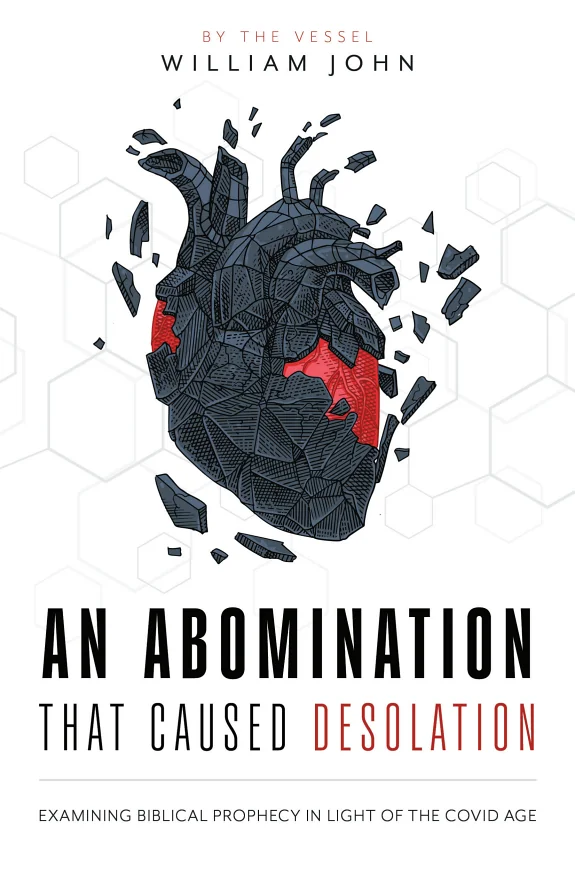
An Abomination that Caused Desolation
 78
78

An Abomination that Caused Desolation
William John's "An Abomination that Caused Desolation" grapples with the disorienting period beginning March 2020, moving past a simple timeline of events to analyze the psychological underpinnings of societal reaction. The author highlights the insidious spread of fear, a force John argues was more potent than the virus itself. A notable strength is the deconstruction of how confusion was weaponized to foster compliance, particularly evident in the early stages of the pandemic when pronouncements of "only for two weeks" became the norm. However, the work occasionally falters in its directness, sometimes hinting at conspiracies without fully substantiating them within the text, leaving the reader to connect dots that could benefit from clearer exposition. The concept of "narrative control" is particularly potent, dissecting how carefully curated information streams can shape mass perception. Ultimately, the book serves as a stark reminder of the fragility of critical thought in the face of overwhelming collective anxiety.
📝 Description
78
### What It Is An Abomination that Caused Desolation, first published in 2023, offers a critical examination of societal responses to the COVID-19 pandemic. The work dissects the rapid shift in global norms and the psychological impact of pervasive fear and confusion that accompanied the virus's spread. It moves beyond a mere chronicle of events to question the underlying mechanisms of societal control and individual compliance.
### Who It's For This book is intended for readers interested in critical social theory, the psychology of mass behavior, and the philosophical implications of global crises. It appeals to those who question official narratives and seek to understand the forces shaping collective consciousness during periods of widespread disruption. It will particularly engage individuals disillusioned with mainstream discourse surrounding public health events.
### Historical Context The publication in 2023 places the work within the immediate aftermath of the most acute phases of the COVID-19 pandemic. It reflects a growing academic and public discourse that began questioning the extensive lockdowns, mandates, and the rapid societal transformations implemented globally starting in March 2020. The book emerged as a counter-narrative to the prevailing accounts, seeking to analyze the 'abomination' from a perspective that prioritizes individual liberty and critical inquiry over enforced conformity.
### Key Concepts Central to the book is the concept of 'mass psychosis,' exploring how widespread fear can create a shared delusion that overrides rational thought. The author also examines 'narrative control,' detailing how dominant stories are constructed and disseminated to influence public perception and behavior. The work posits that the pandemic served as a catalyst for a pre-existing agenda, accelerated by the global emergency, leading to an 'abomination' of societal structures.
💡 Why Read This Book?
• Understand the psychological mechanics of 'mass psychosis' as detailed in the book, offering insights into how widespread fear can override rational decision-making during crises like the one that began in March 2020. • Learn about 'narrative control' as presented in the text, providing concrete examples of how dominant stories shape public perception and behavior during times of uncertainty. • Gain a critical perspective on the societal shifts that occurred post-2020, challenging conventional interpretations and encouraging independent analysis of events and their underlying causes.
⭐ Reader Reviews
Honest opinions from readers who have explored this book.
❓ Frequently Asked Questions
What is the central thesis of "An Abomination that Caused Desolation"?
The central thesis is that the COVID-19 pandemic, beginning in March 2020, was exploited to impose a new, fear-driven societal order, creating an 'abomination' that suppressed critical thought and individual liberty under the guise of public health.
When was "An Abomination that Caused Desolation" first published?
The book was first published on October 3, 2023, making it a contemporary analysis of recent global events.
What historical events does the book primarily address?
The book primarily addresses the societal and psychological impact of the COVID-19 pandemic, which began its rapid global spread in early 2020.
Who is the author of "An Abomination that Caused Desolation"?
The author is William John, whose work first appeared in print on October 3, 2023.
What psychological phenomenon does the book explore in relation to the pandemic?
The book explores 'mass psychosis,' examining how fear and confusion can lead to collective delusion and a suspension of critical thinking during times of crisis.
What is the "abomination" referred to in the title?
The "abomination" refers to the perceived imposition of a new, fear-based societal control system and the erosion of individual autonomy that the author argues was accelerated by the pandemic.
🔮 Key Themes & Symbolism
The Psychology of Fear
The work dissects how fear, amplified by media and official pronouncements starting in March 2020, became a primary driver of societal behavior. It explores how this pervasive emotion can lead individuals to abandon critical thinking and readily accept drastic measures, even those presented as temporary. The author posits that fear creates a fertile ground for manipulation, transforming rational populations into easily directed masses susceptible to a singular, often unexamined, narrative.
Narrative Control and Mass Delusion
This theme examines how dominant narratives are constructed and disseminated during crises. The book argues that the events of 2020 were framed in a way that fostered confusion and hysteria, making it difficult for individuals to discern truth from manufactured consensus. The concept of 'mass psychosis' is central here, illustrating how a shared, often irrational, belief system can emerge and solidify, overriding empirical evidence or dissenting viewpoints.
Erosion of Autonomy
The book critically analyzes the gradual erosion of individual freedoms and autonomy under the guise of collective safety, particularly in the wake of the pandemic's emergence. It questions the legitimacy of mandates and restrictions implemented in 2020, framing them as tools for control rather than genuine public health measures. This theme encourages readers to question authority and reassert their capacity for independent judgment and action.
The 'Abomination' as Societal Shift
The title itself points to a profound, negative transformation of societal norms and individual consciousness. The 'abomination' is presented not just as a consequence of the pandemic but as a deliberate acceleration of pre-existing trends towards centralized control and conformity. The work challenges readers to recognize and resist this shift, advocating for a return to critical inquiry and personal sovereignty.
💬 Memorable Quotes
“Fear was the true contagion, spreading faster than any virus.”
— This highlights the author's core argument that the psychological impact of the pandemic, specifically fear, was more significant and damaging than the physical threat of the disease itself.
“The promise of 'only two weeks' became a gateway to indefinite control.”
— This quote points to the perceived deception in early pandemic messaging, suggesting that temporary measures were used as a pretext for establishing lasting societal restrictions and control.
“Confusion clouded minds, making truth a scarce commodity.”
— This interpretation emphasizes how the deliberate or unintentional spread of misinformation and conflicting information served to disorient the public, hindering their ability to assess situations rationally.
“Mass psychosis is not a diagnosis, but a description of collective delusion.”
— This clarifies the author's use of the term 'mass psychosis,' defining it as a societal phenomenon of shared delusion rather than an individual psychological disorder.
“Compliance was engineered through manufactured hysteria.”
— This suggests that the widespread adherence to pandemic-related measures was not a natural response but a carefully orchestrated outcome driven by artificially generated panic and fear.
🌙 Esoteric Significance
Tradition
While not explicitly tied to a singular esoteric lineage, the work draws heavily on Gnostic themes of hidden knowledge, manipulation by external forces, and the awakening of consciousness. It echoes Hermetic principles of understanding underlying causes and questioning appearances. The critique of mass delusion and the call for individual discernment align with traditions emphasizing inner truth and resistance to illusory external systems.
Symbolism
The 'abomination' itself functions as a potent symbol of corrupted order and unnatural states, a concept found in various apocalyptic and Gnostic texts. The virus, while literal, can be seen as a symbol for a more pervasive spiritual or mental contamination. Fear and confusion are symbolic representations of the veils that obscure true understanding, akin to the veils of Maya in Eastern philosophies, preventing individuals from perceiving reality clearly.
Modern Relevance
Contemporary thinkers focused on consciousness studies, post-truth politics, and critical analysis of media manipulation find resonance in John's work. Its examination of how collective psychology can be steered is relevant to discussions on social engineering, the power of algorithms, and the future of individual autonomy in an increasingly interconnected and surveilled world. It informs analyses of societal control mechanisms relevant to various alternative spiritual and philosophical movements.
👥 Who Should Read This Book
• Critical thinkers and researchers interested in the socio-political and psychological ramifications of the COVID-19 pandemic, particularly those questioning mainstream narratives. • Individuals exploring concepts of mass psychology, societal control, and narrative manipulation, seeking deeper analyses beyond surface-level reporting. • Readers interested in esoteric interpretations of modern events, who look for symbolic meanings and underlying spiritual or philosophical currents driving global changes.
📜 Historical Context
Published in 2023, "An Abomination that Caused Desolation" enters a landscape of critical discourse emerging from the global COVID-19 pandemic, which began its widespread impact in March 2020. The work engages with intellectual currents that question authority and dominant narratives, aligning with a resurgence of interest in critical theory and individual liberty. It stands in contrast to prevailing accounts that largely accepted the necessity of rapid, widespread public health interventions. The book's perspective can be situated alongside contemporaneous critiques from figures like Robert Malone and others who voiced concerns about censorship and the scientific establishment's response. The intellectual climate of the early 2020s, marked by widespread social upheaval and debate over information control, provides the backdrop for this analysis of engineered fear and societal transformation.
📔 Journal Prompts
The concept of 'mass psychosis' as a collective delusion, beginning March 2020.
Reflections on 'narrative control' and its impact on personal beliefs.
The author's depiction of the 'abomination' and its societal implications.
Analyzing the role of fear in decision-making during the pandemic.
Personal strategies for maintaining critical thinking amidst widespread confusion.
🗂️ Glossary
Mass Psychosis
A phenomenon where a large portion of a society adopts a specific delusion or set of delusions, often characterized by a suspension of critical thinking and an embrace of a shared, often irrational, narrative.
Narrative Control
The deliberate shaping and dissemination of information to influence public perception, opinion, and behavior, often serving specific agendas or interests.
Abomination
In the context of the book, refers to a profoundly disturbing and unnatural societal shift or imposition, particularly one that corrupts fundamental principles of freedom and reason.
Manufactured Hysteria
The deliberate creation and amplification of widespread panic and fear within a population, often through media or propaganda, to achieve specific outcomes.
Erosion of Autonomy
The gradual weakening or loss of an individual's capacity for self-governance, independent thought, and freedom of choice, often due to external pressures or control mechanisms.
Two Weeks to Flatten the Curve
A slogan used in early 2020 to justify initial pandemic lockdowns, which the book critiques as a deceptive precursor to more extensive and prolonged restrictions.
COVID-19 Pandemic
The global outbreak of the SARS-CoV-2 virus, which began its rapid spread in early 2020, leading to widespread societal disruption and public health measures.