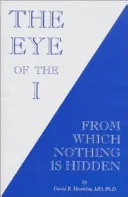
Transcending the Levels of Consciousness

 71
71

Transcending the Levels of Consciousness
David R. Hawkins’s 2006 text, "Transcending the Levels of Consciousness," offers a densely detailed, scalar approach to spiritual development. Its strength lies in providing a precise, albeit rigid, framework for self-assessment. Hawkins’s meticulous calibration of consciousness levels, from the crushing weight of Shame (20) to the transcendent clarity of Enlightenment (1000), gives readers concrete anchors for understanding their inner landscape. The concept of 'kinesiology' as a tool for discerning truth is particularly intriguing, though its application and verification are left somewhat implicit within the text. However, the sheer scale and the often-absolute pronouncements can feel overwhelming, and the lack of nuanced exploration for those who may not fit neatly into these defined levels is a notable limitation. The book demands a certain surrender to its system, which might alienate readers seeking more flexible or experiential paths. Ultimately, it serves as a powerful, if dogmatic, cartography of the psyche for the dedicated seeker.
📝 Description
71
### What It Is
David R. Hawkins's "Transcending the Levels of Consciousness," first published in 2006, presents a complex map of human awareness. The work categorizes consciousness into a hierarchy of levels, each associated with specific emotions, beliefs, and energetic frequencies. Hawkins posits that by understanding these levels, individuals can identify their current state and consciously work toward ascending to higher, more positive states of being.
### Who It's For
This book is intended for individuals seeking a structured framework for personal growth and spiritual development. It appeals to those interested in the intersection of psychology, spirituality, and energy medicine. Readers who appreciate detailed, hierarchical systems and are motivated by self-improvement and the pursuit of enlightenment will find particular value here. It requires a willingness to engage with abstract concepts and potentially re-evaluate deeply held beliefs.
### Historical Context
Emerging in the early 21st century, "Transcending the Levels of Consciousness" arrived during a period of increased interest in New Age spirituality and alternative healing modalities. Hawkins's work built upon earlier concepts of spiritual evolution found in traditions like Theosophy and the teachings of figures such as Helena Blavatsky and Edgar Cayce. It offered a more empirical and quantifiable approach to consciousness, distinguishing itself from more purely philosophical or faith-based systems. The book's publication coincided with a growing body of literature exploring mind-body connections and subtle energies.
### Key Concepts
The core of Hawkins's model is the Scale of Consciousness, a logarithmic scale from 1 to 1000, where levels below 200 are considered destructive (e.g., Shame, Guilt, Apathy) and levels above 200 are constructive (e.g., Courage, Love, Peace). The book details the characteristics of each level, the associated physiological and psychological states, and the energetic signatures they emit. Hawkins also introduces the concept of 'Truth vs. Falsehood' and the importance of distinguishing between them to facilitate spiritual progress. The mechanism of 'Non-Linearity' is also explored, suggesting that consciousness does not necessarily progress in a straight line.
💡 Why Read This Book?
• Understand the energetic signature of emotions like Fear and Joy, as detailed in the Scale of Consciousness, to identify personal energetic blocks. • Learn about the concept of 'Calibration' as presented in the book to scientifically (according to Hawkins) assess the truthfulness of information and people. • Gain insight into the 'Levels of Consciousness' themselves, such as Courage (200) and Love (500), to map out a trajectory for personal spiritual advancement.
⭐ Reader Reviews
Honest opinions from readers who have explored this book.
❓ Frequently Asked Questions
What is the primary framework presented in "Transcending the Levels of Consciousness"?
The book's core framework is the Scale of Consciousness, a logarithmic scale from 1 to 1000 that calibrates spiritual and emotional states, from Shame (20) at the lowest end to Enlightenment (1000) at the highest.
Who is David R. Hawkins and what is his background?
David R. Hawkins (1927-2008) was an American psychiatrist, author, and spiritual teacher. He was known for his work on consciousness, healing, and spirituality, often integrating scientific and spiritual perspectives.
When was "Transcending the Levels of Consciousness" first published?
The book "Transcending the Levels of Consciousness" was first published in 2006, building upon the concepts introduced in his earlier works.
Does the book offer practical exercises for self-improvement?
Yes, while presenting a theoretical framework, the book implies practical application by encouraging readers to 'calibrate' their own consciousness and discern truth, thereby guiding their personal growth.
What is the concept of 'kinesiology' in Hawkins's work?
Hawkins utilized kinesiology, a form of muscle testing, as a tool to empirically determine the truth or falsehood of statements and the energetic level associated with them.
How does this book relate to other spiritual or psychological theories?
It connects to various spiritual traditions by mapping consciousness levels, similar to concepts found in Eastern philosophies, while also employing a quasi-scientific, empirical approach often associated with modern psychology.
🔮 Key Themes & Symbolism
The Scale of Consciousness
This central theme is a logarithmic scale ranging from 1 to 1000, representing the full spectrum of human awareness. Hawkins assigns numerical values to emotions, beliefs, and states of being, with levels below 200 indicating negative, destructive influences (e.g., Guilt, Apathy) and levels above 200 signifying positive, constructive influences (e.g., Courage, Love, Peace). This scale serves as a diagnostic tool for individuals to assess their own spiritual and emotional condition and identify areas for growth towards higher states like Joy and Enlightenment.
Truth vs. Falsehood Calibration
A significant aspect of the book involves the concept of 'calibration,' a method Hawkins claims can empirically distinguish truth from falsehood. Using applied kinesiology (muscle testing), he asserts that 'truth' raises the body's energy level, while 'falsehood' lowers it. This principle is applied not only to abstract concepts and spiritual teachings but also to everyday information and interactions, guiding the reader to align with verifiable realities and shed illusions.
Energetic Anatomy and Healing
Hawkins posits that all phenomena, including thoughts and emotions, have specific energetic frequencies. Lower consciousness levels broadcast 'disharmonic' frequencies that attract similar negative experiences and can manifest as physical illness. Conversely, higher consciousness levels broadcast 'harmonic' frequencies that promote well-being and attract positive outcomes. Understanding this energetic anatomy is presented as key to healing oneself and transforming one's reality.
The Power of Choice and Free Will
Despite the deterministic feel of a consciousness scale, the book strongly emphasizes the power of individual choice. Hawkins argues that while we may be influenced by our current level of consciousness, we possess the free will to choose our thoughts, attitudes, and responses. This capacity for choice is the primary mechanism through which individuals can consciously work to shift their energetic frequency and ascend the Scale of Consciousness.
💬 Memorable Quotes
“All is revealed by the level of consciousness it represents.”
— This statement encapsulates Hawkins's belief that the truth or falsity of any statement, concept, or entity can be objectively measured by the energetic frequency it embodies and broadcasts.
“The level of consciousness of the speaker is the most important factor.”
— Hawkins suggests that the speaker's own spiritual and emotional state is a more critical determinant of the value and truth of their message than the content itself.
“The world is a mirror of the consciousness of the observer.”
— This paraphrased concept implies that our external reality is a direct reflection of our internal state of awareness and the level of consciousness we embody.
“The highest levels of consciousness are characterized by the absence of conflict.”
— Hawkins links spiritual progression to a state of inner peace and non-resistance, where higher states like Peace and Enlightenment are defined by their freedom from internal and external strife.
“The power of a statement is determined by the level of consciousness of the source.”
— This interpretation highlights how the energetic impact and truth-value of communication are directly proportional to the spiritual evolution of the communicator.
🌙 Esoteric Significance
Tradition
Hawkins's work can be seen as a modern interpretation within the broader Western esoteric tradition, particularly influenced by Gnostic and Neoplatonic ideas of hierarchical spiritual planes and the ascent of the soul. It echoes the concept of 'ascent' found in Hermeticism and Kabbalah, but it departs by attempting to provide a quantitative, empirical 'calibration' rather than relying solely on symbolic interpretation or mystical experience. It bridges esoteric thought with a quasi-scientific, psychological framework.
Symbolism
The primary symbol is the logarithmic 'Scale of Consciousness' itself, representing a map of spiritual evolution. Other implicit symbols include the energetic frequencies associated with each level – lower levels embodying 'darkness' or 'density' and higher levels 'light' or 'clarity.' The concept of 'kinesiology' acts as a symbolic tool for discerning truth, representing a physical manifestation of energetic integrity, akin to dowsing rods or pendulums in other traditions.
Modern Relevance
Hawkins's work continues to influence contemporary spiritual teachers, life coaches, and practitioners in fields like energy psychology and consciousness studies. Thinkers in the 'Law of Attraction' and 'positive psychology' spheres often reference his concepts of energetic frequencies and the power of positive emotions. His emphasis on empirical verification through kinesiology also finds echoes in modern biofeedback and subtle energy research communities.
👥 Who Should Read This Book
• Individuals seeking a structured, quantifiable map of spiritual and emotional development, offering precise levels from Shame to Enlightenment. • Aspiring healers and therapists interested in understanding the energetic underpinnings of disease and well-being as presented by Hawkins. • Researchers or practitioners of esoteric philosophy interested in empirical methodologies applied to consciousness studies and spiritual progression.
📜 Historical Context
Published in 2006, "Transcending the Levels of Consciousness" emerged in an era marked by widespread interest in the mind-body connection, alternative healing, and personal transformation. David R. Hawkins's work drew from, yet sought to refine, existing spiritual frameworks. While figures like Helena Blavatsky and the Theosophical Society had previously explored hierarchical spiritual planes, Hawkins introduced a quantifiable, empirical methodology using applied kinesiology. This approach distinguished his work from more philosophical or faith-based systems prevalent in the New Age movement. Unlike the more intuitive explorations of contemporaries such as Eckhart Tolle, Hawkins's model offered a precise, logarithmic scale. The book's reception was largely within specialized spiritual and self-help circles, resonating with those seeking structured, verifiable paths to enlightenment, though it faced skepticism from mainstream scientific and academic communities.
📔 Journal Prompts
The concept of 'Calibration' and its application to your daily information intake.
Identifying your current dominant 'Level of Consciousness' based on the book's descriptions.
Exploring the energetic distinction between Love (500) and Fear (100).
Reflecting on how 'Non-Linearity' might apply to your personal growth journey.
Assessing the 'Truth vs. Falsehood' of a belief you hold using Hawkins's principles.
🗂️ Glossary
Scale of Consciousness
A logarithmic scale developed by David R. Hawkins, ranging from 1 to 1000, which calibrates the level of spiritual and emotional development associated with specific emotions, attitudes, and states of being.
Calibration
Hawkins's term for the process of determining the truth value or energetic level of a statement, concept, or entity, often utilizing applied kinesiology (muscle testing).
Kinesiology
A technique involving muscle testing used by Hawkins to empirically detect the energetic truth or falsehood of information, positing that truth strengthens muscles and falsehood weakens them.
Harmonic vs. Disharmonic
Describes the energetic frequencies associated with consciousness levels. Harmonic frequencies (levels above 200) are considered constructive and life-affirming, while disharmonic frequencies (levels below 200) are destructive and life-negating.
Attractor Patterns
Mental patterns or beliefs that act like magnets, attracting corresponding experiences and circumstances from the environment based on the individual's dominant level of consciousness.
Non-Linearity
The concept that spiritual and personal growth does not always occur in a straightforward, sequential manner. Progress can be uneven, with periods of apparent regression or sudden leaps.
Enlightenment
The highest level on Hawkins's Scale of Consciousness, calibrated at 1000, representing a state of complete spiritual realization, unconditional love, and non-dual awareness.