The Way of Life

 84
84

The Way of Life
Lao Tzu’s The Way of Life arrives not with thunder but with a whisper, a characteristic of its core teachings. Its brevity belies its immense philosophical weight, offering a counterpoint to the often verbose spiritual literature. The sections on Wu Wei, or effortless action, are particularly striking. For instance, the passage describing how water, the softest of things, can overcome the hardest, serves as a potent metaphor for achieving strength through yielding. However, the text’s very nature as a collection of aphorisms can sometimes lead to ambiguity. A reader accustomed to linear argumentation might find themselves rereading passages multiple times to grasp their intended meaning. The 1968 publication date of this specific edition (though the work is ancient) places it within a period of renewed Western interest in Eastern philosophies, making it accessible to a modern audience. It remains a vital text for anyone questioning the efficacy of overt control and seeking an alternative mode of being.
📝 Description
84
Lao Tzu's The Way of Life, written around the 4th century BCE, articulates the Taoist cosmology.
The Way of Life is a foundational text in Taoist philosophy, attributed to Lao Tzu. The work presents a cosmology and ethical framework centered on the concept of the Tao, the fundamental principle of the universe. It is not a narrative but a collection of aphorisms and teachings. These are designed to guide the reader toward alignment with the Tao. The text is known for its paradoxical statements and its emphasis on naturalness, simplicity, and non-action, or wu wei.
Individuals seeking to understand the roots of Eastern philosophical traditions will find this text valuable. It appeals to those interested in concepts of flow, balance, and the natural order. Scholars of comparative religion and philosophy will find its insights crucial for grasping the development of Taoist thought. Those disillusioned with rigid doctrines may find its emphasis on yielding and emptiness particularly resonant.
Emerging from ancient China during a period of intense philosophical inquiry, The Way of Life contrasts with the more socially ordered thought of Confucianism. Its ideas circulated orally and in earlier forms before significant compilation, gaining influence during the Han Dynasty. It became a cornerstone of Taoism, a tradition focused on living in harmony with the Tao, the ineffable, all-encompassing principle that underlies and governs the universe. The text's influence is significant in shaping a spiritual path distinct from more structured religious or philosophical systems.
💡 Why Read This Book?
• You will learn how the concept of Wu Wei, as presented in The Way of Life, offers a distinct approach to problem-solving and personal conduct that differs from Western models of assertive action. • You will gain an understanding of the Tao, the fundamental, ineffable principle described in the text, which provides a cosmological framework for natural order and existence. • You will explore the principle of Ziran, or naturalness, as advocated by Lao Tzu, encouraging a way of living that is spontaneous and unforced, a stark contrast to societal conditioning.
⭐ Reader Reviews
Honest opinions from readers who have explored this book.
❓ Frequently Asked Questions
When was The Way of Life by Lao Tzu first published?
The Way of Life, attributed to Lao Tzu, has ancient origins, but the specific edition referenced was first published in 1968. The original text's composition is believed to be much older, possibly dating back to the Spring and Autumn period of ancient China.
What is the central philosophy of The Way of Life?
The central philosophy revolves around the Tao, the ineffable natural order of the universe. It advocates for living in accordance with this principle through Wu Wei (effortless action) and Ziran (naturalness), emphasizing simplicity and yielding.
Who is Lao Tzu?
Lao Tzu is a semi-legendary ancient Chinese philosopher credited with writing The Way of Life. He is considered a foundational figure in Taoism, though historical details about his life are scarce and often intertwined with myth.
What does 'Wu Wei' mean in The Way of Life?
Wu Wei translates to 'non-action' or 'effortless action.' It signifies acting in harmony with the natural flow of the Tao, without force or unnecessary exertion, achieving results through spontaneity and adaptability.
How does The Way of Life differ from Confucianism?
While Confucianism emphasizes social order, ritual, and hierarchical relationships, The Way of Life focuses on naturalness, individual spontaneity, and alignment with the cosmic Tao, often advocating for a withdrawal from societal complexities.
Is The Way of Life a religious text?
The Way of Life is primarily a philosophical text that forms the basis of Taoism. While it has profound spiritual implications and is revered by many, it is often approached as a guide to living rather than a scripture in the Abrahamic sense.
🔮 Key Themes & Symbolism
The Ineffable Tao
The Tao is presented as the ultimate reality, the source from which all existence arises and to which all returns. It is beyond conceptualization, nameless, and formless, yet it is the underlying principle governing the entire cosmos. The text emphasizes that attempting to define or grasp the Tao through intellect is futile; true understanding comes from direct experience and alignment with its spontaneous unfolding. This theme encourages a surrender of ego and intellectual rigidity in favor of intuitive apprehension of universal truths.
Wu Wei: Effortless Action
Wu Wei is a cornerstone concept, advocating for action that is in accordance with the natural flow of things, devoid of force, striving, or artificiality. It is not passivity but a state of being where actions arise spontaneously and effectively, much like natural processes. The text uses metaphors like water, which yields yet overcomes the hardest substances, to illustrate Wu Wei. This theme offers a profound re-evaluation of efficacy, suggesting that true power lies in adaptability, receptivity, and acting without intent to control.
Ziran: Naturalness and Spontaneity
Ziran signifies the state of being 'so of itself' or naturalness. It is the inherent quality of things when they are allowed to unfold according to their own nature, free from external imposition or artificial constraints. The Way of Life champions a return to this state, urging individuals and societies to shed artifice and conformity. This theme is deeply connected to the Tao, as Ziran is the manifestation of the Tao in individual beings and phenomena, promoting authenticity and unadorned existence.
The Paradox of Opposites
Lao Tzu masterfully employs paradox to highlight the interconnectedness and relativity of apparent opposites. Concepts like being and non-being, hard and soft, high and low are shown to be interdependent and mutually defining. The text suggests that by understanding these relationships, one can transcend dualistic thinking. This approach challenges conventional logic and encourages a holistic perception where apparent contradictions are harmonized within a greater unity, reflecting the dynamic balance of the Tao.
💬 Memorable Quotes
Direct passages from the work, attributed to the author.
“The Tao that can be told is not the eternal Tao. The name that can be named is not the eternal name.”
— This opening statement immediately establishes the ineffable nature of the Tao. It asserts that any attempt to define it verbally or conceptually will fall short of its true, eternal essence, which transcends language and fixed identity.
“The softest thing in the world overcomes the hardest. That which is without substance enters that which is without pores.”
— This illustrates the principle of Wu Wei. It highlights how yielding, flexibility, and subtlety (like water) possess a power that can overcome rigidity and force, demonstrating that true strength often lies in adaptability rather than brute power.
“When people see some things as beautiful, other things acquire the ugliness. When people see some things as good, other things acquire the bad.”
— This points to the relativity of human judgments and values. The creation of dualistic categories like beauty/ugliness or good/bad is seen as a product of societal conditioning, obscuring the natural state of things and leading to artificial distinctions.
“Therefore the sage, in the midst of chaos, still finds his peace. He acts without acting, teaches without speaking.”
— This describes the ideal sage who embodies the principles of Wu Wei and Ziran. Such a person remains centered amidst turmoil by acting spontaneously and naturally, without imposing their will, and by embodying wisdom rather than lecturing about it.
“He who knows does not speak. He who speaks does not know.”
— This aphorism reinforces the idea that true wisdom is often silent and experiential. Those who possess deep understanding may not feel the need to articulate it, while those who speak extensively might be revealing their lack of genuine insight.
🌙 Esoteric Significance
Tradition
The Way of Life is the foundational text of philosophical Taoism and deeply influences its religious and esoteric branches. While not fitting neatly into Western esoteric lineages like Hermeticism or Kabbalah, it shares with them an interest in understanding ultimate reality and achieving harmony with cosmic principles. Its emphasis on the Tao as an ineffable, energetic source connects it to Gnostic ideas of the Pleroma or certain Neoplatonic concepts of the One, though its methodology is distinctly Eastern, focusing on naturalness and yielding rather than esoteric knowledge acquisition.
Symbolism
The primary symbol is water, representing the yielding, adaptable, and persistent nature of the Tao and Wu Wei. Water's ability to take any shape, flow into the lowest places, and yet wear away the hardest stone embodies the text's philosophy. Another key motif is the 'uncarved block' (pu), symbolizing the original, unadulterated state of nature and simplicity before societal artifice intervenes. This state represents purity, potential, and naturalness, free from the complexities and desires that obscure the Tao.
Modern Relevance
Contemporary thinkers and practitioners in fields ranging from mindfulness and alternative medicine to leadership studies and ecological activism draw heavily on The Way of Life. Its principles of Wu Wei and Ziran are seen as antidotes to modern society's emphasis on constant productivity, control, and artificiality. Practices like Tai Chi and Qigong are direct manifestations of its philosophy in embodied form. Many seeking a spiritual path outside of organized religion find its focus on natural order and inner harmony profoundly relevant.
👥 Who Should Read This Book
• Students of Eastern philosophy: Individuals seeking to understand the core tenets of Taoism and its historical development, particularly its divergence from Confucian thought. • Seekers of alternative spiritual paths: Those drawn to contemplative practices, natural living, and philosophies that emphasize balance, simplicity, and non-interference. • Leaders and change-makers: Individuals interested in applying principles of effortless action (Wu Wei) and natural leadership to organizational or societal challenges, offering a counterpoint to command-and-control structures.
📜 Historical Context
The Way of Life emerged from the intellectual ferment of ancient China's Spring and Autumn period (771–476 BCE), a time of great philosophical and social upheaval. Lao Tzu, the attributed author, is often contrasted with Confucius, whose own teachings, emphasizing social order, ritual propriety (li), and hierarchical relationships, were gaining traction. While the text's composition is traditionally dated to this era, its ideas were likely transmitted and refined over centuries before being compiled. Its philosophical approach, prioritizing naturalness and spontaneity over societal constructs, offered a radical alternative to the burgeoning Confucian orthodoxy. The text’s influence solidified during the Han Dynasty (206 BCE – 220 CE), becoming a foundational scripture for Taoism and influencing Chinese art, medicine, and governance for millennia. Its reception has been varied, sometimes seen as apolitical, other times as a guide for rulers seeking to govern by minimal intervention.
📔 Journal Prompts
The Tao's ineffability: How does the concept of the nameless Tao challenge your understanding of reality?
Reflecting on Wu Wei: Identify an area in your life where forceful action is counterproductive, and consider a Wu Wei approach.
Ziran's call: In what ways do societal expectations obscure your natural inclinations, and how might you reclaim Ziran?
The uncarved block: What does the symbol of 'pu' (uncarved block) suggest about your own inherent potential?
Paradoxical wisdom: Explore a personal belief that relies on a strict dichotomy, and consider its opposite.
🗂️ Glossary
Tao (Dao)
The fundamental, ineffable principle underlying the universe. It is the source, the way, and the natural order of all things, beyond human comprehension and description.
Wu Wei
Literally 'non-action' or 'effortless action.' It signifies acting in harmony with the natural flow of the Tao, without force, striving, or artificiality, achieving results spontaneously and effectively.
Ziran
Naturalness, spontaneity, or 'being so of itself.' It refers to the state of things when allowed to unfold according to their inherent nature, free from external imposition.
Pu
The 'uncarved block' or 'plain wood.' It symbolizes the original, simple, and unadulterated state of nature and potential before societal influences and artificial distinctions are applied.
De (Te)
Often translated as 'virtue' or 'power.' It represents the manifestation of the Tao within individual beings or things; the inherent quality or potency that arises from aligning with the Tao.
Yin and Yang
Complementary, interdependent forces that govern the universe. Yin (passive, dark, feminine) and Yang (active, light, masculine) represent a dynamic balance, not an absolute opposition.
Sage
An individual who embodies the principles of the Tao, living in accordance with Wu Wei and Ziran. The sage acts with wisdom, humility, and detachment from worldly ambition.
🔮 Readers Also Liked
Browse all →







More by 老子
All books →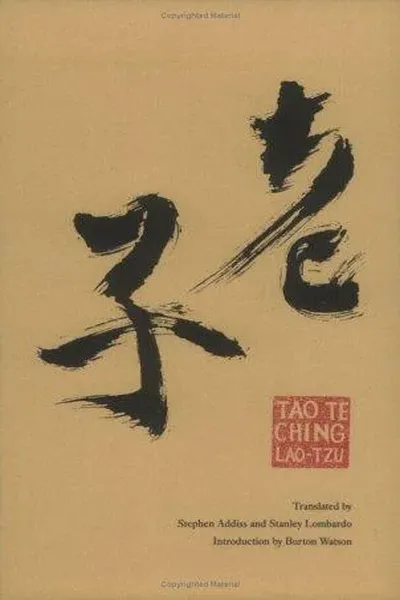





More Free Occult Philosophy Books
View all →