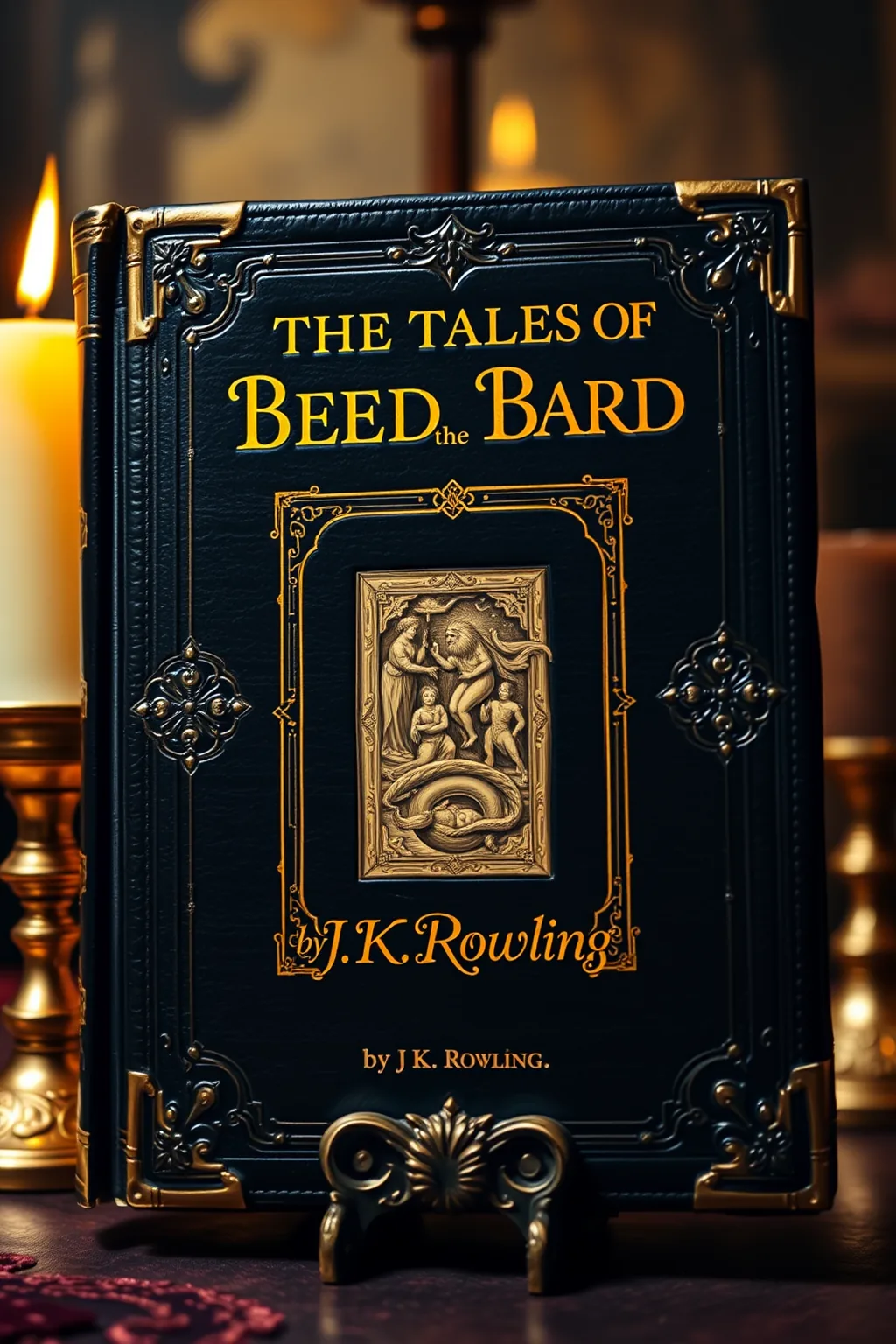
The Tales of Beedle the Bard
 83
83

The Tales of Beedle the Bard
Rowling's "The Tales of Beedle the Bard" presents a fascinating meta-narrative, functioning both as a fictional artifact within the Harry Potter universe and a standalone collection of moralistic tales. The strength of the book lies in its clever integration of lore; "The Tale of the Three Brothers" alone is a masterclass in concise, impactful storytelling that recontextualizes a major plot element. However, some of the other tales, while charming, occasionally feel less developed, perhaps serving the narrative purpose of their inclusion in the larger Harry Potter canon more than standing entirely on their own. The annotations by Albus Dumbledore, which frame the stories with his own reflections, are a particular highlight, offering a character-driven perspective that adds significant depth. The limitation, if any, is that a reader entirely unfamiliar with the Harry Potter universe might miss some of the resonance, though the tales hold up as allegories. The work is a curious blend of child-friendly fable and adult-oriented thematic exploration.
📝 Description
83
Published in 2007, J. K. Rowling's The Tales of Beedle the Bard collects five wizarding fairy tales.
This volume presents five fairy tales, purportedly written by a wizard named Beedle the Bard and introduced by J. K. Rowling. First appearing in 2007, the collection offers insights into the magical society established in the Harry Potter series. The stories are not simple children's fables; they often address serious themes such as love, death, and the exercise of free will, frequently concluding with unexpected turns.
The book appeals to readers familiar with the Harry Potter universe, particularly those interested in how folklore shapes fictional societies and conveys moral lessons. Those expecting straightforward children's stories may be surprised by the darker undertones and thematic complexity. The tales are best suited for readers who appreciate layered narratives and reinterpretations of traditional fairy tale structures.
Within its fictional context, the book's 2007 release mirrored real-world trends of expanding fictional universes through companion materials. Its creation also supported the charity Lumos, linking the fictional artifact to a contemporary philanthropic effort. The book provided fans with expanded lore and a tangible piece of the wizarding world.
While presented as wizarding folklore, these tales function as parables, much like Aesop's fables or the moral tales found in various religious and philosophical traditions. "The Tale of the Three Brothers," for instance, directly connects to the concept of the Deathly Hallows, a significant element in the main series, functioning as a creation myth or origin story within the wizarding world's lore. The stories explore the ethical dimensions of magic and human nature, offering wisdom pertinent to the characters' lives and choices.
💡 Why Read This Book?
• Gain insight into the magical world's ethical framework by examining "The Tale of the Three Brothers," which explains the Deathly Hallows and their allure. • Understand the wizarding world's cultural values by exploring how concepts like love and sacrifice are portrayed in "The Fountain of Fair Fortune." • Appreciate the author's commentary on storytelling itself through the framing device of Albus Dumbledore's annotations, offering a unique meta-perspective.
⭐ Reader Reviews
Honest opinions from readers who have explored this book.
❓ Frequently Asked Questions
When was "The Tales of Beedle the Bard" first published?
The original publication date for "The Tales of Beedle the Bard" was December 4, 2007, with subsequent editions appearing shortly after.
What is the significance of "The Tale of the Three Brothers"?
"The Tale of the Three Brothers" is significant as it introduces the Deathly Hallows, three magical objects sought by characters in the Harry Potter series, and explores themes of mortality and desire.
Are the stories suitable for young children?
While presented as fairy tales, the stories often contain mature themes and darker undertones, making them more suitable for older children and adults who appreciate allegorical storytelling.
Who provided the annotations in the book?
The annotations, offering commentary and context, were provided by Albus Dumbledore, the Headmaster of Hogwarts, adding an in-universe perspective to the tales.
What is the connection between this book and J. K. Rowling's other works?
This book is a canonical text within the Harry Potter universe, expanding its lore and providing context for elements like the Deathly Hallows and wizarding culture.
Was this book released for a specific cause?
Yes, "The Tales of Beedle the Bard" was initially released in a limited edition to raise funds for J. K. Rowling's charity, Lumos, which supports vulnerable children.
🔮 Key Themes & Symbolism
The Nature of True Love
Several tales, particularly "The Fountain of Fair Fortune," examine what constitutes genuine love and sacrifice. This theme challenges simplistic notions of romance, suggesting that true affection often involves selflessness and overcoming personal obstacles, rather than mere magical convenience or enchantment. The stories explore how love can be a powerful force, capable of breaking curses or bestowing blessings, but it is earned through character and action, not simply bestowed. This speaks to the broader themes of loyalty and courage found in the Harry Potter series.
Mortality and the Deathly Hallows
The most prominent exploration of mortality appears in "The Tale of the Three Brothers." This narrative directly addresses the human desire to conquer death, personified by Death himself. The pursuit of immortality through the Hallows—the Elder Wand, the Resurrection Stone, and the Cloak of Invisibility—serves as a cautionary example. The tale suggests that true wisdom lies not in evading death, but in accepting its inevitability and living a meaningful life, a subtle counterpoint to the wizarding world's often-complex relationship with mortality.
The Ethics of Magic
Across the collection, the stories implicitly discuss the responsible use of magical power. Tales like "The Warlock's Hairy Heart" explore the corrupting influence of unchecked ambition and the dangers of tampering with fundamental aspects of life and nature. The narratives often show magic used for selfish ends leading to ruin, while acts of kindness or bravery, sometimes aided by magic, lead to positive outcomes. This reinforces the idea that magic is a tool, and its ethical application is paramount.
Folklore and Societal Values
These tales function as the folklore of the wizarding world, reflecting and shaping the values of its inhabitants. They are presented as stories told to children, imparting lessons about bravery, kindness, and the consequences of one's actions. The way these stories are received and interpreted, particularly through Dumbledore's annotations, reveals much about wizarding society's understanding of history, morality, and the human (or wizarding) condition. They are a cultural artifact within the larger narrative.
💬 Memorable Quotes
Direct passages from the work, attributed to the author.
“The Tale of the Three Brothers”
— This title directly introduces the most famous story within the collection, which serves as the origin myth for the Deathly Hallows and explores the human desire to cheat death.
“It is often said that true love is the most powerful magic of all.”
— This concept, explored in "The Fountain of Fair Fortune," posits love not just as an emotion, but as a potent force capable of overcoming magical obstacles and societal prejudice.
“The best way to control the outcome is to change the story.”
— This idea, suggested by Dumbledore's commentary, reflects a meta-narrative approach, implying that understanding and reinterpreting narratives can alter our perception and relationship with events.
“A heart that has never known love can never truly be happy.”
— This sentiment from "The Warlock's Hairy Heart" underscores the importance of emotional connection and empathy, suggesting that even magical power cannot compensate for a lack of genuine affection.
💡 Key Ideas
Editorial paraphrase of the work's core concepts — not direct quotes.
There are some things worse than death.
This paraphrased concept, implicit in the consequences faced by characters who seek to escape their fate, highlights the narrative's exploration of moral compromise and the value of a life lived authentically.
🌙 Esoteric Significance
Tradition
While not adhering strictly to any single esoteric lineage, "The Tales of Beedle the Bard" draws heavily from the archetypal narratives found in Jungian psychology and comparative mythology, fields often studied by esoteric practitioners. The focus on symbolic journeys, moral trials, and the confrontation with fundamental human desires (like overcoming death) aligns with the self-transformation narratives prevalent in Hermeticism and Gnosticism. The collection functions as a modern grimoire of moral and psychological wisdom, couched in accessible fairy tale language.
Symbolism
Key symbols include the three Deathly Hallows, representing power (Elder Wand), resurrection (Resurrection Stone), and evasion (Cloak of Invisibility), which collectively symbolize humanity's flawed attempts to master mortality. The 'fountain of fair fortune' symbolizes a quest for genuine happiness and love, suggesting that true fulfillment comes from within, not external magical boons. The 'warlock's hairy heart' serves as a potent symbol of emotional barrenness and the destructive consequences of suppressing or rejecting love.
Modern Relevance
Contemporary thinkers and practitioners in areas like narrative therapy and archetypal psychology find value in these tales for their clear illustration of psychological dynamics and moral quandaries. The book's exploration of desire, fear of death, and the nature of true love continues to be relevant in modern self-help and spiritual development circles. Its success also highlights the enduring power of myth and folklore in shaping cultural understanding, a concept relevant to modern mythopoetic movements.
👥 Who Should Read This Book
• Students of comparative mythology and folklore: To analyze how archetypal stories are recontextualized within a contemporary fictional universe and their didactic purpose. • Fans of the Harry Potter series seeking deeper lore: To gain a richer understanding of wizarding culture, history, and the significance of elements like the Deathly Hallows. • Readers interested in moral philosophy and allegory: To explore timeless themes of love, death, and the ethical use of power presented through accessible narrative structures.
📜 Historical Context
Published in 2007, "The Tales of Beedle the Bard" emerged during a period of intense global engagement with J. K. Rowling's Harry Potter phenomenon. While fictional within its own universe, its real-world release tapped into the burgeoning trend of expanding popular media franchises through supplementary materials, offering fans a deeper dive into the established lore. The book's limited initial run was tied to a charitable initiative for Lumos, aligning with contemporary philanthropic movements in publishing. Its publication occurred in the same year as the final Harry Potter novel, "Harry Potter and the Deathly Hallows," solidifying its place as a significant piece of the series' conclusion. While not directly engaging with a specific competing school of thought in esoteric literature, its fairy tale structure and moralistic underpinnings echo traditional didactic literature, albeit with a modern, magical twist.
📔 Journal Prompts
The allure of the Deathly Hallows in "The Tale of the Three Brothers."
The nature of 'fair fortune' as depicted in "The Fountain of Fair Fortune."
The warlock's misguided pursuit of love in "The Warlock's Hairy Heart."
Dumbledore's perspective on the tales and their lessons.
The concept of 'happy endings' versus 'earned resolutions' in the stories.
🗂️ Glossary
Deathly Hallows
Three legendary magical objects – the Elder Wand, the Resurrection Stone, and the Cloak of Invisibility – said to have been created by Death himself and sought after by wizards seeking mastery over death.
The Elder Wand
One of the Deathly Hallows, reputed to be the most powerful wand in existence, belonging to whoever defeats its previous master.
The Resurrection Stone
Another of the Deathly Hallows, this stone is said to have the power to bring back the dead, though not as living beings but as spectral echoes.
The Cloak of Invisibility
The third Deathly Hallow, a cloak that grants the wearer true invisibility, unlike standard Disillusionment Charms or Undetectable Extension Charms.
Beedle the Bard
The fictional medieval wizarding author credited with writing the collection of tales, known for his moralistic and often ironic stories.
Lumos
A charity founded by J. K. Rowling, which the proceeds from the initial limited edition of "The Tales of Beedle the Bard" supported. It works to end the institutionalization of children worldwide.
Albus Dumbledore
The Headmaster of Hogwarts School of Witchcraft and Wizardry, who provides extensive annotations and commentary on the tales within the book.
🔮 Readers Also Liked
Browse all →









More by J. K. Rowling
All books →


More Free Occult Philosophy Books
View all →