The School for Good and Evil
 83
83

The School for Good and Evil
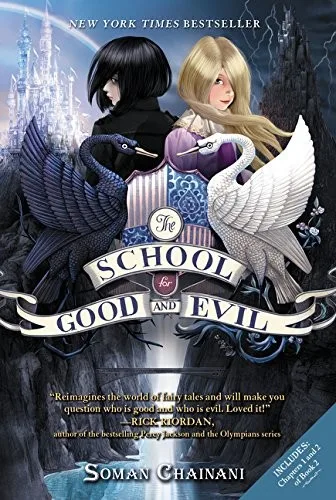
Soman Chainani's *The School for Good and Evil* takes a familiar premise—a magical academy—and injects it with a sharp, critical eye towards fairy tale conventions. The novel's strength lies in its initial setup: the stark contrast between the idyllic School for Good and the menacing School for Evil, and the ironic placement of its protagonists, Sophie and Agatha. The author skillfully plays with reader expectations, particularly when Agatha, the seemingly wicked girl, finds herself at the School for Good, and the beautiful, kind Sophie at the School for Evil. However, the narrative occasionally falters under the weight of its own intricate world-building, sometimes slowing the pacing as it explains the complex rules governing its magical system. The concept of the "Storian," the mythical figure responsible for writing fairy tales, is a particularly fascinating element that deserves further exploration. Despite minor pacing issues, the book offers a compelling examination of appearance versus reality and the manufactured nature of heroism and villainy.
Verdict: An imaginative, if sometimes over-explained, deconstruction of fairy tale archetypes.
📝 Description
83
Soman Chainani's 2018 novel sends children to an academy that trains them as fairy tale heroes or villains.
The School for Good and Evil begins with the kidnapping of children from Gavaldon village to a magical academy. This institution separates students into two schools: one for those destined to become fairy tale heroes and another for those who will play the villains. The story follows Sophie and Agatha, two friends whose lives diverge when they are taken to this mysterious place. Sophie, with her blonde hair and love for princess stories, expects to attend the School for Good. Agatha, who prefers solitude and lives in a graveyard, is assumed to be destined for the School for Evil. Their arrival, however, defies expectations, setting the stage for a narrative that questions the clear divisions between good and evil. The novel examines how stories shape our perceptions and destinies, particularly within the framework of classic fairy tales.
This book appeals to young adult readers who enjoy portal fantasies and stories that twist familiar fairy tale plots. It is for those who appreciate narratives about friendship, identity, and the fuzzy boundaries between good and evil. Readers drawn to magical schools, enchanted woods, and the hero's journey archetype, but with a darker, more complex take, will find this story compelling.
Published in 2018, The School for Good and Evil entered a literary period where fairy tale retellings were common. Chainani's work specifically interrogates the moral binaries often found in these stories. It plays with the idea of preordained roles, questioning whether characters are inherently good or evil, or if their paths are fixed by the narratives they are meant to inhabit. The concept of the 'Ever After' highlights the ultimate goal within these constructed realities, and the book examines the forces that shape a character's journey toward such an ending.
💡 Why Read This Book?
• You will learn how fairy tale archetypes are constructed and deconstructed, moving beyond simplistic good vs. evil binaries, particularly through the mechanics of the "School for Good" and the "School for Evil." • You will feel the tension of predetermined destiny versus personal choice as characters like Sophie and Agatha grapple with their assigned roles in the grand narrative of "Ever After." • You will gain insight into the power of narrative and how stories shape perception, exemplified by the "Storian's" influence on the characters' lives and the world's understanding of heroism.
⭐ Reader Reviews
Honest opinions from readers who have explored this book.
❓ Frequently Asked Questions
When was The School for Good and Evil first published?
The School for Good and Evil by Soman Chainani was first published in 2018, entering the young adult fantasy market.
What is the main premise of The School for Good and Evil?
The book's premise involves a magical academy where children are trained to become characters in fairy tales, either as heroes for the School for Good or villains for the School for Evil.
Who are the main protagonists in The School for Good and Evil?
The primary protagonists are Sophie and Agatha, two best friends from the village of Gavaldon whose lives are dramatically altered when they are sent to the titular schools.
Does The School for Good and Evil have any sequels?
Yes, The School for Good and Evil is the first book in a series, with subsequent installments continuing the adventures of Sophie and Agatha and exploring their world further.
What themes are explored in The School for Good and Evil?
The novel explores themes of friendship, identity, destiny versus free will, the nature of good and evil, and the construction of fairy tale narratives.
Where are the students in The School for Good and Evil taken from?
Students are taken from ordinary villages, such as Gavaldon, and are selected by mysterious forces to attend the magical schools based on their perceived potential for good or evil.
🔮 Key Themes & Symbolism
The Binary of Good and Evil
The novel critically examines the simplistic division of characters into inherent "good" or "evil." It questions whether these roles are predetermined or chosen, often subverting expectations by placing conventionally "good" characters in villainous roles and vice versa. This exploration is central to the functioning of the "School for Good" and the "School for Evil," suggesting that the perception and enforcement of these categories are as significant as any inherent quality.
Destiny vs. Free Will
A core conflict revolves around whether the students at the Schools are bound by a predetermined destiny to fulfill specific fairy tale roles, or if they possess the agency to forge their own paths. The narrative questions the authority of the "Storian" and the very concept of an "Ever After," pushing characters to define their own truths beyond the stories they are expected to inhabit.
The Nature of Fairy Tales
Chainani dissects the mechanics and moral frameworks of traditional fairy tales. The book exposes the constructed nature of these narratives, including the often-unseen costs and complexities behind the "happy endings." It challenges the audience to consider who writes these stories and why, revealing the potential for manipulation and the subjective interpretation of heroism and villainy.
Appearance vs. Reality
The novel consistently contrasts the outward appearance of characters and settings with their true nature. Sophie, who appears outwardly kind and beautiful, exhibits dark tendencies, while Agatha, perceived as grim and reclusive, possesses a strong moral compass. This theme extends to the schools themselves, where the "good" and "evil" labels are not always indicative of the students' actual character or actions.
💬 Memorable Quotes
Direct passages from the work, attributed to the author.
“Sophie and Agatha were best friends. They did everything together. They shared clothes, secrets, and dreams.”
— This opening statement establishes the central friendship that anchors the narrative, immediately highlighting the deep bond between Sophie and Agatha before their separation and divergent paths at the schools.
“In the heart of the woods, the School for Good and Evil stood as a beacon, or a warning.”
— This illustrates the ambiguous nature of the magical institution. Depending on the perspective of the observer or the role they are destined for, the school represents either aspirational virtue or terrifying corruption.
“The Storian wrote the stories, and the stories made the world.”
— This concept points to the immense power of narrative within the book's universe, suggesting that a singular entity dictates reality through the act of storytelling, emphasizing the theme of destiny.
💡 Key Ideas
Editorial paraphrase of the work's core concepts — not direct quotes.
The School for Good and Evil was where fairy tales began. Or ended.
This quote captures the dual nature of the academy, presenting it as both the origin point for heroic narratives and potentially the place where innocence or hope is extinguished, depending on one's assigned path.
They were meant to be villains, but they fought to be heroes. They were meant to be heroes, but they fell into darkness.
This paraphrased concept highlights the central conflict of the novel: characters struggling against their prescribed fairy tale roles, questioning whether their fates are sealed or if they can defy the narrative.
🌙 Esoteric Significance
Tradition
While not overtly aligned with a specific esoteric lineage, The School for Good and Evil draws heavily on archetypal psychology and Jungian concepts of the Shadow and the Anima/Animus, themes prevalent in modern esoteric thought. The binary separation into "Good" and "Evil" schools can be seen as a simplified, allegorical representation of the alchemical process of separation and purification, or the Gnostic concept of dualistic forces shaping human destiny. It reflects a contemporary interest in universal mythologies and narrative structures that underpin human experience.
Symbolism
The two schools themselves, "Good" and "Evil," serve as potent symbols representing the fundamental duality often explored in esoteric traditions. The "Ever After" symbolizes the ultimate goal or enlightenment sought in many spiritual paths, but here it is presented as a potentially manufactured outcome. The "Storian," as the weaver of fate and narrator of reality, can be interpreted as an allegory for the Demiurge in Gnosticism or a cosmic consciousness that shapes perceived reality through narrative.
Modern Relevance
This work appeals to contemporary discourse on identity politics and the deconstruction of traditional narratives. Modern thinkers and practitioners in fields like narrative therapy and archetypal psychology find value in its exploration of how stories shape our understanding of ourselves and the world. The book's questioning of inherent good and evil aligns with philosophical and psychological movements that emphasize personal agency and the constructed nature of societal norms and moral frameworks.
👥 Who Should Read This Book
• Young adult readers interested in fairy tales with a darker, more complex twist, who will gain a fresh perspective on familiar tropes. • Aspiring writers and storytellers who will appreciate the novel's meta-commentary on narrative structure and the creation of compelling characters. • Individuals curious about the psychological underpinnings of good and evil, who will find the exploration of destiny versus free will particularly engaging.
📜 Historical Context
The School for Good and Evil, released in 2018, emerged in a landscape heavily influenced by the enduring popularity of young adult fantasy, particularly the magical school subgenre exemplified by J.K. Rowling's Harry Potter series. Chainani's novel distinguished itself by directly engaging with and deconstructing the archetypal morality of classic fairy tales. This period saw a surge in fractured fairy tales and dark fantasy retellings, with authors like Marissa Meyer (The Lunar Chronicles) and Holly Black (The Cruel Prince) also exploring darker, more complex takes on familiar narratives. The book's reception was generally positive, praised for its imaginative premise and subversion of tropes, though some critics noted its adherence to certain YA fantasy conventions. It arrived at a time when audiences were receptive to stories that questioned traditional heroic narratives and explored the nuances of good and evil beyond simple binaries, contrasting with earlier, more straightforward fairy tale adaptations.
📔 Journal Prompts
The School for Good's idealized curriculum versus the School for Evil's practical teachings.
Sophie's pursuit of the "Ever After" and its true cost.
Agatha's perceived wickedness and her underlying moral compass.
The role of the "Storian" in dictating character fates.
The blurred lines between heroes and villains in the story.
🗂️ Glossary
Gavaldon
The ordinary, non-magical village from which Sophie and Agatha are taken, serving as the mundane starting point for their extraordinary journey.
School for Good
One of the two magical academies where students are trained to become fairy tale heroes, characterized by its emphasis on virtues and happy endings.
School for Evil
The counterpart to the School for Good, where students are prepared to embody the roles of villains in fairy tales, often focusing on darker arts and conflict.
Ever After
The ultimate happy ending or destiny that fairy tale characters are meant to achieve, representing the culmination of their heroic or villainous journey.
Storian
A mythical figure or entity believed to be responsible for writing and recording the fairy tales that shape the world and the destinies of its inhabitants.
Deans (of the Schools)
The enigmatic and powerful heads of the Schools for Good and Evil, who oversee the students' education and adherence to their assigned fairy tale roles.
Fairies (as students)
The children selected and sent to the Schools, who are destined to become characters in the grand narrative of fairy tales, embodying either heroic or villainous archetypes.
🔮 Readers Also Liked
Browse all →








More by Soman Chainani
All books →

More Free Occult Philosophy Books
View all →