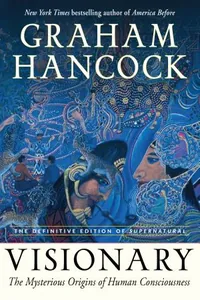
The Mars Mystery

 71
71

The Mars Mystery
Graham Hancock's "The Mars Mystery" is less a scholarly treatise and more a compelling narrative assembling circumstantial evidence for a past Mars teeming with life. Hancock excels at presenting complex astronomical and geological data in an accessible manner, making his case for a once-habitable Mars. He particularly emphasizes features on the Martian surface that, to him, suggest past hydrological activity and atmospheric conditions conducive to life. However, the book's chief limitation lies in its reliance on interpretation over definitive proof. The "face on Mars" photographed by Viking in 1976, a key piece of visual evidence Hancock utilizes, was later revealed by subsequent missions to be a natural geological formation. Despite this, the work remains a significant entry in the literature of speculative cosmology, pushing readers to reconsider the potential for life beyond Earth and the vastness of cosmic history.
📝 Description
71
### What It Is The Mars Mystery, first published in 1997 by Graham Hancock, presents a controversial thesis challenging conventional understandings of Martian history and its potential connection to Earth's past. Hancock posits that Mars was once a habitable world, possibly home to intelligent life, and that a catastrophic event led to its current state. The book synthesizes data from various scientific disciplines, including geology, astronomy, and archaeology, to support its claims.
### Who It's For This work is aimed at readers who question established narratives and are interested in alternative theories regarding planetary evolution and ancient civilizations. It will appeal to those fascinated by ufology, ancient astronaut theories, and the possibility of extraterrestrial intelligence influencing human history. It requires an open mind and a willingness to consider evidence outside mainstream scientific consensus.
### Historical Context Hancock's exploration of Mars' past emerged during a period of renewed public interest in space exploration and ancient mysteries. The late 20th century saw a proliferation of books and documentaries exploring fringe theories about Earth's history and potential alien contact. The book arrived in a landscape where figures like Erich von Däniken had already popularized the concept of ancient astronauts, but Hancock sought to apply similar speculative lenses to planetary science.
### Key Concepts The central argument revolves around the idea of Mars as a formerly Earth-like planet. Hancock presents evidence he interprets as signs of past geological activity, including features resembling dried riverbeds and evidence of a thicker atmosphere. He also explores the possibility that ancient terrestrial myths and symbols might hold echoes of a cosmic history involving Mars, suggesting a shared, ancient past or an influence from Martian visitors.
💡 Why Read This Book?
• Understand the arguments for Mars' past habitability, including analyses of geological features like potential ancient riverbeds, a concept explored extensively in the book's early chapters. • Gain exposure to Hancock's controversial interpretation of surface anomalies, such as the Cydonia region, and how he connects them to ancient myths. • Re-evaluate conventional understandings of planetary science and the possibility of ancient extraterrestrial civilizations, as presented through Hancock's synthesis of data.
⭐ Reader Reviews
Honest opinions from readers who have explored this book.
❓ Frequently Asked Questions
What is the main argument of 'The Mars Mystery' regarding Mars?
The book argues that Mars was once a habitable planet with a thicker atmosphere and liquid water, potentially supporting life, before undergoing a catastrophic environmental collapse.
What kind of evidence does Graham Hancock use to support his claims about Mars?
Hancock utilizes photographic evidence from space missions, geological interpretations of Martian surface features, and parallels drawn with ancient Earth myths and symbols.
When was 'The Mars Mystery' first published?
'The Mars Mystery' was first published in 1997, contributing to discussions on Mars' history during a period of increased space exploration.
Does the book suggest intelligent life existed on Mars?
Yes, Hancock explores the possibility that Mars may have once harbored intelligent life, presenting speculative interpretations of certain geological formations as potential evidence.
How does 'The Mars Mystery' relate to other works by Graham Hancock?
It aligns with Hancock's broader thematic interest in ancient civilizations, lost histories, and the potential for extraterrestrial influences on Earth and other planets.
What is the 'Face on Mars' controversy mentioned in the book?
The book discusses the 'Face on Mars,' a formation in the Cydonia region photographed by Viking 1 in 1976, which some, including Hancock, interpreted as artificial.
🔮 Key Themes & Symbolism
A Habitable Red Planet
Hancock's central thesis is that Mars was not always the arid desert we observe today. He meticulously presents evidence, primarily from photographic data gathered by NASA missions, suggesting that Mars once possessed a substantial atmosphere, oceans, and rivers. Features like dried-up riverbeds, deltas, and shorelines are interpreted as remnants of a vibrant, life-supporting environment. This concept challenges the prevailing scientific view of Mars as having always been a largely inhospitable world, positioning it instead as a planet with a rich, albeit lost, geological and potentially biological history.
The Cydonia Complex
A significant portion of 'The Mars Mystery' is dedicated to the Cydonia region of Mars, particularly the formation known as the 'Face on Mars.' Hancock argues that this feature, along with surrounding structures like pyramids and a city-like grid, is not a natural landform but evidence of intelligent design. He posits that these anomalies are remnants of an ancient Martian civilization, deliberately constructed and now eroded by eons of environmental change. This interpretation places Cydonia as a key symbolic and physical locus for his theory of intelligent life on Mars.
Echoes in Terrestrial Myths
Hancock draws parallels between his hypothesis of Martian history and ancient human myths and legends from Earth. He suggests that stories of fallen gods, cataclysmic events, and celestial journeys found in various cultures might not be mere allegory but fragmented memories of actual events involving Mars. This theme proposes a cosmic connection, where the fate of Mars and its potential inhabitants has somehow influenced or been recorded in the collective unconscious of humanity, linking our own past to that of the Red Planet.
Cataclysm and Transformation
The book explores the idea that Mars underwent a dramatic and devastating transformation, leading to its current desolate state. Hancock speculates on the nature of this cataclysm, suggesting it could have been a natural celestial event or perhaps a consequence of technological activity by its inhabitants. This theme of planetary destruction and subsequent decay serves as a cautionary narrative, hinting at the fragility of civilizations and environments, and raising questions about the long-term survival prospects for life on any planet, including Earth.
💬 Memorable Quotes
“The evidence suggests that Mars was once a world of oceans and rivers, a world that could have supported life.”
— This statement encapsulates Hancock's core argument: Mars' current arid state is a relatively recent phenomenon, and past conditions were far more conducive to biological existence than mainstream science typically acknowledges.
“The 'Face on Mars' and surrounding formations in Cydonia are too symmetrical to be natural.”
— This highlights Hancock's reliance on visual interpretation of specific Martian surface features, particularly the Cydonia region, which he believes point towards artificial construction rather than geological processes.
“Ancient myths on Earth speak of celestial wars and fallen worlds, perhaps reflecting a lost Martian history.”
— This interpretation suggests that terrestrial folklore may contain garbled accounts or ancestral memories of events related to Mars, linking human mythology to potential extraterrestrial occurrences.
“A great catastrophe transformed Mars into the desert planet we see today.”
— This phrase points to the dramatic environmental shift Hancock proposes for Mars, emphasizing the suddenness and scale of the event that led to its current barren condition.
“We must question our assumptions about planetary evolution and the uniqueness of life in the cosmos.”
— This reflects the broader philosophical implication of Hancock's work, urging readers to challenge conventional scientific paradigms and consider the wider possibilities for life and intelligence throughout the universe.
🌙 Esoteric Significance
Tradition
While not strictly adhering to a single esoteric lineage, Hancock's work taps into a vein of thought present in Theosophy and certain branches of New Age cosmology, which posit ancient extraterrestrial influences on Earth and other planets. It resonates with the idea of cosmic cycles and lost, advanced civilizations, themes explored by Helena Blavatsky and later popularizers. Hancock's approach is less about spiritual doctrine and more about a materialist interpretation of esoteric-like claims, seeking evidence for ancient alien presence in planetary geology and archeology.
Symbolism
The "Face on Mars" is a primary symbol, interpreted not as a natural formation but as a deliberate monument, potentially a tomb or marker left by an advanced Martian civilization. This symbolizes the lost intelligence and a forgotten past. The potential presence of water and a thicker atmosphere on ancient Mars symbolizes a lost paradise or a state of primordial abundance, contrasting sharply with its current desolation. These symbols serve as focal points for the argument that Mars holds profound secrets about life's origins and potential demise.
Modern Relevance
Hancock's work continues to influence contemporary discussions on astrobiology and the search for extraterrestrial life, particularly among independent researchers and enthusiasts outside mainstream academia. His approach inspires critical examination of official scientific narratives and encourages the search for anomalies in space exploration data. Thinkers and groups focused on ancient astronaut theories, planetary consciousness, and speculative cosmology often cite "The Mars Mystery" as foundational, keeping its core ideas alive in online communities and alternative media platforms.
👥 Who Should Read This Book
• Speculative history enthusiasts interested in alternative theories about planetary evolution and potential extraterrestrial contact. • Readers intrigued by the 'Face on Mars' and Cydonia region, seeking Hancock's interpretation of these controversial formations. • Individuals questioning conventional scientific timelines and seeking narratives that connect ancient Earth cultures with cosmic events.
📜 Historical Context
Published in 1997, "The Mars Mystery" emerged during a period of burgeoning public fascination with ancient mysteries and extraterrestrial possibilities, fueled by popular culture and earlier works like Erich von Däniken's "Chariots of the Gods?" (1968). Hancock's book sought to ground these speculations in what he presented as scientific data, particularly from NASA's Mars missions. This era also saw the rise of Internet forums dedicated to disseminating alternative theories, allowing Hancock's ideas to spread rapidly. While mainstream geology and planetary science largely dismissed his interpretations, particularly regarding the 'Face on Mars,' his work contributed to a broader cultural conversation about life beyond Earth. Contemporaneous authors like Zecharia Sitchin were also exploring ancient astronaut theories, though often focused on Sumerian texts rather than planetary science. The reception of "The Mars Mystery" was polarized, lauded by believers in ancient alien intervention and criticized by scientists for what they deemed misinterpretations of evidence.
📔 Journal Prompts
Reflections on the Cydonia region's potential as a marker of lost Martian civilization.
The concept of a 'catastrophe' transforming Mars: what parallels exist in Earth's geological or mythological past?
Considering the evidence for past water on Mars: how does this change your perception of planetary habitability?
Ancient myths as potential echoes of extraterrestrial history: what terrestrial stories might support this idea?
Hancock's interpretation of Martian anomalies: what criteria distinguish natural formations from artificial ones for you?
🗂️ Glossary
Cydonia
A region on Mars known for several unusual geological formations, most famously the 'Face on Mars,' which Graham Hancock interprets as artificial structures.
Viking 1
A NASA space probe launched in 1975 that successfully landed on Mars and provided early photographic data, including the initial images of the 'Face on Mars'.
Face on Mars
A specific mesa in the Cydonia region of Mars, photographed by Viking 1, which bears a resemblance to a human face from certain angles and lighting conditions.
Hydrological Activity
The movement, distribution, and management of water on a planet, including features like rivers, lakes, and oceans, which Hancock argues once existed on Mars.
Planetary Cataclysm
A theory suggesting a large-scale, destructive event that fundamentally altered a planet's environment and surface, as proposed by Hancock for Mars.
Mesa
An isolated, flat-topped hill with steep sides, common in arid and semi-arid regions. The 'Face on Mars' is a type of mesa.
Ancient Astronaut Theory
The speculative hypothesis that intelligent extraterrestrial beings visited Earth in antiquity or prehistoric times and were responsible for some ancient monuments and human cultures.