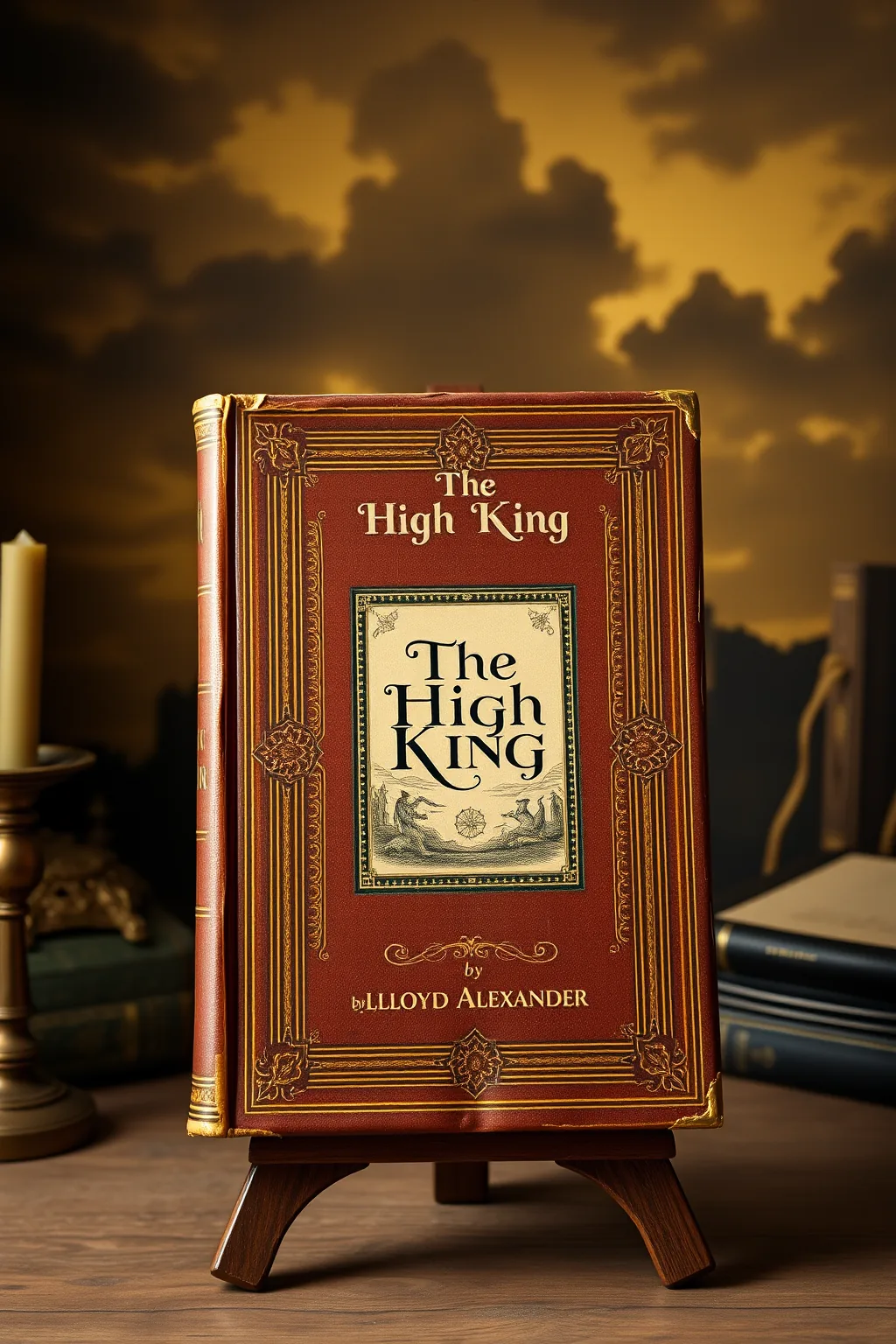
The High King
 78
78

The High King
Lloyd Alexander’s 1985 conclusion to the Prydain cycle, *The High King*, achieves a rare feat: it allows its protagonist, Taran, to grow up, truly and irrevocably. The novel does not shy away from the cost of leadership, presenting Taran’s ascent to kingship as a profound sacrifice rather than a mere reward. A particular strength lies in Alexander’s nuanced portrayal of duty, especially evident in the somber mood surrounding the final confrontation. However, the pacing occasionally falters in the latter half, becoming somewhat diffuse as Taran grapples with his destiny. The climactic decision concerning the mythical sword Dyrnwyn is handled with a weighty, almost elegiac, finality. *The High King* offers a thoughtful, earned conclusion to a celebrated fantasy saga.
📝 Description
78
The High King, published in 1985, concludes Lloyd Alexander's Prydain cycle with Taran's final test.
This 1985 novel serves as the conclusion to Lloyd Alexander's Chronicles of Prydain. While often categorized as young adult fantasy, the book examines the weight of leadership, the necessity of sacrifice, and the difficult shift from youthful idealism to adult responsibility. The story brings to a head the conflict with the Horned King and the dark magic threatening Prydain.
Alexander's prose adopts a serious, sometimes dark, tone that lifts the narrative above mere adventure. Readers who enjoy fantasy with substantial thematic depth and character growth will find this work appealing. It is especially suited for those interested in the archetypal hero's journey, focusing on the duties and burdens that come with authority. Classic quest and epic fantasy fans seeking a more thoughtful, morally complex story will appreciate its conclusion. It is also a natural next step for those who have read the earlier books in the Prydain series.
Published in 1985, The High King arrived as fantasy literature matured into a respected genre. While authors like Le Guin and Tolkien had already elevated the form, Alexander drew distinctively from Welsh mythology. His work also focused on the psychological development of his protagonist, Taran. The book received positive reviews, securing its place in the history of fantasy literature for both young and adult readers.
💡 Why Read This Book?
• Gain insight into the true nature of leadership and sacrifice by examining Taran's difficult choices in the face of ultimate responsibility, as depicted in the final chapters. • Understand the archetypal hero's journey beyond simple triumph, appreciating the emotional and spiritual cost of maturity as Taran confronts his destiny in the year 1985. • Explore the symbolic weight of ancient Welsh mythology as Alexander integrates concepts like the Cauldron of Rebirth and the struggle against primal darkness.
⭐ Reader Reviews
Honest opinions from readers who have explored this book.
❓ Frequently Asked Questions
When was The High King first published?
The High King was first published in 1985, serving as the concluding volume in Lloyd Alexander's acclaimed Chronicles of Prydain.
What is the central theme of The High King?
The central theme revolves around the burden of leadership and the personal sacrifice required for true kingship, moving beyond mere adventure to explore the maturation of its protagonist, Taran.
What mythological traditions influenced The High King?
The book draws heavily from Welsh mythology, particularly the Mabinogion, integrating its characters, lore, and archetypal struggles into the narrative.
Who is the main protagonist in The High King?
The main protagonist is Taran Wanderer, an assistant pig-keeper who evolves into a warrior and ultimately faces his destiny to become High King of Prydain.
What is the significance of the Horned King in the story?
The Horned King represents the ultimate force of destruction and tyranny in Prydain, serving as the primary antagonist whose defeat is crucial for the land's survival.
Is The High King suitable for younger readers?
While part of a young adult series, The High King deals with mature themes of sacrifice and responsibility, making it suitable for older young adults and adults seeking a thematically rich fantasy.
🔮 Key Themes & Symbolism
The Burden of Kingship
This theme is central to the narrative's conclusion. It moves beyond the romanticized notion of power to explore the immense personal cost and moral responsibility inherent in leadership. Taran's journey to becoming High King is not about glory, but about self-denial and the willingness to bear the weight of his realm. The book, published in 1985, critiques simplistic views of power, presenting kingship as a profound spiritual and ethical commitment, often involving difficult sacrifices that redefine the ruler.
Sacrifice and Self-Denial
Central to Taran's final transformation is the concept of sacrifice. He learns that true strength lies not in wielding power or weapons, but in the willingness to give up personal desires and even parts of himself for the welfare of others. This is exemplified in his ultimate decision regarding his destiny and the fate of Prydain. The narrative suggests that the highest form of heroism involves transcending ego and embracing a selfless path, a concept explored deeply as the saga wraps up.
The Nature of Evil
The conflict with the Horned King and his forces represents a confrontation with primal, destructive forces. However, Alexander portrays evil not just as an external enemy, but also as a potential within individuals and societies. The struggle is as much about resisting internal corruption and succumbing to despair as it is about defeating a physical foe. The book, emerging in the mid-80s, offers a nuanced view of the battle against darkness, emphasizing vigilance and moral fortitude.
Maturity and Destiny
The High King is fundamentally a coming-of-age story writ large across an epic canvas. Taran's journey from an eager, sometimes naive, assistant pig-keeper to a king is a profound exploration of maturity. He must reconcile his youthful aspirations with the harsh realities of his responsibilities and his predetermined destiny. Alexander masterfully depicts this transition, showing how embracing one's fate, even when it demands immense personal cost, is a hallmark of true adulthood.
💬 Memorable Quotes
Direct passages from the work, attributed to the author.
“He had come to see that the courage of the warrior was not the only courage.”
— This interpretation highlights Taran's evolving understanding of bravery. It suggests that he learns to value different forms of courage, such as moral fortitude, emotional resilience, and the quiet strength of conviction, beyond mere physical valor.
“The land itself seemed to breathe with a deep, ancient life.”
— This phrase evokes the strong connection between the characters and the mystical range of Prydain. It signifies the living, almost sentient nature of the world, underscoring its importance and the profound responsibility the characters have to protect it.
“His own life was a small thing, but the future of Prydain was a great one.”
— This sentiment reflects the theme of sacrifice central to the book. It illustrates Taran's realization that individual existence is secondary to the collective destiny and well-being of his kingdom, a key moment of selflessness.
“Even the brightest sword can be dulled by the rust of doubt.”
— This metaphorical statement points to the internal struggles that can undermine even the most powerful individuals or intentions. It suggests that inner uncertainty and lack of faith can be as destructive as any external enemy.
💡 Key Ideas
Editorial paraphrase of the work's core concepts — not direct quotes.
The greatest king is not the one who rules longest, but the one who serves longest.
This paraphrase captures the essence of the book's message about leadership. It emphasizes service and duty over personal ambition or longevity in power, suggesting that true kingship is defined by selfless action and dedication to the people.
🌙 Esoteric Significance
Tradition
While not overtly tied to a single esoteric lineage like Hermeticism or Kabbalah, Alexander's work draws heavily on archetypal mythos, a foundational element in many esoteric traditions. The narrative's exploration of the hero's journey, the struggle against shadow forces, and the quest for self-mastery aligns with concepts found in Gnosticism (the struggle against ignorance and material darkness) and Jungian psychology, which itself draws from mythic patterns. The concept of a 'High King' can be seen as an archetypal figure representing divine order or spiritual authority within a terrestrial realm.
Symbolism
The powerful sword Dyrnwyn symbolizes not just martial prowess but also the righteous authority and inherent justice required of a true ruler; its activation by a worthy king signifies spiritual alignment. The Cauldron of Rebirth, a key artifact, represents transformation, creation, and the cyclical nature of life and death, echoing alchemical and shamanic themes of renewal. The Horned King embodies primal chaos, the destructive forces of nature and ego that must be confronted and integrated or overcome for balance to be restored.
Modern Relevance
Contemporary fantasy authors continue to draw inspiration from Alexander's nuanced approach to heroism and his deep engagement with mythology. Thinkers exploring archetypal psychology, particularly in relation to narrative structure and the collective unconscious, find resonance in Taran's journey. Furthermore, the book's emphasis on the moral weight of leadership and the necessity of sacrifice for the common good remains relevant in discussions of ethics, governance, and personal responsibility in a complex modern world.
👥 Who Should Read This Book
• Aspiring writers of fantasy seeking to understand character arcs and thematic depth beyond simple adventure plots, particularly how to conclude a series meaningfully. • Students of mythology and comparative religion interested in the application of Welsh folklore (Mabinogion) within a narrative framework, published around 1985. • Young adults and adults grappling with themes of responsibility, sacrifice, and the transition into adulthood, looking for relatable fictional explorations of these challenges.
📜 Historical Context
Lloyd Alexander's *The High King*, published in 1985, concluded a significant cycle of young adult fantasy literature. The preceding decades had seen the rise of sophisticated fantasy with works by authors like J.R.R. Tolkien, whose influence was pervasive, and Ursula K. Le Guin, who explored complex social and philosophical themes. Alexander distinguished himself by grounding his Prydain Chronicles in the wide range of Welsh mythology, specifically the Mabinogion, offering a different flavor than the Germanic or Arthurian influences common in the genre. The 1980s were a period of expansion for fantasy, with authors like Stephen R. Donaldson and Terry Brooks also achieving popularity. *The High King* received critical acclaim, including the prestigious Newbery Medal in 1986, solidifying its place as a key work that demonstrated the literary potential of fantasy for younger audiences, proving it could tackle profound themes of sacrifice and leadership.
📔 Journal Prompts
Taran's acceptance of kingship involved relinquishing personal desires; reflect on a time your own desires conflicted with a greater responsibility.
The sword Dyrnwyn's power is tied to its wielder's worthiness; consider what qualities define 'worthiness' beyond mere strength.
Analyze the symbolic representation of the Horned King as a force of primal destruction within the narrative.
Reflect on the concept of 'assistant pig-keeper' as Taran's initial identity and how it contrasts with his final role as High King.
Consider the implications of the land of Prydain having an 'ancient life'—how does this personify the setting?
🗂️ Glossary
Prydain
The fictional land that serves as the setting for Lloyd Alexander's Chronicles of Prydain. It is a realm steeped in mythology and history, drawing heavily from Welsh lore.
The Horned King
The primary antagonist in the series, representing a powerful, malevolent force dedicated to destruction and the subjugation of Prydain. He embodies primal evil and tyranny.
Dyrnwyn
A legendary sword of immense power within Prydain, said to be able to ignite its blade with fire. Its activation and use are central to the narrative's climax and the concept of rightful rule.
Assistant Pig-Keeper
Taran's initial, humble occupation at the beginning of his journey. It symbolizes his low status and the unlikely beginnings of his heroic path, highlighting his growth.
Mabinogion
A collection of medieval Welsh prose tales, forming the basis for much of the mythology, characters, and lore found within Alexander's Chronicles of Prydain.
High King
The ultimate ruler of Prydain, a title representing not just political power but also profound moral responsibility and the burden of protecting the entire realm.
Cauldron of Rebirth
A mystical artifact from Welsh mythology featured in the series, symbolizing transformation, creation, and the cyclical nature of life, death, and renewal.
🔮 Readers Also Liked
Browse all →









More by Lloyd Alexander
All books →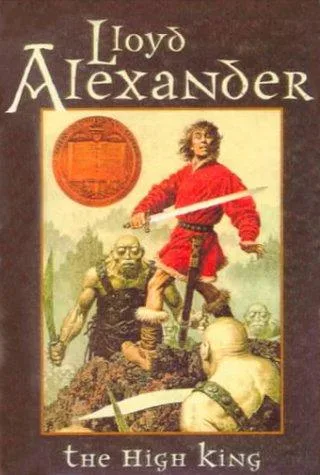


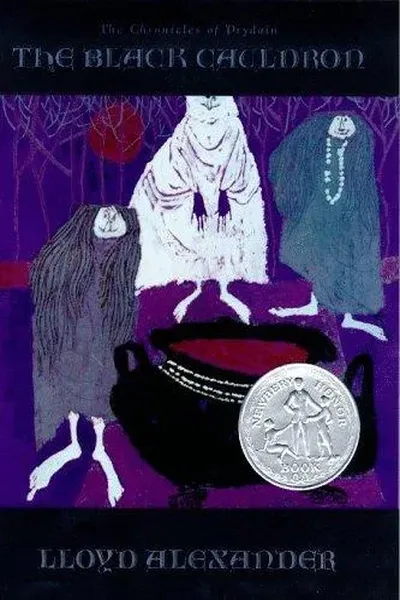


More Free Occult Philosophy Books
View all →