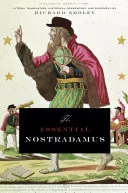
The essential Nostradamus
 71
71

The essential Nostradamus
Smoley’s approach to Nostradamus avoids the common pitfalls of sensationalism and simplistic date-setting that plague much of the popular literature surrounding the seer. His strength lies in grounding the quatrains within their 16th-century context, referencing historical events and the intellectual currents of the time to illuminate the potential meanings. For instance, his discussion of astrological references, linking them to specific celestial events relevant to Nostradamus's era, offers a more nuanced perspective than mere fortune-telling. However, the book occasionally feels dense, with Smoley’s academic rigor sometimes overshadowing the more accessible aspects of Nostradamus's appeal. A limitation is the inherent difficulty in definitively interpreting prophecies centuries old, a challenge Smoley acknowledges but cannot entirely resolve. Nevertheless, "The Essential Nostradamus" provides a valuable, scholarly corrective to popular myth-making.
📝 Description
71
Richard Smoley's 2009 book examines Nostradamus's quatrains beyond sensational interpretations.
Richard Smoley's 2009 book, "The Essential Nostradamus," focuses on the prophecies of Michel de Nostredame, the 16th-century French apothecary. Smoley moves past sensational readings to examine the historical and symbolic framework of Nostradamus's quatrains. He presents them not as direct predictions, but as complex symbolic statements that require careful contextualization.
This work is intended for serious students of prophecy, esoteric history, and Renaissance thought. Readers who wish to understand the underlying currents of Nostradamus's writings, rather than simply list alleged fulfillments, will find value. The book appeals to those who approach such texts with an analytical perspective, seeking context and symbolic meaning over literal interpretations.
Michel de Nostredame produced his prophecies in the 16th century, a time of significant religious and intellectual change in Europe. His "Propheties," first published in 1555, emerged from a blend of Renaissance humanism, Neoplatonism, and astrological and Kabbalistic ideas. These were often expressed in coded language to evade censure. Smoley's analysis places Nostradamus's work within this milieu, interpreting his visions as symbolic resonance rather than literal foretelling.
💡 Why Read This Book?
• Gain a critical understanding of Nostradamus's quatrains, moving beyond sensationalism to explore their historical and symbolic depth, as exemplified by the analysis of astrological references from the 16th century. • Learn to interpret prophetic literature through a lens of symbolic resonance and historical context, rather than solely through literal prediction, appreciating the influence of Renaissance thought. • Discover the potential thematic cycles and coded meanings within Nostradamus's prophecies, as Smoley unpacks the structure and layered symbolism of the quatrains themselves.
⭐ Reader Reviews
Honest opinions from readers who have explored this book.
❓ Frequently Asked Questions
What is the primary focus of Richard Smoley's "The Essential Nostradamus"?
Smoley's book focuses on interpreting Nostradamus's prophecies within their 16th-century historical and symbolic context, aiming for a deeper understanding beyond sensationalistic, literal predictions and exploring their potential esoteric significance.
When was "The Essential Nostradamus" first published?
Richard Smoley's "The Essential Nostradamus" was first published in 2009.
Does the book offer definitive predictions for the future?
No, the book emphasizes interpreting the quatrains as symbolic utterances rooted in their historical period, rather than providing definitive, literal predictions for future events. It explores potential meanings and historical influences.
Who is Michel de Nostredame?
Michel de Nostredame (1503-1566) was a French apothecary and astrologer who published "The Propheties," a collection of quatrains that has been interpreted as prophetic visions since its first appearance in 1555.
What kind of background knowledge is helpful for reading this book?
While accessible, a reader with an interest in esoteric traditions, Renaissance history, or symbolic interpretation will find the book's contextual analysis particularly rewarding. Familiarity with basic astrological concepts can also be beneficial.
How does Smoley's interpretation differ from popular Nostradamus theories?
Smoley's interpretation prioritizes historical context, symbolic language, and the intellectual milieu of the 16th century, contrasting with popular theories that often focus on literal fulfillment and modern events without sufficient historical grounding.
🔮 Key Themes & Symbolism
Symbolic Interpretation of Quatrains
Smoley posits that Nostradamus's quatrains function as symbolic language rather than direct prophecies. He argues for an interpretation rooted in the Neoplatonic and Hermetic currents of the Renaissance, where symbols held multiple layers of meaning. This approach moves away from the common practice of matching quatrains to specific historical events after the fact, instead suggesting that the power of the prophecies lies in their archetypal resonance and capacity to reflect patterns of human experience across time, influenced by biblical and classical sources.
Renaissance Esotericism and Astrology
The book situates Nostradamus within the intellectual landscape of the 16th century, a period where astrology was considered a legitimate science and esoteric philosophy was interwoven with mainstream thought. Smoley examines how Nostradamus's references to celestial configurations and astrological timing were integral to his prophetic method, reflecting contemporary understandings of cosmic influence. This context is crucial for grasping the visionary process and the symbolic language employed, distinguishing it from later, more secularized views of prophecy.
Historical Contextualization
A central theme is the necessity of understanding the quatrains through the lens of Nostradamus's life and times. Smoley emphasizes that events and cultural understandings of the 16th century, including religious conflicts and political shifts, informed the content and expression of the prophecies. By anchoring the interpretations in this specific historical milieu, the book seeks to provide a more grounded and less speculative reading, highlighting the interplay between personal vision and the socio-political realities of the era.
Beyond Literal Prediction
Smoley challenges the popular notion that Nostradamus's quatrains are simple blueprints of future events. Instead, he proposes that they are complex symbolic utterances designed to provoke contemplation and insight. This perspective aligns with esoteric traditions that view prophecy not as a deterministic forecast but as a tool for spiritual guidance and understanding the underlying patterns of existence, encouraging readers to look for thematic parallels and archetypal significance.
💬 Memorable Quotes
“The quatrains are not simple predictions, but symbolic utterances.”
— This core concept suggests that Nostradamus's prophecies should be understood through their symbolic depth and historical resonance, rather than as literal forecasts of future events. It implies a method of interpretation that engages with metaphor and archetypal patterns.
“Astrological references are key to understanding Nostradamus's method.”
— This highlights the importance of celestial timing and configuration within Nostradamus's prophetic framework. It points to the integration of Renaissance astrology as a vital component for deciphering the quatrains' intended meaning.
“Nostradamus wrote from within the context of 16th-century thought.”
— This emphasizes the need to situate the prophecies within their specific historical and intellectual milieu. Understanding the beliefs, science, and cultural climate of the Renaissance is presented as essential for a proper interpretation.
“We must move beyond sensationalism to find true meaning.”
— This challenges the prevalent approach to Nostradamus, urging readers and interpreters to eschew sensationalist claims and focus on a more rigorous, scholarly, and symbolic analysis of the text.
“The power of the quatrains lies in their archetypal resonance.”
— This suggests that the enduring relevance of Nostradamus's work stems from its ability to tap into universal human experiences and patterns, which are reflected through symbolic imagery rather than specific future occurrences.
🌙 Esoteric Significance
Tradition
Nostradamus's work is deeply embedded within the Western Esoteric Tradition, particularly drawing from Hermeticism, Neoplatonism, and Renaissance Kabbalah. His method of divination, blending astrology with visionary states, aligns with Hermetic principles of correspondence and the interconnectedness of the cosmos. The symbolic language employed in the quatrains reflects a Gnostic-like approach, where hidden meanings are revealed to the initiated, suggesting a spiritual path accessible through interpretation. Smoley's analysis positions Nostradamus not as a simple fortune-teller, but as a practitioner whose visions are informed by these ancient streams of wisdom.
Symbolism
Key symbols in Nostradamus's quatrains often draw from biblical imagery, classical mythology, and alchemical processes. The 'great king' or 'antichrist' figures, for instance, can be interpreted not just as historical individuals but as archetypal representations of oppressive power or spiritual darkness. Celestial bodies and astrological conjunctions, frequently mentioned, symbolize cosmic cycles and influences that shape human events, reflecting the Hermetic maxim "As Above, So Below." The very structure of the quatrains, their four-line verses, can be seen as a symbolic container for complex, multi-layered visions.
Modern Relevance
Contemporary esotericists and students of prophecy continue to engage with Nostradamus's work, often through the lens of symbolic interpretation championed by scholars like Smoley. Modern occult traditions, including certain branches of ceremonial magic and psychological astrology, find value in his quatrains as archetypal narratives that mirror recurring patterns in collective human consciousness. Thinkers exploring synchronicity and deep history often reference Nostradamus as a figure whose visions, when properly contextualized, offer insights into the cyclical nature of conflict and transformation in the human saga.
👥 Who Should Read This Book
• Students of Renaissance history and thought seeking to understand the intellectual and religious climate that produced figures like Nostradamus. • Practitioners of esoteric traditions interested in the historical development of Western divination, astrology, and symbolic interpretation. • Critical readers of prophecy who wish to move beyond sensationalism and engage with texts through historical context and layered symbolic analysis.
📜 Historical Context
Michel de Nostredame published his "Propheties" in Lyon in 1555, a period marked by profound religious strife across Europe, including the French Wars of Religion which began in 1562. His work emerged from a milieu where Renaissance humanism, Neoplatonism, and astrology were actively studied, often blended with older traditions of prophecy and hermeticism. While Nostradamus himself was a respected physician, his prophetic writings placed him in a precarious position, subject to scrutiny by religious authorities. The intellectual climate was one of intense debate, with figures like John Calvin vehemently condemning astrological practices. Nostradamus’s use of veiled language and complex symbolism can be seen as a strategy to navigate these dangerous currents, aiming for a reception that recognized deeper, symbolic truths rather than literal predictions, a contrast to the more straightforward, often millenarian prophecies circulating at the time.
📔 Journal Prompts
Nostradamus's use of astrological references, such as specific planetary alignments, suggests a cosmic underpinning to events. How might these celestial symbols inform your own understanding of cycles in your life?
The concept of symbolic utterance, rather than literal prediction, invites a deeper reading of prophetic texts. Reflect on a personal experience where the symbolic meaning was more significant than the literal event.
Considering the 1555 publication of the "Propheties," what societal anxieties or hopes might Nostradamus have been addressing through his veiled language?
The historical context of the Reformation and Counter-Reformation shaped Nostradamus's era. How do prevailing societal beliefs influence the way prophecies are received and interpreted today?
Smoley emphasizes archetypal resonance in Nostradamus's work. Identify an archetypal theme (e.g., the hero's journey, the fall of empires) present in the quatrains and consider its manifestation in contemporary events.
🗂️ Glossary
Quatrain
A stanza or poem consisting of four lines, typically with a specific rhyme scheme. Nostradamus's prophecies are famously presented in quatrains.
Esotericism
Belief systems, spiritual practices, and philosophical traditions that emphasize hidden knowledge or initiation, often distinct from mainstream religious or scientific doctrines.
Hermeticism
A philosophical and religious tradition based primarily upon writings attributed to Hermes Trismegistus, emphasizing divine wisdom, the interconnectedness of all things, and the pursuit of spiritual enlightenment.
Neoplatonism
A philosophical system that developed from Plato's doctrines, emphasizing the One as the source of all reality and the ascent of the soul towards this ultimate divine principle.
Kabbalah
A system of Jewish mysticism that explores the nature of God and the universe through symbolic interpretation of scripture and contemplation of divine emanations.
Renaissance Humanism
An intellectual movement during the Renaissance that emphasized classical learning, human potential, and secular values, while often remaining within a Christian framework.
Astrology
The study of the movements and relative positions of celestial bodies interpreted as having an influence on human affairs and the natural world.