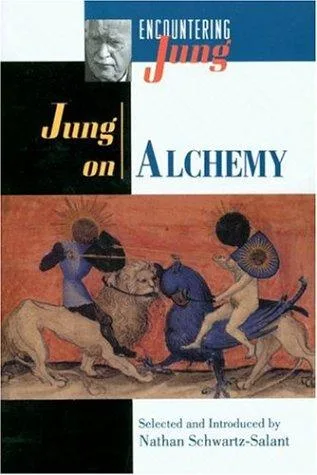
The basic writings of C.G. Jung

 75
75

The basic writings of C.G. Jung
The Basic Writings of C.G. Jung functions less as a comprehensive survey and more as an accessible, albeit selective, introduction to the architect of analytical psychology. Its strength lies in presenting key essays that defined Jung's unique trajectory away from Freudian orthodoxy, particularly his exploration of the collective unconscious and archetypal imagery. The 1993 compilation, while useful, can feel somewhat dated in its organization compared to more recent thematic anthologies. A significant passage concerning the 'Self' archetype, often presented as the goal of individuation, highlights Jung's departure from purely pathological interpretations of the psyche, emphasizing instead a drive toward psychic integration and meaning. However, the collection’s limitations stem from its breadth; some crucial later works or specific clinical applications are necessarily absent. It remains a solid, if not exhaustive, starting point for engaging with Jung's seminal ideas.
📝 Description
75
### What It Is
The Basic Writings of C.G. Jung presents a curated selection of foundational texts from the Swiss psychiatrist and psychoanalyst Carl Gustav Jung. First compiled and published in 1993, this volume offers access to essays and lectures that established many of his core concepts, moving beyond Freudian psychoanalysis to explore the unconscious mind, symbolism, and the spiritual dimensions of human experience. It serves as an entry point into his complex theoretical framework.
### Who It's For
This collection is essential for students of psychology, comparative religion, and esoteric traditions. It is particularly valuable for those seeking to understand the origins of analytical psychology and its influence on Western thought and mysticism. Individuals interested in Jung's theories on archetypes, the collective unconscious, and the process of individuation will find this volume a primary resource.
### Historical Context
Jung's work emerged in the early to mid-20th century, a period marked by significant intellectual and societal shifts. As a contemporary of Sigmund Freud and later a rival, Jung developed his theories independently, diverging on the nature of the libido and the structure of the psyche. His explorations into alchemy, Gnosticism, and Eastern religions placed him at the intersection of emerging psychological science and burgeoning esoteric interests, a position often met with skepticism from the academic mainstream but embraced by those exploring deeper psychic realities.
### Key Concepts
The writings explore Jung's distinctive conceptual landscape, including the collective unconscious—a layer of inherited psychic structures common to all humanity. It details the concept of archetypes, universal patterns of behavior and imagery such as the Shadow, the Anima/Animus, and the Self. The book also addresses the process of individuation, Jung's term for psychological development and the integration of conscious and unconscious elements toward wholeness.
💡 Why Read This Book?
• Gain foundational understanding of the collective unconscious, a concept Jung introduced to explain shared human psychic inheritance, moving beyond individual experience. • Learn about archetypes like the Shadow and Anima/Animus, which Jung identified as universal psychic structures influencing behavior and perception. • Grasp the core principles of individuation, Jung's model of psychological development aimed at achieving psychic wholeness and self-realization.
⭐ Reader Reviews
Honest opinions from readers who have explored this book.
❓ Frequently Asked Questions
When was The Basic Writings of C.G. Jung first published?
The Basic Writings of C.G. Jung was first published in 1993, bringing together seminal essays and lectures from the influential Swiss psychiatrist.
What is the 'collective unconscious' according to Jung?
The collective unconscious, as explored in Jung's writings, refers to a universal layer of the unconscious mind inherited from our ancestors, containing archetypes.
Who was Carl Gustav Jung and what is analytical psychology?
Carl Gustav Jung was a Swiss psychiatrist who founded analytical psychology, a school of psychotherapy focusing on archetypes, the collective unconscious, and individuation.
Are Jung's ideas related to alchemy?
Yes, Jung extensively studied alchemy, viewing its symbolic processes as projections of psychological transformations and a precursor to his theories on the unconscious.
What is the concept of 'individuation' in Jung's work?
Individuation is Jung's term for the lifelong psychological process of differentiating the self from others and integrating conscious and unconscious aspects of the personality.
Does this book contain Jung's 'Red Book'?
The Basic Writings of C.G. Jung typically does not include 'The Red Book' (Liber Novus), which is a separate, highly personal, and visual work by Jung.
🔮 Key Themes & Symbolism
The Collective Unconscious
This seminal concept, detailed in 'The Basic Writings,' posits a psychic inheritance shared by all humanity, distinct from personal experience. Jung argued that this deep layer contains universal patterns, or archetypes, which manifest in myths, dreams, and religious symbolism across cultures and epochs. Understanding the collective unconscious is crucial for grasping Jung's departure from purely individualistic psychology and his exploration of the shared psychic substratum that connects us all.
Archetypes and Symbolism
Central to Jung's work are the archetypes—primordial images and patterns residing in the collective unconscious. The Basic Writings explores figures like the Shadow, the Anima/Animus, and the Self, illustrating how these universal motifs shape human consciousness and behavior. Jung saw these archetypes not merely as psychological constructs but as active forces that manifest through potent symbols in dreams, art, and mythology, offering pathways to psychic integration.
Individuation
Individuation is the core developmental process described by Jung, involving the integration of conscious and unconscious aspects of the psyche to achieve wholeness. The Basic Writings illuminates this journey as a lifelong pursuit of self-realization, distinct from mere personal growth. It emphasizes confronting one's own Shadow, integrating feminine/masculine aspects (Anima/Animus), and ultimately realizing the Self, the archetype of wholeness that governs psychic equilibrium.
Psychology and Spirituality
Jung's work, as presented in these writings, significantly bridges the gap between psychology and spirituality. He viewed religious and mystical experiences not as pathologies but as expressions of deep psychic needs and archetypal manifestations. His engagement with alchemy, Gnosticism, and Eastern traditions underscores his belief that the psyche possesses an innate drive towards meaning and transcendence, often finding its expression in symbolic and spiritual quests.
💬 Memorable Quotes
“The privilege of a lifetime is to become who you truly are.”
— This statement encapsulates Jung's concept of individuation, highlighting the inherent potential within each person to realize their unique psychological destiny and achieve authentic selfhood.
“One should not identify with the archetype, but rather see it as a fundamental structure of the psyche.”
— This emphasizes that archetypes are not ego identifications but fundamental, impersonal patterns that shape our psychological experience and should be understood rather than embodied uncritically.
“The shadow is the dark side of the personality, the repressed, unconscious, and inferior aspects.”
— This defines the Shadow archetype, a critical component of Jung's model, representing the parts of ourselves we deny or suppress, which nonetheless exert influence on our behavior.
“The anima is the feminine psychic principle in the male, and the animus is the masculine psychic principle in the female.”
— This explains the Anima and Animus, archetypes representing the contrasexual aspects of the psyche, crucial for understanding interpersonal dynamics and internal psychological balance.
“Meaning is not the only goal; wholeness is.”
— This interpretation suggests that while finding meaning is important, the ultimate aim of psychological development in Jung's system is the integration of all psychic elements into a complete and balanced whole.
🌙 Esoteric Significance
Tradition
Jung's work occupies a unique space between empirical psychology and esoteric traditions. While firmly grounded in clinical observation, his theories on archetypes, the collective unconscious, and synchronicity draw heavily from Hermeticism, Gnosticism, Kabbalah, and alchemy. He saw these ancient systems not as mere historical curiosities but as profound expressions of the human psyche's innate structures and symbolic language, providing a framework for understanding the spiritual dimension of psychological development.
Symbolism
Key symbols in Jung's work, frequently explored in his writings, include the Ouroboros (representing cyclicality and wholeness), the Mandala (a symbol of the Self and psychic order), and alchemical imagery (portraying psychological transformation). The Mandala, in particular, is often presented as a visual representation of the individuation process, symbolizing the integration of disparate psychic elements into a unified center, the Self.
Modern Relevance
Contemporary thinkers and practitioners in fields ranging from depth psychology and transpersonal psychology to mythology studies and spiritual counseling continue to draw heavily on Jung's insights. His concepts of archetypes and the collective unconscious provide a framework for understanding modern cultural narratives, digital archetypes, and the search for meaning in an increasingly fragmented world. Many contemporary spiritual paths and therapeutic modalities integrate Jungian principles into their practice.
👥 Who Should Read This Book
• Students of analytical psychology and depth psychology seeking to understand the foundational concepts of C.G. Jung's theories, including the collective unconscious and archetypes. • Researchers in comparative religion and mythology interested in how Jung connected universal symbols and myths to the human psyche. • Individuals on a path of personal growth exploring the concept of individuation and the integration of the self.
📜 Historical Context
Carl Gustav Jung's seminal contributions to psychology emerged in the early to mid-20th century, a period of intense intellectual ferment. As a contemporary and later dissenter from Sigmund Freud's psychoanalytic theories, Jung forged his own path, establishing analytical psychology. His work diverged significantly by positing the collective unconscious and archetypes, concepts that drew heavily from mythology, religion, and even alchemy—fields often viewed with suspicion by the scientific establishment. While Freud focused primarily on the personal unconscious and repressed sexuality, Jung expanded the scope to include transpersonal dimensions of the psyche. His engagement with esoteric traditions placed him at a unique nexus, influencing not only psychology but also fields like comparative religion and anthropology. His ideas were met with both fascination and significant criticism from the medical and academic communities of his time.
📔 Journal Prompts
The Shadow archetype's manifestation in personal fears.
The role of the Anima/Animus in relationship dynamics.
Dreams as expressions of the collective unconscious.
The process of individuation and self-realization.
Archetypal symbols encountered in mythology or personal life.
🗂️ Glossary
Collective Unconscious
A hypothesized layer of the unconscious mind shared by all humans, containing inherited archetypes and psychic structures.
Archetype
Universal, archaic patterns and images that derive from the collective unconscious and are the psychic counterpart of instinct.
Individuation
The lifelong psychological process of integrating conscious and unconscious aspects of the personality to achieve wholeness and self-realization.
Shadow
The unconscious, repressed, or inferior aspects of the personality that the ego does not identify with.
Anima/Animus
The contrasexual aspect of the psyche: Anima is the feminine principle in men; Animus is the masculine principle in women.
Self
The archetype of wholeness and the regulating center of the psyche, often symbolized by the mandala or divine figures.
Synchronicity
Meaningful coincidences that appear to be causally unrelated but are connected by meaning.