The Avenging of the Apostles and Prophets
 73
73

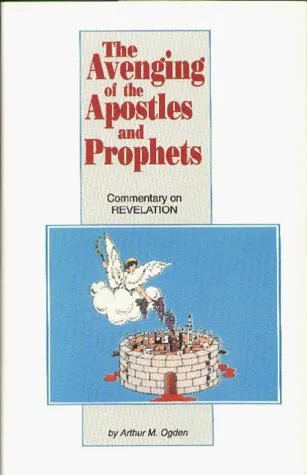
The Avenging of the Apostles and Prophets
Arthur M. Ogden's "The Avenging of the Apostles and Prophets" offers a starkly different lens through which to view foundational Christian figures. Rather than focusing on their evangelistic roles, Ogden probes the energetic and spiritual consequences inherent in their missions, particularly the implied 'avenging' of their teachings and sacrifices. The work is commendable for its direct engagement with scriptural accounts, drawing out less-explored themes of divine justice and cosmic accountability. However, the text can occasionally feel abstract, with the practical application of these concepts remaining somewhat elusive. A particularly striking section explores the spiritual weight carried by the martyrdom of early apostles, suggesting it generates a potent force for eventual spiritual rebalancing. While Ogden's perspective is unique and challenges conventional interpretations, the absence of broader comparative religious analysis or more direct experiential guidance leaves the reader wanting for deeper integration. It remains a provocative, if somewhat isolated, contribution to esoteric Christian thought.
📝 Description
73
Arthur M. Ogden's 1985 book examines the retaliatory aspects in early Christian narratives.
Published in 1985, Arthur M. Ogden's "The Avenging of the Apostles and Prophets" departs from typical theological readings. The text scrutinizes the spiritual and karmic consequences suggested by the actions of apostles and prophets. Ogden proposes a way to understand divine justice as a core principle of cosmic order, rather than simple retribution.
This work is suited for those with a serious interest in esoteric Christianity, comparative religion, and the philosophical basis of spiritual justice. It will appeal to readers who have moved beyond standard theological interpretations and seek alternative views on less discussed themes in religious texts. Scholars and practitioners interested in the psychospiritual implications of biblical narratives will also find value here. Ogden's focus is on spiritual accountability and the energetic repercussions of actions within a divine structure.
Emerging in the mid-1980s, a time of renewed interest in esoteric traditions and a reevaluation of religious doctrines, Ogden's book contributed to this shift. While esoteric interpretations of religious history existed before, Ogden's work specifically addressed the 'avenging' aspect. This publication coincided with growing academic and popular curiosity surrounding Gnosticism and early Christian sects, which often presented alternative cosmologies.
⭐ Reader Reviews
Honest opinions from readers who have explored this book.
❓ Frequently Asked Questions
What is the primary focus of 'The Avenging of the Apostles and Prophets'?
The book examines the retaliatory or vindicatory aspects within early Christian narratives, exploring spiritual justice and cosmic accountability as implied by the actions and sacrifices of apostles and prophets.
Who is Arthur M. Ogden and when was this book first published?
Arthur M. Ogden is an author focused on esoteric philosophy. 'The Avenging of the Apostles and Prophets' was first published in 1985.
Does the book offer practical advice for spiritual practice?
While it provides a framework for understanding spiritual justice, the book's primary focus is on philosophical and esoteric interpretation rather than direct practical instruction.
What kind of esoteric tradition does this book relate to?
It engages with esoteric Christianity, exploring themes often found in Gnostic or Hermetic interpretations that seek deeper, non-literal meanings in religious texts.
Are there specific biblical figures discussed in detail?
Yes, the work analyzes the roles and implied spiritual consequences associated with the actions of the apostles and prophets as central figures.
Is this book suitable for beginners in esoteric studies?
It is more suited for those with some existing knowledge of religious texts and esoteric concepts, as it builds upon conventional interpretations.
🔮 Key Themes & Symbolism
Spiritual Recompense
This theme explores the concept of spiritual recompense as a fundamental law of cosmic order, distinct from simple reward or punishment. Ogden posits that actions taken by figures like the apostles and prophets generate energetic imprints that necessitate a form of spiritual balancing. This isn't about vengeance in a human sense, but about the inevitable restoration of equilibrium within the spiritual economy. The text suggests that transgressions against divine principles, or the sacrifices made in upholding them, create ripples that eventually resolve, ensuring a form of spiritual justice is meted out.
The Prophetic Voice as Cosmic Law
Ogden analyzes the prophetic voice not merely as a medium for divine pronouncements or foretelling future events, but as an active instrument of cosmic law. The words spoken by prophets are presented as having inherent power to shape spiritual realities and incur consequences. This perspective elevates prophecy beyond mere prediction, framing it as a catalyst for spiritual accountability. The 'avenging' aspect arises when this divine law, once invoked by the prophet, operates to correct imbalances or punish those who defy its spiritual integrity.
Apostolic Authority and Karmic Balance
The authority vested in the apostles is examined through an esoteric lens, focusing on its role in establishing and maintaining spiritual order. This authority is seen as not just a mandate for teaching, but as a force capable of enacting karmic balance. Their actions, teachings, and even their martyrdom are presented as significant events that contribute to a larger spiritual economy. The 'avenging' here relates to the spiritual integrity of their mission and the eventual rectification of any spiritual debts or imbalances incurred by or against them.
Justice Beyond Retribution
This work argues for a conception of divine justice that transcends human notions of retribution or revenge. Ogden frames 'avenging' as a process of spiritual restoration and the upholding of cosmic integrity. It's about the natural consequence of actions within a divinely ordered universe, ensuring that spiritual laws are honored. The book suggests that this process is less about punishment and more about the inevitable return to equilibrium, a fundamental principle of spiritual mechanics.
💬 Memorable Quotes
“The sacrifice of the righteous is not a forgotten debt, but a seed of future equilibrium.”
— This paraphrased concept highlights Ogden's view that the suffering of spiritual figures creates an energetic imbalance that the cosmos eventually corrects, ensuring a form of justice is served.
“Prophetic utterance initiates a chain of spiritual consequence.”
— This captures the idea that a prophet's words are not passive but actively set in motion a process of spiritual accountability and cosmic adjustment.
“Apostolic mission carries the weight of divine law.”
— This interpretation suggests that the authority and actions of the apostles were intrinsically tied to the enforcement of spiritual principles, implying consequences for their violation.
“The divine economy seeks balance through the actions of its emissaries.”
— This conveys the notion that spiritual figures are agents within a universal system designed to maintain equilibrium, with their deeds playing a crucial role in this process.
“True justice is the restoration of spiritual order.”
— This paraphrased concept emphasizes Ogden's focus on cosmic integrity rather than human vengeance, suggesting that divine justice aims to re-establish natural spiritual harmony.
🌙 Esoteric Significance
Tradition
This work aligns with esoteric Christianity, drawing parallels with Gnostic and Hermetic traditions that seek hidden meanings within biblical texts. It departs from mainstream Christian theology by focusing on the concepts of spiritual justice, cosmic accountability, and the energetic repercussions of actions. It positions itself within a lineage that views scripture not just as historical or devotional texts, but as repositories of profound spiritual laws and universal principles, accessible through non-literal interpretation.
Symbolism
The 'Apostles' symbolize the foundational pillars of spiritual teaching and energetic transmission, carrying the authority to enact divine will. The 'Prophets' represent the voice of cosmic law, their words acting as catalysts for spiritual consequence and the restoration of order. The concept of 'Avenging' itself functions symbolically, representing not human vengeance but the inexorable rebalancing of spiritual forces and the upholding of divine integrity.
Modern Relevance
Contemporary practitioners of esoteric Christianity, those exploring spiritual law and karma, and scholars of comparative religion continue to find value in Ogden's unique perspective. His focus on the active role of spiritual figures in maintaining cosmic balance resonates with modern discussions on energetic principles, spiritual accountability, and the psychospiritual implications of religious narratives. Thinkers and groups interested in alternative interpretations of foundational religious texts often reference or build upon the ideas presented in this work.
👥 Who Should Read This Book
['Students of esoteric Christianity seeking to understand alternative interpretations of biblical figures and divine justice.', 'Researchers in comparative religion interested in non-traditional analyses of spiritual concepts like karma and cosmic accountability.', 'Individuals drawn to philosophical explorations of justice, spiritual law, and the energetic consequences of actions within a religious framework.']
📜 Historical Context
Published in 1985, "The Avenging of the Apostles and Prophets" emerged during a period of renewed interest in esoteric interpretations of religious texts, often as a counterpoint to purely academic or dogmatic theological approaches. The late 20th century saw a significant rise in the popularization of spiritual and occult studies, with many seeking alternative frameworks to understand Christianity. Ogden's work can be seen in dialogue with earlier esoteric Christian movements and authors like those associated with the Theosophical Society, who also sought to reinterpret biblical narratives. While not necessarily engaging directly with contemporary academic biblical criticism of the era, such as the work of scholars focusing on historical Jesus research, Ogden's text offered a distinct philosophical and spiritual perspective. Its focus on justice and retribution within a spiritual context offered a challenging alternative to more passive or purely redemptive theological narratives, potentially finding an audience among those exploring concepts of karma and spiritual law.
📔 Journal Prompts
The concept of spiritual recompense: how does it differ from human retribution?
Analyze the 'prophetic voice' as a catalyst for spiritual consequence in a specific biblical narrative.
Reflect on the esoteric meaning of 'apostolic authority' beyond its common theological interpretation.
How might the 'avenging' of spiritual principles restore cosmic order?
Consider the energetic imprint of sacrifice as described in the text.
🗂️ Glossary
Spiritual Recompense
A concept suggesting that actions within the spiritual realm inevitably lead to a balancing or restoration of cosmic order, transcending simple reward and punishment.
Prophetic Voice
The utterance or message of a prophet, viewed not just as prediction but as an active force in enacting divine law and spiritual consequences.
Apostolic Authority
The spiritual mandate and power attributed to the apostles, interpreted esoterically as a force capable of establishing and enforcing spiritual order and accountability.
Cosmic Order
The fundamental structure and governing principles of the universe, understood as divinely established and maintained through inherent spiritual laws.
Spiritual Economy
An esoteric framework describing the flow and balance of spiritual energies, forces, and consequences within the cosmos.
Energetic Imprint
The residual spiritual or energetic signature left by actions, events, or individuals, influencing subsequent spiritual dynamics.
Karmic Balance
A principle, akin to spiritual recompense, where actions generate consequences that must eventually be resolved to restore equilibrium.