The art of seeing
 79
79

The art of seeing
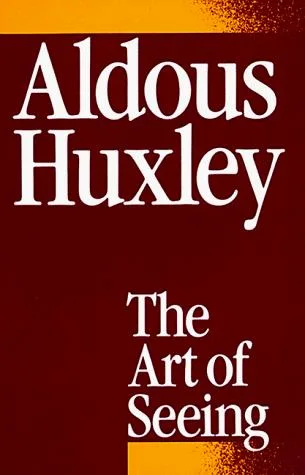
Huxley’s *The Art of Seeing* is less a gentle guide and more a stark confrontation with our own limitations in apprehending the world. He posits that most of us are functionally blind to the sheer volume of detail present in our surroundings, a habit cultivated by convenience and societal conditioning. The strength of the book lies in its insistent, almost polemical, demand for greater conscious engagement. Huxley doesn't coddle; he challenges. A particular point of contention for some readers might be his extended discussion of Dr. W. H. Bates’s controversial eye exercises, which, while illustrating his broader point about active participation, can feel tangential to the core philosophical arguments. Yet, the assertion that perception is an art, a skill to be honed, remains potent. It’s a call to wake up, not merely look. The verdict: a demanding, yet ultimately rewarding, examination of what it truly means to see.
📝 Description
79
Aldous Huxley's 1985 book, *The Art of Seeing*, examines perception beyond mere physical sight.
Aldous Huxley's *The Art of Seeing*, published in 1985, argues that most people fail to truly perceive the world, relying only on the passive reception of visual data. The book suggests that conscious attention and deliberate practice can unlock a deeper apprehension of reality, moving past superficial appearances to grasp underlying structures and meanings. It is for those who feel a gap between sensory input and conscious awareness, appealing to interests in the philosophy of mind, consciousness studies, and the connection between art and perception. Readers wishing to understand our interaction with the world more fully, and to engage more completely with their surroundings, will find valuable insights here. The work is especially pertinent for artists, writers, and anyone whose creative work depends on keen observation.
Huxley drew on his lifelong interest in perception, influenced by figures like Dr. W. H. Bates and his methods for vision improvement. The mid-20th century, when Huxley developed these ideas, saw significant exploration in psychology and philosophy. Huxley's later experiences with psychedelics also shaped his views on altered states of consciousness and heightened sensory input. The central idea distinguishes between 'seeing' (passive visual data) and 'perceiving' (active interpretation and understanding). Huxley advocates for a 'mind-at-large' approach to perception.
This work connects to traditions that emphasize inner awareness and the subjective experience of reality. Huxley's exploration of 'mind-at-large' echoes concepts found in various mystical and contemplative practices that seek to transcend ordinary modes of consciousness. His interest in Dr. Bates's methods, while seemingly practical, can be seen as a tangible approach to altering one's sensory engagement with the world, a common theme in esoteric disciplines aiming for expanded perception. The book's focus on active, conscious engagement with the environment aligns with practices that cultivate mindfulness and a deeper connection to existence.
💡 Why Read This Book?
• You will learn to distinguish between passive visual input and active, conscious perception, a core concept Huxley elaborates on through the lens of Dr. W. H. Bates's methods. • You will gain practical approaches to enhancing your observational skills, moving beyond superficial recognition to a deeper understanding of visual information, as explored in his discussions on ‘mind-at-large’. • You will encounter a philosophical challenge to your everyday assumptions about reality and how we construct it through perception, informed by Huxley’s reflections on the nature of consciousness.
⭐ Reader Reviews
Honest opinions from readers who have explored this book.
❓ Frequently Asked Questions
Is Aldous Huxley's 'The Art of Seeing' about improving physical eyesight?
While it discusses methods like those of Dr. W. H. Bates, which aim to improve physical vision, the book's primary focus is on the philosophical and psychological aspects of perception—how we consciously apprehend and interpret the world.
What is the concept of 'mind-at-large' in Huxley's book?
Huxley uses 'mind-at-large' to describe a state of expanded consciousness where perception is not limited by ego or habitual ways of seeing, allowing for a fuller, more intuitive apprehension of reality.
When was Aldous Huxley's 'The Art of Seeing' first published?
The book was first published in 1985, after Huxley's death, compiling his thoughts and essays on perception.
Does Huxley advocate for specific exercises in 'The Art of Seeing'?
Yes, Huxley details and analyzes methods, notably those of Dr. W. H. Bates, to illustrate his theories on how deliberate practice can alter and improve one's mode of seeing and perceiving.
What is the philosophical underpinning of 'The Art of Seeing'?
The book is rooted in the philosophy of perception, questioning the nature of reality and consciousness, and exploring how our subjective experience shapes what we believe to be objectively true.
How does 'The Art of Seeing' relate to Huxley's other works?
It connects to his broader interests in consciousness, human potential, and the limitations of conventional perception, themes also present in works like 'The Doors of Perception'.
🔮 Key Themes & Symbolism
Conscious Perception vs. Seeing
Huxley relentlessly distinguishes between the physiological act of seeing and the cognitive, conscious process of perception. He argues that most individuals operate at a superficial level of 'seeing,' merely registering visual data without engaging in active interpretation or appreciation. This section explores how habits and societal conditioning lead to a diminished capacity for true perception, a state where the world is experienced in a flat, unexamined manner. Huxley proposes that by cultivating deliberate attention, one can transition from mere seeing to profound perceiving, unlocking a richer sensory and intellectual engagement with existence.
The Practice of Observation
Central to Huxley’s thesis is the idea that perception is not a passive reception but an active skill that can be honed through practice. He dedicates significant attention to methods, most notably those of Dr. W. H. Bates, as examples of how conscious effort can alter ingrained habits of sight and apprehension. This theme emphasizes that by intentionally engaging with visual information—questioning assumptions, noticing details, and actively interpreting—one can expand the scope and depth of their perceived reality. It's an argument for a disciplined approach to experiencing the world.
Mind-at-Large and Reality
Huxley introduces the concept of 'mind-at-large' as a state of expanded awareness that transcends the limitations of the ordinary ego and its conditioned perspectives. This broader consciousness allows for a more holistic and intuitive understanding of reality, integrating sensory input with deeper insights. The book explores how this expanded state challenges conventional notions of objective reality, suggesting that our perceived world is a subjective construct influenced by our internal state and our capacity for perception. It’s a move towards experiencing the world as it is, rather than as we are accustomed to seeing it.
The Role of Intention
This theme examines the power of intention in shaping our perceptual experience. Huxley posits that without a conscious intention to truly see and understand, our visual apparatus operates on autopilot, filtering out much of the world's richness. The book suggests that by setting an intention to perceive more fully—to be present, to notice, to question—we can fundamentally alter our relationship with our environment. This deliberate focus is presented as a crucial element in overcoming the passive 'seeing' that characterizes much of human experience.
💬 Memorable Quotes
“The more you can be aware of, the more you can do.”
— This aphorism encapsulates Huxley’s core argument: increased conscious awareness directly correlates with enhanced capability and a richer experience of life. It suggests that awareness is not merely passive observation but an active force that empowers action and understanding.
“It is our habit of looking at the same things in the same way that prevents us from seeing.”
— This highlights the danger of ingrained perception. Huxley argues that our familiar, routine ways of seeing blind us to novel details and deeper truths, emphasizing the need for a conscious break from habit to achieve genuine insight.
“To see is to remember.”
— This notion connects perception with memory and learning. Huxley implies that true seeing involves integrating new visual information with existing knowledge and consciousness, transforming passive observation into an act of recognition and understanding.
“The aim of the artist is to make the spectator see.”
— This interpretation reflects Huxley's view of art's function. He sees the artist not just as a creator, but as one who guides others toward a more profound and conscious mode of perception, revealing the world anew.
“We see what we are prepared to see.”
— This powerful statement suggests that our perception is not a direct reception of reality, but is heavily influenced by our internal state, beliefs, and expectations. It underscores the subjective nature of experience.
🌙 Esoteric Significance
Tradition
Huxley’s work here touches upon Gnostic and Hermetic traditions that emphasize the illusory nature of ordinary reality and the potential for attaining higher knowledge through altered states of consciousness and direct apprehension. While not strictly adhering to any single lineage, his exploration of perception aligns with the Hermetic principle of 'As above, so below,' suggesting that the inner world of consciousness directly mirrors and shapes the outer world of experience. His focus on 'mind-at-large' can be seen as a secular interpretation of mystical illumination or gnosis, the direct knowing of truth beyond sensory deception.
Symbolism
The central 'symbol' is the act of 'seeing' itself, which Huxley transforms from a passive biological function into an active, conscious engagement. The 'eye' becomes a metaphor for the faculty of perception, capable of both superficial registration and profound insight. Another motif is the 'habit' of conventional seeing, representing the mundane, conditioned state of consciousness that obscures deeper reality. Huxley's work can be interpreted as a call to break free from these symbolic limitations, akin to the Gnostic awakening from the prison of the material world.
Modern Relevance
Huxley's ideas on perception and consciousness are highly relevant to contemporary fields such as mindfulness-based cognitive therapy (MBCT), consciousness studies, and even certain branches of transpersonal psychology. Thinkers exploring embodied cognition and the phenomenology of experience often echo Huxley’s emphasis on the active, interpretive nature of perception. His work continues to inspire artists, writers, and individuals interested in expanding their awareness beyond habitual patterns, resonating with modern practices that aim to cultivate presence and deepen sensory engagement with the world.
👥 Who Should Read This Book
• Individuals interested in philosophy of mind and consciousness studies will find Huxley's exploration of subjective experience and perception particularly compelling. • Artists, writers, and creatives seeking to sharpen their observational skills and deepen their engagement with the visual world will gain practical insights and theoretical frameworks. • Seekers of expanded awareness and alternative ways of experiencing reality, who are open to challenging conventional notions of seeing and perception, will find a thought-provoking perspective.
📜 Historical Context
Aldous Huxley's *The Art of Seeing*, compiled and published posthumously in 1985, emerged from his lifelong engagement with the nature of consciousness and perception. The ideas within it were shaped by his intellectual milieu of the mid-20th century, a period marked by burgeoning interest in psychology, phenomenology, and altered states of consciousness. Huxley was deeply influenced by Dr. W. H. Bates, an ophthalmologist whose controversial methods for improving vision through non-medical means became a focal point for Huxley’s broader theories on active perception. This period also saw figures like Alan Watts exploring Eastern philosophies and their emphasis on mindful awareness, concepts that resonated with Huxley’s own investigations. While not directly engaging in the same scientific rigor as behaviorists like B.F. Skinner, Huxley's work offered a philosophical counterpoint, emphasizing subjective experience and conscious control. The book, therefore, speaks to a tradition of introspective inquiry, bridging scientific curiosity with mystical exploration, and predates much of the modern neuroscience and psychology focused on perception.
📔 Journal Prompts
The habit of seeing and its disruption.
Mind-at-large as a mode of perception.
The intention behind your observation.
Differentiating seeing from perceiving in daily life.
The artist's role in awakening perception.
🗂️ Glossary
Seeing
In Huxley's context, 'seeing' refers to the passive, often habitual, physiological act of registering visual stimuli with the eyes, without deep conscious engagement or interpretation.
Perceiving
The active, conscious process of interpreting, understanding, and integrating visual information with one's awareness, leading to a richer apprehension of reality.
Mind-at-Large
A state of expanded consciousness where perception is unfettered by egoic limitations or conditioned habits, allowing for a more holistic and intuitive experience of the world.
Dr. W. H. Bates
An ophthalmologist whose methods for improving vision through relaxation and active eye movement are discussed by Huxley as examples of conscious engagement with visual function.
Habit
The ingrained, often unconscious, patterns of behavior and thought that Huxley argues lead to superficial 'seeing' and prevent deeper perception.
Intention
The deliberate focus and conscious will to perceive more fully, which Huxley posits is essential for transforming passive seeing into active, meaningful apprehension.
Consciousness
The state of being aware of and responsive to one's surroundings; in Huxley's work, it is the faculty that can be trained to enhance perception.