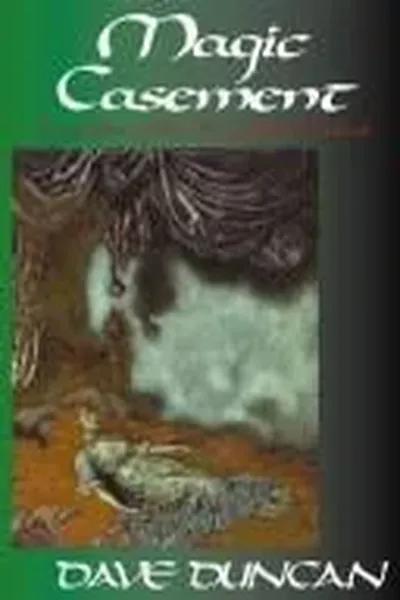
The alchemist's pursuit

 84
84

The alchemist's pursuit
Dave Duncan's *The Alchemist's Pursuit* offers a compelling, albeit sometimes understated, exploration of alchemical principles as a narrative engine. The novel’s strength lies in its grounding of fantastical elements within a consistent internal logic, particularly how the titular pursuit shapes the protagonist’s reality and moral compass. One striking aspect is the depiction of how the alchemist's journey demands not just intellectual understanding but a deep, often arduous, practical engagement with the self and the world. However, the pacing occasionally falters, with certain developments feeling somewhat protracted, which might test the patience of readers seeking constant momentum. The initial chapters, while setting the stage, could benefit from greater narrative urgency. Despite this, the novel ultimately delivers a satisfying conclusion that reaffirms its central thematic concerns. *The Alchemist's Pursuit* is a solid entry for those drawn to character-driven speculative fiction with a philosophical bent.
📝 Description
84
Dave Duncan's 2009 novel, The Alchemist's Pursuit, uses alchemy as a metaphor for personal and spiritual change.
The Alchemist's Pursuit, published in 2009, is a supernatural fiction novel by Dave Duncan. It centers on the alchemical concept of transformation, not just as a chemical process but as a metaphor for internal and spiritual development. The plot unfolds in a world where alchemical pursuits have real effects, leading to altered states of being or understanding. Readers interested in speculative fiction with philosophical and mystical undertones will find this work appealing. It suits those who enjoy stories about characters pursuing hidden knowledge and confronting the potential dangers of such quests. The book blurs the lines between the ordinary and the extraordinary, with the characters' inner lives mirroring external struggles.
Duncan's narrative interprets the alchemical Magnum Opus, or Great Work, as a path toward self-discovery and refinement. The Philosopher's Stone is presented not solely as a substance for transmuting metals, but as a symbol for achieving higher consciousness or enlightenment. The novel contrasts these esoteric goals with the mundane realities characters face.
Published in 2009, The Alchemist's Pursuit resonates with a period of increased interest in esoteric traditions within popular culture. While not a direct engagement with historical alchemical texts, its themes align with the Hermetic tradition's concept of microcosm-macrocosm correspondence. The novel's focus on personal transformation echoes perennial philosophy ideas. Duncan fictionalizes these concepts, contrasting the pursuit of higher consciousness with the tangible consequences within the narrative.
💡 Why Read This Book?
• Gain insight into the personal cost of seeking hidden knowledge, as illustrated by the protagonist's sacrifices detailed in the narrative's progression. • Understand the metaphorical application of alchemical processes to spiritual and psychological development, as Duncan uses the "Great Work" to symbolize internal transformation. • Explore the consequences of wielding esoteric power, particularly through the protagonist's interactions with specific individuals and factions within the story's world.
⭐ Reader Reviews
Honest opinions from readers who have explored this book.
❓ Frequently Asked Questions
What is the central theme of Dave Duncan's The Alchemist's Pursuit?
The central theme revolves around the alchemical "Great Work," interpreted as a profound journey of personal transformation, self-discovery, and the pursuit of hidden knowledge, with tangible, often challenging, consequences for the protagonist.
Does The Alchemist's Pursuit focus on literal alchemy or metaphorical alchemy?
The novel primarily uses alchemy metaphorically. While it acknowledges the traditional alchemical framework, its focus is on the spiritual, psychological, and personal transformation that the "Great Work" represents for the characters.
When was The Alchemist's Pursuit originally published?
The Alchemist's Pursuit was first published in 2009, placing it within a period of significant interest in esoteric and philosophical themes within speculative fiction.
What kind of reader would enjoy The Alchemist's Pursuit?
Readers who enjoy speculative fiction with philosophical depth, character-driven narratives, and explorations of esoteric concepts like transformation and hidden knowledge will likely find this book engaging.
Are there specific alchemical symbols discussed in the book?
While the book focuses on the overarching concept of the "Great Work," it alludes to the symbolic nature of alchemical pursuits, where processes like purification and transmutation apply to the self rather than just base metals.
Is The Alchemist's Pursuit part of a series?
Information regarding whether The Alchemist's Pursuit is part of a series by Dave Duncan is not readily available in the provided context, suggesting it may be a standalone work.
🔮 Key Themes & Symbolism
The Great Work as Personal Metamorphosis
The novel reinterprets the alchemical Magnum Opus not as a literal chemical procedure but as an intense, internal process of refinement and self-discovery. The protagonist's journey mirrors the stages of alchemical transformation, moving from a base state through purification and distillation towards a perfected form. This theme emphasizes that true alchemy is an inward quest, demanding profound personal change and the shedding of old limitations to achieve a higher state of being or understanding.
The Seeker's Burden and Sacrifice
Pursuing esoteric knowledge, as depicted in The Alchemist's Pursuit, comes at a significant personal cost. The narrative explores the sacrifices required – isolation, difficult choices, and the potential loss of worldly attachments – in the quest for enlightenment or power. This highlights the dual nature of esoteric paths: they offer access to profound truths but demand unwavering commitment and often involve navigating morally ambiguous territory.
Hidden Knowledge and Its Ramifications
The book delves into the concept of hidden knowledge, suggesting that certain truths and potentials lie beyond conventional understanding, accessible only through dedicated pursuit. However, it also scrutinizes the consequences of acquiring such knowledge. The narrative suggests that power derived from esoteric secrets is not easily controlled and can lead to unforeseen dangers, impacting both the seeker and the wider world, underscoring a theme of responsibility.
The Interconnectedness of Inner and Outer Worlds
Echoing Hermetic principles, The Alchemist's Pursuit posits a deep connection between the internal state of the individual and the external reality. The protagonist's alchemical journey is not confined to their mind; it actively shapes their environment and interactions. This theme suggests that mastering the self is intrinsically linked to influencing or understanding the broader cosmos, reflecting the ancient maxim "As Above, So Below."
💬 Memorable Quotes
“The stone is not found, it is made.”
— This line encapsulates the novel's core alchemical metaphor, suggesting that enlightenment or self-perfection is not a passive discovery but an active, arduous process of creation and transformation.
“Every transmutation leaves a mark.”
— This paraphrased concept highlights the lasting impact of profound change. The pursuit of alchemical transformation, whether literal or metaphorical, irrevocably alters the seeker, leaving indelible traces on their being and their world.
“He sought the secret, but found only himself.”
— This reflects a common esoteric trope where the ultimate goal of seeking external secrets is the discovery of the self. The pursuit itself becomes the catalyst for self-realization, proving more valuable than any external prize.
“The crucible tests more than metal.”
— This emphasizes the human element in alchemical processes. The intense pressures and transformations are not just chemical reactions but trials of character, will, and spirit, revealing the true nature of the alchemist.
“Some doors, once opened, cannot be closed.”
— This points to the irreversible nature of acquiring certain knowledge or initiating certain processes. The act of unlocking esoteric understanding can lead to consequences and realities from which there is no return.
🌙 Esoteric Significance
Tradition
The work aligns with the Western Hermetic tradition, particularly its alchemical branch, which views the physical processes of transmutation as symbolic of spiritual purification and enlightenment. It departs from literal interpretations by focusing on the psychological and existential dimensions of the "Great Work," framing it as a path of profound personal metamorphosis rather than solely a material science.
Symbolism
Central symbols include the Philosopher's Stone, representing the ultimate goal of spiritual perfection or gnosis, and the crucible, symbolizing the trials and purification necessary for transformation. The act of transmutation itself signifies the shedding of the base self to achieve a higher, more refined state of consciousness or being, reflecting a core Hermetic principle.
Modern Relevance
Contemporary thinkers and practitioners exploring Jungian psychology, particularly the concept of individuation, find echoes of alchemical symbolism in *The Alchemist's Pursuit*. Modern esotericists and self-help philosophies that emphasize personal growth through challenging processes also draw upon the narrative's portrayal of the transformative journey.
👥 Who Should Read This Book
• Aspiring practitioners of Western Esotericism: Individuals interested in understanding the metaphorical and psychological aspects of alchemical traditions beyond literal interpretations. • Fans of philosophical fantasy: Readers who appreciate speculative fiction that integrates deep questions about self, knowledge, and transformation into engaging narratives. • Students of comparative religion and mysticism: Those seeking to explore how ancient traditions like alchemy are reinterpreted and presented within contemporary fictional frameworks.
📜 Historical Context
Dave Duncan's *The Alchemist's Pursuit*, published in 2009, arrived in an era where esoteric themes continued to find purchase in speculative fiction, building on a legacy that saw renewed interest in the late 20th century. The novel taps into the enduring fascination with alchemy, a tradition with roots stretching back to Hellenistic Egypt and the Hermetic corpus. While not directly engaging with academic circles, its thematic exploration of transformation and hidden knowledge aligns with perennial philosophy concepts, a field championed by figures like Aldous Huxley. The work's fictional approach offers an alternative to more scholarly or purely mystical interpretations of alchemy, providing a narrative lens on its potential for personal and spiritual metamorphosis. The reception of such works often falls into niche communities, appreciating their unique blend of fantasy and philosophical inquiry, distinct from the more mainstream fantasy literature of the time.
📔 Journal Prompts
The alchemist's pursuit of the Stone as a metaphor for personal goals.
Reflecting on the concept of 'transmutation' in one's own life.
The burden of hidden knowledge, as explored through the protagonist's experiences.
Interpreting the symbolism of the crucible in personal challenges.
Identifying personal 'base metals' that require refinement.
🗂️ Glossary
The Great Work (Magnum Opus)
In alchemy, the 'Great Work' refers to the process of creating the Philosopher's Stone, but metaphorically, it signifies the ultimate spiritual or personal transformation and enlightenment of the alchemist.
Transmutation
The alchemical process of changing one substance into another, often from base metals into gold. In a symbolic sense, it refers to the transformation of the self from a lower, impure state to a higher, perfected one.
Philosopher's Stone
The legendary alchemical substance believed to be capable of turning base metals into gold and providing immortality. Symbolically, it represents ultimate wisdom, spiritual perfection, or enlightenment.
Crucible
A vessel used for heating substances to very high temperatures. Symbolically, it represents a place of intense trial, purification, and transformation where the alchemist's character and resolve are tested.
Esoteric
Intended for or likely to be understood by only a small number of people with a specialized knowledge or interest. Esoteric literature often deals with mystical, spiritual, or occult subjects.
Hermeticism
A religious, philosophical, and esoteric tradition based primarily upon writings attributed to Hermes Trismegistus. It emphasizes the interconnectedness of all things and the potential for human spiritual ascent.
Gnosis
Knowledge of spiritual mysteries. In Gnosticism and related traditions, gnosis is a salvific knowledge that enables liberation from the material world.