The adepts in the Eastern esoteric tradition

 74
74

The adepts in the Eastern esoteric tradition
Hall approaches the subject of Eastern adepts with his characteristic erudition, attempting to bridge the vast conceptual gulfs between disparate spiritual systems. His strength lies in drawing meticulous parallels between yogic practices, Buddhist enlightenment, and the Western Hermetic ideal of mastery over the self and the elements. The section detailing the concept of the "Inner School" is particularly compelling, suggesting a hidden network of enlightened beings guiding humanity. However, the work occasionally suffers from an over-reliance on Hall's established Western esoteric interpretations, sometimes projecting these frameworks onto Eastern traditions rather than allowing them to stand independently. The prose, while informative, can become dense, requiring careful attention to follow the intricate comparisons. Despite these limitations, "The Adepts in the Eastern Esoteric Tradition" remains a valuable resource for understanding the shared aspirations of spiritual seekers across continents and epochs.
📝 Description
74
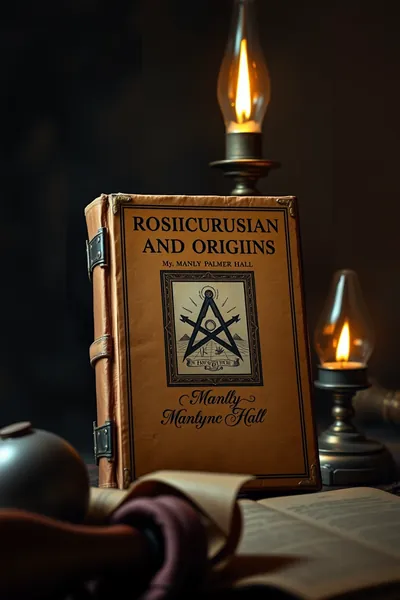
### What It Is Manly Palmer Hall's "The Adepts in the Eastern Esoteric Tradition," first published in 1952, is a scholarly examination of ancient philosophies and their manifestations across diverse spiritual cultures. It does not present a singular doctrine but rather surveys the common threads and unique expressions of wisdom found in traditions stretching from India to the West. The work analyzes the lives and teachings of individuals who achieved profound spiritual realization, often referred to as 'adepts.'
### Who It's For This book is aimed at serious students of comparative religion, esoteric philosophy, and the history of mysticism. It appeals to those who seek to understand the underlying unity of spiritual seeking across disparate cultures. Readers should possess a foundational knowledge of Western esoteric thought, as Hall frequently draws parallels and contrasts with familiar concepts from Hermeticism, Gnosticism, and Rosicrucianism.
### Historical Context Published in the mid-20th century, "The Adepts in the Eastern Esoteric Tradition" emerged during a period of burgeoning interest in Eastern religions and philosophies in the West, influenced by figures like Helena Blavatsky and the Theosophical Society. Hall’s work situates itself within this milieu, attempting to synthesize Eastern mystical insights with the Western esoteric framework he was already well-known for exploring. It was a time when comparative mythology and religious studies were gaining academic traction, but the esoteric dimensions were often overlooked by mainstream scholarship.
### Key Concepts The text explores the concept of the 'Inner School' or hidden spiritual lineages that transmit esoteric knowledge across generations. It examines the 'Great Work' not merely as an alchemical process but as a universal path of spiritual transformation. Hall also delves into the nature of consciousness, the subtle bodies, and the stages of initiation as understood through various Eastern and Western lenses.
💡 Why Read This Book?
• Gain insight into the concept of the 'Inner School' as described by Hall, understanding it as a potential lineage of spiritual masters transcending cultural boundaries. • Explore the parallels Hall draws between specific yogic practices and Western Hermetic ideals, offering a unique comparative lens on spiritual disciplines. • Understand the historical context of mid-20th century Western esoteric interest in Eastern traditions, as reflected in Hall's synthesis in "The Adepts in the Eastern Esoteric Tradition."
⭐ Reader Reviews
Honest opinions from readers who have explored this book.
❓ Frequently Asked Questions
When was Manly Palmer Hall's "The Adepts in the Eastern Esoteric Tradition" first published?
Manly Palmer Hall's "The Adepts in the Eastern Esoteric Tradition" was first published in 1952, reflecting a mid-20th century surge in Western interest in Eastern spiritual philosophies.
What is the primary focus of "The Adepts in the Eastern Esoteric Tradition"?
The book primarily examines and compares the lives, teachings, and spiritual achievements of individuals recognized as 'adepts' within various Eastern esoteric traditions, seeking commonalities with Western mystical paths.
Does Hall present a unified Eastern philosophy in this book?
No, Hall's approach is more comparative and synthetic. He surveys diverse traditions, highlighting shared principles and esoteric methodologies rather than proposing a single, unified Eastern doctrine.
What Western esoteric traditions does Hall reference when discussing Eastern adepts?
Hall frequently references Hermeticism, Gnosticism, and Rosicrucianism, using their concepts and terminology to draw parallels and contrasts with Eastern spiritual concepts.
Is this book suitable for beginners in esoteric studies?
While accessible, the book benefits from a foundational understanding of Western esoteric thought. Beginners might find the comparative nature and dense prose challenging without prior context.
What does Hall mean by the 'Inner School'?
Hall uses 'Inner School' to refer to a concept of an ancient, hidden lineage or fraternity of enlightened masters who preserve and transmit esoteric knowledge across generations and cultures.
🔮 Key Themes & Symbolism
The Universal Path of the Adept
Hall posits that despite vast cultural and doctrinal differences, the path to spiritual mastery, or 'adeptship,' follows a remarkably consistent trajectory. He scrutinizes figures from various traditions, identifying common stages of inner development, the overcoming of personal limitations, and the attainment of profound wisdom. The work emphasizes that the 'Great Work' is not confined to alchemical transmutation but represents a universal process of soul evolution accessible to dedicated practitioners across the globe.
The 'Inner School' and Esoteric Lineages
A central theme is the concept of the 'Inner School' – a hidden succession of enlightened beings who transmit authentic esoteric knowledge throughout history. Hall suggests these lineages operate beyond the visible world, influencing humanity's spiritual progress. This idea connects diverse mystical traditions, proposing a continuity of wisdom that transcends specific religious or cultural forms, accessible only to those who qualify through rigorous inner discipline and understanding.
Comparative Mysticism and Symbolism
The book functions as a vast comparative study, juxtaposing Eastern meditative practices, philosophical insights, and symbolic systems with their Western Hermetic, Gnostic, and Kabbalistic counterparts. Hall meticulously analyzes recurring symbols and archetypes, demonstrating how different cultures have expressed similar metaphysical truths. This comparative approach aims to reveal the underlying unity of mystical experience and the universal language of spiritual symbolism.
Consciousness and Subtle Anatomy
Hall explores the nature of human consciousness and its potential for expansion, often detailing concepts related to subtle bodies and energetic centers found in both Eastern and Western esoteric systems. He discusses how adepts achieve mastery through understanding and harmonizing these inner planes of existence. The work touches upon the principles of concentration, meditation, and the development of psychic faculties as tools for spiritual realization.
💬 Memorable Quotes
“The ancient masters of the East did not teach a religion; they imparted a science.”
— This statement highlights Hall's perspective that the esoteric traditions of the East are not based on dogma or blind faith, but on observable principles and verifiable methods for spiritual attainment, akin to scientific inquiry.
“The adept is one who has achieved mastery over the lower nature and consciously directs the forces of the higher.”
— This paraphrased concept defines the adept not just as someone with knowledge, but as an individual who has undergone profound self-mastery, integrating their physical, emotional, and mental faculties under the guidance of their spiritual will.
“The path of initiation is a process of unfolding divine consciousness within the human organism.”
— This concept suggests that initiation is not an external bestowal of status but an internal, developmental journey. It emphasizes the inherent divine potential within each individual that is gradually revealed through spiritual practice and understanding.
“Wisdom is the prize of suffering, and suffering is the price of wisdom.”
— This aphorism, often attributed in spirit to various esoteric traditions, encapsulates the idea that significant spiritual growth and profound understanding are often forged through trials, challenges, and the willingness to endure hardship.
“The universe is a manifestation of divine thought, and man is a microcosm reflecting the macrocosm.”
— This reflects the Hermetic principle of 'As Above, So Below,' suggesting a fundamental correspondence between the greater cosmos and the individual human being. It implies that understanding oneself is key to understanding the universe.
🌙 Esoteric Significance
Tradition
This work is deeply rooted in the Western esoteric tradition, particularly Hermeticism and Rosicrucianism, as Hall consistently draws parallels and interprets Eastern concepts through this lens. It seeks to position the Eastern 'adepts' within a universal framework of spiritual mastery that Hall believed was also present, though often expressed differently, in Western mystery schools. It departs from purely academic religious studies by assuming the validity and efficacy of these esoteric paths.
Symbolism
The book frequently engages with symbols such as the lotus flower, representing spiritual awakening and purity in Eastern traditions, often compared to the Western rose. Hall also discusses the concept of the 'third eye' (the Ajna chakra in yogic traditions) as a symbol of expanded consciousness and inner vision, correlating it with similar concepts of heightened perception in Western mysticism.
Modern Relevance
Contemporary interest in mindfulness, comparative mysticism, and non-dual philosophies can find resonance in Hall's work. Modern practitioners of yoga, meditation, and various forms of Western esotericism continue to draw upon Hall's efforts to find unifying threads between these diverse spiritual disciplines and to understand the historical transmission of esoteric knowledge.
👥 Who Should Read This Book
• Students of comparative religion and philosophy seeking to understand the historical bridges built between Eastern and Western esoteric thought in the mid-20th century. • Practitioners of Western esoteric traditions (Hermeticism, Rosicrucianism) who wish to see how their own path is reflected in or contrasted with Eastern mystical systems. • Researchers interested in Manly Palmer Hall's broader oeuvre and his specific interpretations of spiritual mastery and hidden lineages across cultures.
📜 Historical Context
Manly Palmer Hall’s "The Adepts in the Eastern Esoteric Tradition" emerged in 1952, a period marked by a significant Western fascination with Eastern spirituality, partly fueled by the Theosophical Society's influence and the post-war search for meaning. Hall, already established with his "The Secret Teachings of All Ages" (1928), sought to synthesize these Eastern currents with the Western esoteric traditions he championed, such as Hermeticism and Rosicrucianism. This era saw figures like Swami Vivekananda and Paramahansa Yogananda introduce Vedanta and Kriya Yoga to American audiences. While mainstream academia was developing comparative religion studies, Hall operated within a more dedicated esoteric framework, aiming to demonstrate the universal principles underlying diverse mystical paths rather than adhering strictly to academic distinctions.
📔 Journal Prompts
Reflect on the concept of the 'Inner School' as presented by Hall; how might such hidden lineages influence spiritual progress?
Consider the 'science' versus 'religion' framing of Eastern traditions; how does this perspective shape the understanding of adeptship?
Analyze the parallels Hall draws between specific yogic practices and Western Hermetic ideals; what common principles emerge?
Explore the idea of the 'Great Work' as a universal process of soul evolution; how does this apply beyond alchemical symbolism?
Examine the symbolism of the lotus flower or the 'third eye' within the context of both Eastern and Western esoteric traditions discussed.
🗂️ Glossary
Adept
An individual who has achieved a high degree of spiritual knowledge and mastery, often through rigorous discipline and inner transformation, enabling them to consciously direct spiritual forces.
Esoteric
Pertaining to a body of knowledge or practice intended for or understood by only a small number of people with a specialized background or initiation; inner teachings.
The Great Work
In esoteric traditions, this refers to the process of spiritual transformation and perfection, often symbolized by alchemy, aiming for the purification of the soul and the attainment of divine consciousness.
Inner School
A concept referring to a hidden succession or fraternity of enlightened masters who preserve and transmit esoteric wisdom across time and cultures, existing beyond conventional historical records.
Microcosm
The principle that the human being (or the Earth) is a reflection or miniature representation of the greater universe (macrocosm), embodying similar structures and laws.
Chakra
In yogic and Tantric traditions, these are centers of spiritual energy within the subtle body, often visualized as spinning wheels of light, influencing physical and psychological states.
Hermeticism
An ancient philosophical and religious tradition based on writings attributed to Hermes Trismegistus, emphasizing the unity of all things, the correspondence between the macrocosm and microcosm, and the pursuit of divine knowledge.