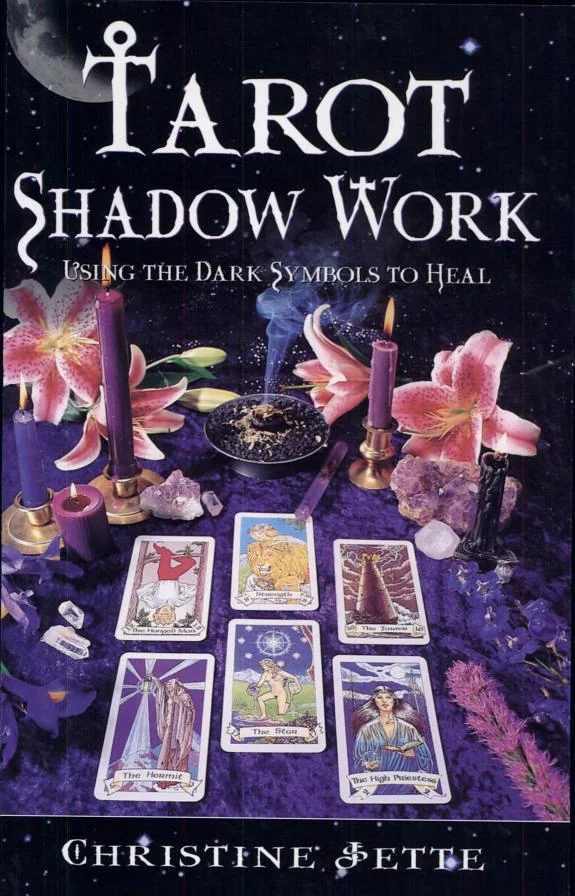
Tarot Shadow Work
 77
77

Tarot Shadow Work
Christine Jette's *Tarot Shadow Work* distinguishes itself by demanding a level of psychological rigor rarely applied to the tarot. The book avoids the common pitfall of repackaging existing tarot interpretations with a new, superficial label. Instead, Jette offers a structured, if demanding, approach to using the cards as catalysts for confronting personal shadow material. Her insistence on moving from 'discovery to healing' is particularly valuable, providing a clear pathway beyond mere identification of issues. A limitation, however, is that the book's intensity may prove daunting for those unaccustomed to deep psychological introspection or the more challenging aspects of the Major Arcana, such as the inherent darkness suggested by cards like The Devil. The chapter exploring the use of reversed cards as indicators of repressed energies is a standout, offering a concrete, actionable framework for shadow work. Ultimately, Jette's book serves as a potent, if rigorous, guide for those ready to engage the tarot's full, often uncomfortable, psychological spectrum.
📝 Description
77
### What It Is Tarot Shadow Work by Christine Jette, first published in 2000, offers a radical reorientation of tarot practice. Moving beyond simple divination or self-help affirmations, Jette proposes the cards as potent instruments for confronting and integrating the darker, often disowned aspects of the psyche. This work asserts that true esoteric development necessitates acknowledging and working with what is typically repressed or hidden. The book guides readers through exercises designed to unearth subconscious patterns, past traumas, and ingrained beliefs that hinder personal growth and spiritual evolution.
### Who It's For This book is intended for experienced tarot practitioners and serious students of esoteric psychology who are ready to move past superficial interpretations. It appeals to individuals seeking a deeper, more confrontational engagement with their inner landscape. Those interested in Jungian psychology, archetypal exploration, and the practical application of occult tools for psychological healing will find this approach particularly relevant. It is for the seeker who understands that genuine transformation requires facing discomfort and integrating all facets of the self.
### Historical Context Published at the turn of the millennium, *Tarot Shadow Work* emerged during a period of burgeoning interest in Jungian psychology and its application to spiritual practices. The early 2000s saw a growing demand for esoteric literature that offered more than simple prediction, pushing for depth and psychological integration. Jette's work contributed to this wave, offering a specific methodology for using the tarot, a practice often viewed through a lens of fortune-telling, as a serious tool for psychospiritual alchemy. This contrasted with the more mainstream New Age approaches prevalent at the time, which often shied away from the 'shadow' aspects of the human condition.
### Key Concepts The core of Jette's method lies in the concept of 'shadow work' as understood through a Jungian framework—the integration of the unconscious, repressed parts of the personality. The book applies this to the tarot, viewing each card not just as an archetypal representation but as a potential trigger for revealing personal shadow material. Specific concepts explored include the use of reversed cards as indicators of suppressed energies, the 'shadow spread' for diagnostic readings, and the transformation of fear-based archetypes (like The Devil or Death) into agents of liberation when confronted directly.
💡 Why Read This Book?
• Gain a structured method for using the 78 cards of the tarot specifically for psychological integration, moving beyond simple divination as outlined in Jette's "shadow spread." • Learn to interpret reversed tarot cards not as negative omens but as direct indicators of suppressed shadow aspects, a key concept from the book's early chapters. • Develop practical techniques for transforming archetypal fears, such as those associated with The Devil card, into catalysts for personal liberation, as detailed in the latter sections of the book.
⭐ Reader Reviews
Honest opinions from readers who have explored this book.
❓ Frequently Asked Questions
What is shadow work in the context of Christine Jette's book?
In *Tarot Shadow Work*, shadow work refers to the process of acknowledging, confronting, and integrating the disowned or repressed aspects of one's psyche. Jette uses tarot cards as tools to uncover these hidden elements and facilitate their healing.
How does *Tarot Shadow Work* differ from standard tarot reading guides?
Unlike guides focused on prediction or general self-help, this book prioritizes psychological depth. It uses the tarot as a sophisticated tool for exploring personal darkness, past traumas, and subconscious patterns, aiming for integration rather than superficial advice.
Is this book suitable for beginners with tarot?
While beginners can attempt the exercises, *Tarot Shadow Work* is best suited for those with some existing familiarity with tarot card meanings and a readiness for intense self-exploration. It assumes a certain level of psychological introspection.
What psychological theories influence Christine Jette's approach?
The book is heavily influenced by Carl Jung's concept of the 'shadow' and archetypal psychology. Jette applies these frameworks to the traditional tarot imagery to facilitate deeper self-understanding and healing.
What specific tarot spreads are discussed in the book?
The book introduces specific spreads designed for shadow work, most notably the 'shadow spread.' It also discusses how to adapt traditional spreads for uncovering subconscious material.
Can the methods in *Tarot Shadow Work* be applied without a full tarot deck?
While a full tarot deck is recommended for the exercises, the core concepts of shadow work and psychological integration can be explored conceptually. However, the book's practical application relies on the symbolic language of the cards.
🔮 Key Themes & Symbolism
The Tarot as a Mirror
Jette presents the 78 tarot cards not merely as divinatory tools but as profound psychological mirrors. Each card, from the Fool to the World, is reframed to reflect aspects of the reader's own hidden psyche. The book argues that the archetypal imagery serves as a potent catalyst for bringing subconscious material to light. This perspective shifts the focus from external prediction to internal excavation, where the cards act as prompts for self-awareness concerning repressed emotions, limiting beliefs, and past wounds. The goal is not to see the future, but to understand the present self more completely.
Integration of the Shadow
Central to the book is the Jungian concept of the 'shadow'—the parts of ourselves we deny, repress, or project onto others. Jette demonstrates how the tarot can be used to identify these shadow aspects, often represented by the more challenging or 'negative' archetypes within the deck. Rather than fearing these elements, the book advocates for their conscious integration. This process involves acknowledging their existence, understanding their origins, and reclaiming the energy bound within them. The integration is portrayed as crucial for wholeness and authentic spiritual development.
Healing Through Confrontation
Jette proposes that true healing arises not from avoidance but from direct confrontation with difficult psychological material. *Tarot Shadow Work* provides practical exercises and specific spreads designed to guide readers through this confrontation. The book suggests that by facing the 'shadow' aspects illuminated by the tarot, individuals can move beyond the power these hidden parts hold over their lives. This approach views the tarot as an alchemical tool, transforming psychological 'lead' (pain, fear, repression) into spiritual 'gold' (wholeness, self-acceptance, liberation).
Archetypal Psychology and Tarot
The work bridges the gap between archetypal psychology, particularly the theories of Carl Jung, and the practice of tarot reading. Jette interprets the Major and Minor Arcana through the lens of universal human experiences and the dynamics of the unconscious. The cards become symbolic representations of internal conflicts, defense mechanisms, and the journey toward individuation. This framework offers a sophisticated understanding of the tarot, positioning it as a key to unlocking deeper psychological insights and facilitating profound personal transformation.
💬 Memorable Quotes
“The cards can trigger awareness in ourselves of troubling aspects of our lives and histories.”
— This statement encapsulates the book's core premise: that the tarot serves as a powerful diagnostic tool for revealing deeply buried psychological issues and historical patterns that influence the present.
“Go beyond discovery to use the cards as tools for healing.”
— This highlights the practical, therapeutic aim of Jette's method. It emphasizes that understanding one's shadow is only the first step; the ultimate goal is the active integration and healing of those identified aspects.
“Part of the work that needs to be done with tarot in this new century.”
— This suggests a forward-looking perspective on tarot practice, positioning shadow work as an essential evolution for the discipline in the 21st century, moving toward greater psychological depth and efficacy.
“Using the cards to confront and integrate the darker, often disowned aspects of the psyche.”
— This paraphrased concept summarizes the book's primary objective: to leverage the tarot's symbolic language for the deliberate process of acknowledging and assimilating repressed parts of the self.
“The reversed cards as indicators of suppressed energies.”
— This specific interpretation, likely found within the text, offers a concrete example of Jette's unique approach, reframing a common tarot reading technique to serve the purpose of uncovering the shadow.
🌙 Esoteric Significance
Tradition
This work sits firmly within the Hermetic and Jungian esoteric traditions. It draws heavily on the symbolic language and archetypal framework inherent in the Hermetic arts, particularly the tarot, while grounding its methodology in the psychological principles of Carl Jung. Jette extends the Hermetic goal of 'as above, so below' into the psychological realm, suggesting that understanding the macrocosm (the archetypes of the tarot) provides direct access to the microcosm (the individual psyche). It departs from purely predictive or ceremonial magic, focusing instead on psychospiritual alchemy.
Symbolism
Key symbols explored include The Devil, representing bondage to material desires and repressed instincts, and The Tower, symbolizing the shattering of false structures and ego defenses. Jette likely interprets these not as purely negative portents but as powerful archetypes that, when confronted through shadow work, can lead to liberation. The concept of reversed cards also functions symbolically, indicating energies that are blocked, denied, or operating unconsciously, thus pointing towards areas needing integration.
Modern Relevance
Jette's approach remains highly relevant for contemporary practitioners of depth psychology, Jungian analysts, and modern occultists seeking integrated spiritual paths. Her work anticipates the current emphasis on trauma-informed spirituality and the integration of 'difficult' emotions within esoteric practices. Thinkers and practitioners in fields like archetypal astrology, modern witchcraft, and somatic experiencing often find her methods valuable for understanding the interplay between symbolic systems and personal psychological healing.
👥 Who Should Read This Book
• Tarot practitioners seeking to deepen their practice beyond divination, looking for methods to use the cards for psychological self-exploration and healing. • Students of Jungian psychology and archetypal studies interested in applying symbolic systems like the tarot to understand the unconscious and the shadow self. • Individuals undergoing personal transformation who are ready to confront difficult aspects of their past and psyche, using a structured symbolic framework for guidance.
📜 Historical Context
Published in 2000, *Tarot Shadow Work* emerged at a pivotal moment for esoteric literature. The preceding decades had seen a surge in New Age spirituality, often characterized by positive thinking and superficial self-help. Jette's work stood in stark contrast, aligning more with the burgeoning interest in Jungian depth psychology and its application to spiritual practices. Authors like Robert Bly had already popularized the concept of engaging with the 'masculine shadow' in the early 90s, creating fertile ground for a tarot-based exploration of the broader shadow concept. Jette's rigorous approach demanded a level of psychological engagement that distinguished it from more accessible, but less profound, contemporary tarot guides. The work implicitly challenged the notion that tarot was solely for fortune-telling, positioning it instead as a serious psychospiritual tool for integration, a perspective that resonated with a growing segment of the esoteric community seeking deeper meaning.
📔 Journal Prompts
The Devil card's representation of perceived limitations: what personal 'chains' does it illuminate for you?
Reflect on a reversed card's message regarding your suppressed energies.
How does the concept of the shadow manifest in your relationship with The Tower archetype?
Identify one troubling aspect of your history revealed by the cards and its healing potential.
Consider the journey from discovery to healing using the tarot.
🗂️ Glossary
Shadow Work
A psychological concept, particularly from Jungian psychology, referring to the process of exploring and integrating the repressed, denied, or disowned aspects of the personality.
Archetype
Universal, archaic patterns and images that derive from the collective unconscious and are the psychic counterpart of a biological instinct. In tarot, figures like The Magician or The Hermit represent archetypal patterns.
Shadow Spread
A specific tarot card layout designed by Christine Jette to systematically uncover and analyze an individual's shadow aspects.
Integration
The psychological process of incorporating disowned or unconscious parts of the self into conscious awareness, leading to greater wholeness and balance.
Reversed Cards
In tarot, cards drawn or interpreted upside down. Jette suggests they can indicate repressed energies, blocked potential, or aspects of the shadow.
Psychospiritual Alchemy
The process of transforming psychological and spiritual 'base matter' (e.g., fear, ignorance, repression) into higher states of consciousness, wholeness, and enlightenment.
Individuation
A central concept in Jungian psychology describing the lifelong process of psychological differentiation, aimed at developing one's unique self and potential.