Tarot of the Magicians
 73
73

Tarot of the Magicians
Oswald Wirth's "Tarot of the Magicians" is less a gentle introduction and more a rigorous immersion into the symbolic architecture of the Tarot. Its strength lies in Wirth's deep engagement with occult traditions, presenting the cards as philosophical texts rather than mere fortune-telling tools. The detailed analysis of the Major Arcana, particularly his interpretation of The Fool as representing "the Will" or "the Spirit," offers a distinct perspective from many later decks. However, the book's dense prose and reliance on esoteric terminology can present a significant barrier for newcomers. While Mary K. Greer's new introduction provides valuable context, the core text remains demanding. This is a work that rewards patient study and a pre-existing foundation in esoteric thought.
📝 Description
73
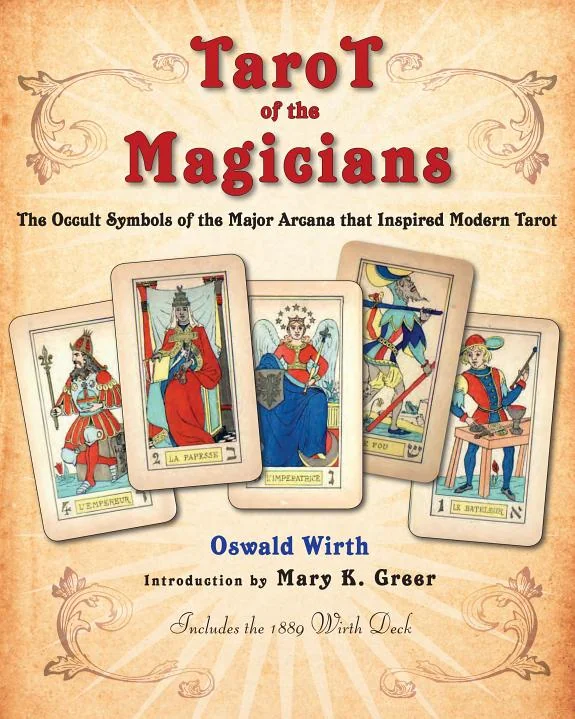
### The Wirth Tarot's Core Oswald Wirth's "Tarot of the Magicians," first published in Paris in 1927, offers a foundational exploration of the Tarot's symbolic language. This work meticulously dissects the Major Arcana, presenting them not merely as playing cards but as vehicles for occult philosophy. Wirth, a prominent figure in French occultism, grounds his analysis in esoteric traditions, drawing connections between the cards and concepts like the Kabbalah and Hermeticism. The book's original artwork, reproduced in this edition, provides a visual anchor for its detailed textual commentary.
### Who Will Benefit This volume is designed for serious students of Tarot and occult symbolism. It appeals to those who seek a scholarly approach, moving beyond simple divinatory interpretations to understand the deeper philosophical and mystical underpinnings of the cards. Individuals interested in the history of Western esotericism, particularly the late 19th and early 20th centuries, will find Wirth's perspective invaluable. It is also a vital resource for artists and designers interested in the visual language of esoteric traditions.
### A Landmark in Esoteric Literature "Tarot of the Magicians" emerged during a fertile period for occult studies in Europe. Published in the interwar years, it reflects a synthesis of earlier occult traditions and a burgeoning interest in psychological and symbolic interpretation. Wirth's deck and accompanying text were influential, contributing to the broader movement that sought to codify and explain esoteric systems. Its reappearance, complete with Wirth's original 1889 deck designs, reconnects contemporary readers with a significant moment in Tarot's intellectual history.
### Unpacking Esoteric Concepts The book systematically unpacks a complex web of esoteric concepts linked to the Tarot. Wirth focuses on the archetypal imagery of the Major Arcana, interpreting them through lenses of alchemy, astrology, and mystical philosophy. He explores the inherent duality and synthesis within the cards, such as the balance of opposing forces. The work presents the Tarot as a symbolic map of the human psyche and spiritual journey, aligning it with broader Hermetic principles of correspondence and macrocosm-microcosm relationships.
💡 Why Read This Book?
• Gain a structured understanding of the Major Arcana as philosophical symbols, as demonstrated by Wirth's detailed exegesis of each card's archetypal meaning. • Explore the direct link between Wirth's original 1889 tarot deck and his occult interpretations, offering a visual and conceptual coherence often absent in modern decks. • Understand the Tarot's place within early 20th-century occultism, contextualized by Wirth's engagement with Hermeticism and Kabbalistic principles.
⭐ Reader Reviews
Honest opinions from readers who have explored this book.
❓ Frequently Asked Questions
When was Oswald Wirth's "Tarot of the Magicians" originally published?
The original French edition of "Tarot of the Magicians" by Oswald Wirth was first published in Paris in 1927. A subsequent English edition was released by Weiser Books in 1985.
What is unique about the Tarot deck associated with this book?
The book is famously paired with Oswald Wirth's own tarot deck, designed in 1889. This deck features distinct symbolism and artwork that directly reflects Wirth's esoteric interpretations discussed within the text.
Who was Oswald Wirth and what was his background?
Oswald Wirth (1860-1943) was a Swiss occultist, engraver, and author prominent in French esoteric circles. He was a student of Stanislas de Guaita and a member of the Kabbalistic Order of the Rose-Cross.
Does "Tarot of the Magicians" focus on divination or symbolism?
While the Tarot is used for divination, Wirth's "Tarot of the Magicians" primarily focuses on the symbolic and philosophical meanings of the Major Arcana, interpreting them as keys to occult knowledge and spiritual development.
Is this book suitable for beginners in Tarot?
Due to its dense symbolic analysis and reliance on esoteric concepts, "Tarot of the Magicians" is generally more suited for intermediate to advanced Tarot students or those with a background in occultism.
What is the significance of the new introduction in the 2013 edition?
The 2013 edition includes a new introduction by Mary K. Greer, a renowned Tarot author, providing contemporary context and guiding readers through Wirth's complex work, enhancing its accessibility.
🔮 Key Themes & Symbolism
The Major Arcana as Philosophical Keys
Wirth presents the 22 Major Arcana not as random images but as a coherent system of symbolic philosophy. Each card is dissected to reveal its connection to universal principles, occult doctrines, and the path of spiritual initiation. He emphasizes the archetypal nature of the figures, linking them to concepts like the divine spark, the material world, and the journey of consciousness. The work positions the Tarot as a didactic tool for understanding the fundamental forces governing existence and the human condition.
Hermetic and Kabbalistic Correspondences
A central theme is the integration of Hermetic and Kabbalistic thought into Tarot interpretation. Wirth meticulously maps the Tarot's symbolism onto the Tree of Life and other Kabbalistic structures, demonstrating correspondences between the cards and Hebrew letters, divine names, and esoteric concepts. This approach elevates the Tarot beyond a simple divinatory tool, presenting it as a symbolic representation of the cosmos and a guide to understanding the subtle energies that operate within it and upon the human soul.
The Alchemical Process in Tarot
The book explores the alchemical symbolism embedded within the Tarot, viewing the Major Arcana as stages or processes within the Great Work. Wirth interprets figures and symbols as representing different phases of transformation, from the initial raw material (the Fool) to the perfected state. This alchemical lens provides a framework for understanding personal transformation and spiritual evolution, suggesting that the Tarot deck mirrors the stages of inner purification and spiritual attainment sought by alchemists.
Wirth's Original Symbolism
The unique visual language of Wirth's 1889 tarot deck is integral to the book's message. Wirth, an accomplished engraver, imbued his cards with specific symbolic details intended to convey complex esoteric meanings. The book serves as a guide to deciphering these symbols, offering interpretations that are deeply personal to Wirth's understanding of occultism. This emphasis on his specific artistic and symbolic choices makes the work a valuable study for understanding the artist's intent and the visual tradition he represents.
💬 Memorable Quotes
“The Tarot is a book of symbols.”
— This concise statement encapsulates Wirth's approach, framing the Tarot not as a narrative or a simple game, but as a rich, multi-layered symbolic language waiting to be deciphered for occult and philosophical understanding.
“The Fool represents the Will, the Spirit, the divine impulse.”
— This interpretation positions The Fool, often seen as representing innocence or a beginning, as a potent force of consciousness and divine potential, central to Wirth's esoteric cosmology.
“Each card holds a lesson for the initiate.”
— This suggests the Tarot's primary function, according to Wirth, is didactic, offering progressive stages of wisdom and self-knowledge for those undertaking a spiritual or occult path.
“Symbolism is the language of the subconscious and the divine.”
— Wirth asserts the profound importance of symbolic representation as a bridge between the inner world of the psyche and the outer manifestation of universal truths.
“The Tarot is a synthesis of ancient wisdom.”
— This highlights Wirth's view of the Tarot as a compendium of esoteric knowledge, drawing from diverse traditions to form a unified system of spiritual understanding.
🌙 Esoteric Significance
Tradition
Wirth's work is firmly rooted in the Western Esoteric Tradition, specifically drawing from Hermeticism and Kabbalah. It aligns with the occult revival of the late 19th and early 20th centuries, which sought to synthesize various mystical streams. Wirth's approach emphasizes the Tarot as a symbolic map of consciousness and spiritual development, a common theme in Hermetic philosophy where the microcosm reflects the macrocosm.
Symbolism
Key symbols explored include the Fool, often interpreted as the divine spark or primal Will, and The Magician, representing focused intent and the mastery of elemental forces. The book extensively deciphers the numerical and pictorial symbolism of the Major Arcana, linking them to alchemical processes and Kabbalistic concepts like the Tree of Life, illustrating the esoteric correspondences Wirth perceived.
Modern Relevance
Contemporary Tarot scholars and practitioners interested in the historical development of Tarot symbolism frequently reference Wirth. His detailed analysis of the Major Arcana's philosophical underpinnings influences modern esoteric interpretations. Thinkers focusing on the psychological and archetypal dimensions of Tarot, as well as those studying the history of occultism, find Wirth's work a foundational text for understanding the Tarot's evolution.
👥 Who Should Read This Book
• Students of Western Esotericism seeking to understand the philosophical underpinnings of Tarot within Hermetic and Kabbalistic traditions. • Tarot practitioners who wish to move beyond simple divination to explore the symbolic and psychological depth of the Major Arcana. • Researchers of occult history and symbolism interested in the contributions of early 20th-century figures like Oswald Wirth and his contemporaries.
📜 Historical Context
Oswald Wirth's "Tarot of the Magicians," first published in 1927, emerged during a vibrant period for esoteric thought in post-World War I Europe. Paris was a significant hub for occult studies, with figures like Eliphas Lévi and Stanislas de Guaita preceding Wirth's work. Wirth himself was a student of Guaita and a member of the Kabbalistic Order of the Rose-Cross, deeply immersed in the Hermetic and Kabbalistic traditions that informed his interpretation. His deck, designed in 1889, predated the book but gained prominence through its association with his writings. The era saw a surge in symbolic analysis, partly influenced by movements like Theosophy and psychoanalysis, as thinkers sought to understand the human psyche and the cosmos through allegorical systems. Wirth's work offered a structured, philosophical reading of the Tarot that stood apart from purely divinatory or popular interpretations, contributing to a more academic and esoteric understanding of the cards.
📔 Journal Prompts
The symbolism of The Magician and its representation of focused Will.
Wirth's interpretation of the Fool as the divine impulse.
The connection between Tarot Major Arcana and the Kabbalistic Tree of Life.
How alchemical concepts are mapped onto the Tarot journey.
The significance of Wirth's specific artistic choices in his 1889 deck.
🗂️ Glossary
Major Arcana
The set of 22 trump cards in a traditional Tarot deck, numbered from 0 (The Fool) to 21 (The World), representing significant archetypal figures and life lessons.
Hermeticism
A philosophical and religious tradition based on writings attributed to Hermes Trismegistus, emphasizing esoteric wisdom, the correspondence between the macrocosm and microcosm, and spiritual transformation.
Kabbalah
A system of Jewish mysticism focused on understanding the divine nature and creation, often represented visually through the Tree of Life diagram and associated with Hebrew letters and numerology.
Alchemy
An ancient practice combining elements of chemistry, metallurgy, astrology, art, and mysticism, aiming for spiritual purification and transformation, often symbolized by the process of turning base metals into gold.
Archetype
A universal, inherited pattern of thought or imagery derived from the collective unconscious, frequently found in mythology, religion, and art, such as those represented by the Tarot figures.
Esotericism
Belief systems and practices characterized by a focus on inner knowledge, spiritual realization, and hidden meanings, often accessible only to a select group of initiates or through specialized study.
Initiation
A ritual or process marking a person's entry into a group, society, or a new stage of spiritual understanding, often involving symbolic death and rebirth or the transmission of secret knowledge.