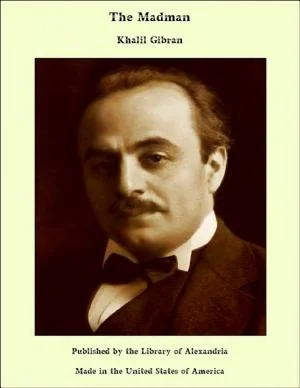
The Madman
 75
75

The Madman
Khalil Gibran’s "The Madman" is an arresting collection that bypasses conventional narrative to present a series of stark, philosophical pronouncements. The opening allegorical account of losing one's "masks" is particularly potent, offering a visceral image for the shedding of societal artifice. It’s a powerful assertion of self-discovery through what others might deem alienation. However, the work occasionally falters under the weight of its own pronouncements; some passages, while poetic, can feel overly generalized, lacking the specific allegorical grounding of the initial narrative. The strength lies in Gibran’s ability to distill complex ideas into memorable, often challenging, aphorisms. The limitation is that, at times, the relentless philosophical declaration can feel less like exploration and more like decree. The passage describing the youth on the rooftop crying "He is a madman" encapsulates the core tension: the clash between authentic selfhood and the world’s judgment. It's a stark, unvarnished examination of spiritual freedom.
📝 Description
75
Khalil Gibran's 1918 work, "The Madman," begins with its protagonist shedding societal pretenses.
Published in 1918, Khalil Gibran's "The Madman" presents a collection of parables and poetic prose. The book's central figure, the madman, recounts his experience of losing the 'masks' of societal expectation and identity. This act, while leading him to a more authentic self, results in his ostracization by a world that values illusion over truth. The work is not a linear story but a series of aphorisms and allegories designed to question conventional perceptions of reality and conformity.
This book is for those who challenge societal definitions of normalcy and seek self-understanding independent of external approval. It speaks to individuals interested in philosophical ideas about individuality, freedom, and the often overlooked spiritual aspects of human existence. Readers familiar with Gibran's earlier, more philosophical writings, and his engagement with Eastern and Western mysticism, will find resonance here. It is for the introspective individual willing to face uncomfortable truths about self-deception and embrace the courage required for genuine living.
Emerging in 1918 amidst global upheaval and intellectual change, "The Madman" reflects a spiritual and philosophical search outside established structures. Gibran, drawing from his Lebanese heritage and American literary engagement, participated in a current questioning traditional forms. His work aligns with movements seeking deeper meaning beyond orthodox religion and societal dictates, resonating with mystical traditions that emphasize inner truth and direct experience over external dogma.
💡 Why Read This Book?
• Understand the profound concept of "masks" as societal pretenses, gaining a new lens through which to view your own public and private personas, as described in the opening parable of "The Madman." • Explore the philosophical tension between societal definitions of sanity and individual spiritual liberation, a core theme Gibran develops through the "madman's" prophetic voice. • Gain insight into Gibran's unique blend of Eastern mysticism and Western thought, particularly his 1918 perspective on conformity versus authenticity, offering a distinct philosophical stance.
⭐ Reader Reviews
Honest opinions from readers who have explored this book.
❓ Frequently Asked Questions
What does Khalil Gibran mean by "masks" in "The Madman"?
In "The Madman," the "masks" represent the identities, pretenses, and societal roles individuals adopt to gain acceptance or conform. Gibran uses the protagonist's loss of these masks as a metaphor for shedding societal artifice to reveal an authentic self, even if that self is perceived as madness by others.
When was "The Madman" first published and what was the context?
"The Madman" was first published on January 1, 1918. This was a period of significant global change following World War I, with intellectual currents shifting away from traditional structures and towards individual expression and philosophical inquiry.
Is "The Madman" a novel or a collection of parables?
"The Madman" is best described as a collection of parables, allegories, and poetic prose rather than a traditional novel. It presents a series of meditations on themes of madness, sanity, societal norms, and spiritual awakening, primarily through the voice of its titular character.
Who is the author Khalil Gibran and what is his style?
Khalil Gibran (1883-1931) was a Lebanese-American poet, novelist, and spiritual thinker. His style is characterized by lyrical prose, poetic imagery, and philosophical depth, often blending Eastern mystical traditions with Western thought, as seen in "The Madman" and his more famous work, "The Prophet."
What are the main themes explored in "The Madman"?
The primary themes in "The Madman" include the nature of sanity versus madness, the conflict between individual authenticity and societal conformity, the shedding of false identities (masks), and the perception of truth by the masses versus the enlightened individual.
Is "The Madman" part of a larger series by Gibran?
While "The Madman" shares thematic and stylistic similarities with other works by Khalil Gibran, such as "The Prophet" (published later in 1923), it is not part of a narrative series. It stands as a distinct philosophical and poetic exploration.
🔮 Key Themes & Symbolism
The Tyranny of Masks
The central allegory of "The Madman" is the shedding of "masks" – the social conventions, pretenses, and roles that individuals adopt to navigate society. Gibran posits that these masks, while offering perceived safety and belonging, ultimately stifle the authentic self. The protagonist’s act of discarding his seven masks, each representing a lifetime of assumed identity, is a radical act of liberation. His subsequent denouncement as a "madman" by the populace highlights the profound disconnect between societal validation and genuine spiritual freedom, suggesting that true madness lies in the collective adherence to illusion.
Sanity vs. Societal Norms
Gibran radically questions the very definition of sanity. In "The Madman," the character labeled as insane is the one who has achieved self-awareness and shed the collective delusions that bind others. The "sane" world, depicted as fearful and judgmental, is shown to be trapped in its own illusions, unable to comprehend the freedom of the unmasked individual. This theme challenges readers to consider whether conformity to societal norms equates to mental well-being, or if true clarity often appears as madness to the uninitiated.
The Prophet of the Unseen
The "madman" in Gibran's work functions as a prophetic figure, speaking truths that are uncomfortable or incomprehensible to the ordinary world. His nakedness and unmasked state allow him to perceive and articulate realities hidden from those blinded by societal expectations. This aligns with a long tradition of spiritual or philosophical figures who operate outside conventional societal structures, acting as conduits for deeper truths. The youth on the rooftop, a voice of the masses, identifies him as "madman," underscoring the isolation often experienced by those who embody radical authenticity.
Authenticity and Liberation
The narrative arc, though brief, is one of profound liberation achieved through radical authenticity. By surrendering his borrowed identities (masks), the protagonist achieves a state of unadulterated being. This liberation is not without consequence, as it leads to social ostracism and the label of "madness." However, Gibran emphasizes that this external judgment is secondary to the internal freedom gained. The work suggests that the pursuit of external approval is a form of self-imprisonment, while embracing one’s true, unadorned self is the ultimate act of spiritual emancipation.
💬 Memorable Quotes
Direct passages from the work, attributed to the author.
“You ask me how I became a madman. It happened thus: One day, long before many gods were born, I woke from a deep sleep and found all my masks were stolen—the seven masks I have fashioned and worn in seven lives—I ran maskless through the crowded streets shouting, “Thieves, thieves, the cursed thieves.””
— This foundational passage introduces the central metaphor of the "masks." It frames the protagonist's transformation not as a descent into illness, but as an awakening following the loss of artificial identities. The act of running "maskless" through the streets, crying for the return of his stolen pretenses, highlights the shock and vulnerability of confronting the world in one's unadorned state.
“Men and women laughed at me and some ran to their houses in fear of me. And when I reached the market place, a youth standing on a house-top cried, “He is a madman.””
— This segment illustrates the societal reaction to the protagonist's unmasked state. His vulnerability and apparent lack of conformity are met with ridicule and fear, culminating in the definitive label of "madman." It powerfully contrasts the protagonist's internal experience of liberation with the external perception of his actions as aberrant.
“And I looked up to behold him; and I saw that he was not of the city, but was a youth who had come down from the mountain, and he had his face turned toward the sun, and his eyes were full of light.”
— Interpretation: This is a crucial moment where the "madman" encounters another figure who seems to understand or embody a different kind of existence. The description of the youth as "not of the city" and having "eyes full of light" suggests a spiritual or enlightened perspective, hinting that true wisdom may originate outside conventional society.
“Then I said to him, “Come down and let us build a city of truth and beauty.” But he smiled and said, “Come up into the mountain and let us build a city of truth and beauty.””
— Interpretation: This exchange highlights a divergence in approaches to creating an ideal world. The "madman" seeks to transform the existing societal structure (the "city"), while the youth suggests ascending to a higher plane of existence. This reflects a common theme in spiritual literature where true change might require transcendence rather than reform.
“But I said, “If I come up into the mountain, who will remain in the city to tell them of the madman who ran maskless through their streets?””
— Interpretation: This final line from the "madman" underscores his self-appointed role as a messenger or witness. Even after the encounter with the enlightened youth, he chooses to remain among the "sane" populace, implying a responsibility to communicate his experience or the truth he has found, even if it means enduring their judgment.
🌙 Esoteric Significance
Tradition
Gibran's work, including "The Madman," draws from a syncretic esoteric tradition, blending elements of Sufism, Christianity (particularly its mystical interpretations), Gnosticism, and Hermeticism. The emphasis on inner knowledge, the critique of superficial societal structures, and the concept of awakening to a hidden reality align with Gnostic ideas of liberation from ignorance. The "masks" can be seen as analogous to the veils of illusion that obscure divine truth in many mystical paths. His approach is less about adherence to a specific doctrine and more about expressing universal spiritual principles through poetic allegory.
Symbolism
The primary symbol is the "mask," representing the ego, societal conditioning, and the false self that obscures one's divine essence. The "madman" himself becomes a symbol of the awakened individual who, by shedding societal pretenses, appears "mad" to the unenlightened world but is, in fact, liberated. The "city" represents the material world and its conventions, while the "mountain" symbolizes a higher spiritual plane or state of consciousness, as seen in the dialogue with the youth.
Modern Relevance
Contemporary thinkers and practitioners in fields like transpersonal psychology and spiritual coaching often reference Gibran's ideas on authenticity and self-discovery. His critique of societal conformity and his exploration of the "higher self" continue to inspire individuals seeking to break free from limiting beliefs and societal pressures. Movements focused on mindfulness, self-actualization, and philosophical exploration draw upon the spirit of Gibran's work, finding in "The Madman" a timeless articulation of the individual's quest for meaning beyond the superficial.
👥 Who Should Read This Book
• Seekers of spiritual philosophy: Those interested in exploring the nature of consciousness, self-identity, and the conflict between inner truth and societal expectations will find "The Madman" a rich text for contemplation. • Students of Khalil Gibran: Readers familiar with "The Prophet" or other works by Gibran will appreciate this earlier exploration of themes that would later define his literary legacy. • Disenchanted individuals: Anyone feeling alienated by societal norms or questioning the pursuit of conventional success will connect with the "madman's" journey of liberation through non-conformity.
📜 Historical Context
Published in 1918, "The Madman" emerged from Khalil Gibran's engagement with both his Lebanese heritage and the vibrant intellectual milieu of New York City. The early 20th century was a period marked by profound societal shifts, including the aftermath of World War I, the rise of spiritualist movements, and the flourishing of literary modernism which often questioned established norms. Gibran’s work resonated with a desire for spiritual and philosophical meaning beyond conventional religious dogma and materialist philosophies. Contemporaries like Claude McKay and other Harlem Renaissance writers explored themes of identity and societal alienation, though Gibran's unique synthesis of Eastern mysticism and Western existential thought set him apart. While not subject to widespread censorship, Gibran's philosophical and spiritual explorations often challenged the prevailing rationalist and positivist viewpoints of the era, finding a receptive audience among those seeking alternative perspectives on life and the self.
📔 Journal Prompts
The seven masks and their symbolic representation of lived experiences.
The city versus the mountain: choosing the arena for truth-building.
Societal judgment of the "madman" versus personal liberation.
The courage required to run maskless through crowded streets.
Defining "truth and beauty" in the context of the madman's vision.
🗂️ Glossary
Masks
In "The Madman," masks are metaphorical representations of societal roles, pretenses, and identities that individuals adopt to conform or protect themselves. Their shedding signifies a return to an authentic, unadorned self.
Madman
The protagonist who, after losing his masks, is labeled "mad" by society. He functions as a seer or prophet, articulating truths that the conventional world cannot accept or comprehend.
City
Represents the conventional world, society, and its structures, norms, and illusions. It is the arena where the "madman" is judged and where superficiality often reigns.
Mountain
Symbolizes a higher spiritual plane, a place of detachment, enlightenment, or a different perspective from which truth and beauty can be built, as suggested by the youth.
Youth
A character encountered by the madman who embodies a different form of spiritual understanding or aspiration, suggesting alternative paths to truth and beauty.
Truth and Beauty
The ultimate ideals that the "madman" and the "youth" aspire to create, representing a state of authentic existence and profound aesthetic or spiritual harmony.
Seven Lives
Refers to the multiplicity of identities or experiences the "madman" had lived through, each associated with a specific "mask" he had fashioned and worn.
🔮 Readers Also Liked
Browse all →









More Free Occult Philosophy Books
View all →