Tai Chi
 73
73

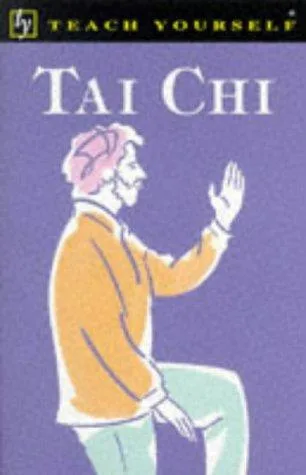
Tai Chi
Robert Parry’s *Tai Chi* offers a commendable attempt to articulate the often-elusive energetic and philosophical dimensions of this practice. The strength of the work lies in its persistent effort to connect the physical movements to their underlying Taoist principles, particularly the flow of Qi. Parry succeeds in presenting complex ideas like the 'Eight Energies' (Peng, Lu, Ji, An, Cai, Lie, Zhou, Kao) in a manner that, while dense, is ultimately accessible to dedicated readers. However, the book occasionally falters in its structure, with some sections feeling more like an extended essay than a cohesive guide. A particularly insightful passage discusses the 'Empty Force' (Xu Jin), exploring its theoretical basis within the art. While the prose is generally clear, a more rigorous academic sourcing for some of its more speculative claims would have bolstered its authority. Nonetheless, *Tai Chi* is a valuable addition for those seeking a deeper esoteric understanding of the art.
📝 Description
73
Robert Parry's 2001 book examines Tai Chi's internal mechanics and philosophical underpinnings.
Published in 2001, Robert Parry's "Tai Chi" goes beyond basic instruction to dissect the internal mechanics and energetic principles of the Chinese art form. Parry details the postures and movements, explaining their intended effects on the physical body and the practitioner's vital energy, known as 'Qi' or 'Chi'. The author emphasizes cultivating stillness within motion and developing internal awareness through practice.
This book is for practitioners who want to understand Tai Chi more deeply than just the physical forms. It appeals to those interested in the esoteric and philosophical aspects of this internal martial art, including students of Taoism, Chinese philosophy, or Qi cultivation. Martial artists from other disciplines, as well as individuals interested in mind-body integration, will also find value in Parry's discussion of yielding and internal power generation.
Tai Chi Chuan's roots are traced to Taoist monasteries and martial arts masters in China, with development often linked to internal alchemy and Neidan practices. Its spread outside China in the mid-20th century led to diverse interpretations. Parry's work connects the art form to these established esoteric traditions and their foundational principles.
💡 Why Read This Book?
• Gain a nuanced understanding of Qi cultivation as described within the specific framework of Tai Chi Chuan, moving beyond superficial exercises to grasp its energetic underpinnings. • Explore the Taoist philosophical concepts like Yin and Yang and their practical application in the slow, deliberate movements detailed by Parry, offering a unique lens on internal balance. • Discover the esoteric meaning behind specific Tai Chi postures and transitions, such as the principle of 'peng', which Parry elaborates upon as a vital energetic quality.
⭐ Reader Reviews
Honest opinions from readers who have explored this book.
❓ Frequently Asked Questions
When was Robert Parry's book on Tai Chi first published?
Robert Parry's exploration of Tai Chi was first published in 2001, making it a relatively modern contribution to the literature on this ancient art form.
What is the primary focus of Parry's Tai Chi book?
The book primarily focuses on the esoteric and philosophical aspects of Tai Chi, examining its energetic principles (Qi), Taoist connections, and the integration of mind, body, and spirit, rather than solely serving as a step-by-step instructional guide.
Does the book explain the connection between Tai Chi and Taoism?
Yes, the work explicitly links Tai Chi practice to core Taoist concepts such as Yin and Yang, Qi, and the cultivation of Shen (spirit) and Jing (essence), explaining how these philosophical tenets inform the art's movements.
Is Robert Parry's Tai Chi book suitable for beginners?
While it can be informative for beginners interested in the deeper aspects, the book is best suited for practitioners who already have some familiarity with Tai Chi forms and are seeking to understand its philosophical and energetic dimensions.
What key concepts are explored in the book regarding Tai Chi practice?
Key concepts include the cultivation of Qi, the principles of Yin and Yang, Shen (spirit), Jing (essence), the importance of rooting, yielding, and the energetic quality known as 'peng'.
What distinguishes this book from a standard Tai Chi instruction manual?
This book distinguishes itself by prioritizing the esoteric interpretation and philosophical underpinnings of Tai Chi, exploring its internal mechanics and energetic flow rather than focusing exclusively on the technical execution of postures.
🔮 Key Themes & Symbolism
Qi and Energetic Cultivation
The book meticulously details the concept of Qi (vital energy) as central to Tai Chi practice. Parry elucidates how the slow, continuous movements are designed not just for physical health but for the circulation and refinement of this energy within the body. He explores techniques for sensing, directing, and harmonizing Qi, linking it to the Taoist principles of balance and flow. The work emphasizes that true mastery involves not merely performing the form correctly, but cultivating an internal energetic landscape that supports well-being and spiritual development.
Taoist Philosophy in Motion
Parry grounds the practice of Tai Chi firmly within the framework of Taoist philosophy. Concepts such as Yin and Yang, the Tao, and the Five Elements are presented as integral to understanding the art's dynamics. The book explains how the interplay of yielding and asserting, stillness and movement, softness and hardness within Tai Chi directly mirrors the cosmic principles described in Taoist texts. This connection elevates Tai Chi from a physical discipline to a method of embodying and experiencing fundamental universal laws.
Mind-Body Integration and Shen
A significant theme is the profound integration of the mind, body, and spirit (Shen) achievable through Tai Chi. Parry argues that the practice cultivates a state of mindful presence, where awareness is focused inward, connecting physical action with mental intent. This internal focus is crucial for developing the subtle energies and heightened perception associated with advanced practice. The book explores how this unified state fosters not only physical health but also mental clarity and a deeper connection to one's inner essence.
The Principle of Yielding and Rooting
The book places considerable emphasis on the martial aspects inherent in Tai Chi, particularly the principles of yielding and rooting. Parry explains how practitioners learn to absorb and redirect an opponent's force rather than meeting it directly, a strategy rooted in Taoist adaptability. Rooting is presented as the foundation for this ability, providing stability and connection to the earth from which energy can be channeled. This duality of yielding power and grounded stability is explored as a key to both effective self-defense and energetic cultivation.
💬 Memorable Quotes
Direct passages from the work, attributed to the author.
“The practitioner learns to become like water, yielding yet persistent.”
— This statement highlights a core principle of Tai Chi: the power of adaptability and subtle persistence. It suggests that true strength lies not in brute force, but in the ability to flow, yield, and patiently overcome obstacles, much like water shaping stone over time.
“Qi flows where the Shen leads; the body follows.”
— This succinctly captures the mind-body connection central to internal arts. It asserts that directing one's consciousness (Shen) is paramount, as it guides the flow of vital energy (Qi), which in turn directs the physical movements of the body.
“The empty force is not an absence, but a potent potential.”
— This interpretation of 'Xu Jin' suggests it's not about being powerless, but about cultivating a state of readiness and subtle power that can be unleashed with precision. It implies a sophisticated understanding of energy dynamics beyond simple physical exertion.
“Rooting connects the practitioner to the earth's grounding energy.”
— This emphasizes the importance of stability and connection to the ground in Tai Chi. It explains that proper rooting allows for the efficient channeling of earth's energy, providing a stable base from which to generate and redirect force.
💡 Key Ideas
Editorial paraphrase of the work's core concepts — not direct quotes.
Stillness within movement is the hallmark of internal awareness.
This quote points to the meditative aspect of Tai Chi. It emphasizes that the practice cultivates a focused, calm internal state even amidst physical motion, fostering a deep sense of presence and self-awareness that transcends the physical form.
🌙 Esoteric Significance
Tradition
This work draws heavily from the Taoist tradition, interpreting the physical art of Tai Chi as a practical method for cultivating 'Qi' (vital energy), harmonizing 'Yin and Yang', and developing 'Shen' (spirit). It aligns with the Neidan (internal alchemy) practices found within Taoism, where the body is seen as a vessel for spiritual transformation. Parry's approach positions Tai Chi not merely as a martial art or health exercise, but as a path toward spiritual realization, echoing themes found in Hermetic philosophy concerning the microcosm reflecting the macrocosm.
Symbolism
The flowing, circular movements themselves are symbolic of the Tao, representing constant change, interconnectedness, and the cyclical nature of existence. The concept of 'Qi' is a fundamental symbol of life force, its circulation within the body mirroring the flow of energy throughout the universe. The interplay of 'Yin' (passive, yielding) and 'Yang' (active, assertive) in each posture symbolizes the dynamic balance of complementary forces that govern all phenomena, a core tenet in both Taoism and Hermetic thought.
Modern Relevance
Parry's work remains relevant for contemporary practitioners and scholars of esoteric traditions seeking to understand the practical application of ancient philosophies. It informs modern mindfulness practices, somatic therapies, and contemplative martial arts that emphasize internal awareness and energetic cultivation. Thinkers and practitioners exploring the intersection of East Asian philosophy and Western esoteric thought, as well as those investigating the energetic body, often find value in its detailed exploration of Qi dynamics and Taoist principles within a tangible practice.
👥 Who Should Read This Book
• Dedicated Tai Chi practitioners seeking to move beyond the physical form and understand the underlying energetic and philosophical principles described by Parry. • Students of Taoism and Chinese philosophy interested in a practical, embodied exploration of concepts like Qi, Yin Yang, and Shen through a recognized art form. • Scholars and practitioners of Western esoteric traditions interested in comparative studies, seeking parallels between Eastern internal alchemy and Hermetic principles of energy cultivation.
📜 Historical Context
Robert Parry's *Tai Chi*, published in 2001, entered a field already rich with literature on the subject, much of which focused on health benefits or martial applications. Its significance lies in its deliberate engagement with the esoteric and philosophical underpinnings, particularly its Taoist roots, which had been explored by earlier Western authors like D.T. Suzuki in his writings on Zen Buddhism and Eastern philosophy. Parry's work emerged during a period of continued global interest in internal martial arts and mind-body practices, influenced by figures like Bruce Lee who, though primarily a martial artist, also explored concepts of Eastern philosophy and 'Jeet Kune Do' as a reflection of Taoist principles. While not directly engaging with specific academic debates of the time, Parry's book contributed to a broader cultural current seeking deeper meaning beyond superficial practice, aligning with a resurgence of interest in Hermeticism and other Western esoteric traditions that often found parallels in Eastern thought.
📔 Journal Prompts
The concept of Qi as described by Parry and its perceived presence or absence in your own life.
Reflecting on the interplay of Yin and Yang within a challenging personal situation.
How the principle of 'yielding' might be applied in a non-physical context.
The role of 'Shen' (spirit) in guiding your daily actions and intentions.
The significance of 'rooting' in maintaining balance during moments of stress.
🗂️ Glossary
Qi (Chi)
The vital life force or energy that flows through all living things, considered central to Tai Chi practice and traditional Chinese medicine. Its cultivation and circulation are key objectives.
Yin and Yang
The fundamental Taoist concept of complementary, interdependent opposites that govern the universe. In Tai Chi, this manifests as yielding/asserting, stillness/movement, and soft/hard dynamics.
Shen
Often translated as 'spirit' or 'mind', Shen represents consciousness, awareness, and intention. In Tai Chi, developing Shen is crucial for guiding Qi and achieving internal harmony.
Jing
Translated as 'essence', Jing refers to the fundamental vital substance of the body, often associated with reproductive and generative energy. Its conservation and refinement are important in internal arts.
Peng
A key energetic principle in Tai Chi, often described as an expansive, buoyant, upward-reaching force. It signifies a state of readiness, rootedness, and outward expansion without tension.
Neidan
Literally 'internal alchemy', a Taoist practice focused on cultivating and transforming the body's intrinsic energies (Qi, Jing, Shen) for spiritual development and longevity.
Xu Jin
Translated as 'empty force' or 'void force', this refers to a subtle, powerful energy that is not overtly muscular but arises from proper structure, intention, and Qi cultivation.
🔮 Readers Also Liked
Browse all →









More by Robert Parry
All books →




More Free Occult Philosophy Books
View all →