Tai chi

 82
82

Tai chi
Crompton's "Tai Chi" approaches the subject with an academic rigor often missing in popular guides. The author meticulously details the theoretical framework, emphasizing the energetic flow and philosophical underpinnings that inform the physical practice. A particular strength is the clear exposition of Qi cultivation, presented not as abstract mysticism but as a practical, observable force. However, the book's academic tone, while commendable for its depth, can sometimes render the material less accessible to absolute beginners seeking immediate practical application. The section discussing the historical evolution of different Tai Chi styles, while informative, could have benefited from more illustrative diagrams. Despite this, the work provides a solid foundation for understanding the 'why' behind the 'how' of Tai Chi, making it a valuable resource for serious students.
📝 Description
82
Paul H. Crompton's 1996 book examines Tai Chi as a system for personal development.
Paul H. Crompton's "Tai Chi" looks at the Chinese practice, covering its history and varied uses. It moves beyond just the physical forms to discuss the core ideas of energy cultivation and mental control that are vital to Tai Chi. The book presents the art as a complete method for self improvement, not just a set of movements.
This text is for those who want a deeper understanding of Tai Chi than beginner guides offer. Practitioners interested in the philosophical and energetic aspects of their training will find it useful. It also speaks to readers interested in Chinese martial arts history and Taoist philosophy, appreciating its structured approach to difficult ideas.
Published in 1996, Crompton's "Tai Chi" arrived when interest in Eastern practices grew. Unlike books focusing on simple forms or health, Crompton's work aimed for a thorough look at the art's history and philosophy. It placed Tai Chi within its cultural context, noting influences from Taoism and traditional Chinese medicine. The book explains core concepts like Qi, the balance of Yin and Yang in practice, and the role of conscious intent, showing how these ideas connect to physical movement and internal states.
💡 Why Read This Book?
• Gain a nuanced understanding of Qi cultivation, moving beyond superficial interpretations to grasp its role in energetic balance as detailed in the text. • Explore the philosophical underpinnings of Yin and Yang within the context of Tai Chi movements, learning how these principles guide the practice's flow and application. • Appreciate the historical development of Tai Chi styles, understanding how different lineages evolved from foundational principles outlined in the book's historical context section.
⭐ Reader Reviews
Honest opinions from readers who have explored this book.
❓ Frequently Asked Questions
When was Paul H. Crompton's book on Tai Chi first published?
Paul H. Crompton's "Tai Chi" was first published in 1996, reflecting a growing academic and public interest in Eastern practices during that era.
What are the primary esoteric traditions discussed in relation to Tai Chi in this book?
The book primarily connects Tai Chi to Taoist philosophy, exploring concepts like Qi and Yin/Yang, which are foundational to many Chinese esoteric traditions.
Does the book offer practical instruction on performing Tai Chi movements?
While the book explains the principles and theory behind Tai Chi, its focus is more on understanding the philosophical and energetic aspects rather than providing step-by-step physical instruction.
What role does the concept of Qi play in Crompton's "Tai Chi"?
Qi, or vital energy, is presented as a central concept, crucial for understanding the energetic flow and internal cultivation aspects of Tai Chi practice as described in the work.
Who would benefit most from reading this book?
Individuals interested in the historical, philosophical, and energetic dimensions of Tai Chi, including students of Taoism and comparative martial arts, would find this book particularly beneficial.
Does the book discuss the influence of traditional Chinese medicine on Tai Chi?
Yes, the work explores how traditional Chinese medicine principles, particularly those related to energy flow and balance, inform the practice and theory of Tai Chi.
🔮 Key Themes & Symbolism
Qi Cultivation
The book emphasizes Qi, or vital energy, as the fundamental force animating Tai Chi. Crompton details how the practice aims to cultivate, circulate, and harmonize this energy within the body. It moves beyond a simple physical exercise, framing Tai Chi as a method for enhancing vitality and spiritual awareness through conscious energetic manipulation. This concept is central to understanding the internal dimensions of the art, distinguishing it from purely athletic pursuits and linking it to broader Taoist principles of life force.
Yin and Yang Dynamics
Crompton explores the application of Yin and Yang principles to Tai Chi movements and internal states. This duality is presented not as opposing forces but as complementary energies whose balance is essential for effective practice. The text illustrates how concepts like stillness and motion, hardness and softness, are integrated within the fluid transitions of Tai Chi forms. Understanding this dynamic provides a framework for interpreting the subtle interplay of forces and achieving harmonious movement.
Taoist Philosophical Roots
The work firmly situates Tai Chi within its Taoist philosophical origins. It draws connections to core Taoist tenets such as living in accordance with the Tao (the Way), the importance of naturalness (Ziran), and the pursuit of inner harmony. Crompton elucidates how these philosophical underpinnings shape the methodology and goals of Tai Chi, presenting it as a path toward spiritual and physical integration aligned with the natural order of the universe.
Historical Lineage and Styles
The book touches upon the historical evolution of Tai Chi, acknowledging its development and diversification into various styles. Crompton provides context for understanding how different schools and forms emerged, often linked to specific historical figures or regions. This exploration helps readers appreciate the art's long history and the theoretical distinctions that may exist between various lineages, grounding the practice in its historical and cultural trajectory.
💬 Memorable Quotes
Direct passages from the work, attributed to the author.
“The movements are designed to facilitate the free flow of Qi.”
— This statement highlights the core purpose of Tai Chi's physical forms: they are not merely exercises but conduits for cultivating and directing vital energy (Qi) throughout the body.
“Intention guides the energy.”
— This interpretation underscores the mental component of Tai Chi. It suggests that conscious thought and focused intention are crucial for directing the flow of Qi, making the practice a mind-body discipline.
“The practice seeks alignment with the natural Way.”
— This interpretation connects Tai Chi to its Taoist origins, suggesting that the ultimate goal of the art is to achieve harmony with the natural principles of the universe, often referred to as the Tao.
💡 Key Ideas
Editorial paraphrase of the work's core concepts — not direct quotes.
Balance is achieved through the interplay of opposing yet complementary forces.
This paraphrased concept refers to the application of Yin and Yang principles, emphasizing that harmony in Tai Chi arises from the dynamic integration of seemingly opposite qualities like stillness and motion.
Understanding the historical roots provides context for the practice.
This paraphrased concept points to the importance of historical knowledge. It suggests that appreciating Tai Chi's lineage and development offers deeper insight into its principles and techniques.
🌙 Esoteric Significance
Tradition
This work is deeply rooted in the Taoist tradition, a major lineage within Chinese esoteric thought. It explicates Tai Chi not just as a martial art or exercise but as a practical application of Taoist principles aimed at cultivating harmony, vitality (Qi), and alignment with the natural order (the Tao). Crompton's approach departs from more purely physical or health-focused interpretations by emphasizing the energetic and philosophical dimensions integral to Taoist cosmology and practice.
Symbolism
Key symbols explored include Qi, the vital life force energy that Tai Chi seeks to cultivate and circulate, and the interplay of Yin and Yang, representing complementary dualities (e.g., stillness/motion, hardness/softness) whose balance is central to the art's effectiveness. The circular movements themselves can symbolize the cyclical nature of the universe and the continuous flow of energy, reflecting Taoist concepts of unity and interconnectedness.
Modern Relevance
Contemporary practitioners and scholars of Taoism, Qigong, and internal martial arts continue to draw on works like Crompton's for their foundational explanations of core principles. Thinkers exploring embodied cognition and mind-body integration in Western contexts also find value in its detailed analysis of energetic cultivation and intentional movement. The book remains relevant for those seeking to understand the philosophical depth beneath the physical practice of Tai Chi.
👥 Who Should Read This Book
• Students of Taoism seeking to understand its practical applications in physical and energetic cultivation. • Practitioners of Tai Chi who desire a deeper comprehension of the philosophical and energetic principles guiding their movements. • Researchers in comparative religion and martial arts history interested in the esoteric traditions of China.
📜 Historical Context
Paul H. Crompton's "Tai Chi," first published in 1996, arrived during a period when Western engagement with Eastern philosophy and martial arts was burgeoning. While many books focused on practical instruction or health benefits, Crompton's work aimed for a deeper exploration of the art's theoretical and historical dimensions. It emerged in dialogue with a growing body of scholarly and practitioner-focused literature on Chinese internal martial arts. Contemporaries like Benjamin Pang Jeng Lo were also contributing significantly to the understanding of Tai Chi's philosophical depth in English. Crompton's text sought to situate Tai Chi within its Taoist roots, offering a more academic perspective that contrasted with purely popularizations. The work mattered as it provided a structured, analytical approach to concepts like Qi and Yin-Yang, making them more accessible to a Western audience interested in the esoteric underpinnings of the practice.
📔 Journal Prompts
The concept of Qi as described in the text: how does this energy manifest in your daily life?
Reflect on the balance of Yin and Yang within a recent challenging situation.
Consider the historical development of Tai Chi styles and your preferred approach.
How does the principle of 'intention guides the energy' apply to other areas of your life?
Explore the connection between 'alignment with the natural Way' and your personal goals.
🗂️ Glossary
Qi
The fundamental vital energy or life force believed to permeate all things in the universe, central to Taoist philosophy and practices like Tai Chi.
Yin and Yang
Two complementary and interdependent forces or principles that represent duality and balance in the universe, fundamental to Taoist thought and applied in Tai Chi's movements.
Tao
The fundamental principle of the universe in Taoism; the 'Way' or natural order that practitioners strive to live in accordance with.
Ziran
A Taoist concept meaning 'naturalness' or 'spontaneity,' emphasizing living in accordance with one's own nature and the natural flow of the Tao.
Internal Martial Arts
A category of Chinese martial arts, including Tai Chi, that emphasize the cultivation and application of internal energy (Qi) alongside physical technique.
Form (in Tai Chi)
A sequence of choreographed movements in Tai Chi, designed to cultivate energy, balance, and specific martial or health applications.
Energetic Cultivation
The process of developing, strengthening, and harmonizing one's internal vital energy (Qi) through specific practices like Tai Chi.
🔮 Readers Also Liked
Browse all →








More by Paul H. Crompton
All books →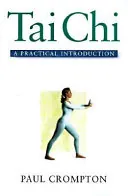


More Free Occult Philosophy Books
View all →