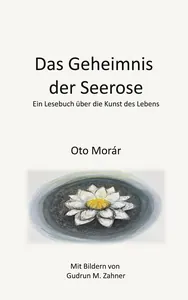
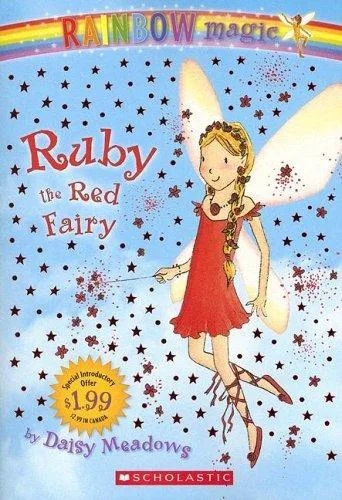
Ruby the Red Fairy
 84
84

Ruby the Red Fairy
Daisy Meadows' Ruby the Red Fairy offers a bright, accessible introduction to elemental fairy magic. The strength of the book lies in its vivid descriptions of Ruby's fiery domain and the clear, engaging way it presents the concept of elemental affinities. Ruby's journey from uncertainty to mastery of her fire powers is a compelling arc for young readers. However, the narrative occasionally feels constrained by its target audience, simplifying potential conflicts to a degree that may underwhelm older children seeking deeper thematic exploration. A particularly effective passage is Ruby's initial struggle to contain a spark, which visually communicates the raw, untamed nature of her abilities before she learns control. This book succeeds as a charming, introductory piece to fairy lore for the uninitiated.
📝 Description
84
Published in 2023, Ruby the Red Fairy by Daisy Meadows centers on a young fairy's connection to fire.
Ruby the Red Fairy, released in 2023, introduces readers to a world of elemental beings, with a focus on Ruby, a fairy tied to fire. The story follows her as she learns about her powers and her place in a magical community. The book uses Ruby's journey to explain fairy hierarchies and how different fairy types connect. This narrative approach makes complex ideas about the fairy world more approachable for young readers. It is designed for children aged 7 to 10 who are ready for more involved fantasy stories.
The book appeals to children interested in magical creatures, elemental abilities, and tales of friendship and courage. Readers who enjoy learning about nature spirits and fairy archetypes will find Ruby's experiences particularly interesting. It acts as an easy introduction to fantasy, encouraging imagination and a sense of wonder in its audience. The narrative provides a gentle way to explore themes of responsibility and self discovery within a fantastical setting.
While published recently, Ruby the Red Fairy connects to a long history of folklore about fairies and nature spirits. Earlier traditions often viewed fairies as powerful, sometimes unpredictable, beings tied to the natural world. This book adapts those concepts for a younger audience, simplifying them and focusing on positive magical interactions. It fits within contemporary literature that reinterprets mythological figures, making them accessible to new generations.
💡 Why Read This Book?
• Young readers will learn about elemental magic, specifically fire, through Ruby's personal journey of discovering and controlling her powers, inspired by the book's portrayal of elemental fairy types. • Children can explore the concept of community and responsibility within a magical society, as Ruby learns her role among other fairies, echoing themes present in 19th-century folklore collections. • Readers will experience a sense of wonder and imaginative escape as they are transported to Ruby's vibrant, fire-infused world, a characteristic of fantasy literature since its earliest forms.
⭐ Reader Reviews
Honest opinions from readers who have explored this book.
❓ Frequently Asked Questions
When was Ruby the Red Fairy first published?
Ruby the Red Fairy was first published in 2023. This places it as a contemporary work within the children's fantasy genre, building on a long tradition of fairy literature.
What is the main character's name in Ruby the Red Fairy?
The main character's name is Ruby. She is a Red Fairy, indicating her connection to the element of fire within the magical world created by Daisy Meadows.
What age group is Ruby the Red Fairy best suited for?
The book is primarily aimed at children aged 7-10. Its themes, language, and narrative complexity are designed to engage early to middle-grade readers interested in fantasy and magic.
What element is associated with Ruby?
Ruby is associated with the element of fire. As a 'Red Fairy,' her powers and nature are intrinsically linked to this element, which is a central theme in her character development.
Who is the author of Ruby the Red Fairy?
The author of Ruby the Red Fairy is Daisy Meadows. This name is associated with a popular series of children's books focusing on magical creatures and fantasy worlds.
Does the book explore different types of fairies?
Yes, the book hints at a world populated by various fairy types, each likely associated with different elements or domains, suggesting a broader magical ecosystem beyond just Ruby.
🔮 Key Themes & Symbolism
Elemental Affinity
The concept of elemental affinity is central, with Ruby embodying fire. This suggests a structured magical system where fairy beings are intrinsically tied to specific natural forces. The narrative explores how these elemental connections shape identity, abilities, and responsibilities within the fairy community. This theme echoes ancient beliefs connecting spirits and nature, presented here in an accessible format for young minds.
Self-Discovery and Power
Ruby's arc is one of learning to understand and control her inherent fiery powers. This theme of self-discovery is crucial, as she grapples with her abilities and their potential impact. The book illustrates the journey from magical potential to mindful application, a common motif in coming-of-age stories, emphasizing that true strength lies not just in power, but in its wise management.
Community and Belonging
The presence of a fairy community implies a social structure and the importance of belonging. Ruby's journey involves finding her place within this society and understanding her role. This theme highlights cooperation and mutual support among different fairy types, suggesting that even unique elemental beings contribute to a larger, interconnected whole. It subtly introduces the idea that diversity strengthens a community.
The Nature of Magic
The book presents magic as an inherent force, tied to nature and individual beings. It is depicted as something that requires learning, practice, and respect. The narrative differentiates between raw, untamed magic and controlled, purposeful magic, offering a gentle introduction to the idea that magical power is a responsibility. This perspective aligns with many esoteric traditions that view magic as a natural, albeit mysterious, force.
💬 Memorable Quotes
Direct passages from the work, attributed to the author.
“Ruby felt a spark jump from her fingertips.”
— This simple statement captures the initial, untamed manifestation of Ruby's fire magic. It signifies the beginning of her journey, where her powers are not yet fully understood or controlled, representing raw potential.
“The Red Fairies guarded the heart of the fire mountain.”
— This highlights the specific role and territorial connection of Ruby's kind. It implies a lineage and a duty tied to elemental domains, suggesting a structured hierarchy within the fairy world.
“She learned to channel the heat, not just feel it.”
— This represents a key turning point in Ruby's development, illustrating the transition from passive experience of magic to active, controlled manipulation. It’s about mastering one's innate abilities.
“Even the smallest spark could grow into a great flame.”
— This proverb-like statement emphasizes the potential for growth and the significance of even nascent abilities. It serves as a message of encouragement regarding the development of magical power and personal strength.
“Other fairies shimmered with different lights.”
— This suggests the existence of a diverse fairy population, each perhaps tied to distinct elements or magical properties. It hints at a broader, interconnected magical ecosystem beyond Ruby's immediate experience.
🌙 Esoteric Significance
Tradition
While not explicitly aligned with a specific esoteric lineage like Hermeticism or Kabbalah, Ruby the Red Fairy draws on universal archetypes found in nature-based spiritual traditions. Its elemental categorization of beings—fire fairies—appeals to ancient philosophies that attribute distinct energies and qualities to earth, air, fire, and water. The work can be seen as a modern, simplified entry point into understanding these elemental forces as living, conscious entities, a concept present in various animistic and pagan traditions.
Symbolism
The primary symbol is the Red Fairy herself, representing the element of fire. Fire here symbolizes passion, energy, transformation, purification, and sometimes destruction. The 'fire mountain' mentioned likely symbolizes a sacred, potent source of this elemental energy. Other fairies, implied to exist, would symbolize different elements, creating a symbolic ecosystem reflecting the ancient four elements that form the basis of much Western esoteric thought.
Modern Relevance
Contemporary paganism, eco-spirituality, and children's fantasy literature continue to explore elemental beings and nature spirits. Authors and practitioners seeking to introduce foundational concepts of elemental magic and nature-based spirituality to younger generations may find this work a useful, albeit simplified, reference. It reflects a modern trend of making esoteric ideas more accessible and child-friendly, diverging from the more scholarly or complex presentations often found in older esoteric texts.
👥 Who Should Read This Book
• Young children (ages 7-10) beginning their journey into fantasy literature will find Ruby's elemental magic and adventure engaging and easy to follow. • Parents and educators looking for stories that introduce concepts of nature, elemental forces, and magical creatures in a positive and accessible way. • Aspiring young writers interested in character development and world-building within a magical setting, observing how elemental themes are woven into a narrative.
📜 Historical Context
Published in 2023, Ruby the Red Fairy emerges within a contemporary children's literature landscape that continues to engage with mythological beings. While this specific work is new, it stands on the shoulders of centuries of folklore collection and literary fantasy. The 19th century, for instance, saw a surge in interest in fairies, exemplified by works like those of Victorian authors who documented fairy lore. These earlier portrayals often depicted fairies with a more ambiguous or even perilous nature, sometimes influenced by Romanticism's fascination with the supernatural and the wild. In contrast, Meadows' work reframes fairies for a younger, modern audience, emphasizing benevolent magic and clear elemental roles. This approach sidesteps the complex, sometimes unsettling, spiritualist currents that captivated figures like Arthur Conan Doyle in the early 20th century, offering a more sanitized and accessible vision of the fairy realm.
📔 Journal Prompts
Ruby's connection to fire: How does this element manifest in your own experiences?
The responsibilities of fairy magic: What duties might a fire fairy have?
Discovering new powers: Reflect on a time you learned a new skill.
The fairy community: How do different types of beings coexist?
The heart of the fire mountain: What does this symbolic location represent?
🗂️ Glossary
Red Fairy
A type of fairy intrinsically connected to the element of fire, possessing powers and characteristics associated with heat, energy, and transformation.
Elemental Magic
Magic derived from and connected to the fundamental forces of nature, such as fire, water, earth, and air, often embodied by specific beings or spirits.
Fire Mountain
A significant location within the fairy world, likely serving as a source of power or a sacred territory for fire-related beings like the Red Fairies.
Fairy Community
The collective society of fairies, suggesting a structured environment with different roles, responsibilities, and interactions among various fairy types.
Channeling Power
The act of directing and controlling magical energy, moving beyond simply experiencing it to actively using it with intent and skill.
Fairy Types
Distinct categories of fairies, likely differentiated by their elemental affiliations, habitats, or magical abilities, indicating a diverse population.
Spark
A small, initial manifestation of magical energy, particularly fire magic, often representing nascent power or an uncontrolled outburst.
🔮 Readers Also Liked
Browse all →
![The Works of Edgar Allan Poe [68 stories, 31 poems]](/img/thumb/the-works-of-edgar-allan-poe-68-stories-31-poems-edgar-allan-poe-092903.webp)






More by Daisy Meadows
All books →





More Free Occult Philosophy Books
View all →