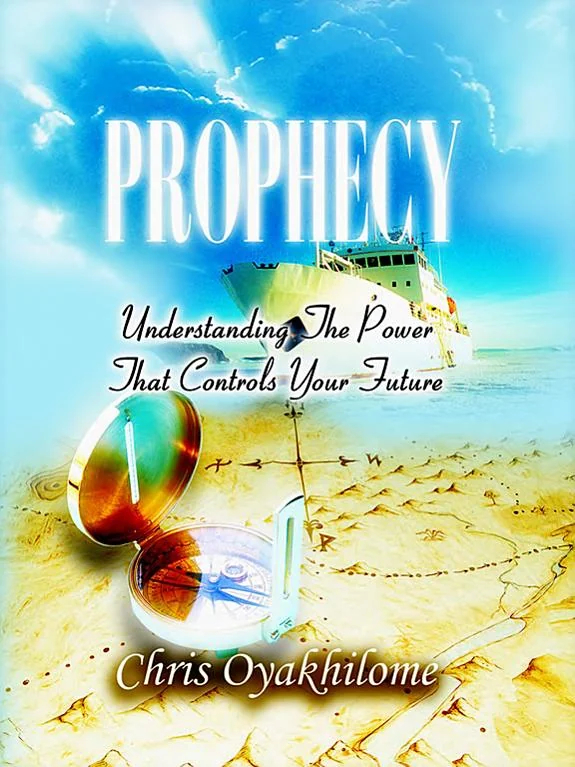
Prophecy
 74
74

Prophecy
Chris Oyakhilome's "Prophecy" (2005) offers a detailed exposition on the nature and function of prophetic utterance, moving beyond simple prediction to a framework of divine decree. The author’s strength lies in his systematic approach, presenting prophecy as an active force intended to shape future realities. He articulates a clear distinction between mere foreknowledge and the authoritative pronouncements he terms "prophetic words." However, the work's reliance on a specific theological framework, while internally consistent, may present a challenge for readers outside that tradition. A passage discussing the "word of knowledge" as a divine impartation of specific information, distinct from general prophecy, highlights this focused theological lens. The work effectively argues for the ongoing relevance of prophecy within its defined parameters.
Verdict: A thorough theological treatise on prophecy for adherents of its specific spiritual tradition.
📝 Description
74
### What It Is Prophecy, authored by Chris Oyakhilome and first published in 2005, presents a particular perspective on divine communication and its manifestation in human affairs. The work posits that prophetic utterances are not mere predictions but active pronouncements intended to shape future realities. It categorizes different types of prophecy and explores the mechanisms through which they are believed to operate, offering a framework for understanding spiritual foresight.
### Who It's For This text is directed towards individuals seeking a structured theological or spiritual interpretation of prophecy. It appeals to those who engage with concepts of divine revelation and wish to understand its perceived function beyond simple foretelling. Readers interested in the intersection of faith, spiritual authority, and the unfolding of events will find material for contemplation. It is particularly relevant for followers of Oyakhilome’s teachings or those exploring charismatic Christian perspectives on prophecy.
### Historical Context Published in 2005, Prophecy emerged during a period of continued global interest in spiritual and religious phenomena, following the rapid expansion of digital communication. Within Christian theological discourse, discussions around spiritual gifts, including prophecy, were active, often debated between cessationist and continuationist viewpoints. Oyakhilome's work engages with these ongoing conversations, offering a continuationist stance that emphasizes the present-day relevance and operational power of prophetic gifts, aligning with movements like the Charismatic Renewal that gained significant traction throughout the late 20th century.
### Key Concepts The book centers on the concept of the "word of knowledge" and the "word of prophecy" as distinct but related divine communications. Oyakhilome distinguishes between the passive reception of information and the active impartation of divine will designed to effect change. Another central idea is the "flow of the Spirit," which describes the dynamic and often unpredictable manner in which prophetic messages are conveyed and received. The author also elaborates on the "law of faith" as it pertains to the activation and manifestation of prophetic declarations, suggesting that belief and confession are crucial for their fulfillment.
💡 Why Read This Book?
• Understand the "word of knowledge" as distinct from general prophecy, learning how Oyakhilome posits it functions as a direct impartation of divine information for specific situations. • Explore the "law of faith" as presented in the book, examining how belief and confession are framed as essential components for the activation and manifestation of prophetic declarations. • Grasp the concept of prophecy as an active pronouncement, not just a passive prediction, and how this active nature is intended to shape future outcomes according to the author's theological model.
⭐ Reader Reviews
Honest opinions from readers who have explored this book.
❓ Frequently Asked Questions
What is the primary distinction made in Chris Oyakhilome's Prophecy between prophecy and the word of knowledge?
Oyakhilome differentiates prophecy as a divine utterance meant to shape future events from the "word of knowledge," which he describes as a specific impartation of information from God about a particular person or situation.
When was Chris Oyakhilome's book 'Prophecy' first published?
Chris Oyakhilome's book 'Prophecy' was first published in 2005.
What role does faith play in the manifestation of prophecy according to the book?
The book posits a "law of faith," suggesting that belief and confession by the recipient or speaker are critical for activating and bringing prophetic declarations to their intended fulfillment.
Does the book discuss different types of prophetic communication?
Yes, the work categorizes various forms of prophecy and explores the mechanisms through which they are understood to operate, offering a structured view of divine communication.
Is 'Prophecy' by Chris Oyakhilome considered a theological or practical guide?
It functions as both, presenting a theological framework for understanding prophecy while also offering insights into its perceived operational function and application in spiritual practice.
What is the core concept of prophecy as presented in the book?
The core concept is that prophecy is an active, divine pronouncement intended to shape future realities, rather than solely a passive prediction of what will occur.
🔮 Key Themes & Symbolism
Active Pronouncement of Prophecy
The work emphasizes prophecy not as a passive foretelling but as an active, divine pronouncement designed to shape future realities. Oyakhilome posits that prophetic words carry inherent power to effect change, aligning with a view of spiritual utterance as a creative force. This perspective suggests that when a prophecy is declared, it initiates a process intended by the divine to bring about a specific outcome, moving beyond mere observation of future events to active participation in their unfolding.
The Word of Knowledge
A central theme is the "word of knowledge," which Oyakhilome distinguishes from general prophecy. This concept refers to a specific, direct impartation of information from the divine concerning individuals or situations. It is presented as a distinct channel of spiritual communication that provides targeted insight, enabling understanding and action based on divine revelation. This theme explores how such specific knowledge functions within a broader prophetic framework.
Law of Faith Activation
The book details the "law of faith" as a critical component for the manifestation of prophetic declarations. Oyakhilome suggests that belief, confession, and the reception of prophetic words are not passive acts but require an active engagement of faith. This theme explores how spiritual conviction and the declaration of belief are seen as instrumental in activating the divine potential inherent in prophecy, translating spiritual pronouncements into tangible realities.
Flow of the Spirit
Oyakhilome describes the "flow of the Spirit" as the dynamic, often intuitive, way in which prophetic messages are conveyed and received. This concept highlights the non-linear and sometimes unpredictable nature of divine communication, emphasizing that it operates according to spiritual principles rather than rigid human logic. Understanding this flow is presented as key to accurately receiving and interpreting prophetic utterances.
💬 Memorable Quotes
“Prophecy is not just a word; it is a creative force.”
— This statement encapsulates the active nature of prophecy as presented in the book. It suggests that prophetic utterances are not merely descriptive but possess an inherent power to bring about what they declare, functioning as divine pronouncements that shape reality.
“The word of knowledge is the Spirit of God revealing specific information.”
— This paraphrase highlights the distinction Oyakhilome makes between different forms of divine communication. The "word of knowledge" is presented as a direct impartation of targeted information from God, offering specific insight rather than general foretelling.
“Faith is the substance of things hoped for, the evidence of things not seen.”
— This is a common biblical reference (Hebrews 11:1) that Oyakhilome likely employs to underscore the importance of belief. It frames faith as the foundational element that gives tangible reality to unseen prophetic visions or promises.
“The law of faith ensures the manifestation of the prophetic word.”
— This interpretation reflects the book's emphasis on the active role of faith. It posits that for prophecy to be fulfilled, it requires the believer's active engagement through faith, acting as a mechanism for its realization.
“Understand the flow of the Spirit in prophetic utterances.”
— This paraphrased concept points to the dynamic and intuitive nature of divine communication as described in the text. It suggests that accurate reception of prophecy involves discerning this spiritual flow, which operates beyond predictable patterns.
🌙 Esoteric Significance
Tradition
While rooted in a Pentecostal Christian framework, "Prophecy" engages with themes that resonate with broader esoteric traditions concerning divine communication and manifestation. It shares with Gnosticism an interest in direct divine revelation and the impartation of hidden knowledge. However, it diverges significantly by centering these concepts within a Christocentric narrative and emphasizing the scriptural canon, unlike Gnostic systems that often critique or bypass established religious structures. The emphasis on specific spiritual "flows" and active pronouncements also touches upon Hermetic principles of correspondence and the power of the spoken word.
Symbolism
The book doesn't heavily rely on traditional esoteric symbols but focuses on the symbolic power of the "prophetic word" itself. This word acts as a symbol of divine will and intent, a conduit through which the spiritual realm directly influences the material. Another implicit symbol is the "flow of the Spirit," which can be understood as a symbolic representation of divine energy or consciousness moving and interacting with human consciousness, akin to concepts of divine breath or emanation found in other traditions.
Modern Relevance
Oyakhilome's work continues to be influential within Pentecostal and Charismatic circles today, impacting contemporary understandings of spiritual gifts. Thinkers and practitioners within these denominations often draw upon his teachings to inform their interpretation and practice of prophecy. Furthermore, in an era increasingly fascinated by spiritual experiences and direct divine encounters, "Prophecy" offers a structured theological approach that appeals to individuals seeking to understand and engage with perceived supernatural communication channels, bridging traditional faith with a desire for tangible spiritual engagement.
👥 Who Should Read This Book
• Students of Pentecostal theology: Individuals seeking to understand the theological underpinnings and practical framework for prophecy within the Charismatic and Pentecostal movements. • Aspiring spiritual communicators: Those interested in developing or refining their understanding of divine communication, particularly the 'word of knowledge' and prophetic utterance. • Comparative religion scholars: Researchers examining contemporary Christian expressions of spiritual gifts and their doctrinal foundations, offering insight into a specific theological tradition.
📜 Historical Context
Published in 2005, Chris Oyakhilome's "Prophecy" emerged within a vibrant landscape of Pentecostal and Charismatic Christianity, a movement that had seen significant global expansion since the mid-20th century. This period was marked by continued theological discourse on spiritual gifts, with ongoing debates between those who believed gifts like prophecy were still active (continuationists) and those who held they had ceased (cessationists). Oyakhilome’s work firmly aligns with the continuationist perspective, which was particularly influential in churches associated with the Charismatic Renewal. Unlike theological approaches that might emphasize historical analysis or critical scholarship of prophetic texts, Oyakhilome’s work focuses on the practical application and operational power of prophecy in contemporary life. It engaged with a readership already predisposed to believing in the active manifestation of spiritual gifts, offering a framework for understanding and utilizing these abilities within their faith community.
📔 Journal Prompts
The concept of the "word of knowledge": how does this differ from general understanding?
Prophecy as an active pronouncement: what are the implications of this view?
Reflecting on the "law of faith": how does belief influence manifestation?
The "flow of the Spirit": what qualities characterize this divine movement?
Analyzing the distinction between passive prediction and active shaping of future realities through prophecy.
🗂️ Glossary
Word of Knowledge
A specific type of divine communication described by Oyakhilome, where God imparts precise information about a person, situation, or future event directly to an individual.
Prophetic Word
A divine utterance or pronouncement believed to originate from God, intended not just to foretell but to actively shape future events and circumstances.
Law of Faith
The principle, as presented in the book, that belief, confession, and the reception of prophetic declarations are essential for their activation and manifestation in reality.
Flow of the Spirit
The dynamic, intuitive, and often unpredictable manner in which divine communication and spiritual power are understood to operate and manifest.
Active Pronouncement
The idea that prophecy is a declarative statement from God that carries inherent power to bring about its intended outcome, rather than a mere passive prediction.
Divine Impartation
The concept of God directly bestowing knowledge, wisdom, or spiritual ability upon an individual through supernatural means.
Manifestation
The process by which a spiritual reality, promise, or prophetic word becomes evident or actualized in the physical realm.