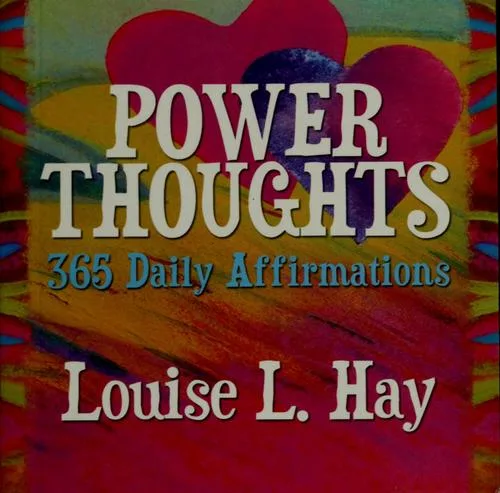
Power thoughts
 75
75

Power thoughts
Louise L. Hay’s "Power Thoughts" presents a direct, no-nonsense approach to mental reframing. Its strength lies in its unadorned clarity; Hay doesn't get lost in complex theory, instead offering actionable affirmations. The core concept—that our thoughts shape our reality—is compellingly articulated through simple, repetitive exercises. However, the book's straightforwardness can also be its limitation. For those with deeply entrenched negative beliefs or complex psychological issues, the reliance solely on affirmations might feel insufficient, potentially overlooking the need for deeper therapeutic intervention. A particularly resonant idea is the emphasis on "I love myself," posited not as a vanity but as a fundamental building block for all other positive change. Ultimately, "Power Thoughts" functions as a potent primer for anyone willing to commit to daily mental practice.
📝 Description
75
### What It Is
Louise L. Hay's "Power Thoughts," first published in 2005, offers a foundational approach to harnessing the mind's potential for personal change. It presents a system of affirmations and positive thinking designed to reshape ingrained beliefs and foster a more empowered outlook on life. The book operates on the principle that our thoughts directly influence our experiences, and by consciously choosing positive mental patterns, individuals can improve their well-being and manifest desired outcomes.
### Who It's For
This work is intended for individuals seeking practical tools to overcome self-defeating thought patterns and cultivate greater self-esteem. It appeals to those interested in self-help, personal development, and the mind-body connection, particularly those new to the concept of positive affirmations or the power of thought. Readers looking for straightforward guidance on shifting their internal dialogue to effect external change will find its accessible style beneficial.
### Historical Context
"Power Thoughts" emerged during a period of significant popular interest in New Thought and self-help movements, which gained momentum throughout the late 20th century. Hay's work aligns with earlier pioneers like Florence Scovel Shinn and Norman Vincent Peale, who also emphasized the role of faith and positive thinking in achieving worldly success and spiritual peace. The book's 2005 publication date places it within a wave of self-help literature that often drew from metaphysical and psychological principles, making concepts of mental reprogramming widely available.
### Key Concepts
The central tenet is the idea that "you are what you think." The book elaborates on the creation of "affirmations" – positive, present-tense statements designed to reprogram subconscious beliefs. It discusses the importance of self-love as a prerequisite for positive change and explores how to release limiting beliefs, fear, and anger. Hay also touches upon the connection between specific physical ailments and underlying emotional states, suggesting that mental healing can precede physical healing.
💡 Why Read This Book?
• You will learn to construct potent affirmations, directly inspired by Hay's method for challenging negative self-talk, enabling a tangible shift in your internal dialogue. • You will gain an understanding of the mind-body connection as presented in the early 2000s self-help landscape, recognizing how specific emotional patterns, as discussed by Hay, may correlate with physical experiences. • You will feel empowered to begin a practice of self-love, a central theme Hay champions as the essential first step toward personal transformation, as detailed in her work.
⭐ Reader Reviews
Honest opinions from readers who have explored this book.
❓ Frequently Asked Questions
When was Louise L. Hay's 'Power Thoughts' originally published?
'Power Thoughts' by Louise L. Hay was first published in 2005, positioning it within the popular self-help literature of the early 21st century.
What is the central philosophy behind 'Power Thoughts'?
The book's central philosophy is that our thoughts directly influence our experiences, and by consciously choosing positive affirmations, individuals can reprogram their minds to create a better reality.
Are affirmations the only technique discussed in 'Power Thoughts'?
While affirmations are the primary tool, 'Power Thoughts' also emphasizes self-love, releasing old patterns, and understanding the link between emotional states and physical well-being.
Who is Louise L. Hay?
Louise L. Hay was an American author and motivational speaker, widely recognized as one of the founders of the modern self-help movement, known for her work on positive thinking and affirmations.
Is 'Power Thoughts' suitable for beginners in self-help?
Yes, 'Power Thoughts' is highly suitable for beginners due to its clear, accessible language and straightforward exercises that introduce the principles of positive affirmations.
Does 'Power Thoughts' offer specific examples of affirmations?
Yes, the book provides numerous examples of affirmations tailored to various life areas, such as health, finances, relationships, and self-esteem, to guide readers in their practice.
🔮 Key Themes & Symbolism
The Power of Affirmations
The core of 'Power Thoughts' lies in its detailed exploration of affirmations as a tool for mental reprogramming. Hay posits that consistently repeating positive, present-tense statements can bypass the critical conscious mind and instill new beliefs in the subconscious. The book guides readers in crafting affirmations that are specific, believable, and focused on desired outcomes, moving away from negative self-talk and toward self-empowerment. This technique is presented as a direct method for altering one's perception of reality and, consequently, one's life experiences.
Self-Love as Foundation
Hay consistently emphasizes that genuine self-love is the bedrock upon which all other positive changes are built. She argues that many limiting beliefs and emotional blockages stem from a lack of self-acceptance. The book encourages readers to cultivate a deep sense of worthiness, independent of external validation or achievements. This theme is explored through affirmations focused on self-acceptance, forgiveness, and embracing one's inherent value, presenting it not as ego but as essential spiritual and psychological health.
Releasing Limiting Beliefs
A significant portion of 'Power Thoughts' is dedicated to identifying and releasing old, negative patterns of thought that hinder progress. Hay addresses common fears, resentments, and guilt, explaining how these emotional burdens create obstacles in achieving desired outcomes. The work provides techniques, primarily through affirmations and mental reframing, to let go of past hurts and outdated beliefs that no longer serve the individual. The goal is to clear mental space for new, positive possibilities to emerge.
Mind-Body Connection
While primarily focused on mental and emotional well-being, 'Power Thoughts' also touches upon the interconnectedness of the mind and body. Hay suggests that negative thought patterns and unresolved emotional issues can manifest as physical ailments. By addressing the root mental and emotional causes through positive thinking and self-love, the book implies that healing can occur on a physical level as well. This perspective aligns with holistic approaches to health that gained traction in the late 20th century.
💬 Memorable Quotes
“I am willing to release all patterns of fear and doubt.”
— This affirmation directly targets the internal obstacles that prevent personal growth. It signifies a conscious decision to let go of ingrained anxieties and uncertainties, clearing the way for confidence and positive action.
“I love and accept myself.”
— This core affirmation is presented as the essential starting point for all positive change. It underscores the belief that true well-being and the ability to attract positive experiences begin with unconditional self-acceptance.
“My body is healthy and strong.”
— This affirmation reflects the mind-body connection discussed in the book, suggesting that positive mental focus can influence physical well-being. It's a statement of intent for vitality and resilience.
“I am open and receptive to the good in my life.”
— This statement encourages an attitude of openness and gratitude, allowing individuals to recognize and embrace the positive opportunities and blessings that surround them, rather than focusing on perceived lack.
“I approve of myself.”
— This affirmation moves beyond mere acceptance to active approval, fostering a sense of inner validation and confidence. It signifies a shift from seeking external approval to finding it within oneself.
🌙 Esoteric Significance
Tradition
Hay's work aligns broadly with the New Thought tradition, a spiritual movement that emerged in the United States during the 19th century. This tradition emphasizes the power of thought, consciousness, and spiritual principles to create reality. While not strictly Hermetic or Kabbalistic, it shares common ground with these older systems in its focus on the mind as a creative force and the importance of inner transformation. Hay's approach is a modern, accessible interpretation of these principles, focusing on practical application through affirmations rather than complex ritual or arcane symbolism.
Symbolism
The primary 'symbol' in Hay's work is the affirmation itself – a linguistic construct designed to reprogram the subconscious. Beyond this, the concept of 'self-love' functions symbolically, representing the core of spiritual and psychological wholeness. It symbolizes the divine spark within, which must be recognized and nurtured. The act of releasing 'old patterns' can be seen as a symbolic shedding of the ego's limitations, akin to spiritual purification or exorcism of negative thought forms.
Modern Relevance
Hay's emphasis on affirmations and self-love continues to be highly relevant in contemporary wellness and personal development spheres. Her work has influenced many modern coaches, therapists, and spiritual teachers who integrate similar techniques. Practices like mindfulness, positive psychology, and even certain therapeutic modalities that focus on cognitive reframing owe a debt to the accessible principles Hay popularized. Her teachings remain a foundational text for many seeking self-empowerment through mental discipline.
👥 Who Should Read This Book
• Individuals new to self-help and positive thinking seeking straightforward, actionable techniques to improve their mindset. • Those struggling with low self-esteem or negative self-talk who want practical tools to cultivate self-acceptance and confidence. • Readers interested in the New Thought movement and its emphasis on the power of consciousness to shape personal reality.
📜 Historical Context
Published in 2005, Louise L. Hay's "Power Thoughts" arrived during a peak period for the New Thought movement and popular psychology's influence on self-help literature. Hay herself was a significant figure, building on the work of earlier New Thought authors like Florence Scovel Shinn, whose "The Game of Life and How to Play It" (1925) similarly championed positive affirmations and spiritual principles for manifestational success. The era saw a proliferation of books advocating mental reprogramming and visualization techniques, often drawing from a blend of spiritual philosophy and early psychological concepts of cognitive restructuring. While Hay's approach was accessible and widely embraced, it existed within a broader intellectual landscape that also included more clinically oriented cognitive behavioral therapy (CBT) pioneers like Aaron T. Beck, though their methodologies differed significantly in theoretical underpinnings and therapeutic application. Hay's work, in contrast, maintained a distinctly spiritual and metaphysical framing.
📔 Journal Prompts
Your primary affirmation for releasing fear and doubt.
The core self-love statement you will practice daily.
Identify one limiting belief you are ready to release.
How your thoughts about finances have manifested.
What does 'approving of yourself' mean in practice?
🗂️ Glossary
Affirmation
A positive, present-tense statement used to reprogram subconscious beliefs and attitudes, intended to influence thoughts, feelings, and behaviors.
New Thought
A spiritual movement emphasizing the power of thought and consciousness to create reality, often advocating for positive affirmations and spiritual healing.
Subconscious Mind
The part of the mind operating below conscious awareness, believed to store deeply ingrained beliefs, habits, and emotions that influence behavior.
Self-Love
Unconditional acceptance and appreciation of oneself, considered by Hay to be the foundation for positive change and healthy relationships.
Limiting Beliefs
Negative or restrictive assumptions about oneself, others, or the world that hinder personal growth and prevent the achievement of goals.
Manifestation
The process of bringing thoughts, beliefs, and desires into physical reality through focused intention and positive energy.
Mind-Body Connection
The reciprocal relationship between mental states (thoughts, emotions) and physical health, suggesting that psychological well-being can impact physical health.