Paradise Lost
 73
73

Paradise Lost
Milton's *Paradise Lost* is less a narrative to be passively consumed and more a theological and linguistic Everest to be scaled. Its sheer ambition, to justify "the ways of God to men," is breathtaking. The portrayal of Satan, particularly in Book I, is undeniably its most potent element – a fallen archangel of such compelling, albeit damned, charisma that he risks eclipsing the divine. Milton’s command of blank verse allows for a majestic, flowing exposition that can feel both ancient and immediate.
However, the poem’s theological density and Milton’s own didactic impulses can, at times, create a formidable barrier. The extended theological debates, while crucial to the work’s purpose, can slow the narrative momentum. A passage like the depiction of God the Father calmly explaining the Son's role in the war in Heaven, while theologically significant, can feel rather prosaic compared to the infernal grandeur of Satan's lament. Despite its challenges, *Paradise Lost* remains a foundational text for understanding Western thought on sin, free will, and cosmic order. It is an artifact of profound intellectual and artistic struggle.
📝 Description
73
### What It Is John Milton's *Paradise Lost*, first published in 1667, is an epic poem of immense scope, chronicling the biblical story of the Fall of Man. It recounts the temptation of Adam and Eve by Satan, their expulsion from the Garden of Eden, and the subsequent fate of humanity. The work is structured in twelve books, employing blank verse (unrhymed iambic pentameter) to convey its grand narrative and theological arguments.
### Who It's For This monumental work is for readers interested in foundational Western literature, theological inquiry, and the exploration of cosmic rebellion and divine justice. It appeals to those who appreciate intricate poetic language, complex character portrayals of figures like Satan, God, and Adam and Eve, and the exploration of free will versus predestination. Scholars of English literature and comparative mythology will find its dense allusions and theological underpinnings particularly rewarding.
### Historical Context Composed and published during a tumultuous period in English history, *Paradise Lost* reflects the intellectual and religious climate of the mid-17th century. Milton, a staunch Puritan and former supporter of the Commonwealth, wrote the poem after the Restoration of the monarchy in 1660. Its publication in 1667, during the reign of Charles II, occurred in an environment where religious and political dissent was often suppressed. The poem engages with Renaissance humanism and classical epic traditions, while also presenting a distinctly Protestant theological viewpoint, diverging in significant ways from Catholic interpretations of the Fall.
### Key Concepts The poem grapples with profound theological and philosophical questions. Central among these are the nature of free will and obedience, the problem of evil, divine foreknowledge versus human agency, and the consequences of rebellion against divine authority. It examines the psychological and spiritual dimensions of sin, temptation, repentance, and redemption, offering a complex portrayal of both angelic and human nature. The narrative explores the cosmic struggle between good and evil, personified by God and Satan, and its impact on the created world.
💡 Why Read This Book?
• Understand the theological underpinnings of the Fall of Man as interpreted through a 17th-century Puritan lens, gaining insight into concepts like original sin and divine justice, which shaped Western religious thought. • Analyze Milton's unique characterization of Satan, a figure of immense persuasive power and tragic grandeur, offering a complex exploration of rebellion and pride that continues to influence literary archetypes. • Appreciate the masterful use of blank verse in an epic scale, as demonstrated in the twelve books of *Paradise Lost*, to construct a grand theological and cosmological argument that profoundly impacted English poetry.
⭐ Reader Reviews
Honest opinions from readers who have explored this book.
❓ Frequently Asked Questions
When was John Milton's *Paradise Lost* first published?
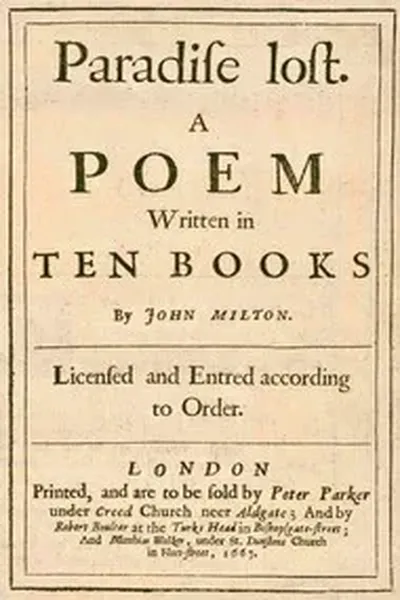
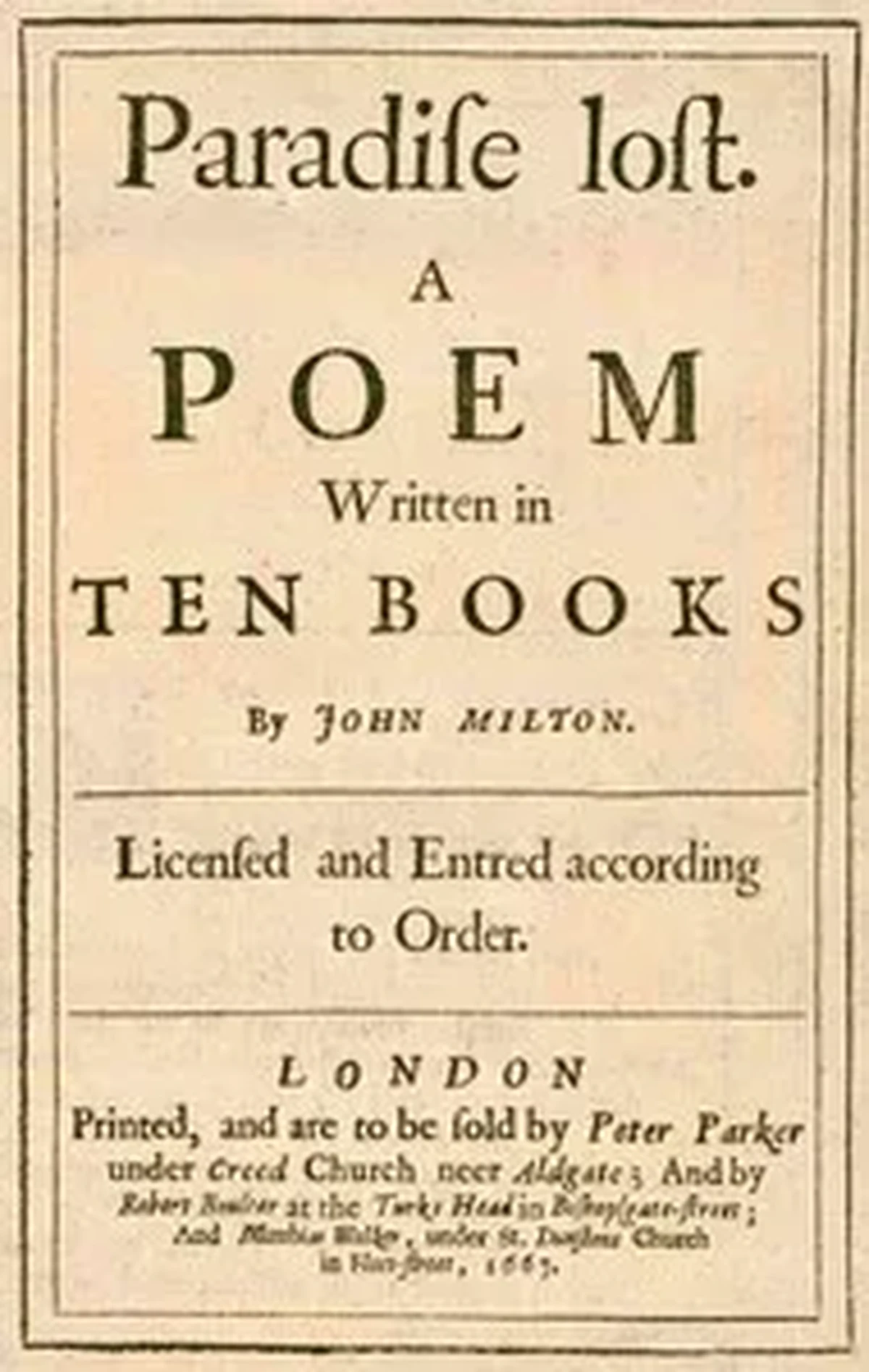
John Milton's epic poem *Paradise Lost* was first published in 1667, consisting of ten books. It was later revised and expanded to twelve books in a 1674 edition.
What is the central theme of *Paradise Lost*?
The central theme is the justification of God's ways to humanity, focusing on the Fall of Man: Satan's rebellion, the temptation of Adam and Eve, and their subsequent expulsion from the Garden of Eden.
What poetic form does Milton use in *Paradise Lost*?
Milton employs blank verse, which is unrhymed iambic pentameter, throughout *Paradise Lost*. This form was chosen for its elevated, classical style, suited to epic poetry.
Who are the main characters in *Paradise Lost*?
The primary characters include God, Jesus Christ, Satan, Adam, and Eve. Other significant figures are the Archangel Michael, Beelzebub, and various fallen and unfallen angels.
What does 'the Fall of Man' refer to in the context of the poem?
The Fall of Man refers to the disobedience of Adam and Eve in the Garden of Eden, by eating the forbidden fruit after being tempted by Satan, leading to their expulsion and the introduction of sin and mortality into the world.
Is *Paradise Lost* based on the Bible?
Yes, *Paradise Lost* is primarily based on the biblical account of creation and the Fall of Man found in the Book of Genesis, but Milton significantly elaborates on the narrative and theological implications.
🔮 Key Themes & Symbolism
Free Will and Divine Foreknowledge
The poem intricately explores the tension between God's omniscient foreknowledge and humanity's possession of free will. Milton posits that God knows all future events, including humanity's choice to sin, but this knowledge does not compel the action itself. Adam and Eve make their own choices, particularly Eve's decision to eat the forbidden fruit and Adam's subsequent choice to join her in disobedience. This concept is central to justifying God's justice and the fairness of the divine plan, arguing that true obedience must be freely given.
The Nature of Evil and Rebellion
Milton presents Satan not merely as a mustache-twirling villain but as a complex figure of immense pride and ambition who instigates rebellion against God. His fall from Heaven and subsequent actions in Eden are depicted as the consequence of his refusal to submit to a higher authority, particularly the divine investiture of the Son. The poem examines the seductive nature of pride, the allure of challenging established order, and the ultimate futility and destructive consequences of evil when it is divorced from truth and love.
The Cosmic Significance of the Fall
The expulsion of Adam and Eve from Eden is portrayed as a pivotal event with universal and cosmic repercussions. It signifies not just the loss of human innocence and paradise but also the introduction of sin, death, and suffering into the created world. The poem frames this event within a grand cosmological struggle between divine order and chaotic rebellion. The sacrifice of the Son and the subsequent promise of redemption offer a path forward, transforming the Fall into a necessary precursor for a greater salvation.
Theology and Biblical Interpretation
Milton's work is a profound act of theological interpretation, drawing heavily on Genesis but expanding upon it with imaginative scope and detailed argumentation. He grapples with classic theological problems such as theodicy (the problem of evil), predestination, and the nature of God and angels. His Puritan background heavily influences his depiction of divine justice, the importance of scripture, and the moral failings of both Satan and, initially, Adam and Eve, presenting a complex vision of divine providence.
💬 Memorable Quotes
“The mind is its own place, and in itself / Can make a Heav'n of Hell, a Hell of Heav'n.”
— This famous line, spoken by Satan, encapsulates the poem's exploration of internal states and the power of perception. It suggests that one's subjective experience and mental disposition are paramount, capable of transforming even the direst circumstances.
“Better to reign in Hell, than serve in Heav'n.”
— Satan's declaration of his defiant stance after his defeat. It highlights his unyielding pride and his preference for absolute, albeit tormented, autonomy over subservience to divine authority.
“O foul descent! that I who erst have fed / On manna, and with Angels have conversed, / ... / Should be degraded to this abject state!”
— A lament from a fallen angel, expressing shock and despair at their diminished status and the loss of divine communion after their rebellion and expulsion from Heaven.
“The Serpent... / Into his womb did secretly infuse / The seeds of knowledge and distrust.”
— Describes Satan's subtle act of temptation upon Eve, not through overt force but by planting the 'seeds' of doubt and forbidden knowledge, leading to her fateful choice.
“What hath God wrought?”
— While more famously associated with Samuel Morse's telegraph, this phrase reflects the awe and apprehension surrounding divinely ordained events and new creations or revelations within the poem's scope.
🌙 Esoteric Significance
Tradition
While not strictly belonging to a single esoteric lineage, *Paradise Lost* has been interpreted through Gnostic and Hermetic lenses due to its profound exploration of dualism, cosmic rebellion, and the nature of knowledge. The figure of Satan as a bringer of forbidden knowledge, and Eve's subsequent enlightenment (albeit a fallen one), echoes Gnostic themes of a flawed creator and the awakening of consciousness through transgression. The poem's intricate cosmology and its engagement with primordial states resonate with Hermetic concepts of divine order and the macrocosm/microcosm relationship.
Symbolism
The Garden of Eden itself functions as a potent symbol of primal innocence, divine harmony, and uncorrupted nature. The Tree of Knowledge of Good and Evil symbolizes the acquisition of consciousness, the awareness of duality, and the inherent risks of choice and intellectual exploration. Satan, beyond his biblical role, can be seen as an archetype of the rebel spirit, the adversary who challenges established hierarchies, and a symbol of the alluring power of pride and self-will against divine order.
Modern Relevance
Contemporary occultists and esoteric thinkers continue to draw on *Paradise Lost* for its archetypal figures and its exploration of rebellion, free will, and cosmic consciousness. Figures like Aleister Crowley engaged with the poem's Luciferian and Promethean themes. Modern interpretations often focus on Satan as a symbol of liberation from oppressive dogma or as an embodiment of the shadow self. The poem's examination of the psychological landscape of sin and redemption remains relevant for modern therapeutic and spiritual practices exploring self-knowledge and transformation.
👥 Who Should Read This Book
• Students of comparative religion and mythology seeking to understand the Western literary tradition's engagement with biblical narratives and their theological implications. • Practitioners of Western esotericism interested in the symbolic interpretations of the Fall, the figure of Satan as an archetype of rebellion, and the Gnostic echoes within a canonical text. • Literary scholars and poetry enthusiasts who wish to engage with a foundational work of English literature, appreciating its complex blank verse, intricate structure, and profound philosophical inquiries.
📜 Historical Context
John Milton's *Paradise Lost*, first published in 1667, emerged from the intellectual ferment of 17th-century England. Written in the shadow of the English Civil War and the subsequent Restoration of the monarchy under Charles II, the poem reflects a deep engagement with political and religious themes. Milton, a former civil servant under Oliver Cromwell, found himself in a precarious position following the monarchy's return. The work's publication occurred during a period of renewed religious conservatism and censorship, yet Milton, despite his personal setbacks and partial blindness, completed this epic. He engaged with classical epic traditions, evident in his invocation of the muse and epic similes, while also presenting a distinctly Protestant theological argument, diverging from Catholic interpretations of the Fall. His contemporary, Andrew Marvell, recognized Milton's genius, though the poem's initial reception was mixed, with some critics finding its subject matter too theological and its style too archaic.
📔 Journal Prompts
The nature of Satan's pride and its role in his rebellion.
Adam's choice to follow Eve, and the concept of loyalty versus obedience.
The symbolic meaning of the Garden of Eden before and after the Fall.
Reflections on divine foreknowledge versus free will as presented in the poem.
The significance of 'The Serpent' in corrupting innocence.
🗂️ Glossary
The Fall of Man
The biblical event where Adam and Eve disobeyed God by eating the forbidden fruit, leading to their expulsion from the Garden of Eden and the introduction of sin, suffering, and mortality into the world.
Blank Verse
Unrhymed poetry written in iambic pentameter, a line of ten syllables with alternating unstressed and stressed syllables. Milton famously used this form for *Paradise Lost*.
Theodicy
The branch of theology that attempts to reconcile the existence of evil and suffering in the world with the concept of an omnipotent, omniscient, and benevolent God.
Archangel
A high-ranking angel, often serving as a messenger or leader of angelic hosts. In *Paradise Lost*, figures like Michael and Satan are archangels.
Forbidden Fruit
The fruit from the Tree of the Knowledge of Good and Evil in the Garden of Eden, which God commanded Adam and Eve not to eat. Its consumption signifies disobedience and the acquisition of morally ambiguous knowledge.
Restoration
The period in English history (beginning in 1660) when the monarchy was restored with Charles II, following the period of the Commonwealth and Protectorate.
Invocation of the Muse
A traditional epic convention where the poet calls upon a divine source of inspiration (a muse) to help them tell a grand story, common in classical epics and adopted by Milton.