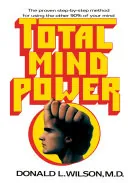
Total Mind Power

 74
74

Total Mind Power
Donald M. Wilson’s *Total Mind Power* is less a book to be read and more a training manual to be worked. Its strength lies in its no-nonsense, almost utilitarian approach to mental discipline. Wilson eschews grand pronouncements for detailed instructions, presenting a series of exercises that feel akin to physical calisthenics for the brain. One particularly striking section details methods for overcoming mental fatigue, a common obstacle for anyone attempting sustained focus. The limitation, however, is its somewhat dry presentation; the prose, while clear, lacks the evocative quality that might inspire deeper engagement for some readers. It demands commitment through its structure rather than through rhetorical flair. Ultimately, *Total Mind Power* offers a structured path for those who prefer doing over contemplating.
📝 Description
74
Donald M. Wilson's 1981 book, *Total Mind Power*, offers a system for developing latent mental faculties through disciplined practice.
Published in 1981, *Total Mind Power* by Donald M. Wilson is a practical guide, not a theoretical text, focused on enhancing mental abilities. Wilson lays out specific exercises and techniques aimed at improving concentration, memory, and what he calls "conscious control." The book's central argument is that these mental skills are not fixed traits but can be cultivated through consistent effort and structured training. It is intended for individuals who seek to develop their mental capabilities beyond typical self-help methods and are willing to commit to a disciplined approach. The work emphasizes the application of psychological principles for personal growth, appealing to those interested in unlocking their mind's potential through active engagement and practice. Readers are encouraged to embrace a structured method for mental development.
Wilson's system centers on the concept of mental energy and how to direct it effectively. He stresses the importance of rigorous mental exercises, visualization techniques, and the cultivation of a steady focus. Key ideas presented include "mental inertia," the mind's resistance to new effort, and "mental momentum," a state achieved through persistent practice. The book advocates for building mental strength systematically, moving from simpler exercises to more complex ones. This methodical progression is designed to help individuals gain greater command over their thoughts and mental processes.
Emerging in the early 1980s, *Total Mind Power* appeared during a period of growing interest in consciousness studies and applied psychology. While distinct from the more spiritualistic aspects of the New Age movement, it shared a cultural interest in alternative methods for self-improvement and personal empowerment. Wilson's focus on actionable techniques set it apart from purely theoretical works on the mind prevalent at the time. The book taps into a long-standing human fascination with mental discipline and the potential for self-mastery.
💡 Why Read This Book?
• Learn specific, repeatable exercises for enhancing concentration, directly applicable from the techniques outlined in Wilson's methodical approach, allowing for tangible improvements in focus. • Develop an understanding of "mental inertia" and "mental momentum" as described by Wilson, providing a conceptual framework for overcoming procrastination and building mental endurance. • Practice disciplined mental training through the structured exercises presented, mirroring the systematic approach to building mental acuity championed in the book's original 1981 publication.
⭐ Reader Reviews
Honest opinions from readers who have explored this book.
❓ Frequently Asked Questions
What is the core principle of Donald M. Wilson's Total Mind Power?
The core principle is that mental abilities like concentration and memory are skills that can be systematically developed through rigorous, disciplined practice and specific techniques, rather than being fixed traits.
When was Total Mind Power first published?
Total Mind Power was first published on March 15, 1981, placing it within the early 1980s wave of interest in practical psychology and self-improvement.
Does Total Mind Power offer spiritual or metaphysical concepts?
While it deals with the mind's potential, the book focuses primarily on practical, actionable psychological techniques and disciplined training, rather than extensive metaphysical or spiritual doctrines.
What kind of exercises are included in Total Mind Power?
The book includes exercises designed to build concentration, improve memory recall, and develop conscious control over mental states, often involving visualization and focused attention.
Is Total Mind Power suitable for beginners in self-development?
Yes, it is suitable for beginners willing to commit to its structured approach. Its clarity and focus on actionable steps make it accessible, provided the reader is prepared for consistent effort.
What is the author's background relevant to this book?
Donald M. Wilson was known for his work in practical psychology and the development of mental training systems, focusing on empirical results through disciplined methods.
🔮 Key Themes & Symbolism
Systematic Mental Development
The book presents a structured methodology for enhancing cognitive functions. Wilson argues against the notion of fixed mental capacities, proposing instead that focus, memory, and willpower are skills trainable through consistent application of specific exercises. This theme underscores the book's practical, almost scientific, approach to self-improvement, treating the mind as a system to be optimized through deliberate effort and repetition.
Conscious Control and Awareness
A central theme is the cultivation of 'conscious control' over one's thoughts and mental processes. This involves developing a heightened awareness of mental states, recognizing patterns of distraction or inefficiency, and actively directing attention. Wilson guides the reader to move beyond passive mental states towards an active, intentional engagement with their inner world, fostering a sense of agency over one's cognitive landscape.
Overcoming Mental Inertia
Wilson identifies 'mental inertia' as a primary obstacle to progress, describing the mind's natural tendency to resist effort and remain in a state of low activity. The book provides techniques to counteract this inertia, building 'mental momentum' through sustained practice. This theme highlights the book's focus on practical strategies for breaking through procrastination and developing the discipline required for sustained mental exertion.
Applied Psychology Techniques
The work is grounded in the application of psychological principles for tangible results. It offers concrete exercises rather than abstract theories, focusing on methods that can be implemented in daily life. This theme positions *Total Mind Power* as a functional guide for individuals seeking self-mastery through the practical application of mind-training techniques derived from observed psychological dynamics.
💬 Memorable Quotes
Direct passages from the work, attributed to the author.
“Mental strength is built by deliberate and sustained effort.”
— This statement captures Wilson's core philosophy: that cognitive abilities are not static but are cultivated through consistent, focused practice, much like physical strength is developed in a gymnasium.
“The mind naturally resists demanding tasks.”
— This highlights the concept of 'mental inertia,' suggesting that the brain's default state is one of ease, and overcoming this requires conscious effort and specific strategies to build momentum.
“Awareness of distraction is the first step to control.”
— This points to the importance of mindfulness and self-observation in the process of mental training, emphasizing that recognizing where attention wanders is crucial before one can guide it effectively.
“Direct your attention with intention.”
— This core instruction underscores the book's focus on active, rather than passive, mental engagement. It encourages readers to consciously choose and maintain their focus, rather than letting their thoughts drift aimlessly.
💡 Key Ideas
Editorial paraphrase of the work's core concepts — not direct quotes.
Consistent practice yields cumulative results.
This paraphrased concept emphasizes the principle of 'mental momentum,' suggesting that regular engagement with the book's exercises leads to a gradual but significant increase in mental capacity over time.
🌙 Esoteric Significance
Tradition
While not explicitly tied to a single esoteric lineage like Hermeticism or Kabbalah, *Total Mind Power* draws upon a broader tradition of mind-training found in various contemplative practices. Its emphasis on discipline, focus, and the cultivation of internal states echoes techniques found in secularized forms of Buddhism and Stoicism, adapted for a Western audience seeking practical self-mastery. It represents a rationalist, psychological interpretation of achieving higher mental states.
Symbolism
The book's primary "symbol" is the mind itself, treated as a trainable entity. Concepts like "mental inertia" and "mental momentum" function as symbolic representations of internal states – the resistance to effort versus the flow of productive thought. The act of rigorous, repetitive exercise symbolizes the disciplined path required to achieve mastery, akin to the alchemist’s persistent work or the yogi’s sustained meditation.
Modern Relevance
Wilson's focus on practical mental discipline and overcoming cognitive resistance finds echoes in modern productivity techniques, neuroplasticity research, and mindfulness-based stress reduction (MBSR). Thinkers and practitioners interested in cognitive enhancement, habit formation, and the scientific underpinnings of mental performance may find value in its foundational principles, even if the terminology differs from contemporary discourse.
👥 Who Should Read This Book
• Individuals seeking structured, practical techniques for enhancing focus and memory, who prefer actionable exercises over theoretical exploration. • Students of applied psychology or self-development who want to explore methods for building mental discipline and overcoming cognitive limitations. • Those interested in historical approaches to mind training who wish to understand practical systems developed outside of purely spiritual or mystical frameworks.
📜 Historical Context
Published in 1981, *Total Mind Power* emerged during a period when interest in human potential and self-improvement was high, yet distinct from the more overtly spiritual New Age trends. Donald M. Wilson’s approach was notably pragmatic, focusing on actionable psychological techniques rather than mystical insights. This positioned his work alongside burgeoning fields like cognitive psychology and practical self-help, offering a disciplined alternative to less structured methods. While contemporaries like Maxwell Maltz were exploring positive self-image, Wilson concentrated on the mechanics of mental exertion. The book's emphasis on rigorous exercises and systematic training reflects an underlying belief in the mind's capacity for development, resonating with a desire for tangible results in personal growth during the era.
📔 Journal Prompts
The concept of mental inertia as described by Wilson: how does it manifest in your daily routines?
Reflect on the techniques for building mental momentum presented in the book. What specific exercises will you prioritize?
Analyze a recent instance where your concentration wavered. How could the principles of conscious control have been applied?
Consider the author's emphasis on deliberate and sustained effort. What is one area where you can increase this in your life?
How does the idea of 'awareness of distraction' connect to your personal experiences with focus?
🗂️ Glossary
Mental Inertia
The tendency of the mind to resist effort, remain inactive, or resist changes in its current state of thought or activity. It's the mental equivalent of physical inertia.
Mental Momentum
The state achieved through consistent practice and effort, where mental tasks become easier and focus is maintained more readily. It's the opposite of mental inertia.
Conscious Control
The ability to deliberately direct one's thoughts, attention, and mental focus, rather than being passively carried along by mental processes.
Mental Stamina
The capacity to sustain mental effort or concentration over an extended period without significant fatigue or loss of effectiveness.
Focus Building
The process of systematically training the mind to maintain attention on a specific object, task, or thought for increasing durations.
Mental Exercise
Specific, disciplined activities designed to strengthen cognitive functions such as memory, concentration, and willpower, analogous to physical exercise for the body.
Willpower
The mental faculty that enables individuals to exert self-control, resist impulses, and pursue goals despite difficulties or temptations.
This book appears in 1 collection
🔮 Readers Also Liked
Browse all →
![Bidayah al-Hikmah (Arab-English) [The Elements of Islamic Metaphysics]](/img/thumb/bidayah-al-hikmah-arab-english-the-elements-of-islamic-metaphysics-allama-muhammad-husayn-tabatabai.webp)








From the “Mind Power” Collection
View all →





More Free Occult Philosophy Books
View all →