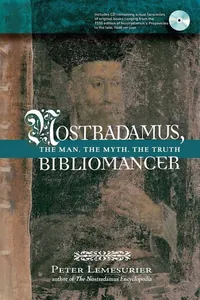
Nostradamus

 72
72

Nostradamus
Peter Lemesurier's "Nostradamus" presents a refreshing, if somewhat dry, dose of scholarly skepticism to the often-sensationalized world of prophecy. The author is at his best when dissecting the linguistic gymnastics employed by interpreters seeking to connect Nostradamus's cryptic quatrains to specific historical events. His meticulous breakdown of how the "Great Comet" of 1910 was retrofitted onto a quatrain initially describing a celestial event of the 16th century is particularly illuminating. A limitation, however, lies in the book's dense academic tone, which may deter casual readers drawn to the mystique of Nostradamus. While Lemesurier avoids outright dismissal, his focus on deconstruction leaves less room for exploring the psychological or cultural forces that drive belief in prophecy. Ultimately, "Nostradamus" serves as a valuable corrective, urging readers toward critical engagement with prophetic claims.
📝 Description
72
Peter Lemesurier's 1993 book critically examines Nostradamus's prophecies.
Peter Lemesurier's "Nostradamus" scrutinizes the prophecies attributed to the 16th-century French astrologer. Published in 1993, the book moves beyond a simple collection of predictions. It analyzes the historical setting, the ambiguities in Nostradamus's language, and the various interpretations that have given his work lasting fame. Lemesurier questions how his quatrains have been connected to later world events, challenging the common acceptance of these links.
This study is for those interested in esotericism, history, and prophecy who want a deeper understanding of the debates surrounding Nostradamus. It will interest readers curious about the psychology of prophecy, the history of occult beliefs, and how cultural myths form. The book offers a balanced view, relying on textual analysis and historical facts rather than sensationalism.
Lemesurier's work engages with the significant interest in Nostradamus that grew in the late 20th century. This period saw many popular books linking his prophecies to current events, alongside a rise in academic skepticism. This book emerged as a more rigorous approach, contrasting with earlier analyses that often presented unsupported claims and selective readings of the texts. It addresses how Nostradamus's writings have been understood within occult and historical circles.
💡 Why Read This Book?
• Understand the historical evolution of Nostradamus interpretations, learning how specific quatrains, like those concerning celestial events, have been recontextualized over centuries to fit contemporary anxieties. • Develop critical analytical skills by examining Lemesurier's methodology for dissecting linguistic ambiguity and astrological references, enabling you to evaluate other prophetic claims more rigorously. • Gain insight into the phenomenon of "Nostradamism" as a cultural force, recognizing how Michel de Nostredame's work became a canvas for projecting hopes and fears onto historical narratives.
⭐ Reader Reviews
Honest opinions from readers who have explored this book.
❓ Frequently Asked Questions
When was "Nostradamus" by Peter Lemesurier first published?
Peter Lemesurier's "Nostradamus" was first published in 1993, entering a period of renewed popular interest in the prophecies of Michel de Nostredame.
What is the primary focus of Lemesurier's analysis of Nostradamus?
Lemesurier's primary focus is on critically examining the historical context, linguistic ambiguities, and interpretative frameworks used to link Nostradamus's quatrains to specific historical events, questioning uncritical acceptance.
Does the book provide specific examples of Nostradamus's prophecies?
Yes, the book analyzes specific prophecies, such as the alleged predictions related to celestial events and historical figures, demonstrating how interpretations have evolved.
What historical period does the book primarily discuss in relation to Nostradamus?
While covering Nostradamus's life in the 16th century, the book extensively discusses the historical periods and events that interpreters have linked to his prophecies, from the French Revolution to the 20th century.
Is "Nostradamus" by Peter Lemesurier suitable for beginners interested in prophecy?
The book is more suited for serious students due to its scholarly tone and critical approach. Beginners seeking sensationalized accounts might find it dense, but those desiring a balanced, evidence-based perspective will benefit.
What makes Lemesurier's approach different from other Nostradamus books?
Lemesurier's approach distinguishes itself through rigorous historical and linguistic analysis, deconstructing common interpretations and emphasizing scholarly skepticism rather than speculative connections.
🔮 Key Themes & Symbolism
Prophetic Ambiguity
The work deeply explores the inherent ambiguity within Nostradamus's quatrains, arguing that their poetic and astrological language is intentionally veiled. Lemesurier demonstrates how this obscurity allows for fluid reinterpretation across centuries. He scrutinizes specific examples, such as the "Great Comet" quatrain, showing how interpretations shifted dramatically from its original 16th-century context to accommodate 20th-century events, highlighting the subjective nature of prophetic fulfillment.
Historical Contextualization
A central theme is the necessity of placing Nostradamus's writings within their precise 16th-century French milieu. Lemesurier emphasizes that Michel de Nostredame was a physician and astrologer operating within specific intellectual currents of the Renaissance. The book critiques the anachronistic application of his prophecies to later historical periods, arguing that such readings ignore the original intent and the limitations of 16th-century knowledge and worldview.
The Mechanics of "Nostradamism"
Lemesurier dissects "Nostradamism" not as a direct prophetic science, but as a cultural phenomenon and interpretative practice. He examines the evolution of how Nostradamus's work has been perceived and utilized, from his contemporaries to modern-day enthusiasts. The book outlines the common methodologies employed by interpreters – including selective citation, linguistic manipulation, and astrological 'proving' – to construct narratives of predictive accuracy.
Skepticism and Evidence
This theme underpins the entire work. Lemesurier champions a skeptical, evidence-based approach to prophecy. He contrasts the often-unsubstantiated claims made about Nostradamus's foresight with the rigorous demands of historical and textual analysis. The book implicitly argues for a distinction between genuine historical insight and the construction of meaning through retrospective interpretation, urging readers to question extraordinary claims.
💬 Memorable Quotes
“The tendency to see Nostradamus's predictions fulfilled requires a willingness to overlook the vast majority of his verses.”
— This statement encapsulates Lemesurier's critical stance, suggesting that the perceived accuracy of Nostradamus relies on selective attention and ignoring the numerous quatrains that do not align with historical events.
“Ambiguity is the prophet's most potent tool.”
— This highlights the core argument that the vagueness and multi-layered meanings within Nostradamus's prophecies are essential to their enduring appeal and adaptability across different eras.
“Interpreting Nostradamus often reveals more about the interpreter than the prophet.”
— This concept points to the subjective nature of prophecy interpretation, suggesting that readers project their own biases, historical knowledge, and desires onto the text.
“The historical record often bends to fit the quatrain, not the other way around.”
— This observation critiques the common practice in Nostradamism where historical events are forced to align with pre-existing interpretations of the prophecies, rather than allowing the text to be understood in its original context.
“A prophecy fulfilled is merely a statement whose conditions have been met, often by deliberate design.”
— This interpretation suggests that 'fulfilled' prophecies may not indicate prescience but rather a self-fulfilling or carefully constructed alignment that becomes apparent only after the event.
🌙 Esoteric Significance
Tradition
While Nostradamus himself operated within Renaissance astrological and medical traditions, Lemesurier's work examines his legacy through a modern critical lens. It doesn't strictly adhere to a single esoteric lineage but analyzes how Nostradamus's writings have been absorbed and reinterpreted by various occult and New Age movements. The book implicitly questions the traditional view of prophecy as direct divine revelation, instead framing it within psychological, linguistic, and historical constructs, thus engaging with modern skeptical critiques of esoteric claims.
Symbolism
The quatrain form itself is a key symbolic element, representing a condensed, poetic vessel for veiled knowledge. Astrological conjunctions, though often interpreted literally by followers, function symbolically in Lemesurier's analysis as markers of interpretive flexibility; their perceived relevance shifts with historical context. The symbolism of "obscurity" and "ambiguity" within the text is paramount, representing the deliberate obfuscation that allows for Nostradamus's prophecies to be endlessly reinterpreted and applied to new events.
Modern Relevance
Lemesurier's critical approach remains highly relevant today, particularly in an era saturated with online 'prophecy' and conspiracy theories. His work provides a valuable framework for deconstructing claims made by contemporary figures who invoke Nostradamus or similar prophetic figures. Thinkers and practitioners focused on critical thinking within esoteric studies, comparative religion scholars examining belief systems, and even psychologists studying pattern recognition and confirmation bias can draw upon Lemesurier's methodological rigor.
👥 Who Should Read This Book
• Students of Western Esotericism seeking to understand the critical scholarship surrounding prophetic traditions, moving beyond devotional interpretations of Nostradamus. • Historians interested in the reception and adaptation of historical texts, particularly how 16th-century prophecies have been used to interpret events from the French Revolution to modern conflicts. • Skeptics and critical thinkers who wish to arm themselves with analytical tools to dissect unsubstantiated claims of foresight and understand the mechanisms of belief in prophecy.
📜 Historical Context
Peter Lemesurier's "Nostradamus" emerged in 1993, a period marked by a surge in popular interest in esotericism and prophecy, particularly following events like the Gulf War. The late 20th century saw a proliferation of books linking Nostradamus's 16th-century quatrains to modern conflicts and political upheavals. Academically, however, this era also fostered a more critical approach. Scholars like Patrick Curry were questioning the historical basis and interpretative methods employed by popular Nostradamus interpreters. Lemesurier's work directly engages with this scholarly counter-current, challenging the often-uncritical acceptance prevalent in popular literature. He situates his analysis within the intellectual landscape of Renaissance France, contrasting it with the anachronistic interpretations that dominated much of the preceding century, particularly the work of proponents like Erika Cheetham who championed specific predictive successes.
📔 Journal Prompts
The linguistic ambiguity of Nostradamus's quatrains, as analyzed by Lemesurier, and its role in prophetic interpretation.
Examining how historical events, such as the French Revolution, have been retrofitted onto Nostradamus's verses.
The concept of "Nostradamism" as a cultural phenomenon versus literal prophecy.
Assessing the evidence for specific predictions versus generalized interpretations in the study of prophecy.
The psychological drivers behind seeking predictive accuracy in historical texts like those of Nostradamus.
🗂️ Glossary
Quatrain
A stanza of four lines, typically rhyming. Nostradamus's prophecies are primarily composed of these four-line verses, making their concise and often cryptic nature central to interpretation.
Michel de Nostredame
The 16th-century French astrologer, physician, and reputed seer, commonly known as Nostradamus, author of 'Les Prophéties'.
Les Prophéties
The collection of quatrains first published by Nostradamus in 1555, which forms the basis of his enduring fame as a prophet.
Nostradamism
The practice or belief system centered around the interpretation and application of Nostradamus's prophecies to historical and future events.
Astrological Conjunction
The apparent alignment of two or more celestial bodies in the sky, often interpreted by astrologers as having specific influences or predictive significance.
Renaissance Humanism
An intellectual movement during the Renaissance that emphasized classical learning, human potential, and critical inquiry, influencing thinkers like Nostradamus.
Anachronism
The misplacement of a person, event, or custom in a historical period to which it does not belong, a common criticism leveled against Nostradamus interpreters.