Nostradamus Code

 71
71

Nostradamus Code
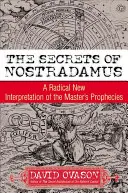
David Ovason's Nostradamus Code offers a welcome departure from the usual sensationalism surrounding the 16th-century seer. Ovason anchors his analysis in a scholarly approach, attempting to decode the quatrains through the lens of Renaissance esoteric thought, a refreshing perspective that moves beyond simplistic future-telling. His examination of astrological symbolism and potential Kabbalistic influences provides a structured framework for interpretation, particularly compelling when he dissects specific passages to reveal layers of meaning. However, the book sometimes struggles under the weight of its own theoretical framework; the dense symbolism, while explained, can occasionally feel speculative, leaving the reader to bridge significant interpretive gaps. A notable strength lies in Ovason's meticulous attention to the historical and intellectual milieu of Nostradamus, grounding the prophecies in a tangible 16th-century reality. Despite its occasional interpretive leaps, Nostradamus Code serves as a valuable resource for serious students of prophecy and esoteric history.
📝 Description
71
### What It Is Nostradamus Code is an exploration into the symbolic language and hidden meanings embedded within the prophecies of Michel de Nostredame, commonly known as Nostradamus. David Ovason, the author, presents an argument for understanding these quatrains not as mere predictions of future events, but as complex symbolic narratives requiring a specific interpretive key. The work examines the historical context surrounding Nostradamus and his writings, suggesting that the prophet operated within a framework of Renaissance esoteric thought, blending astrology, Kabbalah, and Hermeticism.
### Who It's For This book is intended for readers with a serious interest in esotericism, historical prophecy, and the life and work of Nostradamus. It appeals to those who seek a deeper, more analytical approach to his prophecies, moving beyond sensationalist interpretations. Students of Western mystery traditions, particularly those familiar with Renaissance occultism and astrological symbolism, will find the material engaging. It is also for individuals who appreciate scholarly investigation into historical figures and their intellectual environments.
### Historical Context The publication of Nostradamus Code in 2013 places it within a modern scholarly tradition of re-examining the prophet's legacy. Nostradamus himself published his *Centuries* in the mid-16th century, a period marked by intense interest in astrology and occult sciences across Europe. Figures like John Dee were contemporaries who also engaged deeply with divinatory arts and esoteric philosophy. Ovason's work seeks to situate Nostradamus within this milieu, challenging earlier interpretations that often divorced him from his intellectual era, and offering a counterpoint to more simplistic, event-focused readings that gained prominence during periods of public anxiety, such as the Cold War.
### Key Concepts Central to Nostradamus Code is the idea of the 'Prophetic Code,' a system of symbolic correspondences that Ovason argues is essential for deciphering the quatrains. This involves understanding astrological configurations, alchemical processes, and Kabbalistic principles as they might have been understood by Nostradamus and his contemporaries. The book examines specific quatrains to illustrate how these symbolic layers operate, suggesting that the prophecies function on multiple levels of meaning – personal, historical, and cosmic. Ovason also explores the potential influence of earlier esoteric texts and traditions on Nostradamus's unique visionary output.
💡 Why Read This Book?
• Understand the symbolic language of prophecy, learning how Ovason interprets Nostradamus's quatrains through astrological and Kabbalistic frameworks, a method distinct from mere chronological prediction. • Gain historical context for the 16th century, understanding how figures like Nostradamus engaged with Renaissance esoteric traditions and intellectual currents, moving beyond isolated historical analysis. • Explore the concept of a 'Prophetic Code' as presented by Ovason, discovering how specific symbols and correspondences might unlock deeper meanings in seemingly cryptic verses, offering a unique analytical tool.
⭐ Reader Reviews
Honest opinions from readers who have explored this book.
❓ Frequently Asked Questions
What is the main argument of David Ovason's Nostradamus Code?
The book argues that Nostradamus's prophecies should be interpreted as symbolic narratives rather than literal predictions. Ovason suggests understanding them requires knowledge of Renaissance esoteric traditions like astrology and Kabbalah, presenting a 'Prophetic Code' for decipherment.
When was Nostradamus Code first published?
Nostradamus Code was first published in 2013. This places it in the contemporary era of scholarship attempting to re-evaluate the prophet's work with modern analytical tools.
Does Nostradamus Code focus on predicting future events?
No, the primary focus is not on predicting specific future events. Instead, it explores the symbolic, astrological, and esoteric meanings embedded within Nostradamus's quatrains, treating them as complex symbolic texts.
What esoteric traditions are discussed in relation to Nostradamus?
The book discusses Renaissance esoteric traditions such as astrology, Kabbalah, and Hermeticism. Ovason posits that these frameworks are key to understanding the symbolic language used by Nostradamus.
Who is David Ovason?
David Ovason is an author known for his works on prophecy, symbolism, and esoteric history, particularly concerning Nostradamus. His approach often involves historical and symbolic analysis of prophetic texts.
Is Nostradamus Code suitable for beginners in esotericism?
While accessible to dedicated beginners, the book delves into complex symbolic and historical analysis. Readers with some familiarity with esoteric concepts or a strong interest in Nostradamus will likely gain the most.
🔮 Key Themes & Symbolism
The Symbolic Prophetic Code
The central thesis revolves around understanding Nostradamus's prophecies as a coded symbolic language rather than literal foretelling. Ovason argues that the quatrains are layered with astrological, alchemical, and Kabbalistic meanings, requiring specific interpretive keys to unlock their true significance. This approach suggests that the power of the prophecies lies not in predicting specific events, but in their symbolic resonance and the universal truths they might represent when properly decoded. The work meticulously examines specific quatrains to demonstrate how this code operates.
Renaissance Esoteric Frameworks
Ovason situates Nostradamus firmly within the intellectual and spiritual landscape of the 16th-century Renaissance. The book explores how astrological charts, alchemical symbolism, and Hermetic principles were integral to the worldview of the era. By analyzing Nostradamus's life and writings through these lenses, Ovason aims to provide a more accurate historical and symbolic context, moving beyond anachronistic interpretations. This theme emphasizes the interconnectedness of knowledge and mysticism during this pivotal historical period.
Astrological Interpretation of Quatrains
A significant portion of Nostradamus Code is dedicated to the role of astrology in deciphering the prophecies. Ovason demonstrates how specific celestial alignments, planetary influences, and zodiacal symbolism might have been employed by Nostradamus himself as a means of structuring or encoding his visions. The book offers detailed analyses of how astrological configurations within the quatrains can be interpreted, providing readers with a method to approach these complex texts with a specific symbolic vocabulary.
The Nature of Prophecy
Beyond Nostradamus specifically, the work touches upon the broader nature of prophecy and visionary experience. It questions the common perception of prophecy as simple prediction, proposing instead that it can function as a form of symbolic communication or a reflection of deeper cosmic patterns. Ovason's exploration invites readers to reconsider how prophetic texts are understood, emphasizing interpretation, context, and the subjective experience of the prophet and the interpreter.
💬 Memorable Quotes
“The quatrains are not mere predictions but a complex symbolic language.”
— This concept highlights Ovason's core argument: that Nostradamus's prophecies require specialized knowledge of esoteric symbolism, moving them from the realm of simple fortune-telling to intricate symbolic texts.
“Understanding Renaissance astrology is key to decoding Nostradamus.”
— This emphasizes the book's focus on astrological correspondences as a primary tool for interpretation, suggesting that the prophet's contemporaries would have readily understood these celestial references.
“Nostradamus operated within a rich tradition of esoteric thought.”
— This points to the book's effort to contextualize Nostradamus within the broader intellectual and mystical currents of the 16th century, linking him to Kabbalah, Hermeticism, and alchemy.
“The 'Prophetic Code' requires specific interpretive keys.”
— This encapsulates the idea that there is a systematic, albeit hidden, method to Nostradamus's prophecies, which Ovason aims to reveal through his analytical approach.
“Symbolism transcends simple chronological prediction.”
— This interpretation suggests that the value and meaning of Nostradamus's work lie in its symbolic depth, offering universal insights rather than just a timeline of future events.
🌙 Esoteric Significance
Tradition
The work aligns with the Western Esoteric tradition, specifically drawing upon Renaissance Hermeticism, Kabbalistic principles, and astrological symbolism. It fits within a lineage of interpreters who view Nostradamus not merely as a seer, but as an initiate employing complex symbolic systems. Ovason's approach departs from purely literal or fatalistic readings, emphasizing the symbolic and allegorical dimensions inherent in esoteric texts, much like earlier Hermetic scholars who sought deeper, hidden meanings in ancient wisdom.
Symbolism
Central symbols explored include astrological configurations, which Ovason posits Nostradamus used as a coded language to structure his prophecies. Alchemical processes and their transformative symbolism are also key, suggesting a parallel between material transformation and spiritual evolution. Furthermore, the book likely delves into numerical symbolism, possibly derived from Kabbalistic gematria, where numbers themselves hold esoteric significance and can unlock layers of meaning within the text.
Modern Relevance
Contemporary practitioners of Western esoteric traditions, particularly those interested in Hermeticism, Kabbalah, and the history of astrology, find Ovason's work relevant. Thinkers and groups focused on symbolic interpretation and the decoding of ancient texts often draw upon his methodologies. The book's emphasis on understanding prophecy through esoteric lenses resonates with modern movements seeking to connect with older wisdom traditions and explore the symbolic dimensions of consciousness and reality.
👥 Who Should Read This Book
• Students of Western Esotericism: Those studying Hermeticism, Kabbalah, or Renaissance occultism will find Ovason's contextualization of Nostradamus invaluable. • Prophecy Enthusiasts: Individuals fascinated by the history and interpretation of prophecy, particularly Nostradamus, seeking a more scholarly and symbolic approach. • Historical Researchers: Scholars and readers interested in the intellectual and spiritual currents of the 16th century, and how esoteric beliefs influenced figures of that era.
📜 Historical Context
Nostradamus Code, published in 2013, engages with the enduring legacy of Michel de Nostredame, whose *Centuries* first appeared in 1555. This mid-16th century period was a fertile ground for esoteric studies, with figures like Paracelsus exploring alchemy and astrology, and Cornelius Agrippa publishing influential works on occult philosophy. Nostradamus himself was deeply immersed in these currents, blending astrological prognostication with a prophetic vision that captivated Europe. Ovason's work seeks to situate Nostradamus within this intellectual milieu, challenging interpretations that emerged much later, particularly during times of public anxiety like the World Wars. While not directly engaging with specific censorship events concerning Nostradamus's work at the time of its publication, Ovason's approach offers a scholarly counterpoint to the more sensationalist interpretations that have often dominated public perception, aligning with a modern academic trend of re-examining historical figures within their authentic temporal and intellectual frameworks.
📔 Journal Prompts
The 'Prophetic Code' as a symbolic language: How might understanding esoteric symbolism transform your perception of historical texts?
Renaissance astrological influences: Reflect on how celestial patterns might have informed a 16th-century worldview.
Nostradamus's use of Kabbalistic principles: Consider the potential for numerical or symbolic systems to encode meaning.
The nature of visionary experience: Explore the difference between literal prediction and symbolic communication.
Deciphering cryptic verses: How can one approach a text with multiple potential layers of meaning?
🗂️ Glossary
Quatrain
A stanza of four lines, especially one having a rhyme scheme. Nostradamus famously organized his prophecies into quatrains.
Esotericism
Belief systems, spiritual practices, and philosophical traditions that focus on hidden knowledge and inner transformation, often distinct from exoteric or public teachings.
Kabbalah
A body of mystical teachings and esoteric traditions of Judaism, concerning the divine nature and the creation and existence of the universe. Often involves complex symbolic interpretations of scripture and numerical analysis.
Hermeticism
A religious, philosophical, and esoteric tradition based on writings attributed to Hermes Trismegistus. It emphasizes principles like 'as above, so below' and the interconnectedness of the macrocosm and microcosm.
Astrology
The study of the movements and relative positions of celestial bodies interpreted as having an influence on human affairs and the natural world. Crucial to Renaissance thought and Ovason's interpretation.
Alchemy
An ancient practice involving the transformation of matter, often seen as a symbolic path to spiritual purification and enlightenment. Its symbolism is frequently interwoven with esoteric interpretations.
Renaissance
The period in European history, roughly from the 14th to the 17th century, marked by a revival of classical art, architecture, and literature, and a flourishing of intellectual and scientific inquiry, including esoteric studies.