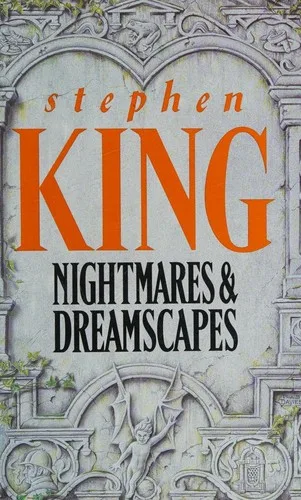
Nightmares & Dreamscapes
 80
80

Nightmares & Dreamscapes
Stephen King’s 2016 collection, *Nightmares & Dreamscapes*, functions less as a singular statement and more as a potent showcase of his thematic and stylistic range. The stories here, while varied, consistently demonstrate King's knack for imbuing the everyday with a creeping sense of dread. The strength lies in his character work; even in brief encounters, individuals feel lived-in, making their descent into the bizarre all the more impactful. A notable example is the unsettling transformation in "The Raft," where a simple patch of water becomes a primal, inescapable threat. However, the collection’s sheer breadth can also be a limitation; some stories, while competent, feel less essential, existing more as exercises in a particular trope than as deeply resonant explorations. The sheer volume of 24 stories means a variable hit rate. Nonetheless, *Nightmares & Dreamscapes* offers a solid, if uneven, immersion into King’s particular brand of unsettling fiction.
📝 Description
80
### What It Is Stephen King's 2016 collection, *Nightmares & Dreamscapes*, gathers 24 of his short fiction works, offering a broad spectrum of his narrative power. These stories range from the chillingly supernatural to the psychologically unsettling, often blurring the lines between reality and the subconscious. The collection showcases King's consistent ability to craft compelling narratives that explore the darker aspects of human experience and the uncanny.
### Who It's For This anthology is particularly suited for readers fascinated by the psychological underpinnings of horror and the uncanny. Those who appreciate narratives that delve into the human psyche, exploring fears, anxieties, and the unexpected intrusions of the strange into everyday life will find much to engage with. It appeals to long-time fans of King's work and newcomers interested in his shorter, more concentrated storytelling.
### Historical Context Published in 2016, *Nightmares & Dreamscapes* arrived during a period of significant output for King, following novels like *Revival* (2014) and preceding *The Outsider* (2018). The collection reflects a mature author revisiting and refining his mastery of the short story form, a medium he has consistently employed throughout his career since the 1970s. Its release also coincided with a broader popular interest in serialized storytelling and curated collections across various media.
### Key Concepts The stories within *Nightmares & Dreamscapes* frequently explore the fragility of normalcy, the persistent influence of past traumas, and the ways in which ordinary individuals confront extraordinary circumstances. Concepts like the uncanny valley, the power of narrative to shape perception, and the manifestations of repressed guilt are recurrent. The collection also examines how seemingly mundane objects or locations can become focal points for profound dread or inexplicable phenomena.
💡 Why Read This Book?
• Gain insight into the psychological architecture of fear by examining how King constructs dread in stories like "The Raft," which uses a confined, surreal environment to amplify primal anxieties. • Understand the power of narrative framing in exploring the uncanny, as seen in tales where everyday objects or settings become conduits for the inexplicable, challenging the reader's perception of reality. • Appreciate the evolution of King's craft through a diverse selection of 24 stories, noting his consistent engagement with themes of trauma and the supernatural across different narrative structures since his early work.
⭐ Reader Reviews
Honest opinions from readers who have explored this book.
❓ Frequently Asked Questions
What is the earliest story included in Stephen King's Nightmares & Dreamscapes collection?
While published in 2016, *Nightmares & Dreamscapes* includes stories from various points in Stephen King's career. For instance, 'The Man in the Black Suit' was first published in 1994, showcasing earlier thematic explorations.
Are there any recurring characters or settings across the stories in Nightmares & Dreamscapes?
While the stories are largely standalone, Stephen King often revisits certain thematic concerns and even minor characters or locations across his works. Readers might recognize echoes of Derry or the general sense of a Maine-based uncanny.
Which story from Nightmares & Dreamscapes was adapted into a film?
Several stories have been adapted. For example, 'Children of the Corn' from this collection was famously adapted into a film series, highlighting King's early impact on cinema.
Does Nightmares & Dreamscapes contain elements of cosmic horror?
While King primarily focuses on psychological and supernatural horror rooted in human experience, some stories touch upon larger, unknowable forces. The collection explores the dread of the unknown rather than strict Lovecraftian cosmicism.
What is the typical length of a story in Nightmares & Dreamscapes?
The collection features a wide range of lengths, from very short vignettes to novella-length pieces. This variety allows King to explore different narrative paces and depths within the short fiction format.
How does Nightmares & Dreamscapes compare to Stephen King's other short story collections like Skeleton Crew?
*Nightmares & Dreamscapes* offers a broader chronological spread of King's short fiction than some earlier collections, encompassing a wider array of his stylistic development and thematic preoccupations up to its 2016 publication.
🔮 Key Themes & Symbolism
The Unraveling of Reality
Many stories in *Nightmares & Dreamscapes* center on the sudden, inexplicable intrusion of the bizarre into ordinary lives. King excels at depicting the moment the familiar facade cracks, revealing a terrifying underlying strangeness. This theme is explored through characters who suddenly face phenomena that defy rational explanation, forcing them to confront the limits of their understanding and the fragility of their perceived reality. The collection consistently questions what constitutes 'normalcy' and how readily it can be disrupted.
Lingering Trauma and Guilt
A significant undercurrent in this collection is the persistent impact of past events and unresolved guilt. Characters are often haunted by their histories, with memories manifesting as external threats or internal torment. King uses supernatural elements as a lens through which to examine psychological burdens, suggesting that the true horrors often stem from within. The stories frequently feature individuals grappling with their past actions, demonstrating how guilt can become a relentless, consuming force.
The Supernatural in Mundane Settings
King's signature ability to locate the uncanny within the everyday is on full display in *Nightmares & Dreamscapes*. Whether it's a deserted stretch of road, a seemingly innocent object, or a quiet suburban street, the supernatural does not require grand, gothic backdrops. Instead, it seeps into the fabric of ordinary life, making the horror more accessible and relatable. This grounding in the familiar amplifies the shock when the extraordinary occurs, demonstrating the porous boundary between the known and the unknown.
The Nature of Fear Itself
Beyond specific monsters or events, the collection probes the fundamental nature of fear. King explores primal anxieties, the dread of the unknown, and the terror that arises from isolation and helplessness. Through diverse scenarios, he maps out the various ways fear can manifest and impact human behavior, often revealing more about the characters' inner lives than the external threats they face. The stories function as investigations into what truly scares us and why.
💬 Memorable Quotes
“The world is a bad place and the reason is simple: it’s full of people who are not afraid to do anything they want to.”
— This statement, or the sentiment it represents, highlights King's recurring theme that human malice and lack of moral restraint are often more terrifying than supernatural entities. It suggests that our greatest fears can stem from the potential for cruelty within ourselves and others.
“We are the things that we have done.”
— This concept emphasizes the weight of past actions and their indelible impact on identity. It suggests that individuals are fundamentally defined by their choices and deeds, and that these actions can return to haunt or shape their present and future.
“Sometimes, when you’re alone in the dark, you’re not alone at all.”
— This captures the essence of the uncanny intrusion that permeates many of King's stories. It speaks to the unsettling feeling that unseen presences or malevolent forces can exist just beyond the veil of perception, especially when one is most vulnerable.
“The thing about a nightmare is that it’s a dream you can’t wake up from.”
— This interpretation underscores the collection's focus on inescapable dread. It suggests that the most terrifying experiences are those from which there is no relief, where the horror becomes a persistent reality rather than a fleeting subconscious projection.
“There are places where the world is thin.”
— This evocative concept points to liminal spaces or moments where the boundary between our reality and other, stranger dimensions or forces becomes permeable. It suggests that certain locations or circumstances are conduits for the supernatural.
🌙 Esoteric Significance
Tradition
While not overtly adhering to a specific esoteric lineage like Hermeticism or Gnosticism, King's work in *Nightmares & Dreamscapes* often taps into archetypal fears and psychological landscapes that resonate with Gnostic themes of a flawed or malevolent creation and the struggle for awareness. The pervasive sense of dread and the intrusion of malevolent forces into everyday reality echo Gnostic concerns about the deceptive nature of the material world and the hidden powers that influence human destiny.
Symbolism
The collection frequently employs potent symbols of transformation and entrapment. Water, for instance, appears as a symbol of both primal life force and terrifying, consuming otherness, as seen in "The Raft." Roads and isolated locations often symbolize journeys into the unknown or inescapable fates, representing the individual's confrontation with forces beyond their control. Abandoned or decaying structures can symbolize the remnants of past traumas or the decay of normalcy, acting as physical manifestations of psychological distress.
Modern Relevance
Contemporary horror fiction and psychological thrillers frequently draw upon King's methods of grounding the uncanny in relatable human experiences. Thinkers and practitioners in fields like Jungian psychology, which explores archetypes and the collective unconscious, find fertile ground in King's narratives for analyzing the symbolic dimensions of fear and desire. The collection's exploration of trauma and its manifestations also remains highly relevant to contemporary discussions on mental health and the therapeutic potential of confronting difficult narratives.
👥 Who Should Read This Book
• Readers interested in the psychological underpinnings of horror who wish to understand how fear is constructed through narrative and atmosphere. • Fans of Stephen King seeking a broad overview of his short fiction, showcasing his thematic range and stylistic evolution across numerous tales. • Students of American literature and popular culture exploring how contemporary authors engage with themes of the uncanny, trauma, and the supernatural in modern settings.
📜 Historical Context
Published in 2016, *Nightmares & Dreamscapes* arrived at a time when Stephen King was firmly established as a literary titan, with a career spanning over four decades. The collection reflects a seasoned storyteller revisiting the short form, a medium he had already significantly impacted with earlier anthologies like *Night Shift* (1978) and *Skeleton Crew* (1985). In the years leading up to 2016, King had seen a resurgence in critical appreciation, with works like *11/22/63* (2011) receiving acclaim. The literary landscape of 2016 was also marked by a continued popular interest in genre fiction and curated collections, with authors like George R. R. Martin dominating popular discourse with his *A Song of Ice and Fire* series. King’s work, while consistently popular, was also being increasingly studied in academic circles for its engagement with American folklore and psychological depth, a trend that continued with scholarship on his oeuvre.
📔 Journal Prompts
The sudden intrusion of the uncanny into ordinary settings.
The lingering resonance of past traumas within characters.
The symbolic weight of desolate or isolated locations.
The narrative function of repressed guilt.
The porous boundary between reality and nightmare.
🗂️ Glossary
The Uncanny
A concept describing the feeling of unease or strangeness evoked by something that is simultaneously familiar and unfamiliar, often leading to a sense of dread.
Psychological Horror
A subgenre of horror that relies on mental and emotional states to elicit fear, often focusing on a character's deteriorating mental state or internal conflicts.
Foreshadowing
A literary device where the author hints at future plot developments, often creating suspense or a sense of impending doom.
Archetype
A recurring symbol, character, or motif in literature and mythology that represents universal patterns of human nature or experience.
Liminal Space
A transitional or in-between place or state, often associated with a sense of unease, mystery, or potential for supernatural encounters.
Narrative Arc
The structural framework of a story, typically involving an exposition, rising action, climax, falling action, and resolution.
The Grotesque
A literary style or element characterized by exaggeration, distortion, and a combination of the humorous and the macabre, often to disturb or shock.