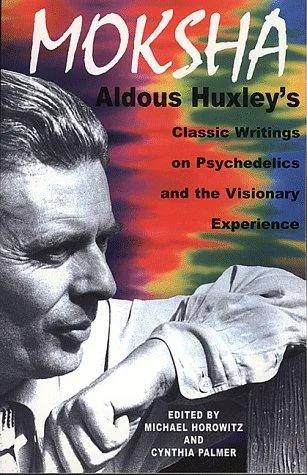
Moksha
 79
79

Moksha
Aldous Huxley's *Moksha* presents a candid, if sometimes uneven, account of his engagement with psychedelic substances. The strength of the collection lies in Huxley's characteristic intellectual rigor and eloquent prose, which elevate discussions of drug-induced states beyond mere sensationalism. His ability to connect these personal experiences to broader philosophical and spiritual traditions, particularly his interest in Eastern mysticism, is consistently insightful. A notable limitation, however, is the inherent difficulty in conveying the ineffable nature of profound altered states through written word; at times, the descriptions feel more like intellectual approximations than visceral accounts.
The passages detailing his mescaline experiences, particularly the reflections on perceiving the "Mind at Large" and the reduction of the ego, offer compelling arguments for the potential of these substances to unlock deeper layers of consciousness. Yet, the collection occasionally drifts into lengthy philosophical digressions that can dilute the immediacy of his reported experiences. Ultimately, *Moksha* serves as a valuable historical document and a testament to Huxley's enduring curiosity about the human mind's furthest reaches, though it requires a reader willing to engage with dense philosophical contemplation.
📝 Description
79
Aldous Huxley's 1977 collection, Moksha, gathers his writings on psychedelic substances and consciousness.
Moksha is a posthumous compilation of Aldous Huxley's essays, letters, and journal entries. The book focuses on his direct experiences and philosophical reflections concerning psychedelic drugs and the altered states of consciousness they can induce. Huxley documents his investigations into the nature of reality and the self, often viewing these substances as tools for spiritual insight and expansion of awareness.
This collection appeals to readers interested in the study of consciousness, Western esotericism, and the history of psychedelic research. It is especially relevant for those examining the cultural impact of psychedelic exploration and individuals pursuing spiritual paths involving altered states of awareness. Readers familiar with Huxley's *The Doors of Perception* will find these writings a continuation of his lifelong inquiry into the human mind's potential.
Huxley's work in Moksha sits within the mid-20th century Western esoteric interest in consciousness expansion. Alongside figures like Timothy Leary and Alan Watts, he engaged with the potential of substances like mescaline and LSD. This period saw a counter-culture questioning established norms and seeking alternative spiritual experiences. Huxley's perspective, however, was notably literary and philosophical, contributing a unique voice to the discourse on psychedelics and their relation to spiritual seeking.
💡 Why Read This Book?
• Gain a nuanced understanding of the 1950s and 60s psychedelic research movement, specifically through Huxley's personal accounts and philosophical framing of his 1953 mescaline experiments. • Explore Huxley's unique synthesis of Western intellectual traditions with Eastern mystical concepts, particularly his interpretations of "Mind at Large" as presented in the essays. • Discover how Huxley grappled with the integration of profound altered states into everyday life, offering insights relevant to contemporary discussions on consciousness and well-being.
⭐ Reader Reviews
Honest opinions from readers who have explored this book.
❓ Frequently Asked Questions
What is the primary focus of Aldous Huxley's book Moksha?
Moksha compiles Aldous Huxley's writings on his explorations with psychedelic substances, focusing on altered states of consciousness, mysticism, and the potential for spiritual insight.
When was Aldous Huxley's Moksha first published?
Moksha was first published in 1994, compiling materials that were largely written decades earlier.
Which psychedelic substances did Huxley explore in the context of Moksha?
The primary substances documented in Moksha are mescaline and LSD, reflecting Huxley's extensive personal investigations.
How does Moksha relate to Huxley's other famous works like The Doors of Perception?
Moksha includes writings that expand upon themes introduced in *The Doors of Perception*, offering further reflections on consciousness, perception, and the 'reducing valve' of the ego.
What is the concept of 'Mind at Large' as discussed in Moksha?
Huxley uses 'Mind at Large' to describe a potential, unfiltered reality that our ordinary consciousness, acting as a 'reducing valve,' prevents us from fully experiencing.
Is Moksha a narrative novel or a collection of essays?
Moksha is a collection of essays, letters, and journal entries, rather than a fictional narrative.
🔮 Key Themes & Symbolism
Psychedelics and Consciousness
The core of Moksha revolves around Aldous Huxley's systematic investigations into psychedelic substances, primarily mescaline and LSD. He meticulously documents his subjective experiences, aiming to understand how these compounds affect perception, cognition, and one's sense of self. Huxley viewed these substances not merely as recreational drugs but as tools for expanding consciousness, potentially offering access to deeper layers of reality and insight into the nature of existence. His writings offer a philosophical framework for understanding these states, often linking them to mystical experiences described in various spiritual traditions and exploring the concept of the 'reducing valve' of the ego.
Mysticism and the Perennial Philosophy
Huxley consistently sought connections between the states induced by psychedelics and the insights of traditional mysticism and contemplative practices. Moksha reveals his deep interest in the Perennial Philosophy, the idea that all religions share a common metaphysical core. He draws parallels between his own experiences of ego-dissolution and cosmic consciousness with descriptions found in Buddhist, Hindu, and Christian mystical literature. This theme underscores his belief that altered states, whether chemically induced or achieved through asceticism, can provide direct experience of ultimate reality and universal truths.
The Nature of Reality and Perception
A central preoccupation in Moksha is Huxley's exploration of how our everyday perception shapes our understanding of reality. He famously proposed that consciousness functions as a 'reducing valve,' filtering out the vast potential information of 'Mind at Large' to allow for practical, ego-centric survival. Psychedelics, in his view, can temporarily open this valve, revealing a more direct, unmediated apprehension of the world. The book contemplates the implications of this expanded perception for understanding the self, the universe, and the limitations of ordinary language and conceptual thought.
Integration and the Spiritual Path
Beyond the initial experience, Moksha addresses the crucial challenge of integrating profound altered states into a coherent and meaningful life. Huxley grapples with how to translate the insights gained under psychedelics into practical wisdom and ethical conduct. He discusses the difficulties of communicating these ineffable experiences and the potential for misunderstanding or misuse. The collection implicitly frames these explorations as part of a broader spiritual path, one that involves self-discovery, the transcendence of ego, and the pursuit of greater understanding and compassion.
💬 Memorable Quotes
“After a high dose of mescaline, I have been able to see the Mind at Large.”
— This statement encapsulates Huxley's core thesis: that ordinary consciousness filters out a greater reality. He believed substances like mescaline could temporarily disable this 'reducing valve,' allowing for a direct perception of universal consciousness or 'Mind at Large.'
“The ego, which is the center of my universe, was dissolved.”
— This describes the profound sense of ego-dissolution that Huxley experienced. The shattering of the self's boundaries is a common theme in mystical experiences and psychedelic states, leading to feelings of unity and interconnectedness.
“The world was transformed into a field of pure significance.”
— This paraphrase reflects Huxley's description of a reality perceived not through ordinary, utilitarian lenses but as imbued with inherent meaning and spiritual import, a common visionary experience.
“Intention and Grace are the two conditions for psychedelic insight.”
— This interpretation highlights Huxley's understanding that both a prepared mindset (intention) and an element of uncontrollable cosmic favor (grace) are necessary for achieving profound, beneficial insights during psychedelic sessions.
“Every man is, in the last analysis, the slave of his own unconscious desires.”
— This reflects Huxley's psychological observations, suggesting that our actions and perceptions are often driven by hidden motivations stemming from the unconscious mind, a concept explored in relation to self-awareness.
🌙 Esoteric Significance
Tradition
Huxley's work aligns with the Western Esoteric tradition's interest in consciousness expansion and the exploration of non-ordinary states of awareness. While not strictly adhering to Hermeticism, Gnosticism, or Kabbalah, he engaged with their underlying themes of hidden knowledge and direct apprehension of ultimate reality. His exploration of psychedelics can be seen as a modern, scientifically-informed method for accessing states traditionally sought through meditation, asceticism, or visionary practices found across diverse mystical paths, including Eastern religions.
Symbolism
A key symbolic concept is the 'reducing valve,' representing the ego and the brain's filtering mechanism that limits our perception of reality. The 'Mind at Large' symbolizes the boundless, undifferentiated consciousness that lies beyond ordinary experience. The dissolution of the ego is another potent symbol, signifying the transcendence of the individual self to experience unity and interconnectedness with the cosmos, a recurring motif in mystical traditions.
Modern Relevance
Huxley's writings remain highly relevant in contemporary discussions surrounding psychedelic-assisted therapy, consciousness studies, and the philosophy of mind. Thinkers and practitioners in fields like neuropharmacology and transpersonal psychology often cite his work as foundational. His nuanced perspective on the potential and pitfalls of altering consciousness continues to inform debates about the ethical use of psychedelics and the search for meaning in a secular age.
👥 Who Should Read This Book
• Students of consciousness and altered states: Those interested in the historical and philosophical underpinnings of psychedelic research will find Huxley's firsthand accounts and intellectual analysis invaluable. • Seekers of spiritual insight: Readers exploring diverse paths to spiritual awakening, including meditation and contemplative practices, can draw parallels from Huxley's experiences with chemically induced mystical states. • Fans of Aldous Huxley's work: Individuals familiar with *Brave New World* and *The Doors of Perception* will appreciate this collection as a deeper dive into his lifelong fascination with the human mind and its potential.
📜 Historical Context
Aldous Huxley's writings on psychedelics, compiled in *Moksha*, emerged from the burgeoning counter-culture and consciousness exploration movement of the mid-20th century. His influential 1954 book, *The Doors of Perception*, detailing his mescaline experiences, preceded the widespread LSD research and experimentation of the 1960s. Contemporaries like Timothy Leary and Alan Watts were also deeply engaged with altered states, though Huxley's approach was distinctly more philosophical and less focused on widespread societal application. The era was marked by intense scientific and public debate; while some researchers like Humphry Osmond championed therapeutic potential, others, including figures in government, viewed psychedelics with alarm, leading to eventual widespread prohibition. Huxley's intellectual engagement with these substances provided a sophisticated, literary perspective that differed from both academic studies and popular sensationalism.
📔 Journal Prompts
Reflect on Huxley's concept of the 'reducing valve' and how it might shape your daily perceptions.
Consider the parallels Huxley draws between psychedelic experiences and traditional mystical states.
Analyze the role of intention in achieving profound insights, as discussed in Moksha.
Explore the challenges of integrating altered states of consciousness into ordinary life.
Meditate on the meaning of 'Mind at Large' and its potential implications for reality.
🗂️ Glossary
Reducing Valve
Huxley's term for the brain's function in filtering out most of the information available in the universe, allowing only what is necessary for survival and practical living to reach consciousness.
Mind at Large
The totality of consciousness or reality that lies beyond the filtered perception of ordinary, ego-bound awareness. Huxley believed psychedelics could grant temporary access to this broader field.
Ego Dissolution
The temporary loss or transcendence of the sense of individual self. This state is often associated with profound mystical or psychedelic experiences, leading to feelings of unity.
Mescaline
A psychoactive alkaloid found in the peyote cactus, known for producing intense visual hallucinations and alterations in thought and perception. Huxley extensively documented his experiences with it.
Perennial Philosophy
The concept, central to Huxley's thought, that all major religious and spiritual traditions share a common, underlying metaphysical truth or essence.
Set and Setting
While not exclusively Huxley's term, it refers to the psychological state (set) and the physical/social environment (setting) in which a psychedelic experience takes place, both considered crucial by Huxley.
Immanence
The philosophical or theological concept that the divine or ultimate reality is present within the material world, rather than being solely transcendent or external to it.