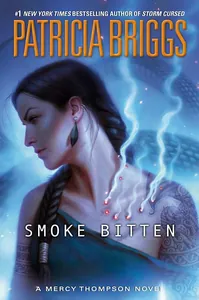
Mercy Thompson

 82
82

Mercy Thompson
Patricia Briggs’ Mercy Thompson series, launched in 2009, is a prime example of urban fantasy that grounds its fantastical elements in relatable character struggles. The series excels in its depiction of Mercy, a coyote shapeshifter, as a capable but vulnerable protagonist caught between the supernatural world’s power players. Briggs’ strength lies in her nuanced portrayal of interspecies relations, particularly the complex dynamics of werewolf packs and vampire covens, which feel less like generic fantasy tropes and more like distinct, albeit magical, cultures. A notable limitation, however, is the occasional pacing issue, where intricate political maneuvering can sometimes overshadow the immediate plot. The early chapters of the first book, for instance, meticulously establish the rules of this hidden world, which, while necessary, can feel dense for readers eager for action. Despite this, the series offers a compelling exploration of identity and belonging through a non-human lens. Briggs provides a solid foundation for the series, demonstrating a clear vision for Mercy's world and her place within it.
📝 Description
82
### What It Is
Mercy Thompson, first published in 2009, presents a unique urban fantasy narrative centered on its titular protagonist, a coyote shapeshifter. The series is known for its intricate world-building, blending supernatural elements with the mundane realities of modern life. The character Mercy navigates a hidden society of vampires, werewolves, fae, and other magical beings, often acting as a mediator or investigator in their affairs. The narrative is driven by Mercy's personal struggles and her interactions with a complex web of supernatural politics and ancient pacts.
### Who It's For
This series appeals to readers who appreciate character-driven stories with a strong supernatural core. Fans of urban fantasy looking for complex characters, detailed lore, and a mature take on magical societies will find much to engage with. It is particularly suited for those interested in exploring themes of identity, belonging, and the challenges of maintaining one's humanity (or animal nature) within a world of powerful, often dangerous, entities. The blend of action, mystery, and character development offers a rich reading experience.
### Historical Context
The urban fantasy genre, which Mercy Thompson inhabits, saw significant growth in the early 2000s, with authors like Laurell K. Hamilton and Charlaine Harris paving the way for more complex, adult-oriented paranormal narratives. Patricia Briggs' work emerged within this fertile ground, distinguishing itself by focusing on a non-human protagonist with a unique perspective on the supernatural world. The year 2009 itself was a period of continued exploration within the genre, with authors pushing boundaries in terms of world-building and character complexity.
### Key Concepts
The series explores the concept of 'pack' dynamics, not just among werewolves, but metaphorically across different supernatural species and their alliances. Mercy's coyote nature provides a distinct viewpoint, highlighting themes of independence versus community, and the tension between instinct and learned behavior. The inherent 'otherness' of her species, and her place within the broader supernatural hierarchy, is a recurring motif. The narrative also frequently engages with the idea of ancient magical laws and their impact on modern supernatural beings.
💡 Why Read This Book?
• Gain insight into the complex social structures of supernatural beings, as seen in the detailed portrayal of werewolf pack hierarchies and vampire politics, first established in 2009. • Experience a unique perspective on identity and belonging through Mercy’s coyote shapeshifter identity, exploring the balance between instinct and societal expectations. • Understand the challenges of interspecies diplomacy and conflict resolution within a richly imagined hidden world, exemplified by Mercy’s role as a mediator.
⭐ Reader Reviews
Honest opinions from readers who have explored this book.
❓ Frequently Asked Questions
What is the primary supernatural species Mercy Thompson belongs to?
Mercy Thompson is a coyote shapeshifter, a fact central to her identity and her unique position within the supernatural world established in the series' debut.
Who is the author of the Mercy Thompson series?
The Mercy Thompson series is written by Patricia Briggs, with the first book published in 2009.
What are the main supernatural factions Mercy interacts with?
Mercy frequently interacts with werewolves, vampires, and fae, each with their own distinct societies, rules, and often conflicting agendas.
Is Mercy Thompson a human who can shapeshift?
No, Mercy is a coyote shapeshifter by birth, meaning her primary nature is non-human, which influences her abilities and her place in the supernatural world.
What year was the first Mercy Thompson book published?
The first book in the Mercy Thompson series was published in 2009.
Does the series focus on romance or action?
The series blends both elements, featuring significant romantic subplots alongside action-packed encounters and intricate supernatural politics.
🔮 Key Themes & Symbolism
Identity and Otherness
The series deeply explores the concept of identity, particularly through Mercy's coyote shapeshifter nature. She constantly grapples with her 'otherness' in a world dominated by more powerful or numerous supernatural beings like werewolves and vampires. This theme is not just about her species but also about her place within the supernatural community and her struggle to maintain her individuality and autonomy. Her coyote instincts often clash with her human-learned behaviors and desires, creating internal conflict that drives much of the narrative. The exploration of what it means to be 'normal' or 'accepted' is central to Mercy's journey.
Pack Dynamics and Community
Beyond the literal werewolf packs, the concept of 'pack' extends to all forms of close-knit, often fraught, relationships within the supernatural world. Mercy finds herself drawn into various 'packs' – her found family of allies, her business associates, and the literal packs of werewolves and other shifters. These dynamics highlight themes of loyalty, betrayal, obligation, and the sometimes-difficult choices between personal desires and communal responsibilities. The series examines how these bonds are formed, tested, and broken, often with significant consequences for all involved.
The Supernatural Underbelly
Mercy Thompson pulls back the curtain on a hidden supernatural world coexisting with our own, particularly in the Pacific Northwest. It presents a gritty, often dangerous, reality where ancient beings and magical creatures navigate modern society. This theme involves exploring the 'rules' of this world – magical laws, territorial disputes, political structures of vampires and werewolves, and the delicate balance of power. Mercy, as a mechanic and a coyote, often finds herself in the liminal spaces, dealing with the fallout of these supernatural machinations.
Autonomy and Agency
A core theme is Mercy's fierce pursuit of autonomy and agency in a world where she is often underestimated or sought after for her unique abilities or connections. Despite facing threats from powerful vampires, territorial werewolves, and ancient fae, she consistently strives to make her own choices and control her own destiny. This is particularly evident in her business, Marcee's Auto Shop, which serves as a base of operations and a symbol of her independence. Her refusal to be easily controlled or manipulated by any single faction underscores her resilience.
💬 Memorable Quotes
“I'm the sort of person who likes to know the rules, but I'm also the sort of person who likes to bend them.”
— This quote encapsulates Mercy's character: she respects the established order of the supernatural world but isn't afraid to challenge it when necessary for her survival or principles.
“A coyote is a scavenger. We survive. We adapt. We are opportunistic.”
— This highlights Mercy's innate nature as a coyote shapeshifter, emphasizing her resourcefulness and resilience in the face of adversity, traits that define her actions throughout the series.
“The only thing worse than being a werewolf is being a werewolf with no pack.”
— This statement underscores the critical importance of community and belonging within the werewolf society depicted, suggesting that isolation is a fate worse than the inherent challenges of their nature.
“Vampires are predators. They see humans as cattle. And they see other supernatural creatures as inconvenient prey.”
— This interpretation from Mercy’s perspective reveals the inherent danger and predatory mindset attributed to vampires within the series' lore, setting up inherent conflict.
“Sometimes, the only way to survive is to embrace the wildness.”
— This reflects Mercy's journey of accepting and utilizing her coyote instincts, suggesting that true strength lies in acknowledging and integrating all aspects of one's being, even the primal ones.
🌙 Esoteric Significance
Tradition
While not strictly adhering to a single esoteric lineage, the Mercy Thompson series draws heavily from themes found in Western esotericism, particularly concerning the nature of the self, hidden worlds, and the integration of primal forces. Its exploration of shapeshifting, pacts between different supernatural species, and the idea of ancient laws governing magical beings echoes Gnostic and Hermetic concepts of hidden realities and spiritual hierarchies. The series presents a modern, secularized interpretation of these ideas, focusing on the practical implications for its characters rather than overt spiritual dogma.
Symbolism
The coyote itself is a potent symbol, often associated with trickery, adaptability, and survival in indigenous mythologies, which Briggs imbues with Mercy's character. The concept of 'pack' serves as a symbol for community, loyalty, and the inherent need for belonging, whether chosen or inherited. Furthermore, the interplay between different supernatural species—vampires representing ancient, often predatory, power, and fae embodying wild, capricious magic—symbolizes archetypal forces clashing and coexisting within a structured, yet volatile, world.
Modern Relevance
Contemporary urban fantasy authors and practitioners of modern witchcraft often cite series like Mercy Thompson as influential for their detailed world-building and relatable, flawed protagonists. The series' nuanced portrayal of interspecies politics and the exploration of identity through a non-human lens resonate with modern discussions on otherness and belonging. Thinkers exploring animistic perspectives or contemporary shamanism might find parallels in Mercy's connection to her coyote nature and her ability to bridge different realms of existence.
👥 Who Should Read This Book
• Readers interested in exploring the concept of 'found family' within a high-stakes supernatural environment, particularly those who appreciate complex character dynamics and loyalty. • Fans of urban fantasy seeking intricate world-building with detailed lore concerning werewolf packs, vampire covens, and fae societies, first established in 2009. • Individuals drawn to stories about navigating identity and belonging as an 'outsider,' especially when dealing with primal instincts and societal expectations.
📜 Historical Context
The debut of Patricia Briggs' Mercy Thompson series in 2009 arrived during a golden age for urban fantasy. The genre, significantly shaped by authors like Laurell K. Hamilton (Anita Blake series) and Charlaine Harris (The Southern Vampire Mysteries), had moved beyond simpler paranormal romance to explore more complex societal structures and darker themes within supernatural worlds. Briggs' work stood out by centering on a non-human protagonist, a coyote shapeshifter, offering a unique perspective distinct from the prevalent vampire or werewolf protagonists. This era saw a burgeoning readership hungry for detailed lore and gritty realism blended with magic. The early 2000s were also marked by increasing popularization of diverse mythological creatures beyond the standard vampires and werewolves. While not facing overt censorship, the genre's growing popularity meant increased critical attention, with works like Mercy Thompson being reviewed alongside established authors, solidifying its place in contemporary fantasy literature.
📔 Journal Prompts
Mercy's coyote nature and its influence on her decision-making.
The definition of 'pack' beyond literal wolf packs in the series.
The challenges of maintaining autonomy amidst powerful supernatural factions.
Reflecting on the balance between instinct and learned behavior in your own life.
The representation of interspecies relationships and their inherent complexities.
🗂️ Glossary
Shapeshifter
An individual possessing the ability to change their physical form into that of another creature, most commonly an animal. In the series, Mercy is specifically a coyote shapeshifter.
Werewolf
A supernatural being capable of transforming into a wolf or a wolf-like creature. The series depicts werewolves as having strong pack structures and territorial instincts.
Vampire
An undead being that subsists by feeding on the life essence (typically blood) of living creatures. The vampires in the series often operate within complex political structures and hierarchies.
Fae
Short for Faerie, referring to a race of supernatural beings from folklore, often depicted as powerful, capricious, and possessing their own distinct realms and rules.
Pack
A social group, most notably associated with werewolves, characterized by loyalty, hierarchy, and mutual protection. The concept is extended metaphorically to other groups Mercy interacts with.
Dominant/Submissive
Terms referring to social or behavioral roles often seen in pack dynamics, indicating the natural inclination towards leadership or deference within a hierarchy.
Mate
In the context of werewolf lore within the series, a mate is a destined partner, often implying a profound and unbreakable bond.