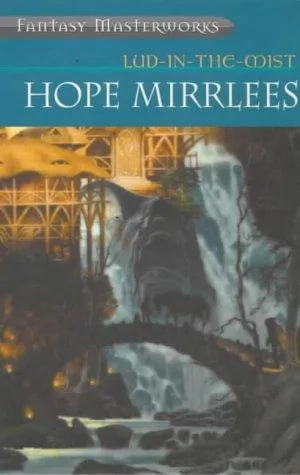
Lud-in-the-mist
 74
74

Lud-in-the-mist
Mirrlees's prose in *Lud-in-the-Mist* possesses an almost alchemical quality, transforming the mundane into the marvelous and the hallucinatory. The novel excels in its evocation of atmosphere; the city of Duns feels alive, breathing with the secrets of its Naric trade. Nathaniel's journey from a relatively sheltered existence into the heart of this hidden world is compelling. However, the narrative's dreamlike logic, while its strength, occasionally becomes a limitation, leading to moments where the plot's progression feels somewhat elusive, demanding a patient reader willing to surrender to its unique rhythm. The scene where Nathaniel first truly comprehends the nature of Naric and its pervasive influence is a masterclass in understated dread. *Lud-in-the-Mist* is an odd, potent brew for the discerning literary palate.
📝 Description
74
Hope Mirrlees's 1926 novel *Lud-in-the-Mist* is set in Duns, a city where a hallucinogenic drug called 'Naric' is manufactured.
The story follows Nathaniel, a young man growing up in Duns, a city where the illicit trade of Naric shapes daily life. This substance blurs the lines between reality and dream, impacting perception and consciousness. Mirrlees uses dreamlike prose and allegory to examine themes of addiction, escapism, and the hidden aspects of society.
The novel emerges from a period of intense literary experimentation in the early 20th century, a time when modernism was challenging traditional narrative forms. Mirrlees's work shares a spirit with the burgeoning surrealist movement and the influence of psychoanalysis on artistic expression. The city of Duns, with its shadowed passages and layered realities, acts as a central metaphor for the subconscious and the allure of forbidden knowledge.
Published in 1926, *Lud-in-the-Mist* reflects the era's fascination with the subconscious and the hidden forces that shape human experience. The city of Duns and the drug Naric function as potent symbols for exploring altered states of consciousness, similar to how psychoanalysis offered new perspectives on the dream world. The novel engages with the idea that reality is not a fixed state, but is permeable to subjective experience and hidden influences, aligning with certain occult traditions that explore inner landscapes and esoteric knowledge.
💡 Why Read This Book?
• Gain an understanding of early modernist literary explorations of altered states, distinct from later psychedelic literature, by examining Mirrlees's unique depiction of Naric and its societal impact. • Experience a narrative that uses the city of Duns as a symbolic landscape of the unconscious, offering a different lens on urban symbolism than typically found in realist fiction. • Appreciate a narrative that predates the full emergence of Surrealism in English literature, offering insight into the period's burgeoning interest in dreams and the irrational, exemplified by its 1926 publication.
⭐ Reader Reviews
Honest opinions from readers who have explored this book.
❓ Frequently Asked Questions
What is the significance of Naric in Lud-in-the-Mist?
Naric is a fictional drug manufactured in the city of Duns. It serves as a central symbol in the novel, representing forbidden knowledge, escapism, altered perception, and the hidden, often dangerous, undercurrents of society.
When was Lud-in-the-Mist first published?
Lud-in-the-Mist was first published in 1926, placing it within the vibrant and experimental era of early 20th-century modernist literature.
What is the setting of Lud-in-the-Mist?
The novel is set in the fictional city of Duns, a place renowned for its clandestine production and trade of the hallucinogenic substance known as Naric.
Who is the author of Lud-in-the-Mist?
The author is Hope Mirrlees, a British writer whose work, though not extensive, is highly regarded for its unique style and imaginative depth.
What kind of themes does Lud-in-the-Mist explore?
The book explores themes of perception, reality versus illusion, addiction, the subconscious, hidden worlds, and the consequences of societal secrets.
Is Lud-in-the-Mist considered a fantasy novel?
Yes, Lud-in-the-Mist is often categorized as literary fantasy or surrealist fiction due to its dreamlike atmosphere, symbolic elements, and departure from strict realism.
🔮 Key Themes & Symbolism
The Nature of Reality
Mirrlees challenges conventional perceptions of reality through the pervasive influence of Naric in Duns. The drug doesn't merely induce hallucinations; it actively reshapes the characters' understanding of their world, blurring the lines between the tangible and the imagined. This theme invites readers to question what constitutes genuine experience and how societal structures might be built upon shared illusions or suppressed truths, echoing Gnostic concerns with maya or illusion.
Hidden Worlds and the Unconscious
The city of Duns is depicted as a place with multiple layers, where a clandestine world of Naric production and consumption operates beneath the surface of ordinary life. This mirrors explorations of the unconscious mind, suggesting that what is hidden is often more potent and influential than what is openly acknowledged. The narrative's dreamlike quality further reinforces this, drawing parallels between the symbolic language of dreams and the hidden forces shaping human behavior.
Addiction and Its Metaphorical Power
Naric functions not just as a literal drug but as a potent metaphor for any force that offers escape or altered states at the cost of genuine engagement with life. This could represent societal complacency, forbidden knowledge, or any form of addiction that disconnects individuals from their true selves and responsibilities. The novel critically examines the allure and ultimate consequences of such dependencies, exploring how they can distort personal lives and community structures.
The Symbolism of Duns
The city of Duns itself is a symbolic construct, representing a microcosm of human society grappling with hidden desires and dangerous trade-offs. Its architecture, its hidden passages, and the omnipresent scent of Naric contribute to an atmosphere that is both alluring and unsettling. The city's duality—its respectable facade versus its secret operations—serves as a powerful symbol for the dual nature of human consciousness and the societal repression of certain truths.
💬 Memorable Quotes
Direct passages from the work, attributed to the author.
“The scent of Naric was the breath of Duns.”
— This statement captures the pervasive and essential nature of the drug within the novel's setting. It suggests that Naric is not merely an illicit substance but an integral part of the city's identity and atmosphere, deeply woven into its fabric.
“Dreams are the true country.”
— This interpretation suggests that the inner world of dreams and imagination holds a reality or significance equal to, if not greater than, the external, waking world. It aligns with the novel's exploration of altered states and the power of the subconscious.
“The world was a looking-glass, and the glass was beginning to crack.”
— This evocative image implies a breakdown in the perception of reality. The 'looking-glass' represents the apparent solidity of the world, and its cracking signifies the emergence of hidden truths or the influence of forces (like Naric) that disrupt this perceived order.
“There were rooms in the city that no one entered, and lights that no one saw.”
— This speaks to the theme of hiddenness and unseen forces at play. It suggests a concealed reality within Duns, filled with unknown potentials, dangers, or simply mysteries that exist beyond the awareness of the general populace.
💡 Key Ideas
Editorial paraphrase of the work's core concepts — not direct quotes.
He lived in the shadow of the great Naric works.
This paraphrased concept highlights the inescapable influence of Naric production on the lives of the inhabitants. It suggests that even those not directly involved are still profoundly affected by this central, clandestine industry that defines their city.
🌙 Esoteric Significance
Tradition
While not explicitly adhering to a single established esoteric lineage, *Lud-in-the-Mist* appeals to Gnostic themes of illusion (maya) and the search for hidden knowledge. The pervasive influence of Naric and the city's veiled realities echo the Gnostic concept of a flawed material world concealing a higher spiritual truth. The protagonist's journey can be interpreted as an archetypal quest for gnosis, seeking to pierce the veil of ordinary perception to understand a deeper, perhaps more dangerous, reality.
Symbolism
The drug 'Naric' serves as a powerful symbol for forbidden knowledge or altered states of consciousness that offer escape but ultimately obscure true understanding. The city of Duns, with its hidden passages and layers of reality, symbolizes the unconscious mind, a place where hidden desires and suppressed truths reside. The 'dreaming' within the novel represents not just nocturnal visions but a pervasive state of being that distorts or reveals deeper truths about existence.
Modern Relevance
Contemporary interest in lucid dreaming, consciousness studies, and the philosophical implications of altered states of mind finds fertile ground in Mirrlees's work. Thinkers exploring the nature of subjective experience and the construction of reality may draw parallels to the way Naric shapes perception in Duns. Furthermore, its allegorical exploration of societal dependencies and hidden truths remains relevant to discussions of escapism, addiction, and collective delusion in the modern era.
👥 Who Should Read This Book
• Students of literary modernism interested in experimental narratives that deviate from realism, particularly those exploring psychological depth and symbolic landscapes. • Readers of esoteric or philosophical fiction who appreciate allegorical storytelling that probes the nature of reality, consciousness, and hidden knowledge. • Those fascinated by early 20th-century literary explorations of altered states, dreams, and the subconscious, offering a unique perspective predating more overt surrealist movements.
📜 Historical Context
Published in 1926, *Lud-in-the-Mist* emerged during the height of literary modernism, a period characterized by experimentation with form, consciousness, and narrative. Hope Mirrlees's novel arrived alongside works by contemporaries like Virginia Woolf and James Joyce, who were similarly pushing the boundaries of psychological realism and stream of consciousness. However, Mirrlees’s approach leaned more towards the symbolic and the surreal, predating the full institutionalization of Surrealism as a movement in English literary circles. The era was also marked by a burgeoning interest in psychoanalysis, which offered new frameworks for understanding dreams and the subconscious, themes central to *Lud-in-the-Mist*. While not a direct engagement, the novel's exploration of altered states and hidden realities can be seen in dialogue with the broader intellectual currents that questioned objective reality and explored the inner landscape, a contrast to the more grounded social realism prevalent in other quarters.
📔 Journal Prompts
The pervasive scent of Naric and its symbolic weight in Duns.
Nathaniel's transition from unawareness to comprehension of the city's hidden commerce.
The symbolic function of Duns as a representation of hidden realms or the unconscious.
The interpretation of 'Dreams are the true country' within the narrative.
Mirrlees's portrayal of reality's fragility, likened to a cracking looking-glass.
🗂️ Glossary
Naric
A fictional, potent drug manufactured and consumed in the city of Duns within the novel. It is central to the plot, symbolizing altered perception, escapism, and hidden societal truths.
Duns
The primary setting of Lud-in-the-Mist, a fictional city known for its clandestine production of Naric. It serves as a symbolic landscape representing hidden aspects of society and the human psyche.
Dreaming
In the context of the novel, 'dreaming' extends beyond nocturnal sleep to represent a pervasive state of altered perception, illusion, or a deeper, symbolic reality that influences waking life.
Looking-glass
A metaphor used in the book to represent the perceived nature of reality. Its cracking signifies a disruption or breakdown in this perception, revealing underlying truths or illusions.
The Great Naric Works
Refers to the central, clandestine industry responsible for the production of Naric in Duns. Its 'shadow' implies the pervasive and inescapable influence of this enterprise on the city and its inhabitants.
Modernism
An early 20th-century artistic and literary movement characterized by experimentation with form, focus on subjective experience, and a departure from traditional modes of representation.
Surrealism
An artistic and literary movement that explored the irrational, the subconscious, and dreamlike imagery, often juxtaposing unexpected elements. Mirrlees's work shares thematic and atmospheric qualities with this movement.
🔮 Readers Also Liked
Browse all →







More by Hope Mirrlees
All books →
More Free Occult Philosophy Books
View all →