Laozi
 83
83

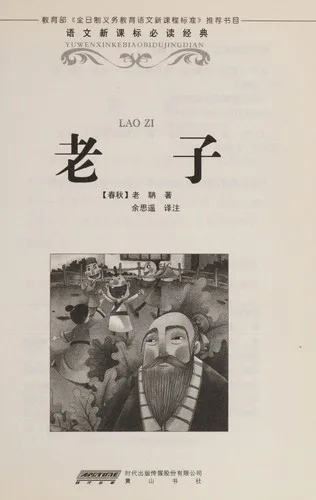
Laozi
Laozi’s foundational text presents a starkly different vision of existence than most Western philosophical traditions. The sparse, aphoristic style, particularly in chapters concerning governance, suggests a leader who rules by yielding, a concept alien to overt power structures. The challenge lies in its deliberate ambiguity; the Tao itself is unnamed and indescribable, requiring the reader to intuit rather than be told. A notable strength is the persistent call for humility and the recognition of power in yielding, as seen in verses like: "The softest things in the world overcome the hardest things of the world." However, a limitation for modern readers is the complete lack of narrative or direct ethical instruction, which can make initial engagement feel disorienting. The work’s power is in its quiet insistence on paradox and natural order. It offers a unique perspective on achieving balance through non-striving.
📝 Description
83
Attributed to Laozi, this text is a core scripture of Taoism.
This work presents a series of aphorisms and poetic reflections on existence, governance, and personal conduct. It is structured in short, memorable verses, functioning as a philosophical and spiritual guide rather than a narrative scripture. Its style encourages deep contemplation.
The text is important for students of Eastern philosophy, especially Taoism and its impact on Chinese thought. It will also appeal to those interested in living according to natural principles, understanding leadership through subtle influence, and finding inner peace. Scholars of comparative religion and ancient traditions will find it a significant reference.
The origins of the text are debated. Traditional attribution places Laozi as a contemporary of Confucius during the Spring and Autumn period (771–476 BCE). However, many scholars believe it was compiled later, perhaps during the Warring States period (475–221 BCE). This era saw significant intellectual activity, including the rise of Confucianism and Mohism, traditions that Taoism countered by emphasizing wu wei (non-action) and naturalness.
This text is a foundational scripture for Taoism, an esoteric tradition originating in ancient China. It articulates the Tao, the ineffable principle underlying all reality, and De, its manifestation. The emphasis on wu wei, or effortless action aligned with natural flow, contrasts with more assertive philosophies. The work also explores the interplay of opposites, like yin and yang, and the value of simplicity and emptiness for spiritual clarity and effective, non-coercive leadership. It forms a significant part of the broader landscape of East Asian mystical and philosophical thought.
💡 Why Read This Book?
• Gain a foundational understanding of the Tao, the ineffable principle underlying all existence, which offers a unique cosmological framework distinct from Western creation myths. • Learn the principle of wu wei, or non-action, as presented in the text’s aphorisms on leadership, providing a counter-intuitive approach to achieving effectiveness through effortless action. • Explore the concept of De, or virtue, as the manifestation of the Tao, and how cultivating it leads to a state of natural harmony, a core tenet for personal and societal balance.
⭐ Reader Reviews
Honest opinions from readers who have explored this book.
❓ Frequently Asked Questions
When was the text attributed to Laozi traditionally believed to have been written?
Traditionally, the text is believed to have been written by Laozi, a contemporary of Confucius during China's Spring and Autumn period, which spans from 771 to 476 BCE.
What is the meaning of 'Tao' as presented in the book?
The Tao, or Dao, is presented as the ultimate, ineffable principle of the universe. It is the source and guide for all things, yet it is nameless and beyond human comprehension or description.
What is 'wu wei' and how does Laozi describe it?
Wu wei translates to 'non-action' or 'effortless action.' The text describes it as acting in accordance with the natural flow of the Tao, without forcing or striving, leading to greater effectiveness.
How does the book discuss leadership?
The work suggests that ideal leadership involves humility, yielding, and governing through wu wei. It emphasizes subtle influence and non-interference rather than overt control.
Is this book part of a larger philosophical tradition?
Yes, this text is the foundational scripture of Taoism, a major Chinese philosophical and religious tradition that profoundly influenced East Asian culture and thought.
What are some of the key symbols or concepts explored?
Key concepts include the Tao, De (virtue/power), wu wei (non-action), the interplay of opposites (yin and yang), and the value of simplicity and emptiness.
🔮 Key Themes & Symbolism
The Tao as Unnamable Source
The work repeatedly emphasizes that the Tao, the fundamental principle of existence, cannot be named or fully described. Chapters begin by asserting 'The Tao that can be told is not the eternal Tao.' This highlights its ineffable, transcendent nature, serving as the origin and sustainer of all things. Understanding the Tao requires transcending linguistic and conceptual limitations, moving towards intuitive apprehension rather than intellectual grasp. It is the cosmic order underlying reality, guiding natural processes and human conduct when aligned.
Wu Wei: The Art of Effortless Action
A central theme is wu wei, often translated as 'non-action' or 'effortless action.' This concept advocates for acting in accordance with the natural flow of the Tao, without force or artificiality. The text illustrates this through natural phenomena, such as water's ability to overcome hardness by yielding. It suggests that true power lies not in overt control but in subtle influence and allowing things to unfold naturally. This principle applies to personal conduct, governance, and understanding the world's operations.
De: Virtue as Manifestation
De, often translated as 'virtue' or 'power,' is presented as the manifestation of the Tao in individual beings and phenomena. It is the inherent quality or potency that arises from aligning with the Tao. The text implies that cultivating De involves recognizing and honoring one's true nature and acting in harmony with it. This leads to a state of balance and integrity, where actions are naturally effective and beneficial, reflecting the underlying cosmic order without conscious effort.
Simplicity and Emptiness
The work champions simplicity, humility, and emptiness as pathways to wisdom and spiritual fulfillment. It critiques societal attachments to desire, knowledge, and status, suggesting they obscure the Tao. Emptiness, particularly in the context of the mind, is seen as a state that allows for receptivity to the Tao's subtle workings. By shedding artificial constructs and desires, one can return to a natural, uncarved state, achieving inner peace and clarity.
💬 Memorable Quotes
Direct passages from the work, attributed to the author.
“The Tao that can be told is not the eternal Tao.”
— This opening statement immediately establishes the ineffable nature of the Tao. It suggests that any attempt to define or explain the ultimate reality through language is inherently limited and falls short of its true, eternal essence.
“The softest things in the world overcome the hardest things of the world.”
— This aphorism illustrates the principle of wu wei. It highlights how yielding, flexibility, and persistence, like water wearing away stone, can achieve greater results than brute force or rigid opposition.
“Governing a large country is like cooking a small fish.”
— This analogy emphasizes that leadership requires minimal interference. Just as too much handling will break a small fish, excessive intervention in governance will disrupt the natural order and harm the state.
“The sage is occupied with the valley, and therefore he is full.”
— This refers to the value of emptiness and receptivity. The 'valley' symbolizes a state of humility and openness, which allows one to be filled with the Tao and its wisdom, rather than being closed off by ego or ambition.
💡 Key Ideas
Editorial paraphrase of the work's core concepts — not direct quotes.
He who knows does not speak. He who speaks does not know.
This quote points to the limitations of verbal expression when dealing with profound truths. True wisdom, it suggests, is often silent and intuitive, while excessive speech can indicate a lack of deep understanding.
🌙 Esoteric Significance
Tradition
This work is the foundational text of Taoism, a major Eastern philosophical and religious tradition. While not fitting neatly into Western esoteric categories like Hermeticism or Kabbalah, its emphasis on an underlying cosmic principle (the Tao), the cultivation of inner virtue (De), and alignment with natural forces shares common ground with mystical paths worldwide. It represents a lineage focused on achieving harmony with the fundamental patterns of existence through intuitive understanding and minimal intervention.
Symbolism
Key symbols include the Tao itself, representing the ultimate, ineffable reality; water, symbolizing yielding, adaptability, and persistent power that overcomes hardness; and the uncarved block (pu), representing a state of natural simplicity and potential before societal conditioning. The concept of emptiness is also symbolic, signifying receptivity and the void from which all phenomena arise, crucial for spiritual clarity.
Modern Relevance
Contemporary thinkers and practitioners in fields ranging from mindfulness and meditation to leadership studies and environmentalism draw heavily on Laozi's concepts. The emphasis on wu wei influences modern approaches to management and problem-solving, advocating for less forceful, more adaptive strategies. Its principles of naturalness and harmony resonate with ecological awareness and alternative spiritual movements seeking to reconnect with fundamental rhythms of life.
👥 Who Should Read This Book
• Students of Eastern philosophy and comparative religion seeking primary source material on Taoism and its core tenets. • Individuals interested in contemplative practices and philosophies that emphasize natural living, inner peace, and non-striving. • Leaders and managers looking for alternative perspectives on governance and influence, focusing on subtlety and alignment with natural processes.
📜 Historical Context
The origins of this text are deeply embedded in ancient Chinese intellectual history, particularly the Spring and Autumn (771–476 BCE) and Warring States (475–221 BCE) periods. This era was a crucible of philosophical innovation, marked by the rise of Confucius and his emphasis on social order and ethical conduct, and Mohism, which advocated utilitarianism. Laozi's work emerged as a distinct counter-current, proposing a philosophy centered on naturalness, spontaneity, and the principle of wu wei (non-action). While traditionally attributed to Laozi, a figure supposedly active in the 6th century BCE, many scholars suggest a later compilation, possibly around the 4th century BCE. This period saw increased philosophical debate and the formation of distinct schools of thought. The text's reception was not immediate; its influence grew over centuries, eventually becoming the a core part of Taoism, a tradition that profoundly shaped Chinese culture, art, and governance, often in dialogue with, and sometimes in opposition to, Confucianism.
📔 Journal Prompts
The Tao's ineffability: Reflect on a concept that feels fundamentally beyond words.
Wu wei in practice: Consider a situation where effortless action yielded better results than forceful intervention.
Cultivating De: How can one align actions with their inherent nature?
The wisdom of yielding: Analyze a time when flexibility proved stronger than rigidity.
Simplicity's role: Explore the benefits of reducing desires in achieving clarity.
🗂️ Glossary
Tao (Dao)
The fundamental, ineffable principle of the universe; the Way. It is the source, the underlying order, and the natural flow of all existence, beyond human comprehension or naming.
De (Te)
Virtue or power. It is the manifestation of the Tao in individual beings and phenomena; one's inherent nature or moral integrity that arises from aligning with the Tao.
Wu Wei
Literally 'non-action' or 'effortless action.' It refers to acting in accordance with the natural flow of the Tao, without force, striving, or artificiality, leading to spontaneous and effective outcomes.
Pu
The 'uncarved block' or 'plain wood.' It symbolizes the natural, original state of things—simple, unadulterated, and full of potential, before being shaped by external forces or desires.
Yin and Yang
The complementary, interdependent forces that shape the natural world. Yin represents passive, dark, and feminine qualities, while Yang represents active, light, and masculine qualities. Their dynamic interplay governs all phenomena.
Spring and Autumn period
A historical period in China (771–476 BCE) characterized by political fragmentation and intellectual ferment, during which foundational Chinese philosophies like Confucianism and Taoism began to take shape.
Warring States period
The period following the Spring and Autumn period (475–221 BCE), marked by intense conflict among Chinese states, during which philosophical schools further developed and consolidated.
🔮 Readers Also Liked
Browse all →








More by 老子
All books →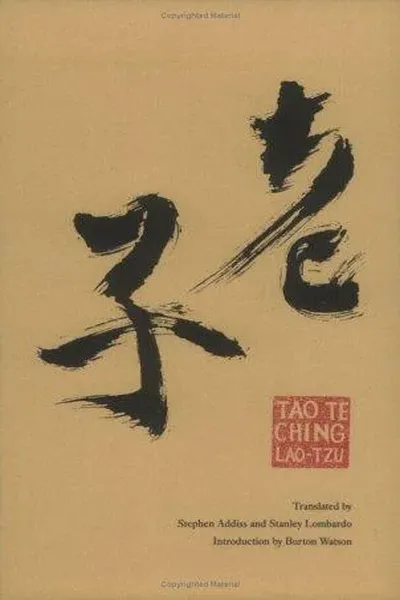





More Free Occult Philosophy Books
View all →