Keeper of Genesis
 82
82

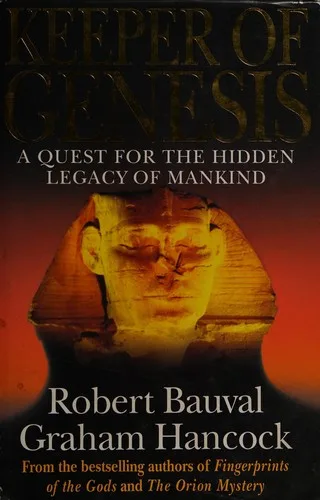
Keeper of Genesis
Graham Hancock’s *Keeper of Genesis* is less a scholarly treatise and more a compelling, if sometimes speculative, narrative that forces a re-examination of prehistory. Hancock excels at presenting disparate pieces of evidence – from flood myths spanning continents to the precise astronomical alignments of sites like Gobekli Tepe – and suggesting a unifying, albeit radical, explanation: a lost global civilization. His ability to connect geological data, such as the evidence for comet impacts, with ancient folklore is particularly potent. However, the book occasionally suffers from overreach, at times presenting conjecture as near-fact without fully satisfying the burden of proof required by rigorous historical or archaeological methodology. The interpretation of certain myths and the dating of proposed evidence remain points of contention, leaving the reader with more questions than definitive answers. Still, Hancock’s persistent inquiry into the silences of our past makes *Keeper of Genesis* a significant, if controversial, contribution to the discourse on human origins.
📝 Description
82
### What It Is Keeper of Genesis, first published in 1997 by Graham Hancock, is a work that challenges conventional archaeological and historical narratives. It posits a highly advanced antediluvian civilization that predates known human history, a civilization whose remnants and influence have been systematically overlooked or suppressed by mainstream scholarship. The book presents evidence from myths, geological records, and astronomical alignments to support its central thesis.
### Who It's For This book is intended for readers skeptical of established historical timelines and eager to explore alternative interpretations of human origins and ancient cultures. It appeals to those fascinated by lost civilizations, ancient mysteries, and the possibility of advanced prehistoric societies. It will particularly engage individuals interested in archaeoastronomy and comparative mythology.
### Historical Context Hancock's work emerged during a period of growing public interest in alternative history, following figures like Erich von Däniken. It engaged with the then-dominant paradigm of gradual human development, directly confronting the prevailing view that complex societies arose only after the last Ice Age. The book's reception was met with both fervent support from alternative history circles and sharp criticism from academic archaeologists and geologists.
### Key Concepts The core concepts revolve around the existence of a sophisticated global civilization that flourished before the Younger Dryas event, approximately 12,800 to 11,500 years ago. Hancock argues that this civilization possessed advanced knowledge of astronomy and engineering, and that its destruction by a catastrophic event led to a 'civilizational reset'. He explores how fragments of this lost knowledge might have survived in ancient myths and megalithic structures worldwide.
💡 Why Read This Book?
• Understand the theory of a sophisticated global civilization predating the Younger Dryas event, a concept explored through geological evidence and comparative mythology. • Gain insight into Graham Hancock's controversial arguments regarding the suppression of evidence for advanced prehistoric societies, challenging standard archaeological timelines. • Examine the potential connections Hancock draws between ancient myths of cataclysm and the astronomical evidence for a comet impact around 12,800 years ago.
⭐ Reader Reviews
Honest opinions from readers who have explored this book.
❓ Frequently Asked Questions
What is the main argument of Graham Hancock's Keeper of Genesis?
The book's central thesis is that a highly advanced global civilization existed before the last Ice Age, specifically before the Younger Dryas event around 12,800 years ago, and that its destruction has been largely erased from historical and archaeological records.
What kind of evidence does Keeper of Genesis present?
Hancock utilizes evidence from global flood myths, astronomical alignments in ancient sites, geological data suggesting catastrophic events, and interpretations of ancient art and artifacts to support his theory of a lost civilization.
When was Keeper of Genesis first published?
Keeper of Genesis was first published in 1997, contributing to a wave of popular interest in alternative theories about human history and ancient civilizations.
What is the Younger Dryas event mentioned in the book?
The Younger Dryas is a period of abrupt, severe cooling that occurred approximately 12,800 to 11,500 years ago. Hancock proposes this event was responsible for the destruction of the advanced antediluvian civilization.
How does Keeper of Genesis relate to other works by Graham Hancock?
It lays much of the groundwork for his subsequent books, such as 'Fingerprints of the Gods,' by presenting the core hypothesis of a lost Ice Age civilization and the evidence he believes supports it.
Is the theory presented in Keeper of Genesis accepted by mainstream academia?
No, the theories presented by Hancock in Keeper of Genesis are largely rejected by mainstream archaeologists, geologists, and historians, who find his interpretations of evidence to be speculative and lacking sufficient empirical support.
🔮 Key Themes & Symbolism
Antediluvian Civilization
The central theme posits a sophisticated global society that existed prior to the last Ice Age, flourishing roughly before the Younger Dryas period (c. 12,800-11,500 years ago). Hancock suggests this civilization possessed advanced knowledge, particularly in astronomy and engineering, evidenced by megalithic structures and myths of a great flood. This lost epoch is presented as a forgotten chapter of human history, deliberately or inadvertently obscured by subsequent geological and cultural upheavals.
Cataclysmic Events
Hancock argues that the destruction of this advanced civilization was caused by a major cataclysm, most notably a comet impact event around the end of the Pleistocene epoch. He connects widespread flood myths and oral traditions across cultures to this singular event, suggesting a global memory of a world-ending disaster. The book explores the geological evidence for such impacts and their potential to radically alter civilization and climate.
Suppressed History
A recurring argument is that mainstream archaeology and history have either ignored or actively suppressed evidence pointing to a more complex and ancient human past. Hancock suggests that the prevailing narrative of gradual human development from primitive beginnings serves to maintain existing academic structures and overlooks inconvenient truths about prehistoric knowledge and societal organization found in sites like Gobekli Tepe.
Archaeoastronomy and Mythology
The book heavily relies on the interpretation of ancient sites and myths through the lens of archaeoastronomy. Hancock seeks astronomical alignments in structures like the pyramids and proposes that ancient mythologies are not mere fables but encoded memories of historical events, scientific knowledge, and the cyclical nature of cosmic and terrestrial catastrophes.
💬 Memorable Quotes
“The Earth has a history of civilization that is far longer than we have been led to believe.”
— This statement encapsulates Hancock's core argument: that conventional timelines for human civilization are incomplete and that evidence for advanced societies in deep antiquity has been overlooked or misinterpreted.
“Flood myths are not just stories; they are echoes of a real cataclysm.”
— This interpretation highlights Hancock's belief that global flood narratives are not allegorical but represent collective memories of a devastating geological event, likely linked to the destruction of a prehistoric civilization.
“Ancient sites often display precise astronomical alignments pointing to forgotten knowledge.”
— This points to Hancock's use of archaeoastronomy, suggesting that megalithic structures and ancient monuments were built with sophisticated celestial observation and calculation, indicating advanced scientific understanding in early societies.
“We are not the first advanced civilization on Earth.”
— A direct assertion of the book's central premise, challenging the anthropocentric view that modern technological civilization is the pinnacle and sole example of advanced human achievement.
“The evidence for a lost civilization lies hidden in plain sight, dismissed by conventional thinking.”
— This suggests that the remnants and indicators of a sophisticated prehistoric past are readily available but are systematically ignored or reinterpreted by mainstream academia due to preconceived notions about human history.
🌙 Esoteric Significance
Tradition
Hancock's work draws implicitly from esoteric traditions that speak of lost golden ages and cyclical catastrophes, echoing themes found in Theosophy, Atlantis myths, and certain interpretations of Gnosticism. While not explicitly aligned with a single lineage, it taps into a broader Western esoteric current that seeks hidden knowledge beyond conventional historical accounts and posits a more complex, spiritual, or advanced past for humanity than mainstream science allows.
Symbolism
The book frequently references the 'Tree of Life' motif found in global mythologies, interpreting it as a symbol of a lost, interconnected civilization and its wisdom. Another recurring symbol is the Great Flood, which Hancock presents not merely as a myth but as a coded memory of a real, world-altering cataclysm, often associated with celestial events like comet impacts, signifying destruction and subsequent rebirth.
Modern Relevance
Hancock's ideas continue to influence contemporary alternative history communities, independent researchers, and even some artists and writers exploring themes of lost civilizations and forgotten pasts. His work is often cited in discussions about archaeoastronomy, ancient consciousness, and the potential for humanity to have experienced advanced societies in prehistory, influencing online forums, documentary films, and podcasts dedicated to these subjects.
👥 Who Should Read This Book
• Skeptical readers interested in challenging conventional historical timelines and exploring evidence for advanced prehistoric societies. • Students of comparative mythology and archaeoastronomy seeking to understand how ancient stories and sites might encode lost knowledge. • Individuals fascinated by the concept of lost civilizations, global cataclysms, and the possibility of a forgotten golden age of humanity.
📜 Historical Context
Published in 1997, *Keeper of Genesis* arrived amidst a burgeoning public fascination with alternative history, fueled by works that questioned established timelines. Graham Hancock’s book directly challenged the prevailing academic consensus on human development, which largely posited a gradual ascent from primitive hunter-gatherers to complex societies only after the end of the last Ice Age. His hypothesis of a sophisticated, global antediluvian civilization running counter to figures like the mainstream archaeologist Colin Renfrew, who championed the established Neolithic Revolution timeline. The book tapped into a cultural undercurrent questioning official narratives, resonating with readers interested in ancient mysteries and the possibility of forgotten epochs. Its reception was polarized, lauded by proponents of alternative history while drawing sharp criticism from academic circles for its speculative interpretations of geological and archaeological data.
📔 Journal Prompts
The concept of an antediluvian civilization and its potential remnants.
Reflect on the global recurrence of flood myths and their possible historical basis.
Consider the implications of advanced astronomical knowledge in ancient cultures.
The Younger Dryas event as a potential turning point in human history.
How might evidence for lost civilizations be overlooked or suppressed?
🗂️ Glossary
Antediluvian
Referring to the time before the biblical Great Flood. In the context of Hancock's work, it denotes the period before the last Ice Age and the presumed existence of a highly advanced global civilization.
Younger Dryas
A period of abrupt, severe cooling that occurred approximately 12,800 to 11,500 years ago. Hancock posits this event as the cataclysm that destroyed the antediluvian civilization.
Archaeoastronomy
The interdisciplinary study of how people in the past understood and utilized celestial phenomena and how these relate to their cultures and structures. Hancock uses this to interpret ancient sites.
Megalithic Structures
Large stone structures, such as Stonehenge or the pyramids, built by prehistoric peoples. Hancock suggests their complexity and alignment point to advanced civilizations.
Civilizational Reset
The idea that a catastrophic event wipes out an advanced society, forcing survivors to rebuild from a much lower technological and social level, often losing much of their ancestral knowledge.
Gobekli Tepe
An archaeological site in Turkey featuring massive stone pillars dating back to around 9600 BCE, predating the accepted timeline for monumental architecture and complex societies. Hancock sees it as evidence for advanced early cultures.
Pleistocene Epoch
The geological epoch that lasted from about 2.58 million to 11,700 years ago. It is characterized by the repeated glaciations. Hancock's proposed lost civilization existed at the end of this epoch.